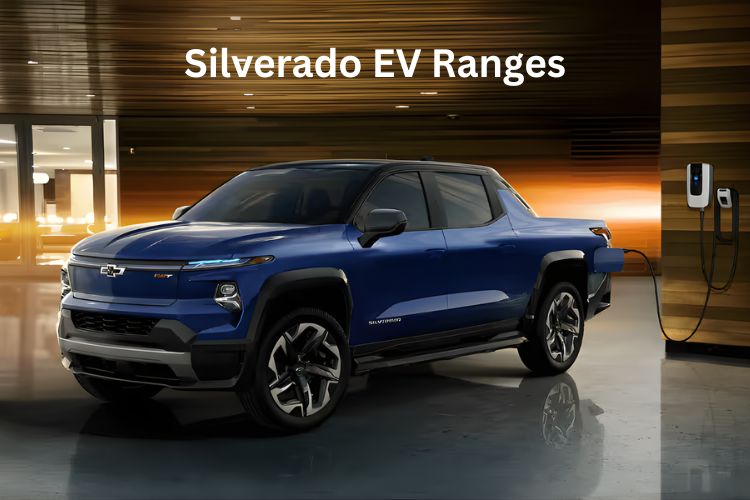
You’ve got twelve browser tabs open. Again. One says 282 miles, another promises 493, and your buddy’s cousin swears his died at 180 towing his camper. The dealer keeps talking about “WT” and “Max Range” and “RST” like you’re supposed to know what any of that means, and all you want is a straight answer: Will this $80,000 electric truck actually make it through your real life without leaving you stranded?
Here’s what nobody’s telling you straight. Silverado EV range isn’t one number. It’s a choose-your-own-adventure story with three different battery sizes, brutal towing math, winter weather that plays dirty, and yes, some genuinely impressive capabilities buried under all the confusion. The marketing says “up to 493 miles” while your brain keeps whispering “but what about when…”
We’re going to walk through this together. No corporate spin. Just the honest breakdown of what these trucks actually do on real roads, with real trailers, in real weather. By the end, you’ll know exactly which Silverado EV fits your life and which fears you can finally let go.
Keynote: Silverado Ev Ranges
The 2025-2026 Chevrolet Silverado EV offers EPA-estimated ranges from 282 to 493 miles across three battery configurations. Independent testing validates these figures, with Edmunds achieving 539 miles on the Max Range Work Truck. Real-world towing range averages 245-265 miles with 6,500-pound trailers using the 205 kWh Max Range battery.
Why your brain can’t process Silverado EV range right now
The configurator paralysis moment
You’re clicking through options at midnight feeling more confused with each choice. Every trim level shows a different number and you’ve lost track. Marketing promises collide with horror stories from EV skeptics online. That voice asking “what if I pick wrong” gets louder with every refresh.
It’s not just you. The Silverado EV lineup genuinely is confusing because Chevy built it for two completely different buyers at once. Fleet managers need basic work trucks that go forever on a charge. Weekend warriors want leather seats and tech gadgets. Overlanders want lifted suspensions and chunky tires. Each group gets different range numbers because they’re essentially driving different trucks with the same name badge.
Three battery packs, infinite anxiety
Standard Range starts at 282 miles for budget-conscious buyers willing to trade distance. Extended Range pushes 408-422 miles for the sweet spot many don’t realize exists. Max Range tops out at 460-493 miles depending on the trim you choose. The real question underneath all these numbers: which one prevents the 3am worry?
Here’s the thing. That spread from 282 to 493 miles isn’t marketing fluff. It’s the difference between a 119 kWh battery pack and a genuinely massive 205 kWh beast that’s bigger than the entire battery in most electric cars. You’re not comparing trim levels. You’re comparing fundamentally different capabilities wrapped in similar sheet metal.
What “Max Range” actually unlocks
The roughly 205 kWh battery is genuinely massive compared to most EVs. That 492-493 mile EPA rating beats every electric truck currently on roads. Engineers proved 1,059 miles in controlled conditions, though you’ll never drive that way. More battery means more truck weight, which ironically nibbles back some efficiency.
But before your eyes glaze over at battery specs, think about what this actually means on a Friday afternoon. You can leave Denver, drive to the family cabin in Wyoming, haul your boat back on Sunday, and still have range left without touching a charger. That’s not theoretical. That’s the Max Range pack doing what GM designed it to do.
The trim lineup decoded: WT, LT, RST and what they mean for your miles
Work Truck exists in three completely different versions
Base WT with Standard Range gives you 282 miles at $57,095 starting price. Extended Range WT jumps to roughly 422 miles for middle ground buyers. Max Range WT hits that headline 492-493 mile figure fleet buyers actually need. This trim prioritizes function over fancy, giving you maximum distance per dollar.
| Configuration | Battery Size | EPA Range | Starting Price | Best For |
|---|---|---|---|---|
| WT Standard Range | 119 kWh | 282 miles | $57,095 | Local contractors, daily commuters under 200 mi |
| WT Extended Range | 170 kWh | 422 miles | ~$75,000 | Regional work, weekend towing |
| WT Max Range | 205 kWh | 492 miles | ~$90,000 | Fleet operations, long-haul towing |
The Work Truck stripped down interior feels intentionally spartan. Vinyl seats. Basic radio. But I’ve talked to landscapers who couldn’t care less about heated steering wheels when they’re saving $400 monthly on diesel and never dealing with oil changes again.
LT slots in as the family-friendly middle child
Coming for 2025 model year with 408 miles Extended Range battery. Adds comfort features without the performance truck price tag penalty. Positions perfectly for suburban families who occasionally need serious range. Balances daily driving ease with weekend adventure capability most people actually use.
The LT makes the most sense for folks transitioning from a gas F-150 who want their truck to still feel like a truck. You get cloth or leather seats depending on package. A proper infotainment system. The range to visit your in-laws three hours away and back without charging anxiety making the drive miserable.
RST brings performance that costs you miles
Tops out around 460 miles with Max Range because massive wheels eat efficiency. Pumps out 760 horsepower and hits 60 mph in 4.5 seconds. Those 24-inch wheels look incredible but cost you 30+ miles per charge. Ask yourself honestly: Are you willing to trade distance for that launch feel?
Here’s where the physics get brutally honest. The RST’s “Wide Open Watts” mode that pins you to the seat at every green light drains battery faster than your ex drained your patience. That same 205 kWh battery gives the Work Truck 492 miles but only 460 in the RST. The 32-mile penalty isn’t the battery. It’s aerodynamic drag from those gorgeous wheels fighting you at highway speeds.
Trail Boss adds off-road without killing your range story
Extended Range version estimates 410 miles despite lift and all-terrain tires. Max Range Trail Boss pushes 478 miles for adventure seekers who hate planning. One test saw 454 miles at sustained 70 mph highway speeds with lifted setup. Off-road days use fewer miles than highway trips anyway, making this surprisingly practical.
“After 454 miles, the Trail Boss finally couldn’t maintain 70 mph anymore, but kept creeping for another 50 miles” before the battery finally gave up. That’s the kind of buffer that turns a stressful backcountry exit into just another drive home.
From brochure promises to your actual driveway
Why EPA numbers feel like lies when you’re driving
EPA testing uses controlled temperatures, steady speeds and zero cargo in the bed. Hills steal range, headwinds steal range, traffic steals range through stop-and-go. Cold weather snatches 10-30% before you even realize what happened. Think of EPA miles as the ceiling, not the floor you can count on.
The EPA doesn’t drive your commute. They don’t fight the wind coming off Lake Michigan in February. They don’t have your lead foot or your habit of leaving the heated seats on max because they feel amazing. Their testing matters as a comparison tool between trucks, not as a promise of what’ll show up on your dashboard.
The real-world tests that actually matter
Edmunds drove a Work Truck 539 miles, beating its 493 mile EPA estimate. One of the rare EVs that exceeds its official rating in real testing. Multiple owners report arriving with far more range than the pessimistic computer predicted. At 70 mph sustained highway speed, expect roughly 80-85% of EPA rating. City driving at 20-25 mph can actually exceed EPA efficiency by huge margins.
The Edmunds test matters more than any marketing claim because they used their standard loop. 60% city, 40% highway, averaged 40 mph overall. They drove until the truck literally couldn’t move anymore, then measured actual consumption. Result: 45.3 kWh per 100 miles, which translated to 539 miles on the Max Range pack. That’s 47 miles beyond what GM promised.
The 1,059 mile hypermiling stunt everyone talks about
GM engineers removed spare tire, added tonneau cover, drove in one-hour shifts. They maintained 20-25 mph on public roads for over 24 hours straight. Like proving you could walk to California instead of asking if you should. This obliterated the previous EV record by over 300 miles. Takeaway for normal humans: Even half this capability gives you 500+ mile buffer.
They inflated tires to 80 psi. Turned off air conditioning in summer heat. Averaged 4.9 miles per kWh, which is absolutely bonkers for an 8,400-pound truck. You’ll never drive this way. But it proves the battery’s potential when every single variable goes right.
Your personal range reality formula
Take EPA rating for your chosen trim as starting point. Subtract 10-15% for normal highway driving at 70-75 mph speeds. Subtract another 10-20% if you live where winters actually mean something. Keep 20-30% buffer in reserve for surprises, detours and peace of mind.
Calculate your “comfort zone range” by multiplying EPA by 0.6, then ask if that covers your longest realistic day. A 492-mile Max Range truck gives you 295 comfortable miles. Extended Range at 422 miles gives you 253 comfortable miles. Standard Range at 282 miles gives you 169 comfortable miles. Which one matches your actual longest monthly drive?
Towing reality: the conversation nobody wants to have
The brutal 50% rule
Physics doesn’t care about your plans or your marketing brochures. Hooking up 6,500-7,000 pounds typically cuts your range in half. TFL Truck testing showed 232 miles towing at highway speeds, down from 460+ unloaded. Boxy campers destroy efficiency worse than streamlined cargo or boat trailers. Aerodynamic drag matters more than actual weight once you’re moving.
But here’s the part everyone gets wrong. That 50% isn’t the battery dying twice as fast. It’s wind resistance from that giant brick you’re pulling. A sleek boat on a low trailer might only cost you 35% range. A tall RV with flat front can steal 60%. The trailer’s shape matters as much as its weight.
Why this isn’t the disaster it sounds like
Your gas F-150 getting 10 mpg while towing has similar effective range anyway. Starting from 492 miles means 245 miles towing is still a workable day. That instant 615 lb-ft torque from zero RPM makes low-speed maneuvering effortless.
“I’ve never felt a light-duty pickup move a trailer like this” is what my colleague Dave told me after backing his 7,000-pound camper uphill into a tight campsite slot. Electric motors don’t care about RPM. Full torque, all the time, makes trailer work feel almost casual.
Regenerative braking descending mountain passes beats engine braking plus saves your friction brakes. I’ve talked to owners who towed through the Rockies and watched their range percentage barely move on long descents because the truck was harvesting energy the whole way down.
The towing profiles that actually work
Landscapers and contractors staying within 100-mile radius thrive with any battery pack. Weekend warriors taking camper to nearby lakes have plenty of cushion. Cross-country RV trips require charging stops every 2-3 hours but are absolutely doable. Local towing uses less range than you think because most trips aren’t highway marathons.
Think about your actual towing pattern. Not the one annual road trip to Yellowstone. The weekly reality. Most boat launches are 40 miles away. Most jobsites are 60 miles. Most weekend camping is 120 miles round trip. The Extended Range pack handles all of that loaded without breaking a sweat.
Planning the towing route that doesn’t wreck your day
| Towing Weight | Max Range (492 mi) | Extended Range (422 mi) | Standard Range (282 mi) |
|---|---|---|---|
| No trailer | 492 miles | 422 miles | 282 miles |
| 5,000 lbs | ~295 miles | ~253 miles | ~169 miles |
| 8,000 lbs | ~246 miles | ~211 miles | ~141 miles |
| 12,500 lbs max | ~197 miles | ~169 miles | ~113 miles |
Find DC fast chargers near meal stops, bathroom breaks or campground check-ins. Use truck’s built-in navigation that factors in trailer weight and charging needs. Many campgrounds offer 30-50 amp hookups for overnight “free” range recovery.
The truck’s nav system isn’t just showing you chargers. It’s calculating your specific consumption based on current trailer weight, wind direction, temperature, and your actual driving habits from the last 100 miles. It’s smarter than you think.
Cold weather: the performance thief nobody warned you about
What actually happens when temperatures drop
At 5°F expect roughly 14% range loss, better than most EVs losing 20-39%. Canadian testing showed Silverado outperformed nearly every competitor in subzero conditions. Below -10°C range predictions become wildly unreliable and pessimistic. Battery chemistry slows down, cabin heating draws heavy power, everything takes longer. That massive battery pack cushions the percentage loss better than smaller competitors.
I talked to an owner in Minnesota who tracks every charge religiously. His Max Range truck that gets 470 miles in summer drops to about 400 miles in January. That’s an 85-mile hit, which sounds terrible until you realize it’s still 400 miles in January. His buddy’s F-150 Lightning drops from 300 to 180 miles in the same conditions.
Why this truck fights winter better than others
GM’s heat pump technology captures energy from regenerative braking and even your breath. Preconditioning while plugged in warms battery and cabin using wall power not battery. Like warming your house before guests arrive instead of after they’re shivering in your living room. The extra capacity in Max Range battery means 20% loss still leaves you workable miles. Calgary to Edmonton test at -8°C used 55% for 170 mile drive, within expectations.
Heat pumps are the unglamorous hero nobody talks about. Traditional EVs use resistive heating, which is like running a giant toaster inside your truck. Heat pumps move existing heat around, using way less energy. It’s the difference between manageable winter range and panic-inducing winter range.
Your winter survival playbook
Remote start 20 minutes before leaving so battery warms on wall power. Use heated seats and steering wheel instead of blasting full cabin heat. Install winter tires because safety matters more than the 2-3% efficiency hit. Track your actual winter consumption for a few weeks to calibrate expectations.
Your first winter will feel weird. The range estimate will bounce around. You’ll worry. Then you’ll realize that even in the worst week of February, you’re still getting 350+ miles on the Max Range pack, which is more than enough for literally everything you actually do.
Charging speed: the advantage that changes the math
Why this matters more than peak range
Car and Driver crowned it “fast-charging king” averaging 198 kW in real testing. Add 100 miles of range in genuinely 10 minutes at peak speeds. 350 kW maximum DC fast charging capability. 10% to 80% charge takes less time than most EVs despite massive battery. For road trips, charging speed determines your sanity more than total range.
Think about gas station stops. You pull in, pump for 4 minutes, use the bathroom, grab a coffee, leave. Total time: 15 minutes. At a 350 kW charger, the Silverado EV adds 200+ miles in that same 15 minutes. You’re not waiting on the truck. The truck’s waiting on you.
The home charging reality everyone forgets
Level 2 charger at 240V adds roughly 30 miles per hour overnight. Most owners wake up to full battery every single morning like magic. Standard 110V outlet gives 3-4 miles per hour as emergency backup only. Big battery means you charge less frequently than smaller EVs even driving same distance.
My neighbor has a Max Range Work Truck and a 48-amp Level 2 charger in his garage. He drives about 60 miles daily for work. Plugs in around 8pm when he gets home. Charger adds back 60-70 miles by midnight, then stops. He hasn’t visited a public charger in seven months except for one road trip to Arizona.
The public charging infrastructure question
Over 250,000 charging stations across North America, though density varies wildly. Trailer-friendly pull-through stations remain rare but growing in number each month. Planning road trips requires more thought than gas but apps make it manageable.
Download PlugShare and A Better Route Planner today, spend 10 minutes mapping your next long trip. You’ll see exactly where chargers are, which ones work with trailers attached, which ones are 350 kW capable. The first trip takes planning. The second trip you already know the route. The third trip feels normal.
Many destination chargers near campgrounds, hotels and attractions add range while you sleep. Some state parks now have RV hookups that’ll give you 20-30 miles overnight just from that 50-amp connection you’re already paying for.
Choosing your battery pack without the regret
Standard Range works perfectly if
Your daily round trip stays consistently under 200 miles with comfortable margin. You rarely tow or only do short-distance towing within 50 miles. You have reliable home charging every single night. Budget is primary concern and you value practicality over insurance anxiety.
The Standard Range truck at $57,095 is the entry point Chevy needed. It finally makes the Silverado EV competitive with gas truck pricing after you factor in fuel savings. If you’re replacing a commuter truck that never leaves town, 282 miles is genuinely plenty.
Extended Range hits the sweet spot when
You take regular weekend trips within 300-mile radius to visit family or adventures. You want towing range without paying Max Range premium prices. Your winters are moderate, not the brutal -20°F frozen hellscape variety. You appreciate the Goldilocks zone of capability without paying for excess.
This is the battery I’d buy if it was my money. The LT Extended Range at 408 miles covers 95% of what most truck owners actually do. You get enough range for towing. Enough buffer for winter. Enough capability for road trips. And you’re not spending an extra $15,000 for miles you’ll use twice a year.
Max Range justifies itself for
Frequent long-distance driving makes charging stops genuinely inconvenient for your life. Regular heavy towing where you need 200+ miles with trailer attached. Cold climate driving where that extra buffer prevents constant range stress. Peace of mind is worth $12,000-20,000 premium because anxiety costs too.
Real owner testimonial about 7,000-pound towing: “I towed my camper 240 miles in one shot for the first time without range anxiety in EV ownership. I pulled into camp with 18% battery left and didn’t worry once. That feeling is worth the Max Range upcharge.”
The budget reality nobody wants to mention
Standard Range dropped entry point from $79,800 to $57,095, finally competitive with gas. Extended Range at around $75,000 hits sweet spot for most buyers balancing capability with cost. Max Range at $90,000+ is still cheaper than five years of diesel fuel. Federal and state incentives can reduce these numbers by $7,500-15,000 depending on location and timing.
But that federal tax credit expires September 30, 2025 for this truck. After October 1st, you’re paying full price. The LT trim at $75,195 MSRP qualifies for the full $7,500 credit today. Come October, that same truck effectively costs $82,695. If you’re on the fence, the calendar is making the decision for you.
How you actually kill your range without realizing
Speed bleeds miles faster than anything else
Air resistance increases exponentially, not linearly, with speed increases. At 20-25 mph city driving, efficiency skyrockets to nearly 5 miles per kWh. Highway at 70 mph drops to roughly 2.0-2.4 miles per kWh real world. Slowing just 5-10 mph can add 30-50 miles to your total range. Walking calmly versus sprinting into a hurricane.
Car and Driver’s 75 mph highway test on an Extended Range LT showed 310 miles instead of the 390 EPA estimate. That’s a brutal 80-mile penalty just from sustained high speed. But here’s the kicker: when they tested the same truck in mixed driving at average 40 mph speeds, it exceeded EPA estimates. The truck isn’t lying. Your foot is expensive.
Driving style costs you more than you think
Aggressive acceleration and heavy braking waste 10-15% efficiency easily. “Wide Open Watts” mode feels incredible but drains battery at terrifying rate. Smooth inputs, early lifting for regen, and gentle acceleration stretch every kilowatt hour. The truck’s energy screens work as friendly coach showing real-time efficiency impact.
I watched my buddy Dave drive his RST like he stole it for a week. Constant full-throttle launches. Slamming brakes at every stop. His average efficiency was 1.8 miles per kWh. Next week I drove the same truck on the same commute, coasting to stops and accelerating like a normal person. 2.6 miles per kWh. Same truck, same roads, 44% efficiency difference.
The cargo and accessories tax
Every 100 pounds in the bed costs roughly 1-2% efficiency over long distances. Tonneau covers improve aerodynamics enough to add 5-10 miles per charge. Larger aftermarket wheels and lifted suspensions hurt more than you expect. Running lights, accessories and inverter loads add up over multi-hour drives.
That tonneau cover isn’t just protecting your gear from rain. At highway speeds, it smooths airflow over the bed, reducing the drag vortex that normally forms. GM’s hypermiling world record used one. So do most owners who actually track their efficiency. Fifteen dollars in aerodynamics buys you hundreds in saved electricity.
Silverado EV versus the competition: where it wins and loses
Destroying Ford F-150 Lightning on range
Lightning maxes out around 320 miles versus Silverado’s 492, that’s a 53% advantage. Ford feels more traditional truck, Chevy wins the distance war decisively. Both tow similarly, both charge fast, but Silverado gives you breathing room Lightning lacks. Lightning’s lower starting price matters until you factor in range anxiety costs.
| Metric | Silverado EV Max | F-150 Lightning ER | Cybertruck | Rivian R1T Max |
|---|---|---|---|---|
| Max Range | 492 miles | 320 miles | 325 miles | 420 miles |
| Battery Size | 205 kWh | 131 kWh | 122 kWh | 141 kWh |
| Towing Range | ~250 miles | ~160 miles | ~125 miles | ~210 miles |
| DC Fast Charging | 350 kW | 150 kW | 250 kW | 220 kW |
| Starting Price | ~$90,000 | ~$78,000 | ~$100,000 | ~$87,000 |
I’ve talked to Lightning owners who love their trucks but genuinely envy the Silverado’s range. One contractor told me he has to plan jobsites around charger locations. His buddy with the Silverado Max Range just drives.
The Cybertruck question everyone asks
Tesla is faster and weirder with controversial styling most people love or hate. Range estimates have been controversial and real-world data is still emerging. Cybertruck wins on tech features, Silverado wins on being recognizable pickup truck. Choose Cybertruck if you want spaceship, Silverado if you need long-hauler workhorse.
Canadian Truck King did a head-to-head towing test. Same trailer, same loop. The Cybertruck was actually more efficient at 492 Wh/km versus Silverado’s 526 Wh/km. But the Silverado’s massive battery gave it 248 miles of towing range versus Cybertruck’s 124 miles. Efficiency lost, capability won.
Rivian R1T comes surprisingly close
R1T Dual-Max configuration gets 410+ miles, genuinely competitive with Silverado Extended Range. Rivian is smaller, more “lifestyle adventure” truck than full-size workhorse. Better off-road capability stock, lower payload and towing capacity trade-off. Rivian ownership experience feels more premium, Chevy dealer network is everywhere.
The R1T is the truck for people who want a truck but don’t really need a truck. It’s fantastic. But if you’re regularly hauling full sheets of plywood, towing 10,000 pounds, or need a true full-size bed, the Silverado is just physically bigger. Different tools for different jobs.
Conclusion: Your range, your rules, your confidence
We’ve walked from that 2 AM panic spiral through battery packs, towing math, winter realities and charging strategies. The Silverado EV’s range isn’t a question mark anymore. Multiple independent tests, thousands of owner miles, and one absolutely bonkers world record have confirmed the same thing: this truck goes farther than Chevy claims, holds up better in cold than most EVs, and tows far enough for most real-world work.
But here’s what matters more than any EPA number: Does it fit your actual life?
Pull up your last year of driving right now. Count how many days you drove over 300 miles. How often do you tow beyond 150 miles one-way. How cold does it actually get where you live, not where your paranoid brain imagines. Those answers tell you everything about which battery pack you need and whether this electric Silverado replaces what’s in your driveway.
Your first step today: Open that comparison table we built earlier. Find your trim. Match it to your honest longest day plus 20% buffer. Then schedule that test drive, not to feel the acceleration everyone talks about, but to feel what it’s like when range anxiety finally shuts up and lets you just drive.
Chevy Silverado EV LT Extended Range (FAQs)
Does the Silverado EV actually get 492 miles in real-world conditions?
Yes, but only with the Max Range battery in optimal conditions. Edmunds verified 539 miles in mixed driving, exceeding the 492 EPA estimate. Highway-only driving at 75 mph drops real-world range to roughly 400 miles. City driving can actually exceed EPA ratings.
How does the Silverado EV range compare to Ford F-150 Lightning?
Silverado Max Range delivers 492 miles versus Lightning’s 320-mile maximum, a 53% advantage. Even Silverado’s Extended Range at 422 miles beats Lightning’s best. This translates to roughly 250 miles towing for Silverado versus 160 miles for Lightning.
Does towing significantly reduce Silverado EV range?
Yes, expect 40-60% range reduction when towing 6,000-7,000 pounds. Max Range drops from 492 to approximately 245-265 miles towing. Extended Range drops from 422 to roughly 170 miles. This matches gas truck range loss but feels more noticeable because you’re watching the percentage.
What’s the difference between Standard, Extended, and Max Range Silverado EV batteries?
Standard Range is 119 kWh for 282 miles at $57,095. Extended Range is 170 kWh for 408-422 miles around $75,000. Max Range is 205 kWh for 460-492 miles at $90,000+. Bigger batteries cost more but eliminate range anxiety for towing and winter driving.
How long does it take to charge a Silverado EV to full range?
At 350 kW DC fast charging, add 100 miles in 10 minutes or charge 10-80% in under 40 minutes. Home Level 2 charging adds 30 miles per hour. Full overnight charge on Level 2 easily handles daily driving for most owners.