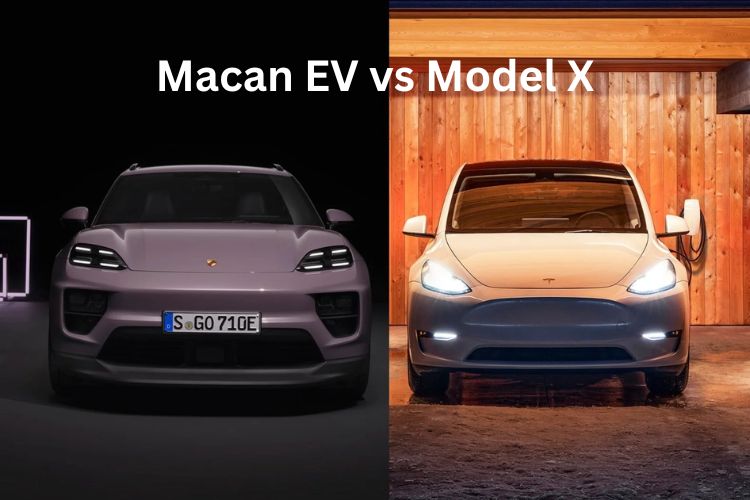
You’re standing in the showroom. Two sets of keys sit on the counter.
One unlocks a Porsche that’ll make your morning commute feel like a track day. The other unlocks a Tesla that’ll swallow your family’s chaos whole and still have room for the dog. And here’s what nobody tells you: this decision isn’t about which one is better. It’s about which one is better for the specific, beautiful mess that is your actual life.
You’ve read the reviews. You’ve watched the YouTube comparisons. Everyone throws specs at you like confetti. But specs don’t answer the question keeping you up at night: “What if I choose wrong?”
Here’s what we’re going to do. We’ll cut through the marketing noise and the fanboy wars. We’ll look at real-world charging speeds, actual cargo needs, and the honest truth about what these machines feel like after the new-car smell fades. By the end, you’ll know exactly which electric SUV deserves your money.
Because 47.2% of luxury EV buyers choose SUVs, but satisfaction doesn’t come from following the crowd. It comes from matching the car to your daily reality.
Keynote: Macan EV vs Model X
The Macan EV vs Model X comparison reveals two philosophies. Porsche delivers sports car handling with 800V charging and German craftsmanship. Tesla offers family versatility with 7-seat capability and Supercharger access. The Macan targets driving enthusiasts. The Model X serves practical families. Build quality favors Porsche decisively. Charging infrastructure currently favors Tesla but converges with NACS adoption. Neither is universally better. Your lifestyle determines the winner. Test drive both vehicles on your actual routes. Choose the one matching your daily reality.
What You’re Really Deciding: A Driver’s Car vs. A Life Solution
This isn’t Porsche versus Tesla. It’s philosophy versus practicality. And pretending otherwise wastes everyone’s time.
The Porsche Promise: Feel Over Function
The Macan EV isn’t just an electric SUV with a Porsche badge slapped on it. It’s 75 years of sports car DNA translated into electrons and torque.
You’re buying the act of driving here. Not just getting from point A to B. The Premium Platform Electric (PPE) architecture sits lower, handles tighter, and talks to you through the steering wheel in ways most EVs simply don’t. Every component exists to make you feel connected to the road.
This is the car you take the long way home in. On purpose.
The Tesla Reality: Space, Network, Simplicity
The Model X solves problems you didn’t know you had until you needed them solved.
Those Falcon Wing doors? They’re not just party tricks. They let you load kids in tight parking spots. That third-row seating? It turns “sorry, can’t fit everyone” into “pile in.” And the Supercharger network remains the ace that no competitor can match. You pull up, plug in, and it just works.
The Tesla is brilliant at making you not think about being electric. It handles the complexity so you don’t have to.
The Truth Most Guides Skip
One car rewards you for caring about the journey. The other rewards you for not having to think about it.
Your answer lives in how you actually spend your days. Not what you dream about on weekends.
Do you want a driver’s car that happens to be electric, or an electric car that does everything?
The Space Reality: Will Your Life Actually Fit?
Let’s get brutally honest about seats, stuff, and whether your family will hate you.
Seating Truth
The Model X offers legitimate 6-7 seat configurations. That third row? It fits actual humans, not just theoretical children. The Macan EV maxes out at five seats, and rear legroom is tighter than you’d expect at this price point.
Translation: if you need that third row even twice a year, this decision just got easy. The Porsche can’t do it. Period.
Cargo Capacity
Here’s where size class matters. The Model X delivers a massive 91.6 cubic feet of cargo space with seats folded. It swallows weekend trips, Costco runs, and that impulse IKEA purchase without breaking a sweat.
The Macan EV offers around 47.6 cubic feet maximum. That’s roughly half. The generous 3.0 cubic foot frunk adds flexibility for groceries or charging cables, but you’re still working with compact crossover space.
Real talk: the Porsche works beautifully for couples or small families. The Model X is the family hauler king.
| Need | Macan EV | Model X | Winner |
|---|---|---|---|
| Seats | 5 | 6-7 | Model X |
| Max Cargo | ~48 cu ft | 91.6 cu ft | Model X |
| Towing | 4,409-5,512 lbs | 5,000 lbs | Tie |
| Tight Parking | Standard doors | Falcon wings (careful) | Macan EV |
The Towing Equation
Both handle towing duty admirably. The Macan ranges from 4,409 pounds in base trim to 5,512 pounds in AWD models. The Model X sits at a solid 5,000 pounds across the board.
If you’re towing regularly, Tesla’s consistency matters. But honestly? If a trailer hitch is your top priority, you should probably be looking at the Rivian R1S instead.
Range and Charging: The Anxiety You Can’t Ignore
Numbers on paper lie. Here’s what actually happens when you need electrons.
The Real Range Story
On paper, the Model X edges ahead with EPA ratings up to 335 miles for the dual-motor version and 314 for the Plaid. The Macan EV ranges from 288 miles for the Turbo to 315 miles for the base RWD model.
But here’s the thing about Porsche: they’re conservative. Real-world testing of the base Macan 4 hit 351.7 miles at highway speeds. That’s 43 miles beyond EPA estimates. Tesla’s numbers, while impressive, tend to be more optimistic and highly sensitive to driving style and temperature.
Bottom line: both handle weekend trips without drama. The Model X edges paper stats, but the Macan surprises when you actually drive it.
Real-world test: Edmunds nailed 351.7 miles in the Macan 4, beating EPA by 43 miles
Charging Speed vs. Network Density
This is where things get interesting. The Macan EV’s 800-volt PPE architecture is a technological marvel. It hits peak DC fast charging at 270 kW, pulling 10-80% state of charge in roughly 21 minutes. It’ll even handle older 400V chargers at a respectable 135 kW.
The Model X charges at 250 kW on Superchargers. That’s 10-80% in around 30 minutes. Slightly slower at peak, but we need to talk about where those chargers actually are.
Tesla’s Supercharger network is the espresso shop on every corner. Reliable. Everywhere. Zero guesswork. The CCS network that Porsche uses? It’s improving fast, but it still requires more planning and occasional app-juggling frustration.
The Road Trip Truth
Tesla built its charging network when everyone else was talking about it. That matters. The Superchargers integrate seamlessly with the car’s navigation. You pull up, plug in, and the payment happens automatically. No apps. No fumbling.
Porsche owners get access to Electrify America and other CCS networks, which work well in urban areas. Road trips demand more attention to route planning. The good news? Cross-compatibility is emerging. Porsche is adopting the North American Charging Standard (NACS), which means access to 23,500 Tesla Superchargers is coming. Free adapters for 2025-2026 model years. $185 for 2024 models.
Your routes decide the winner. Urban charging favors neither. Road trips currently tilt toward Tesla’s ecosystem, but that gap is closing fast.
Think of it this way: the Macan is a faster espresso machine. The Model X is the coffee shop on every corner.
The Drive: Where Heart Battles Logic
Stop reading specs for a second. This is about the 30 seconds after you hit the accelerator and what that does to your soul.
Porsche’s Masterclass in Connection
The Macan EV sits low. Really low. That PPE platform drops the center of gravity, and you feel it immediately. The standard air suspension with Porsche Active Suspension Management (PASM) transforms based on your mood. Comfort mode for Monday traffic. Sport mode for Saturday morning back roads.
The steering actually talks to you. It has weight. Feedback. A conversation happening through your hands. Optional rear-axle steering makes it dance through corners like something half its size.
You’ll take the long way home. You’ll mean it.
“The Macan EV can’t be described as ‘just another electric SUV.’ It feels special.”
Tesla’s Brutal Efficiency
The Model X delivers effortless, relentless thrust. Especially in Plaid trim, which hits 60 mph in a neck-snapping 2.5 seconds with 1,020 horsepower on tap. It’s shockingly fast for something this large.
But here’s the difference: it feels fast more than it feels fun. The steering is light, almost video-game-like. You’ll appreciate the brutal acceleration in traffic. You’ll miss the connection on back roads.
The Model X is brilliant at being quick. The Macan is brilliant at being engaging.
The Performance Numbers (Since You’re Wondering)
The Macan Turbo hits 60 mph in 3.1 seconds with 630 horsepower. That’s absurdly quick. But it feels faster than the numbers suggest because of chassis balance and how the power builds through corners.
The Model X Plaid does 0-60 in 2.5 seconds. It’s objectively quicker. But speed and engagement are different things entirely.
Both are ludicrously fast by any reasonable standard. Only one makes you feel like a driver instead of a passenger with a steering wheel.
| Attribute | Macan EV | Model X |
|---|---|---|
| 0-60 (fastest) | 3.1s (Turbo) | 2.5s (Plaid) |
| Steering Feel | Weighted, communicative | Light, video-game-like |
| Corner Confidence | Sports car roots show | Capable but detached |
| Daily Smile Factor | High for enthusiasts | High for tech lovers |
The Money Truth: What This Actually Costs You
Sticker price is just the entry fee. Here’s the real financial picture, and it’s more complicated than you think.
The Starting Line
The Model X starts around $89,990 for the dual-motor version after Tesla’s June 13, 2025 price increase. The Plaid sits at roughly $104,990. But here’s the catch: Tesla recently bundled features into a mandatory Luxe Package adding about $10,000, which includes Full Self-Driving (Supervised) and some Supercharging credits.
The Macan EV starts in the high $70,000s for the base RWD model. The Turbo breaks six figures at $105,300. But that’s before you touch Porsche’s famously extensive options list.
And oh, that options list. Premium Package? $4,050. Want the good Burmester audio? More money. Fancy interior stitching? More money. A well-equipped Macan 4S easily hits $95,000 to $125,000 once you’ve checked the boxes you actually want.
Both vehicles can qualify for up to $7,500 in federal tax credits, depending on your income. The Model X recently exceeded the MSRP cap for SUV tax credits at $80,000, so verify eligibility before you buy.
The Depreciation Disaster Nobody Warns You About
Electric vehicles are depreciating faster than traditional cars right now. Tesla values swing wildly based on Elon’s latest headline. Porsche Taycans tanked 40-50% after two years, a brutal reality check for early adopters.
But here’s what the data shows: the Macan EV is projected to retain 5.4 percentage points more value than the Model X over five years. Neither is a “safe investment,” but the Porsche badge historically holds better.
Why? Build quality. Brand prestige. And the simple fact that luxury buyers value consistency.
The Ownership Reality
Porsche service means boutique pricing. You’re paying premium rates. But you get excellent dealer experiences, actual loaner vehicles, and technicians who know these cars intimately. J.D. Power rates Porsche highly for service satisfaction.
Tesla service? Pray you don’t need it. The horror stories are real and consistent. Owner satisfaction averages around 3 out of 5 stars. Mobile service is hit-or-miss. Parts delays are common. And when something goes wrong, getting it fixed can feel like pulling teeth.
Insurance costs are similar for both. They’re expensive to insure because they’re expensive to repair. Charging costs vary by region, but Superchargers sometimes cost more per kWh than home charging or Electrify America.
| Cost Factor | Macan EV | Model X |
|---|---|---|
| Purchase Price | High-$70Ks+ | ~$89,990+ |
| Projected Depreciation | Better retention | Steeper drop |
| Service Experience | Premium but pricey | Inconsistent, frustrating |
| Charging Network | Improving CCS + coming NACS | Gold standard Superchargers |
Making the Choice: Your Framework, Not a Formula
Forget what everyone else says. Here’s how you actually decide which electric SUV deserves your garage spot.
Choose the Macan EV If
Driving is an event for you, not a chore. You take the scenic route because corners make you happy. You value interior quality that justifies the badge premium, where every surface feels intentional and built to last.
You’re fine with five seats and tighter cargo because better dynamics matter more. You want a car that feels special every single day, not just on test drive day.
Service quality and dealer experience matter to you. You’d rather pay more upfront for fewer headaches later.
Choose the Model X If
You need 6-7 seats. Period. No negotiation. That third row is non-negotiable because grandparents visit or carpool duty calls.
The Supercharger network is critical for your travel patterns. You road trip frequently and refuse to deal with charging anxiety. Software updates and tech integration trump leather stitching on your priority list.
Maximum cargo space solves real problems in your life. You’re comfortable with Tesla’s service reality, or you’re willing to gamble that your car will be one of the good ones.
The Test You Must Take
Stop reading right now. Open your calendar.
Book back-to-back test drives this weekend. Same route. Same day. Drive your actual weekly routes: the school run, your commute, that Saturday errand circuit. Sit in the back seat. Load your real stuff. Try the charging experience if possible.
Your body will tell you the truth that spreadsheets can’t. One will feel right. The other will feel like a compromise.
If you can swing it, rent both on Turo for a weekend. Not a 15-minute dealer loop. A real weekend with real life. That’s the only test that matters.
Your action step: book those test drives this weekend. Same route. Same day. Let your gut decide.
Conclusion: Your New Reality With the Right Electric SUV
You started confused, drowning in specs and opinions. Now you know the real question isn’t “which is better?” It’s “which is better for me?”
We mapped the space reality, the charging truth, the driving feel, and the money picture. One delivers Porsche soul in electric form, with handling that makes your commute an event and build quality that’ll still feel solid in year five. The other solves family life with tech efficiency, hauling seven humans and their chaos while making charging anxiety disappear. Both are excellent at what they do. Only one matches your actual life.
Stop reading. Open your calendar. Book those test drives. Plot your real weekly miles on a map. Then drive both cars on that exact route.
Here’s the truth that connects back to that showroom moment: the right choice is the one you’ll still be excited to drive in year three, when the novelty fades and only the daily reality remains. Choose the one that makes your Tuesdays better, not just your Saturdays special.
Tesla Model X vs Macan EV (FAQs)
Which is faster to charge, Macan EV or Model X?
Yes, the Macan EV charges faster at peak. Its 800V architecture hits 270 kW versus the Model X’s 250 kW. That’s 10-80% in about 21 minutes for the Porsche versus 30 minutes for the Tesla. But charging speed on paper differs from real-world convenience.
The Model X plugs into 23,500 Superchargers that just work. The Macan uses CCS networks that require more planning but are improving fast. Peak speed matters less if you can’t find a fast charger.
How does Macan EV cargo space compare to Model X?
No, they’re not close. The Model X offers 91.6 cubic feet of maximum cargo space. The Macan EV delivers around 47.6 cubic feet. That’s roughly half. The Porsche works great for couples or families of four with normal stuff. The Tesla swallows road trip chaos, IKEA runs, and sports equipment without thinking.
If maximum cargo defines your needs, the Model X wins decisively. If you prioritize driving dynamics over storage, the Macan’s smaller size becomes an advantage.
Can the Porsche Macan EV access Tesla Superchargers?
Yes, but not immediately with every model. Porsche is adopting the North American Charging Standard (NACS). That gives access to about 23,500 Tesla Superchargers across North America. Adapters are free for 2025-2026 model years and $185 for 2024 models.
The rollout started in September 2025. Check with your dealer for exact timing and compatibility for your specific trim. This levels the charging network playing field dramatically.
Is the Model X bigger than the Porsche Macan Electric?
Yes, significantly. The Model X measures 199.1 inches long. It’s a mid-size luxury SUV. The Macan EV is 188.3 inches long. It’s a compact luxury crossover. That’s nearly 11 inches of difference. This size gap explains everything: the Model X’s 7-seat capability, massive cargo space, and less agile handling.
The Macan’s tighter dimensions make city parking easier and cornering sharper. They’re not really direct competitors. The Macan actually competes more naturally with the Model Y.
Which has better build quality, Porsche or Tesla?
Porsche, without question. J.D. Power gives the Macan EV a reliability score of 84 out of 100. The Model X scores 71. Reviews consistently praise Porsche’s solid construction, premium materials, and tight panel gaps.
Tesla’s build quality issues are well-documented: uneven panels, interior rattles, and materials that don’t match the price tag. This gap matters if you value craftsmanship and long-term durability.
If tech and performance matter more than fit-and-finish, Tesla’s weaknesses might not bother you.