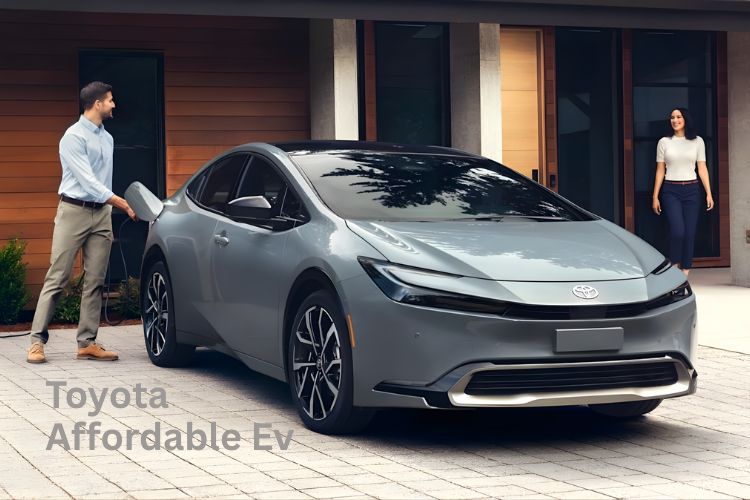
You’ve trusted Toyota for years. Maybe decades. That Camry with 200,000 miles that refused to die. The Corolla that took you through college and your first job. The RAV4 that hauled your growing family without a single breakdown. But now you’re staring at the EV revolution, watching neighbors plug in their Teslas and Hyundais, and you’re asking the question that keeps you up at night: “Where’s my electric Toyota?”
The one that feels affordable. The one that won’t leave you stranded. The one that just… works.
Here’s the gut punch: Toyota can build an affordable EV. They’re selling a $15,000 electric SUV in China that crashed ordering servers with 10,000 orders in 60 minutes. But you can’t have it. And that gap between what’s possible and what’s available in your driveway? That’s where the frustration lives.
Here’s how we’ll tackle this together: We’ll look at what Toyota is actually offering today (and what it costs for real), unpack whether their “slow and steady” approach is wise or just slow, break down the upcoming models that might finally deliver on the promise, and give you a clear framework for deciding if you should buy now, wait it out, or consider the hybrid escape hatch. No hype. Just the truth about Toyota’s affordable EV situation.
Keynote: Toyota Affordable EV
The 2026 Toyota bZ finally delivers a credible affordable EV starting at $34,900 with up to 314-mile range and native Tesla Supercharger access. While it doesn’t qualify for the $7,500 purchase credit due to Japanese assembly, aggressive lease incentives ($6,000 cash) and 0% APR financing options make it competitive against domestic rivals. Toyota’s plug-in hybrids, particularly the Prius Prime at $32,000 with 44-mile electric range, may represent the more practical “affordable electric” path for buyers unwilling to commit to full BEV infrastructure limitations.
The Waiting Game Is Costing You More Than You Think
That sinking feeling every time you pass a charging station
You know the moment. You’re cruising past that sleek Tesla Supercharger station off the highway, watching someone plug in their Model Y while you’re calculating how many miles until your next gas stop. There’s this weird cocktail of emotions: guilt about the planet, frustration with Toyota for being late to the party, and that nagging fear that maybe you’re missing out on something genuinely better.
Here’s what the data won’t tell you but every EV owner will: 58% of potential buyers like you share intense range anxiety before purchasing. Yet less than 5% of actual EV owners report experiencing range problems in real-world use. That gap between fear and reality? It’s costing you money every single day you delay.
The internal debate is exhausting. You want to do the right thing for the environment. You want those fuel savings everyone keeps talking about. But you also need a car that won’t betray you on a road trip to see family or leave you hunting for a working charger at 11 PM in the rain.
I’m not here to sell you on EVs being perfect. They’re not. But we’re going to address both the emotional weight you’re carrying and the actual financial math that matters to your monthly budget.
What “affordable” actually means in 2026
Let’s get brutally honest about the word “affordable” because Toyota’s marketing team and your bank account define it very differently.
The average new EV in America costs around $56,000. That’s not affordable for most families, no matter how you slice it. Toyota’s targeting the mid-$30,000s with their 2026 bZ lineup, which sounds better until you remember that’s still a significant chunk of money. “Affordable” doesn’t live in a press release. It lives in your ability to make the monthly payment without choosing between the car and everything else.
Federal EV tax credits can drop your effective price by $7,500, which genuinely helps. But here’s the catch nobody explains clearly: eligibility gets tricky based on where the vehicle is assembled. Toyota’s current EVs are built in Japan, which means they don’t qualify for the consumer purchase credit. That’s a $7,500 disadvantage right out of the gate against domestically-built rivals like the Chevrolet Equinox EV.
The fuel savings are real, though. You’ll pocket roughly $1,500 annually compared to driving a gas-powered equivalent, assuming you’re paying around 15 cents per kilowatt-hour for home charging. Over five years, that’s $7,500, which effectively cancels out that missing tax credit if you can wait it out.
But here’s the hidden expense that reshapes your entire calculation: EV insurance runs 15-25% higher than comparable gas vehicles. The insurance industry sees those expensive battery packs and charges you for the theoretical replacement risk, even though modern battery warranties are excellent. That $75-$125 extra per month changes what “affordable” actually means in your driveway.
The China envy problem poisoning your research
Every time you research “affordable Toyota EV,” you stumble across articles about the bZ3X selling in China for under $15,000. And every single time, it feels like a slap in the face.
That vehicle represents everything you wish Toyota would build for you. It’s practical. It’s genuinely affordable. It proves Toyota knows exactly how to deliver electric transportation that doesn’t require a second mortgage. But you can’t buy it. You can’t even import it. Current tariffs on Chinese-built EVs exceed 100%, making the economics impossible.
The bZ3X comes from a GAC-Toyota joint venture, which means it’s engineered specifically for China’s market dynamics, regulatory environment, and production costs. Those advantages, manufacturing scale, lower labor costs, government subsidies, simply don’t translate to U.S. production reality.
This gap fuels the core frustration consuming your research: Toyota knows how to do affordable electric vehicles. They’re just not doing it for you. And that feeling of being left behind by a brand you trusted? That’s the loyalty tax you keep paying.
What Toyota Is Actually Selling You Today
Meet the 2026 bZ, the EV Toyota finally priced to compete
After years of disappointing half-measures, Toyota finally delivered something worth your attention. The 2026 bZ (they dropped the “4X” from the name to distance it from the recalled disaster) starts at $34,900 and comes with 314-mile range options and native Tesla Supercharger access. It’s not the $25,000 miracle you were hoping for, but it’s finally competitive.
Here’s the breakdown:
| Trim | Starting Price | Range | Drive Type | Key Feature |
|---|---|---|---|---|
| 2026 bZ XLE FWD | $34,900 | 236 miles | FWD | Entry point, basic features |
| 2026 bZ XLE FWD Plus | $37,900 | 314 miles | FWD | Long-distance capable, best value |
| 2026 bZ XLE AWD | $40,000+ | 288 miles | AWD | All-weather confidence, 338 hp |
| 2026 bZ Limited FWD | $43,300 | 299 miles | FWD | Premium interior and tech |
| 2026 bZ Limited AWD | $45,300 | 278 miles | AWD | Top-tier performance and comfort |
The 2026 model represents a massive price drop. Toyota slashed over $6,000 from 2025 pricing, finally acknowledging that their premium positioning wasn’t working in a market where Chevy’s Equinox EV starts around $30,000.
The extended range version at 314 miles is the real star. It crosses that critical 300-mile psychological threshold that research shows most buyers need before they’ll even consider an EV purchase. You’re not just buying specs on a page. You’re buying the mental freedom to stop calculating range on every trip.
That native NACS port is massive. It means you can pull up to any Tesla Supercharger, the most reliable fast-charging network in the country, and plug in without adapters, apps, or anxiety. Toyota finally solved the infrastructure problem that plagued every other EV brand.
But let me be honest: competitors like the Chevy Equinox EV offer similar range starting around $30,000 before incentives. Toyota’s not the cheapest option. They’re betting you’ll pay a modest premium for their brand reputation and dealer network.
The bZ4X disaster you need to understand before trusting again
We need to talk about the 2022-2025 bZ4X because pretending it didn’t happen would be dishonest, and you deserve better.
Wheels literally fell off. I’m not being dramatic. Toyota issued a global recall weeks after launch because the hub bolts could loosen and cause wheels to detach while driving. That’s not a software glitch or a minor inconvenience. That’s the kind of catastrophic quality failure Toyota built their entire reputation on never having.
The real-world highway range barely hit 160 miles in some tests, despite Toyota’s 252-mile EPA estimate. Imagine planning a 200-mile trip based on the official rating, only to watch your battery drain twice as fast as promised while you’re hunting for a charger in unfamiliar territory. That’s not range anxiety. That’s range betrayal.
Reviewers didn’t hold back. Words like “mediocre,” “ho-hum,” and “disappointing” appeared in nearly every major publication. These are words you never associate with Toyota reliability. The steering wheel partially blocked the digital instrument cluster, an ergonomic failure so obvious it’s baffling it made it to production.
Toyota admitted defeat by slashing $6,000 off the price just to move inventory sitting on dealer lots. That’s not a strategic sale. That’s a clearance event for a product the market rejected.
Why am I telling you this? Because the 2026 bZ is essentially Toyota saying “we heard you, we messed up, and here’s the do-over.” But trust once broken takes time to rebuild, and you’re right to approach this with healthy skepticism.
How the current bZ feels in your actual life
Let me ground this in reality, not marketing brochures. The average American commute is 40 miles round-trip. Even the base 236-mile bZ handles that for five full days on a single charge. For routine daily driving, range becomes a non-issue once you internalize that you’re starting every morning with a “full tank” from home charging overnight.
Home charging transforms the entire experience. You’re not detoured to gas stations anymore. You’re not standing in the cold pumping fuel. You plug in when you park, and eight hours later you wake up to maximum range. It’s the convenience shift that current EV owners rave about but prospective buyers don’t quite believe until they live it.
The cabin feels familiar in ways that matter for daily sanity. Physical buttons for climate control instead of being forced to dig through touchscreen menus while driving. Door handles that work like door handles. Toyota resisted the urge to make everything “futuristic” at the expense of usability.
Winter reduces range 20-40% in extreme cold. This is the honest reality that salespeople gloss over and online forums obsess about. If you live where temperatures regularly drop below 20°F, that 314-mile summer range becomes 220-mile winter range. It’s still usable for most people, but it’s the trade-off that matters for your specific climate.
The Rocky Road Behind and the Trust You’re Rebuilding
Toyota’s market position reveals the painful truth
Toyota sold 9.4 million vehicles globally in 2024. That’s a staggering number that confirms their manufacturing dominance. But only 95,000 of those were battery electric vehicles. That’s barely 1% of their total sales, a figure that should concern anyone betting on Toyota’s EV commitment.
Volkswagen moved 394,000 EVs in the same period. They’re four times deeper into the electric transition than Toyota, and they started from a worse position with the diesel emissions scandal destroying their reputation. This isn’t a “tortoise versus hare” story where the steady approach wins eventually. This is Toyota falling so far behind that catching up requires a sprint, not a walk.
The “slow and steady” narrative Toyota keeps pushing only works if they actually cross the finish line. Right now, they’re watching Hyundai, Kia, Volkswagen, and even Ford capture market share and customer loyalty that Toyota used to own by default.
Here’s what that 1% means for you: Toyota’s EV expertise is thin. Their dealer network isn’t fluent in EV maintenance yet. The economies of scale that make their gas vehicles affordable don’t exist for their electric lineup. You’re not buying from a category leader. You’re buying from a company playing catch-up.
Why the reliability reputation doesn’t automatically transfer to EVs
Consumer Reports data shows EVs have higher initial problem rates than gas vehicles across nearly all brands. That’s not a Toyota-specific issue. That’s the reality of newer technology with less field experience and more complex software integration.
Battery management systems, fast-charging optimization, and over-the-air software updates represent entirely new engineering challenges. Toyota built their reputation on mechanical reliability, perfecting internal combustion engines over decades. EVs require different muscles: thermal management, software engineering, battery chemistry expertise.
The dealer network advantage everyone assumes Toyota has? It matters less when your local mechanic doesn’t understand EV-specific diagnostics or repair procedures. Service centers are still learning. Specialized parts aren’t stocked locally. The infrastructure that made Toyota ownership bulletproof for gas vehicles is still being built for their electric lineup.
Toyota’s hybrid expertise helps. The Prius has been refining electric motor integration and battery management for 25 years. But building a plug-in hybrid with 40 miles of electric range is genuinely different from engineering a 314-mile BEV with fast-charging thermal management. Related skills, different applications.
What actually improved in the 2026 model
Range increased from a maximum of 252 miles to 314 miles in the extended-range configuration. That’s not just a numbers game. That’s the difference between legitimate road trip capability and constant range calculation anxiety. It puts Toyota in the same conversation as the Hyundai Ioniq 5 and Kia EV6, finally.
The interior got a complete redesign addressing early criticism about cheap-feeling materials and awkward ergonomics. The instrument cluster is now fully visible. The materials feel appropriate for a $40,000 vehicle instead of a $25,000 rental car. Small details, massive impact on daily satisfaction.
Native Tesla Supercharger compatibility solves the infrastructure problem without adapters, apps, or uncertainty. You drive up to 20,000+ charging stations across North America and plug in. That’s the network advantage Tesla owners have enjoyed for years, now available to Toyota drivers.
Faster charging cut the 10-80% charge time from over 40 minutes to around 30 minutes under ideal conditions. It’s still trailing Hyundai’s class-leading 18-minute performance, but it’s competitive enough that it won’t be the reason you choose a different vehicle. For a cross-country road trip, that 30-minute charge break every 250 miles aligns reasonably well with human bathroom and food needs anyway.
Breaking Down the True Cost of “Affordable”
The monthly payment reality versus the marketing promise
Let’s stop talking about sticker prices and start talking about what hits your bank account every month. Because “affordable” is a monthly budget reality, not a MSRP fantasy.
| Scenario | Purchase Price | Federal Credit | Monthly Payment (60mo) | 5-Year Fuel Savings | Net Cost vs. Gas RAV4 |
|---|---|---|---|---|---|
| Base bZ (financed at 5% APR) | $34,900 | $0 (ineligible) | ~$660 | -$7,500 | Break-even Year 4 |
| Extended Range bZ (0% APR deal) | $37,900 | $0 (ineligible) | ~$632 | -$7,500 | Break-even Year 3.5 |
| Gas RAV4 (comparison baseline) | $32,000 | $0 | ~$565 (5% APR) | $0 | Baseline |
| bZ Leased (with $6,000 cash) | $37,900 | $6,000 lease incentive | ~$425 | -$7,500 | Wins immediately |
Home charging installation runs $500-$2,000 depending on whether your electrical panel needs upgrading and local permit requirements. Most homes built after 2000 handle a 240V charger installation for under $800. Older homes with 100-amp service might need a $1,500-$2,000 panel upgrade first.
Your monthly electricity bill increases $30-$60 for typical driving patterns. If you’re commuting 1,000 miles monthly, you’re adding about 300 kWh to your home consumption. At 15 cents per kWh, that’s $45 monthly. Still dramatically cheaper than the $150-$200 you’d spend on gasoline for the same miles.
EVs eliminate oil changes, transmission services, and reduce brake wear by 50-70% thanks to regenerative braking doing most of the stopping. You’re saving roughly $800 annually on maintenance. Over five years, that’s $4,000 you’re not handing to quick-lube shops and repair chains.
Insurance premiums run 15-25% higher for EVs. The industry sees those expensive battery packs and panics about replacement costs, even though the 10-year/90% capacity warranty means you’ll likely never pay for battery replacement. Budget an extra $75-$125 monthly compared to insuring an equivalent gas vehicle.
The incentive maze you need to navigate smart
The federal $7,500 EV tax credit sounds straightforward until you actually try to claim it. Then it becomes a masterclass in bureaucratic complexity that costs real money if you get it wrong.
Toyota’s current BEVs are assembled in Japan, which disqualifies them from the consumer purchase tax credit. That’s a hard stop. You cannot claim $7,500 on your taxes if you buy a 2026 bZ outright. The assembly location requirement is non-negotiable.
Leasing unlocks a loophole. When you lease, Toyota Financial Services technically “purchases” the vehicle and can claim the commercial clean vehicle credit. TFS then passes that savings to you as lease cash. That’s why you’re seeing $6,000 lease incentives on the 2026 bZ. It’s not generosity. It’s tax credit arbitrage that benefits you.
State incentives vary wildly. California offers an additional $2,000 rebate for qualifying buyers. Colorado provides $5,000. New York gives $2,000. Texas? Absolutely nothing. Your state residency literally changes the vehicle’s affordability by thousands of dollars.
Income limits phase out the federal credit above $150,000 for individuals or $300,000 for joint filers. If you earn $160,000, you get $0, even if the vehicle otherwise qualifies. That’s a surprise disqualification many discover only after they’ve already signed paperwork.
Hidden costs that reshape your “affordable” calculation
Battery degradation averages 2-3% annually in normal use. Your 314-mile range today becomes 280-290 miles after five years of typical driving. That’s still usable for most people, but it’s the slow erosion of capability that you need to factor into long-term ownership planning.
Frequent DC fast charging accelerates degradation. If you’re road-tripping every weekend and fast-charging twice weekly, you’ll see 4-5% annual degradation instead of 2-3%. The convenience of 30-minute charges creates a trade-off with long-term battery health that forces real decisions about usage patterns.
Specialized EV repair shops charge $150-$200 per hour for labor versus $100-$125 at traditional shops. The technician training and diagnostic equipment costs more, and they pass that cost directly to you. Toyota’s dealer network helps contain this somewhat compared to Tesla-only service centers, but it’s still premium pricing.
Cold weather performance drops require mental load and trip planning. Winter road trips mean factoring 30% range reduction, finding heated charging stations, and allowing longer charging times because cold batteries charge slower. It’s manageable, but it’s cognitive overhead that gas vehicles simply don’t impose.
The Competition Eating Toyota’s Lunch While You Wait
The rivals already delivering what Toyota promised
Toyota’s not operating in a vacuum. While they were recalling bZ4X vehicles and redesigning for 2026, competitors were capturing market share and customer loyalty. Here’s what you’re actually shopping against:
| Model | Starting Price | Range | Charge Time (10-80%) | Key Advantage |
|---|---|---|---|---|
| Toyota bZ 2026 | $34,900 | 236-314 mi | 30 min | Brand trust, dealer network |
| Hyundai Ioniq 5 | ~$35,000 | 303 mi | 18 min | Fastest charging, spacious interior |
| Chevy Equinox EV | ~$30,000 | 319 mi | 30 min | Lowest price, $7,500 credit eligible |
| VW ID.4 | ~$32,000 | 275 mi | 35 min | European refinement, better tech |
| Nissan Leaf | $29,990 | 212 mi | 40 min | Cheapest new EV available |
The Hyundai Ioniq 5 won World Car of the Year, North American Utility Vehicle of the Year, and MotorTrend’s SUV of the Year while the bZ4X was being recalled. That timing destroyed Toyota’s credibility with early EV adopters who now associate Hyundai with excellence and Toyota with disappointment.
Chevy’s aggressive $30,000 starting price qualifies for the full $7,500 federal credit because it’s assembled in Kansas. That makes its effective purchase price around $22,500 for eligible buyers. Toyota cannot compete with those economics on a purchase transaction. The math simply doesn’t work.
VW and Hyundai offer more spacious interiors with significantly better infotainment technology. The ID.4’s interface feels a generation ahead of Toyota’s system. The Ioniq 5’s interior space tricks you into thinking it’s a mid-size SUV, not a compact. Toyota feels behind despite their reliability reputation.
The used Tesla Model 3 market looms over this entire segment. Three-year-old Model 3s with 50,000 miles are selling for $25,000-$28,000. For the same money as a new “affordable” EV, you can get proven technology, the Supercharger network, and Tesla’s over-the-air software updates. That’s a tough value proposition to argue against.
Where Toyota still wins despite the competition
Resale value historically runs 10-15% higher for Toyotas versus comparable vehicles. The brand equity you’ve trusted for years translates to stronger resale prices when you eventually sell or trade in. Though honestly, EV depreciation patterns are still forming, and this advantage is less certain than it was for gas vehicles.
Dealer network density means service is 20 minutes away instead of three states over. When you need warranty work or routine service, you’re visiting a familiar local dealership, not coordinating shipping logistics with a direct-to-consumer startup that might not survive another two years.
Brand trust carries emotional weight worth real money when you’re making a $35,000 bet on new technology. You’ve trusted Toyota to start every morning for decades. That psychological comfort in a category full of uncertainty shouldn’t be dismissed as irrational. It’s genuinely valuable for your peace of mind.
The 10-year battery warranty promises 90% capacity retention, exceeding most competitors’ eight-year coverage. That’s two extra years of guaranteed performance, which matters significantly if you’re planning to own this vehicle for a decade like you did with your last Toyota.
The Prius Prime wildcard reshaping your decision
Here’s the option that might solve your entire dilemma: the 2026 Prius Prime. It’s not a full EV, but for many Toyota loyalists, it’s the “electric enough” solution that honors both environmental goals and practical fears.
40 miles of pure electric range covers the vast majority of American daily commutes without requiring any gas. According to Department of Transportation data, 85% of daily trips are under 30 miles. The Prius Prime handles those on battery alone, making it functionally an EV for routine driving.
The gas engine eliminates infrastructure anxiety completely. Road trips? No charging station planning required. Rural areas with sparse charging? Irrelevant. Family emergency requiring a 500-mile drive tonight? Fill up and go. The freedom from range anxiety is worth thousands of dollars in mental peace for many buyers.
Starting around $32,000, the Prius Prime costs less upfront than the bZ while delivering proven hybrid reliability that Toyota has perfected over 25 years. You’re not beta-testing new technology. You’re buying the refined, fifth-generation evolution of the vehicle that defined hybrid transportation.
For someone commuting 30 miles daily, five days weekly, you’ll drive 90% of your annual miles on electricity while maintaining 100% of your flexibility. That’s not a compromise. That’s getting 90% of EV benefits with 0% of EV limitations.
What’s Coming Next and Whether It’s Worth Waiting For
The Urban SUV and Compact Cruiser concepts fueling hope
Toyota finally committed to nine fully electric models for Europe in 2025-2026, signaling that volume production is legitimately starting. This isn’t concept car vaporware anymore. These are confirmed production vehicles with allocated factory capacity.
The Urban SUV concept targets Yaris Cross size, aiming directly at the “electric Corolla” slot you’ve been begging Toyota to fill for years. Small, practical, genuinely affordable in the $28,000-$32,000 range. This is the vehicle that could finally deliver on the accessibility promise.
The Compact Cruiser EV went viral on social media with its boxy, rugged mini Land Cruiser aesthetic. It taps into emotional desire instead of generic blob styling that makes every EV look identical. People want this vehicle in a way they don’t want another anonymous crossover.
The Czech Republic manufacturing plant will build Europe’s first locally-produced Toyota EV with 220,000 annual capacity starting in 2026. Local production could eventually enable more competitive pricing by avoiding import tariffs and shipping costs.
But here’s the honest timeline: Europe gets these vehicles first. U.S. availability likely follows 12-18 months later. If you’re waiting for the Urban SUV, you’re probably looking at late 2026 or early 2027 before you can actually buy one from an American dealer.
The solid-state battery promise and what to actually believe
Toyota targets their first solid-state battery vehicle by 2027-2028, claiming revolutionary 40-year lifespan, 750-mile range, and 10-minute full charges. Those specs sound like science fiction because, frankly, they mostly are at this point.
Early solid-state versions will almost certainly debut in luxury Lexus models priced above $80,000. The technology costs too much initially for mass-market affordability. You’ll see it filter down to Toyota-branded vehicles 2-3 years after the Lexus launch, probably around 2030.
Current lithium-ion batteries in the 2026 bZ already offer completely practical range and strong warranties that cover normal ownership periods. They’re “good enough” for the overwhelming majority of buyers’ actual needs, not theoretical road trip extremes.
Waiting for perfect future technology means burning gas money and maintenance costs while the clock ticks. If solid-state batteries are your reason for delaying, you’re potentially waiting five years while spending $10,000+ on fuel and maintenance that an EV would eliminate. The math rarely favors waiting unless your current vehicle is paid off and running flawlessly.
The sub-$30,000 target and whether it’s real or fantasy
European regulations are pushing manufacturers toward small EVs priced between €15,000-€20,000 (roughly $16,000-$22,000 USD), creating external pressure Toyota must eventually answer. The market dynamics there differ significantly from the U.S., with smaller vehicles, denser cities, and higher fuel costs making compact EVs more viable.
Local European production could trim import costs over time, potentially enabling lower pricing there first. But those European small cars often don’t meet U.S. crash test standards or consumer size expectations without significant re-engineering.
U.S. manufacturing costs and regulatory requirements make true sub-$30,000 EVs unlikely without major federal or state incentive stacking. The Chevy Equinox EV achieves it only with the $7,500 credit. Once that credit expires in September 2025, even the “cheap” EVs will struggle to stay below $30,000.
The honest truth you need to accept: “Affordable” for Toyota will likely mean mid-$30,000s for the next several years, not the magical $25,000 many people are hoping for. The Urban SUV might hit $32,000, but anything lower requires cost breakthroughs or subsidies that aren’t currently on the horizon.
Your Decision Framework: Buy, Wait, or Pivot
The simple rule based on your current situation
If your current vehicle is over 10 years old or costing you $200+ monthly in repairs, moving to an EV now makes immediate financial sense. You’re bleeding money on a depreciating asset. The fuel and maintenance savings from an EV start paying back immediately.
If you drive under 40 miles daily with reliable home charging access, even the base 236-mile bZ works perfectly for your actual usage. You’ll charge twice weekly and never think about range. The anxiety exists in your imagination, not your driveway.
If you take frequent road trips over 300 miles or live in extreme cold climates where winter temperatures regularly hit 0°F, waiting for better range or seriously considering plug-in hybrids is the wiser choice. Don’t force an EV into a lifestyle that will make you miserable.
If local charging infrastructure is sparse or unreliable, delaying until networks improve protects you from daily frustration. Having one working charger within 50 miles isn’t acceptable. You need redundancy and reliability.
When the Toyota hybrid beats the affordable EV for you
Sometimes the right answer isn’t the question you’re asking. Sometimes it’s the Prius Prime or RAV4 Prime.
| Your Situation | Best Choice | Why |
|---|---|---|
| Apartment living, limited home charging | Prius Prime or RAV4 Prime | Zero dependency on sparse public charging |
| Regular 400+ mile road trips | RAV4 Prime | Gas backup eliminates range planning stress |
| Budget maxes at $30k out the door | Used Prius Prime or wait | New bZ exceeds budget even with incentives |
| Daily commute 20-30 miles, weekend flexibility | Prius Prime | 44-mile EV range covers daily, gas for weekends |
| Want lowest total 5-year cost | Full EV (bZ or Equinox) | Fuel and maintenance savings compound faster |
| Rural area, nearest charger 40+ miles away | RAV4 Prime | Infrastructure anxiety completely eliminated |
The RAV4 Prime offers 52 miles of electric range and 324 horsepower, making it one of the fastest vehicles Toyota sells. You get performance, electric daily driving, and complete flexibility for around $45,000. That’s genuinely competitive with the high-trim bZ AWD.
Red flags that mean waiting is smarter than leaping
Toyota has clearly announced new smaller EV models (Urban SUV, Compact Cruiser) for 2026-2027 in your region. If those vehicles better match your size preferences and budget, patience genuinely pays off. Buying the wrong vehicle now means living with regret for years.
Your local utility charges over 20 cents per kilowatt-hour for electricity. At that rate, your fuel savings shrink significantly. California and Hawaii buyers face this reality. The economics tilt less favorably toward EVs when electricity costs nearly match gasoline on a per-mile basis.
The 2026 bZ still feels too expensive even after incentives, and your current vehicle is running safely and reliably. If you’re forcing a purchase out of environmental guilt rather than practical need, delaying makes sense. Don’t rush a $40,000 decision.
You’re genuinely hoping for solid-state battery technology or major capability leaps, and you don’t mind burning gas and maintenance costs another two years while waiting. Just be honest about whether you’re making a rational timeline bet or indefinitely delaying with perfect-future fantasies.
Your test-drive checklist that cuts through the sales pitch
Bring your typical passengers and cargo to the dealership. Test real-world fit, not empty-car fantasies. Can your family comfortably sit in back for a 3-hour road trip? Does your weekly Costco haul fit in the cargo area with the seats up?
Plug the vehicle in at the dealership and watch the charging information screens. Are they intuitive or confusing? Can you easily see the charging rate, time remaining, and battery percentage? User interface frustrations compound over years of ownership.
Ask directly about battery warranty coverage. What scenarios void it? Does frequent DC fast charging impact coverage? What’s the actual replacement process if you need warranty service at year seven? Get specifics, not brochure promises.
Request details on local charging installation partnerships and any dealer-facilitated rebates. Some dealers work with preferred electricians and can bundle installation discounts. Others leave you completely on your own. Know what support exists before you commit.
Drive both the bZ and at least one direct competitor back-to-back the same day. Your brain needs immediate comparison to feel the honest differences in acceleration, ride quality, cabin noise, and overall refinement. Memory fades. Side-by-side comparison reveals truth.
Conclusion: Making Peace With Toyota’s Timing
You’ve earned the right to feel frustrated. Toyota built their empire on giving you reliable, affordable transportation that just worked for decades. And here you are, watching them stumble into the EV future while Hyundai, Chevy, and Volkswagen race ahead capturing the customers who used to be Toyota loyalists by default. That $15,000 Chinese bZ3X taunts you every time you research. The rocky bZ4X launch with its wheel-falling-off recall shook your fundamental trust. The prices still sting even after the massive cuts for 2026.
But here’s the reality you’re standing in right now: The 2026 bZ starts at $34,900, offers up to 314 miles of legitimate range with native Tesla Supercharger access, and comes backed by Toyota’s dealer network that’s actually 20 minutes from your house. It’s not the “electric Corolla” priced at $25,000 you dreamed about. It’s not the revolutionary vehicle that makes every gas car obsolete overnight. But it’s finally a legitimate, competitive option that won’t bankrupt you or strand you on the highway.
Your first step today: Write down your maximum comfortable monthly payment and your three biggest fears about going electric on actual paper. Then visit your local Toyota dealer this weekend and ask specifically about remaining 2025 bZ4X inventory discounts. Dealers are sitting on unsold units with $10,000+ off MSRP just to clear space for incoming 2026 models. Test drive it with your family and your real-world cargo.
Feel whether that range actually works for your genuine daily commute, not theoretical road trips. Compare it honestly to your current monthly gas expenses and maintenance costs projected over five years. Then decide if Toyota’s slow-and-steady approach finally delivered something good enough for your life, or if you’re genuinely better off waiting another year for the Urban SUV or choosing the Prius Prime escape hatch that gives you 90% of EV benefits with zero infrastructure anxiety.
The electric future doesn’t require perfection. It just requires a choice that lets you sleep at night without waking up at 2 AM to calculate range equations or second-guess a $40,000 commitment. And for Toyota loyalists who’ve waited patiently while everyone else jumped in? That choice is finally sitting in showrooms, imperfect but real, ready for you to decide on your own timeline.
Toyota EV Hybrid SUV (FAQs)
Does the Toyota bZ qualify for the federal tax credit?
No, not if you purchase it. The bZ is assembled in Japan, which disqualifies it from the $7,500 consumer purchase credit. However, leasing unlocks access to $6,000 in lease cash because Toyota Financial Services can claim the commercial clean vehicle credit and pass savings to you.
Is leasing a Toyota EV better than buying for tax savings?
Yes, for most buyers right now. Leasing gets you $6,000 in immediate incentives that purchasing cannot access. However, if Toyota offers 0% APR financing for 72 months, the interest savings over six years can offset the lost lease incentive, making it a personal math decision based on your down payment and ownership timeline.
What is Toyota’s cheapest electric vehicle in America?
The 2026 Toyota bZ starting at $34,900. However, the Prius Prime plug-in hybrid at around $32,000 offers 44 miles of electric-only range and might be the more practical “affordable electric” choice for many buyers since it eliminates charging infrastructure anxiety entirely.
When will the Toyota bZ3X come to the United States?
It won’t. The bZ3X is a China-exclusive model built through a GAC-Toyota joint venture specifically for that market. Current 100%+ tariffs on Chinese-built EVs make importing economically impossible, and Toyota has no announced plans to build this model in North America.
How does the 2026 Toyota bZ compare to Chevy Equinox EV on total cost?
Before the September 30, 2025 tax credit expiration, the Equinox EV wins decisively for purchasers at an effective $27,600 versus the bZ’s $34,900. After the credit expires, they’re nearly identical: Equinox at $35,100 with 319-mile range versus bZ at $36,350 with 236-314 mile range depending on trim.