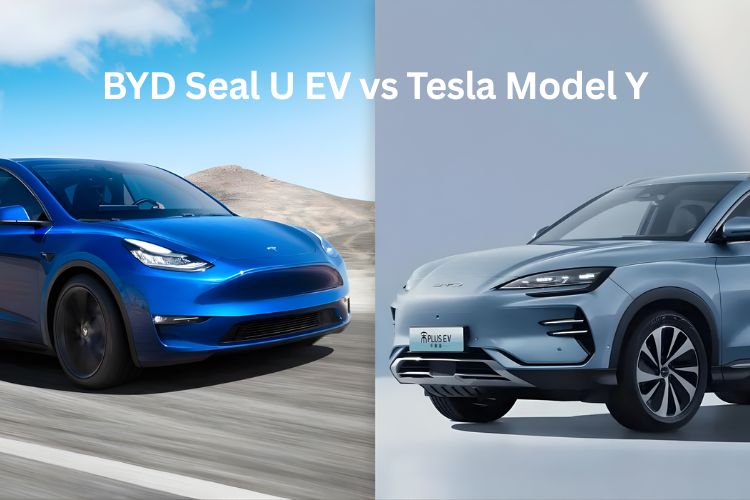
You’ve got seventeen tabs open, each one screaming a different verdict about which electric SUV deserves your money.
Your checkbook is ready. You’re done with gas station guilt trips and that sinking feeling every time you pass a pump. But now you’re frozen, cursor hovering between Tesla’s proven ecosystem and BYD’s impossible-to-ignore value proposition. One tab shows the Model Y’s sleek lines and that legendary Supercharger network. Another shows the Seal U’s feature list that reads like a luxury car brochure but at a price that makes you double-check the currency symbol.
Here’s the thing. This isn’t really about specs. It’s about trust. It’s about resale anxiety and what your driveway says about you. It’s about whether you’re the kind of person who pays for the proven icon or the smart value hunter who discovered the world’s largest EV maker before your neighbours did.
The contradictions are keeping you up at night. Tesla’s brand baggage versus BYD’s “wait, who?” factor. Proven versus promising. Premium price versus premium features.
So here’s our path through this maze. We’ll match every feeling (range panic, charging dread, buyer’s remorse) to cold facts. We’ll dig into real-world range tests, charging curves, cargo space measurements, and the warranty fine print that actually matters. Then we’ll hand you a decision framework that lets you finally exhale and click “configure.”
Keynote: BYD Seal U EV vs Tesla Model Y
The BYD Seal U and Tesla Model Y represent divergent philosophies in electric SUV design. Tesla prioritizes powertrain efficiency, performance, cargo capacity, and its proprietary Supercharger ecosystem. BYD emphasizes ride comfort, feature-rich interiors, competitive pricing, and superior warranty coverage. The Model Y achieves 600 km WLTP range and charges at 250 kW. The Seal U offers 500 km range and 140 kW charging while undercutting price by €3,000 to €8,000. Both earn five-star safety ratings. Your choice depends on charging infrastructure access and whether you value Tesla’s proven ecosystem or BYD’s value proposition.
The Brand Elephant Nobody Mentions (But Everyone’s Thinking About)
Let’s talk about the stuff that doesn’t show up on spec sheets but weighs heavy when you’re signing paperwork.
Tesla’s Identity Crisis: When Your Car Becomes a Statement
Remember when owning a Tesla just meant you were eco-conscious and tech-savvy?
Those days feel distant now. Tesla owners increasingly wrestle with what their car says about them beyond “I care about the planet.” The Musk factor changed the ownership experience overnight for many drivers. You bought the car for its engineering, but now every parking lot conversation comes with an asterisk.
And then there’s the reliability elephant in the room. Consumer Reports slapped Tesla with a brutal 2 out of 5 reliability rating. That stings when you’re dropping fifty grand. MotorTrend’s long-term verdict after two years with a Model Y? They called the driving experience “antagonistic to enjoyable driving” because of the firm ride and the screen-first controls that fight you when you just want to adjust the temperature.
But here’s the truth that complicates everything. Despite the brand turbulence and the reliability concerns, Tesla still sells more EVs than anyone else for a reason. That Supercharger network is real. The efficiency is real. The over-the-air updates that actually improve your car are real.
BYD’s Trust Gap: The “Am I a Guinea Pig?” Fear
You’re looking at the BYD Seal U’s spec sheet and thinking: “This sounds too good to be true.”
Ventilated seats, 360-degree camera, Head-Up Display, panoramic sunroof, all standard. And it’s cheaper than the Tesla. Your brain immediately goes to: “What’s the catch? Am I about to become a beta tester for a brand nobody’s heard of?”
Here’s what most people don’t know, and it changes the entire conversation. BYD isn’t some scrappy startup. They’re the world’s largest EV maker. They sold more electric vehicles globally than Tesla in 2023. Their European sales surged by 272% because people who did their homework discovered what you’re discovering right now.
Still feels risky? Look at the warranty. BYD backs the Seal U with 6 years or 93,750 miles of bumper-to-bumper coverage. Tesla gives you 4 years and 50,000 miles. That’s not guinea pig territory. That’s a company betting big on their engineering holding up over the long haul.
The battery warranty? Eight years or 124,000 miles with a guarantee it’ll retain at least 70% capacity. BYD builds their own batteries. They’ve been doing it longer than almost anyone. Their LFP Blade Battery passed the infamous nail penetration test without catching fire, something that made engineers around the world sit up and take notes.
What Your Choice Signals (And Why You Care More Than You Admit)
Let’s be honest about the parking lot psychology.
Tesla still reads “tech pioneer” to most people. You’re the person who embraced the future first, who values performance and efficiency over convention. BYD reads “smart value hunter.” You’re the person who did the research, who found the better deal, who doesn’t need badge validation.
Both are valid tribes.
There’s a psychology to choosing the known icon versus the rising underdog. Tesla is the safe choice that your friends will understand instantly. BYD requires you to explain, “Actually, they’re the world’s largest EV maker” at the next barbecue. Some people love that conversation. Others dread it.
Permission granted. Buy for your actual route and your real budget, not for parking lot optics. The person you’re trying to impress at the school pickup line isn’t paying your monthly payment or your charging bills.
The Money Math That Actually Keeps You Up at Night
Let’s get past the sticker and talk about the real cost of living with your choice for the next six years.
The Price Gap and What It Buys
Numbers first, then what they actually mean for your wallet.
| What You’re Paying For | BYD Seal U | Tesla Model Y |
|---|---|---|
| Base price (EU indicative) | €41,990 to €44,990 | €44,990 to €51,990 |
| Starting price (UK) | £33,000 (est. based on PHEV pricing) | £44,990 |
| Standard features | 360° camera, ventilated seats, HUD, panoramic roof | Autopilot, Supercharger access, minimalist cabin |
| The “value feel” | First-class upgrade at economy price | Paying for the integrated ecosystem |
The Seal U undercuts serious competitors. It’s £6,000 cheaper than a Hyundai Tucson PHEV and £9,000 less than a VW Tiguan PHEV. That’s vacation money. That’s a home charger installation with cash left over.
But here’s where Tesla makes you think twice. Their new base Model Y in Germany starts at €39,990 from the Berlin Gigafactory. That’s cheaper than the top-spec Seal U. Tesla’s playing the volume game now, cutting prices to stay competitive while BYD is still establishing itself.
Tesla’s hidden costs lurk in the options list. That Full Self-Driving package? Eight thousand dollars that many owners admit they regret. The premium paint? Another chunk of change. BYD loads everything standard because they’re trying to win you over. Tesla makes you pay extra because they know you’re already sold on the ecosystem.
Over five years of ownership, energy costs tell another story. The Seal U will save you roughly €5,000 compared to a similar petrol SUV. The Model Y, being more efficient, saves even more. But if you’re comparing these two electric SUVs head to head, the efficiency crown goes to Tesla by a meaningful margin.
The Charging Infrastructure Reality
This is where romantic notions of EV ownership meet the brutal reality of road trips.
Tesla’s Supercharger network is magic until you’ve experienced it, then it’s just normal. That’s the highest compliment I can give. You pull up, plug in, the car handles authentication and payment automatically, and you’re adding 200 miles in fifteen minutes at up to 250 kW peak power. The navigation system routes you through chargers automatically, preheats the battery so you arrive ready for maximum speed, and shows you real-time stall availability.
The Seal U charges at a solid 140 kW DC fast charging rate. That’s 10 to 80% in about 45 minutes under optimal conditions. Perfectly respectable. But here’s the rub. You’re using the public charging network. That means downloading apps for Ionity, BP Pulse, Shell Recharge, and whoever else. It means pulling up to broken chargers. It means payment friction and wondering if this particular station will actually work today.
Honest truth time. If you have a driveway and a home charger, 90% of this debate evaporates. Both vehicles charge at 11 kW AC overnight. Both wake up at 100% every morning. You’ll charge at home for your daily 30-mile commute and only hit public chargers on road trips.
The equalizer that nobody talks about? The Seal U has Vehicle-to-Load capability at 3.3 kW. Your car becomes a mobile power station for camping gear, power tools, or emergency home backup. Tesla doesn’t offer this yet. It’s a niche feature, but when you need it, you really need it.
The Resale Value Silent Tax
Here’s the number that punches you in the gut three years from now.
Tesla holds roughly 65% better resale value after three years compared to the average EV, according to industry data. Yes, Tesla’s frequent price cuts have hurt used values. Yes, every price drop on new inventory makes current owners wince. But everyone still knows what a Model Y is worth. There’s a massive used market. Values are stable because demand is proven.
BYD’s resale is the great unknown. You win today with lower upfront cost and better features. But when you go to sell in three years? You’re the pioneer. You’re hoping the market has caught up to what you already knew about BYD’s quality. You might take a bigger depreciation hit simply because buyers are still learning the brand.
The calculation changes if you’re keeping the car for six-plus years. Now BYD’s longer warranty becomes the financial shield. You’re covered for two extra years of repairs that Tesla owners pay out of pocket. If you drive it until the wheels fall off, resale value becomes irrelevant and total cost of ownership tilts toward BYD.
Lease versus buy consideration matters here. Leasing a BYD means the leasing company absorbs the resale risk. You just pay for the three years of use and walk away. Buying means you’re betting on the brand’s long-term value proposition in Western markets.
The Driving Experience: Where Your Morning Commute Actually Happens
Specs live on paper. You live in the driver’s seat for 300 hours a year.
Tesla Model Y: The Divisive Daily Driver
Let’s start with what MotorTrend said after living with one for two years: the firm ride means every expansion joint and pothole rings through the cabin. The new Juniper refresh fixed some of this with better suspension tuning and more sound deadening. But the Model Y is still fundamentally a tall sports car pretending to be a family SUV.
The single-screen life polarizes people. The 15.4-inch touchscreen is brilliant for navigation and media. It’s maddening for climate controls when you just want to defog the windscreen without taking your eyes off traffic. There’s no muscle memory. Every action requires visual attention and menu diving.
What owners genuinely praise? The acceleration never gets old. Even the base RWD model hitting 60 mph in 5.9 seconds makes merging onto highways feel effortless. The highway efficiency genuinely impresses, too. You see real-world numbers matching or beating the EPA estimates, something rare in EVs.
The steering is quick and precise. Some call it “video game-like” because it lacks the mechanical feedback of hydraulic systems. You feel connected to the road in a digital sense. The car responds instantly to inputs. It’s thrilling if you enjoy that directness, exhausting if you prefer a more relaxed, filtered experience.
BYD Seal U: The Comfort-First Cocoon
Step into the Seal U and your lower back immediately relaxes.
The suspension is tuned super-soft. It absorbs the chaos of broken pavement and speed bumps with a plushness that prioritizes your comfort over lap times. City driving feels effortless. Long highway stretches feel soothing. Your passengers aren’t complaining about being jostled around.
The interior wraps you in vegan leather and soft-touch materials. The air purification system runs quietly in the background after chaotic school runs. The ventilated seats are standard, not a premium add-on. There’s a rotating 15.6-inch screen that’s mostly a gimmick, but the kids will absolutely fight over DJ duties.
The real concern? The software feels a generation behind Tesla. Menus can lag. Translations from Chinese occasionally miss the mark with awkward phrasing. Apple CarPlay saves the experience by letting you use familiar apps, but the underlying system lacks the polish and snappy responsiveness of Tesla’s interface.
The Seal U’s 0-60 time of 6.7 to 7 seconds feels composed rather than wild. There’s adequate power for passing and merging, but you’re not pinned to your seat. The steering is very light and easy in town but feels detached and vague on twisty roads. Body lean becomes noticeable when you push it.
What You Feel vs. What the Brochure Promises
Let’s put the numbers in context with what your body actually experiences.
| Daily Driving Reality | BYD Seal U | Tesla Model Y |
|---|---|---|
| 0-60 mph acceleration | 6.7 to 7 seconds (composed) | 3.6 to 4.4 seconds (wild) |
| Steering feel | Very light, easy in town, detached on backroads | Quick, darty, you feel connected |
| Ride character | Cushy, isolating, occasional wallow | Firm, engaging, sometimes jarring |
| Highway cruise vibe | Quiet hum eases long drives | Efficient precision, less cosseting |
| Software experience | Functional but laggy, CarPlay saves it | Industry benchmark, continuous updates |
Most guides overhype 0-60 times. You’ll experience that acceleration maybe twenty times a year when passing on two-lane roads. But you’ll feel the ride quality and steering character every single day for two hours in traffic. Throttle tuning and suspension composure matter more for 300 hours a year in the seat than a party trick you show friends once.
Range and Charging: Ending the Anxiety That Haunts Every Trip
That gut-wrenching “will I make it?” feeling deserves real-world data, not marketing promises.
The WLTP Promises vs. Real-World Reality
WLTP ratings are lab numbers. Your life happens in weather, traffic, and with the heater on.
The Model Y Long Range RWD claims up to 311 miles (500 km) WLTP. Real-world driving? Expect a median closer to 283 to 331 miles depending on temperature, speed, and how much you’re using climate control. The Long Range AWD with its dual motors drops to about 360 miles (580 km) WLTP, with real-world figures around 310 to 330 miles in mixed conditions.
The Seal U Design with the larger 87 kWh battery hits 310 miles (500 km) WLTP. Real-world median settles around 264 miles (425 km). The Comfort trim with the 71.8 kWh pack claims 261 miles (420 km) WLTP. Know which battery you’re getting before you sign, because that range difference matters on road trips.
Truth bomb that dealers won’t emphasize: both vehicles fall 30 to 50 miles short in cold weather. Winter cuts range by 15 to 25% when you’re running the heater and the battery is managing its temperature. Always plan your trips with the lower bound in mind, not the optimistic WLTP figure.
The efficiency crown goes decisively to Tesla. The Model Y sips energy at 13.8 to 15.7 kWh per 100 km in optimal conditions. The Seal U consumes 19.9 to 20.5 kWh per 100 km. That efficiency gap compounds over thousands of miles, translating directly to lower charging costs and less time spent charging on long trips.
Charging Speed: Coffee Stop vs. Stress Stop
Tesla’s Supercharger claim of up to 166 miles added in fifteen minutes isn’t just marketing. It’s real when the stars align: warm battery, low starting state of charge, and a V3 Supercharger hitting 250 kW peak.
The Seal U’s 140 kW DC charging takes 10 to 80% in about 45 minutes under ideal conditions. That’s a 30% to 80% charge in roughly 28 minutes. Perfectly adequate for a bathroom break and grabbing coffee. Just budget extra time compared to the Tesla.
The gap widens because of charging curves. Tesla’s thermal management and battery chemistry allow it to maintain higher power longer into the charge session. The Seal U’s charge rate tapers more aggressively above 50% state of charge, a characteristic of LFP chemistry.
Here’s your pro move for either vehicle: plan charging stops every 125 to 155 miles (200 to 250 km). Arrive with 10 to 15% state of charge remaining. Both vehicles charge fastest from low percentages. Stopping more frequently for shorter sessions beats trying to charge to 90% and crawling at slow speeds while range anxiety gnaws at you.
Non-Tesla charging access is improving rapidly across Europe. Networks like Ionity are expanding. Payment systems are getting better. But plug-and-go smoothness still favors Tesla in 2025. That gap is closing, but it hasn’t closed yet.
The Home Charging Equalizer
Both vehicles handle 11 kW AC charging. The Seal U’s 87 kWh pack takes about 9.5 hours for a complete charge overnight. The Model Y’s 79 kWh Long Range pack needs roughly 8.5 hours.
This is where 90% of your actual charging happens if you have a driveway. Your electricity tariff matters infinitely more than brand here. Sign up for a time-of-use rate, charge overnight when electricity is cheap, and wake up to a full battery every morning.
The home charging reality neutralizes most of the public charging network debate for daily driving. Range anxiety largely evaporates when you start every day at 100%. The charging infrastructure discussion only becomes critical for road trippers and people without home charging access.
Space, Comfort, and the Stuff That Fills Your Real Life
This is where kids spill juice boxes and your Costco haul either fits or doesn’t.
Cargo Reality Check
The measurements that decide whether your life actually fits inside.
The Model Y offers 854 litres behind the rear seats. That’s before you fold anything down. Drop the 40:20:40 split rear seats flat and you’re looking at a cavernous 2,041 litres. But here’s the kicker: there’s also a 117-litre frunk under the front hood for storing charging cables, groceries that might roll around, or anything you want separated from the main cargo area.
Total maximum cargo volume in the Model Y? A massive 2,158 litres.
The Seal U provides 425 litres to 552 litres (depending on how you measure) with seats up. Fold the 60:40 split rear seats down and you get 1,440 litres. Respectable for a traditional SUV layout. But there’s no frunk. That space under the hood is occupied by conventional components.
This isn’t an incremental difference. The Model Y has over 700 litres more total cargo capacity. That’s roughly 50% more stuff-carrying ability. For families doing weekend trips, buying lumber for projects, or hauling sports equipment for three kids, this gap becomes the deciding factor.
The Seal U fights back with dimensions that favor passenger comfort. It’s 7 cm taller, which means easier entry and exit for kids and elderly passengers. The rear legroom is generous with a completely flat floor. No transmission tunnel eating into middle-seat comfort.
Actionable takeaway: measure your actual stroller when it’s folded. Check if your family’s weekend luggage fits. One of these vehicles will accommodate your real life better. The other will have you playing Tetris in the parking lot.
Interior Vibe: Spaceship vs. Spa Day
Tesla’s minimalism cuts clutter and forces you to focus. There’s nowhere to hide. The cabin is open, airy, flooded with light from the expansive glass roof. Every surface is clean and unadorned. You interact with the world through that single central screen. Some people find this liberating. Others feel lost without physical controls and visual cues.
Carwow’s Mat Watson described the experience perfectly: “The Model Y is like driving a spaceship—simple, focused, but you arrive calmer because the efficiency and navigation just work.”
BYD’s approach embraces traditional ergonomics. There’s a dedicated instrument cluster behind the steering wheel. The Head-Up Display projects essential info onto the windscreen. Physical climate controls let you adjust temperature without menu diving. The rotating screen is a conversation piece, but the real win is that everything feels immediately familiar.
The Seal U’s vegan leather, ventilated seats, and ambient lighting create a spa-like atmosphere. You sink into softness. The Model Y’s upgraded Juniper interior now features better materials and sound insulation, closing the tactile quality gap that plagued earlier versions.
Safety Scores: Where Both Shine
Euro NCAP gave both vehicles the maximum five-star safety rating. This is the non-negotiable baseline, and both clear it comfortably.
Tesla’s Autopilot represents sophisticated Level 2 driver assistance. Traffic-Aware Cruise Control and Autosteer keep you centered in your lane and manage speed in traffic. The optional Full Self-Driving package adds automatic lane changes and navigation on city streets, though it requires constant supervision and regulatory approval is pending.
BYD’s Level 2 ADAS includes Intelligent Cruise Control with lane centering, Blind Spot Detection, a 360-degree camera system, and automatic emergency braking front and rear. It’s competent and comprehensive as standard equipment, prioritizing simplicity over cutting-edge capability.
Real-world safety records show Tesla has more data and more scrutiny because of their sales volume and public profile. BYD is catching up fast globally with millions of vehicles on the road in China showing positive reliability trends.
Batteries, Tech, and the Stuff You’ll Care About in Year Seven
What’s under the floor matters when the new-car smell has long faded and you’re deciding whether to keep it or trade it.
Battery Chemistry: The LFP vs. NCM Showdown
Think of BYD’s Blade Battery (LFP chemistry) as the tortoise. It’s safer, passing extreme abuse tests without catching fire. It’s happy being charged to 80 to 100% regularly without accelerated degradation. It lasts longer with minimal capacity loss over many charge cycles. The trade-off? It’s slightly heavier and has lower energy density, meaning you need a bigger pack for the same range.
Tesla’s typical Li-NMC chemistry in the Long Range models is the hare. More energy-dense, so you get more range from a smaller, lighter pack. It charges faster, especially in the upper percentage ranges. But it prefers living between 20 and 80% state of charge for optimal longevity. Keep it at 100% constantly and you’ll see faster degradation.
Translation for normal humans: city dwellers who charge at home every night love LFP’s fuss-free charging habits. Just set it to 100% and forget about it. Highway warriors who need maximum range and make frequent Supercharger stops love NCM’s efficiency and lighter weight. The battery barely loses range over hundreds of thousands of miles if managed properly.
Both manufacturers offer 8-year battery warranties, but degradation thresholds and mileage limits differ. BYD guarantees 70% capacity retention over 8 years or 124,000 miles. Tesla’s threshold is similar but with varying mileage depending on trim (100,000 to 120,000 miles).
Read the warranty fine print. Understand what “degradation” actually means. Some capacity loss is normal and expected. You’re covered if it drops below the guaranteed threshold within the warranty period.
Software and Over-the-Air Updates
Tesla’s ecosystem is the industry benchmark. The UI is fast and responsive. Trip planning is seamless, routing you through Superchargers automatically. Regular over-the-air updates add meaningful features and fix bugs. Your car literally improves over time. Features like better regen braking, improved range estimates, and even performance boosts arrive wirelessly.
BYD’s software is functional but feels like a three-year-old Android tablet running on modest hardware. Slower response times. Occasional glitches. Menu structures that require extra taps. Apple CarPlay integration saves the experience by letting you bypass BYD’s native system for navigation and media.
The honest assessment? BYD’s hardware is 10 out of 10. The seats, the build quality, the physical buttons, and the materials are excellent. But the software is 6 out of 10. Tesla flips that equation: 8 out of 10 hardware (good but not luxury-car plush) and 10 out of 10 software (nothing else comes close).
Over time, this gap could narrow. BYD is investing heavily in software development. But today, if you value a polished digital experience and continuous improvement, Tesla wins decisively.
Reliability Track Record
Tesla’s quirks are well-documented. Early Model Y units had panel gap issues and paint defects. Some owners report phantom braking incidents where the car brakes unexpectedly due to false sensor readings. The ride was too firm in pre-Juniper models. But the powertrains and batteries are proving remarkably durable. You see Teslas with 400,000 miles still running strong with minimal battery degradation.
BYD’s longevity in Western markets is still unknown. Millions of vehicles operate reliably in China with generally positive owner feedback. But European and US data remains thin because the brand only recently expanded aggressively into these markets.
Some owner reports surface electrical gremlins: random alarms, window issues, software bugs. Nothing catastrophic, but the kinds of teething problems you expect from a newer player.
Your insurance against the unknown? BYD’s 6-year bumper-to-bumper warranty beats Tesla’s 4-year coverage. That’s two extra years where repairs are covered, providing meaningful peace of mind and reducing total cost of ownership if issues arise.
The Decision Framework: Which One Is Actually Yours?
Time to move from “both are good” to “this one fits my actual life.”
Choose the Tesla Model Y If…
You regularly drive 200-plus miles and need Supercharger access to keep trips stress-free. The seamless plug-and-go experience and automatic trip planning eliminate range anxiety entirely.
Raw acceleration and sharp handling matter to you. You want to feel connected to the driving experience, even if the trade-off is a firmer ride that transmits more road noise and impacts.
You’re already comfortable in the Apple-style ecosystem. You want polished, seamless software that updates itself and improves your car over time. You don’t need physical buttons because muscle memory works through the touchscreen.
You value proven resale value. You’re either keeping the car for 2 to 3 years and want to minimize depreciation, or you’re leasing and benefit from the strong residual values that keep monthly payments lower.
You can handle minimalism and accept a learning curve. You understand you’re buying into a “walled garden” experience that rewards commitment to the Tesla way of doing things.
Choose the BYD Seal U EV If…
Ride comfort, soft seats, and a soothing cabin rank higher than 0-60 bragging rights. You prioritize arriving relaxed over arriving fast. Your daily commute involves rough roads and speed bumps that the soft suspension absorbs beautifully.
You want maximum features for minimum price. Ventilated seats, 360-degree camera, Head-Up Display, panoramic sunroof, all standard. You’re getting luxury features at a mainstream price point.
The 6-year, 93,750-mile warranty provides emotional comfort worth more than badge cachet. You value long-term security and want protection against unexpected repair costs that Tesla owners pay out of pocket after year four.
You charge at home 90-plus percent of the time. Public charging network limitations become largely irrelevant when you wake up to a full battery every morning. Road trips are occasional, not weekly.
You’re excited about supporting an emerging but proven brand. You’re the world’s largest EV maker, and you don’t mind slightly clunkier software because everything else delivers exceptional value.
The Wild Cards That Might Decide It
Local dealer support can override everything else. Can you test-drive both vehicles within 50 km of your home? Is there a service center nearby, or will warranty work require a 200 km round trip?
Insurance costs vary dramatically by brand perception. Get actual quotes before deciding. Some insurers charge 15 to 25% higher premiums for Chinese brands in Western markets simply because they lack long-term claims data.
Your daily driving distance matters more than you think. Under 30 miles per day? Both vehicles are overkill, and you’re paying for range you’ll never use. Over 150 miles daily? Tesla’s efficiency advantage and charging network edge ahead significantly.
Resale timeline changes the financial equation. Selling in 2 to 3 years? Tesla’s proven resale value is the safer bet. Keeping it for 6-plus years? BYD’s warranty advantage wins, and resale value becomes irrelevant because you’re driving it into the ground.
Conclusion: Your New Calm With Either Choice
We started with that chest-tightening paralysis, the fear of overpaying for Tesla’s brand or gambling on BYD’s relative newness in Western markets. We matched every emotion (range panic, charging anxiety, buyer’s remorse) to cold, verifiable evidence. Tesla delivers the smoothest charging ecosystem and highway stamina, wrapped in a divisive minimalist package that prioritizes efficiency and performance over traditional comfort.
BYD counters with undeniable ride quality, generous standard features, V2L flexibility, and that 6-year warranty safety net, all at a price that lets you exhale and allocate savings elsewhere. Both handle school runs and European road trips competently. Both earn 5-star safety scores. Both will get you to work for years without burning a drop of gasoline. The difference isn’t which is objectively “better.” It’s which one fits the life you’re actually living, not the life brochures promise.
Your single action for today: Book back-to-back test drives for the same afternoon. Drive the Tesla first, then immediately slide into the BYD. Don’t just drive. Sit in the back seat where your kids will sit. Fumble with the climate controls at a stoplight. Imagine 300 hours a year in that cabin during your commute. Load your actual stroller and weekend bags into the cargo area. Let the car that makes you exhale win, not the one that impresses your neighbour.
Final thought: Three years ago, choosing anything other than Tesla felt genuinely risky. The charging infrastructure wasn’t there. The competition hadn’t caught up. Today, you have a credible alternative backed by the world’s largest EV maker with millions of vehicles proving their durability globally. That’s not just about these two specific cars. It’s proof the EV market has matured enough to offer genuine choice. Whatever you pick, you’re not making a mistake. You’re making your move into an electric future that finally has options worthy of your consideration.
Tesla Model Y vs BYD Seal U EV (FAQs)
Is the BYD Seal U as safe as the Tesla Model Y?
Yes, both earn five stars from Euro NCAP. The Seal U scored 90% for adult occupant protection while the Model Y achieved an exceptional 97% in previous testing. Both include comprehensive driver assistance systems. Tesla’s Autopilot is more sophisticated, but BYD’s Level 2 ADAS covers all essential safety features as standard. Real-world safety depends more on the driver than minor rating differences at this elite level.
How much does the BYD Seal U cost compared to the Model Y?
The Seal U starts around €41,990 in Germany for the Comfort trim. The Design trim with the larger battery costs €44,990. Tesla’s Model Y starts at €44,990 for the Long Range RWD in most European markets, though Germany offers a cheaper Berlin-built version at €39,990. In the UK, expect the Seal U around £33,000 to £38,000 while the Model Y starts at £44,990. BYD generally offers £3,000 to £8,000 in savings, but Tesla’s pricing fluctuates.
Which has better range: BYD Seal U or Tesla Model Y?
The Model Y Long Range RWD wins with up to 600 km WLTP (about 373 miles). Real-world range settles around 310 to 330 miles in mixed conditions. The BYD Seal U Design with 87 kWh battery claims 500 km WLTP (311 miles) but delivers closer to 264 miles (425 km) in real-world driving. Tesla’s superior efficiency (13.8 to 15.7 kWh per 100 km vs. BYD’s 19.9 to 20.5 kWh per 100 km) means it travels further on every kilowatt-hour.
Can the BYD Seal U use Tesla Superchargers?
Not currently in most markets. Tesla Superchargers use proprietary connectors (NACS in North America, modified CCS in Europe). The Seal U relies on public CCS charging networks like Ionity, BP Pulse, and Shell Recharge. Tesla is gradually opening Superchargers to other brands in Europe through “Non-Tesla Supercharging,” but this requires Tesla’s app and often comes with higher pricing. Full access for BYD owners depends on Tesla’s expansion timeline and potential NACS adapter availability.
Does the BYD Seal U qualify for federal tax credit?
In the US, qualification is uncertain and depends on final assembly location and battery component sourcing. The Inflation Reduction Act requires final assembly in North America for the $7,500 credit. BYD currently manufactures the Seal U in China, which likely disqualifies it. Check IRS.gov and consult a tax professional for current eligibility. The Model Y qualifies if manufactured in the US (Fremont or Texas facilities), though specific trim restrictions apply.
Which is more reliable long-term: BYD or Tesla?
Tesla has more documented long-term data with vehicles exceeding 400,000 miles showing strong battery durability. Consumer Reports rates Tesla reliability at 2 out of 5, citing build quality and electronic issues.
BYD has millions of vehicles operating reliably in China but limited long-term Western market data. BYD counters uncertainty with a superior 6-year, 93,750-mile warranty versus Tesla’s 4-year, 50,000-mile coverage. If keeping the car beyond 4 years, BYD’s warranty provides crucial protection during the unknown period.
What’s the real-world charging time difference?
Tesla charges 10 to 80% in approximately 27 minutes at a 250 kW Supercharger under optimal conditions. The BYD Seal U takes about 43 to 45 minutes for the same 10 to 80% charge at its 140 kW maximum rate. For a typical road trip stop (adding 150 to 200 km of range), expect Tesla to take 15 to 18 minutes while BYD needs 25 to 30 minutes. Over a 500 km road trip, that’s one extra charging stop or 20 to 30 additional minutes total for BYD.