You’re sitting there with seventeen browser tabs open. BYD. XPeng. Zeekr. Names you couldn’t pronounce three weeks ago, but now you’re comparing their battery chemistries like some kind of reluctant expert. One article screams “revolutionary,” the next whispers “risky.” Your finger hovers over the “Schedule Test Drive” button, but something holds you back.
Here’s what nobody’s telling you: that knot in your stomach isn’t about the cars. It’s about trust. Can you really bet your hard-earned money on a brand your neighbors have never heard of? Will you look brilliant or foolish at the next family barbecue when you pull up in a Chinese EV SUV?
Let’s cut through this together. No more spec-sheet overload or clickbait safety scares. We’re going to look at the actual evidence, the real-world owner experiences, and the models that genuinely deserve a spot on your driveway. By the end, you’ll know exactly which Chinese EV SUV fits your life and which fears you can finally stop carrying around.
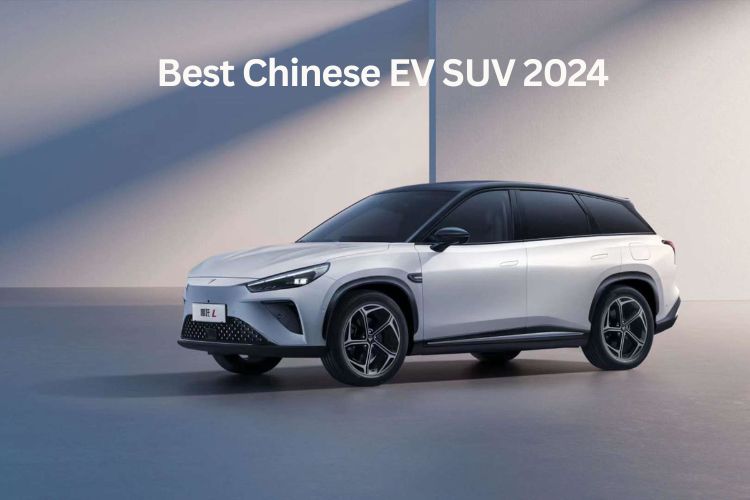
Keynote: Best Chinese EV SUV 2024
Chinese electric SUV manufacturers lead global markets with innovative battery technology including 800V fast charging, battery swap systems, and extended-range powertrains. BYD Atto 3, XPeng G6, and NIO ES6 deliver competitive specifications at lower prices than established brands. However, US buyers face tariff barriers and tax credit disqualification while European, Australian, and Latin American markets enjoy expanding dealer networks and competitive pricing.
Why Chinese EV SUVs Suddenly Feel Unavoidable in 2024
The numbers that explain why everyone’s talking about this now
Chinese manufacturers captured 60 percent of global EV sales last year alone. This isn’t a trend, it’s a takeover.
BYD sold 1.76 million EVs in 2024, matching Tesla’s entire global output. They’re no longer the underdog chasing market share. They’re setting the pace that everyone else scrambles to match.
Over 100 new EV models launched in China in 2024, creating brutal competition that forces rapid innovation. When companies fight to survive, customers win. This isn’t hype or luck. This is a decade of focused investment paying off in ways that legacy automakers didn’t see coming.
The shift happened faster than most analysts predicted. Five years ago, Chinese EVs meant cheap city cars with questionable quality. Today, they’re earning safety awards in Europe and outselling established brands in markets that traditionally favored German engineering.
The value gap that makes traditional brands nervous
XPeng G6 delivers Tesla Model Y performance for $5,000 to $23,900 less depending on your market. Same acceleration. Same tech features. Radically different sticker.
Features that cost thousands extra on German luxury brands come standard here. Heated seats, ventilated seats, 360-degree cameras, advanced driver assistance, ambient lighting. The stuff that turns a $45,000 BMW into a $55,000 BMW? It’s just included.
Here’s the secret advantage: vertical integration. BYD makes its own batteries, unlike most Western competitors who buy from suppliers. That means faster innovation, lower costs, and better warranty confidence because they control the entire supply chain. When Tesla sources LFP batteries from China for some models, they’re validating what Chinese manufacturers have known for years.
The math is simple. You’re getting premium features at mainstream prices because these companies built different cost structures from day one.
From “cheap knockoff” stigma to design award winners
Euro NCAP gave Zeekr X the highest safety score among all EVs tested in 2024, beating Porsche Macan for the safety crown. Let that sink in for a second. A Chinese brand nobody heard of three years ago just outscored one of Germany’s most respected names.
BYD Atto 3 earned a 5-star Euro NCAP rating with strong adult protection scores. Independent testing confirms they’re not cutting corners on structure, crumple zones, or airbag systems. These aren’t promotional videos showing controlled scenarios. These are crash tests conducted by European safety authorities with zero incentive to be generous.
Interior materials now rival premium European brands, shocking early skeptics during test drives. Soft-touch surfaces where you’d expect hard plastic. Thoughtful ergonomics instead of awkward button placement. Genuine leather in mid-range trims, not vinyl pretending to be upscale.
I’ve sat in a NIO ES6 next to a BMW iX3 at an auto show. The difference in interior quality? Honestly minimal. The difference in price? About $20,000. These aren’t ambitions anymore. They’re shipping products that back up the claims.
The Fears Keeping You Up at Night (And What the Data Actually Shows)
That quiet worry about ending up on the evening news
Yes, 8 electric vehicle fires occurred daily in China during Q1 2024, a 32 percent increase from the previous year. That headline scared everyone, and it should get acknowledged honestly.
But context matters desperately here. Multiple studies show EVs are less likely to catch fire than gasoline vehicles per 100,000 vehicles on the road. Gas cars burn too, they just don’t make headlines because we’re used to them. An EV fire feels novel and therefore newsworthy.
Most Chinese EVs use LFP batteries, which are inherently safer than traditional NMC lithium-ion chemistry. You can literally pierce a BYD Blade Battery with a nail and it won’t ignite or explode. The thermal runaway risk that causes spectacular battery fires? LFP chemistry makes it dramatically less likely.
Tesla sources LFP batteries from China for some Model 3 and Model Y variants. If Tesla trusts the chemistry for their reputation and their customers, the technology is proven at scale. This isn’t experimental science. It’s mature engineering.
The “will they still exist in five years” calculation
Not every Chinese EV brand will survive the brutal consolidation happening right now. The market can’t support 100+ manufacturers long-term. Some will merge. Some will disappear. That’s just economic reality.
Your warranty is only as valuable as the company standing behind it tomorrow. This matters more than peak horsepower or fancy screens. A seven-year warranty from a bankrupt company is worth exactly nothing.
Established players with parent corporations offer far more security than pure startups. Zeekr backed by Geely (who also owns Volvo and Polestar). XPeng with strong venture funding and international partnerships. NIO with government support and battery-as-a-service infrastructure investments. These aren’t garage startups burning investor cash with no revenue.
Insurance companies initially refused some models due to parts concerns, but manufacturers responded fast. BYD and GWM now have battery inspection schemes and parts commitments that satisfied underwriters. The situation improved because market pressure forced solutions.
The service network reality check nobody mentions in reviews
Parts availability was genuinely problematic in early 2024, causing insurance headaches in some markets. Let’s not sugarcoat this. If you couldn’t get a replacement door panel for six weeks, your car sat useless while you paid for a rental.
Brands responded because they had to. Jaecoo now promises 24 to 48 hour parts delivery for most components. BYD established regional parts warehouses in Europe. XPeng partnered with existing service networks to expand coverage faster than building from scratch.
MG and BYD have established dealer networks with actual humans answering phones and scheduled service bays. Smaller brands like Zeekr and XPeng are still building infrastructure presence, which means longer wait times and fewer convenient locations.
Call the local service center before falling for showroom lights and test drives. Ask specific questions. “If I need a rear bumper replacement, how many days?” If they can’t give you a straight answer, that’s your answer.
Range promises versus your actual winter commute
Official WLTP figures are tested in perfect lab conditions you’ll never experience in life. Flat roads, moderate temperatures, no headwinds, gentle acceleration. It’s like diet ads showing results “with exercise and calorie restriction” in tiny print at the bottom.
Real-world testing shows 10 to 25 percent range loss depending on climate, speed, and driving style. If the brochure promises 500 km, expect 375 to 450 km in realistic mixed driving. Cold weather? That 500 km becomes 350 km when the heater runs and the battery chemistry slows down.
CLTC numbers from Chinese spec sheets are even more optimistic than WLTP ratings. Many comparison lists quote unrealistic 600 km figures because they’re copying China-market specs without converting to your local test cycle. It’s not dishonest, it’s just lazy research creating false expectations.
Choose models with buffer range for your needs, not perfect sunny-day calculations. If your daily commute plus errands equals 200 km, you need a car rated for at least 350 km WLTP. Buy for winter, enjoy summer. That mindset saves you from range anxiety every January.
The Models That Actually Deserve Your Attention in 2024
BYD Atto 3: The safe bet that doesn’t feel like settling
Starting around $32,000 to $38,000 depending on your market with a proven 420 km WLTP range. Affordable without feeling cheap or stripped down.
Blade Battery technology delivers superior safety and longer lifespan than competitors using conventional NMC chemistry. The LFP cells last longer, tolerate more charge cycles, and handle temperature extremes better. BYD is betting their reputation on this battery tech because the chemistry outlasts the car itself.
6-year or 150,000 km warranty shows manufacturer confidence in long-term durability. They’re not hedging with five-year limits or excluding battery degradation. They’re backing their product for the long haul.
Five-star Euro NCAP rating with a rotating touchscreen and premium materials throughout the cabin. The screen rotates between portrait and landscape, which sounds gimmicky until you use navigation in portrait mode and suddenly maps make sense again. Thoughtful touches like frameless mirrors and ambient lighting create a premium feel.
This is the model I’d recommend to my cousin who just wants something reliable that saves money on fuel. It’s not flashy. It’s not going to impress tech enthusiasts. But it works, it’s safe, and BYD will still exist in 2030.
XPeng G6: When you want Tesla performance without the Tesla price
800V architecture enables 10 to 80 percent charging in just 20 minutes at compatible fast chargers. This is the charging speed that makes road trips actually viable. Grab lunch, use the restroom, and you’re back on the highway.
XPILOT 3.5 driver assistance competes directly with Tesla’s Full Self-Driving capability in terms of features. Adaptive cruise control, lane centering, automatic lane changes on highways, parking assistance. The execution isn’t quite as polished as Tesla’s system, but it’s remarkably close for technology that costs $5,000 to $23,900 less depending on where you buy.
Coupe SUV styling with pet mode, camping mode, and fold-flat seats for adventures. Pet mode keeps climate control running while you’re in the store so your dog doesn’t overheat. Camping mode powers devices and maintains temperature overnight. These are features that acknowledge how people actually use SUVs, not just drive them.
Starting at $32,317 in some markets versus Model Y’s $55,900, and includes a digital gauge cluster that Tesla charges extra for or omits entirely. More features, lower price, same performance tier. The value proposition writes itself.
NIO ES6: Battery swapping changes everything for road trippers
Innovative 150 kWh semi-solid-state battery option delivers up to 929 km range under CLTC testing. Even accounting for real-world losses, you’re looking at 700+ km realistic range. Range anxiety becomes a distant memory.
Battery swap technology lets you “refuel” in 5 minutes or upgrade capacity without buying a new car. Drive into a NIO Power Swap station, the automated system removes your depleted battery and installs a fully charged one, and you drive away. It’s faster than most gas station visits and infinitely faster than any charging session.
The battery-as-a-service program is the real innovation here. Buy the car without the battery, lease the battery separately, and swap it for a newer, higher-capacity battery when technology improves. Your car’s range gets better over time instead of degrading. That’s backwards from every other EV ownership model.
Spacious 6-seat SUV with AR display and premium materials throughout the cabin. Second-row captain’s chairs with heating and massage. Real wood trim. Glass roof. This feels like a BMW iX at half the cost, because it basically is that experience for half the price.
Strong safety record with ANCAP and Euro NCAP ratings positions this as a genuine luxury alternative to European brands, not a budget compromise.
Li Auto L7/L8/L9: The bridge for charging-anxious families
Range-extender powertrain combines EV efficiency with gas backup for infrastructure peace of mind. You drive on battery power for daily commuting, but a small gas engine generates electricity when the battery depletes. It’s not a pure EV, but it solves real anxiety for families who can’t shake charging desert fears.
Sofa-like seating with cinema-style rear entertainment makes long trips genuinely enjoyable for kids. The second and third rows feel like living room furniture. Screens, cupholders, USB ports everywhere. Your kids will beg for longer road trips instead of complaining about them.
This is the model that bridges the gap between gas and electric. You get most of the benefits of EV driving with none of the infrastructure compromises. For families who want to make the transition but need training wheels, this is it.
Best for buyers who road-trip frequently through areas with sparse charging infrastructure or who need range confidence that pure EVs can’t yet deliver in their region. You’re not compromising. You’re choosing what fits your life.
Zeekr X: The compact premium choice that won safety awards
Earned highest Euro NCAP score among all EVs and small SUVs tested in 2024, beating Porsche Macan for the safety crown. A Chinese brand that most people can’t pronounce just outscored one of Germany’s most prestigious names in independent crash testing.
Compact dimensions with 315 kW power and 543 Nm torque for thrilling acceleration. Small doesn’t mean slow or boring. This thing launches like a hot hatch while carrying five adults and their luggage.
Geely backing provides Volvo and Polestar engineering DNA plus financial security confidence. Geely owns Volvo, they own Polestar, and they’re building the London electric taxi. They know how to engineer safe vehicles and they’re not going anywhere. That stable foundation matters for warranty claims and parts availability five years from now.
Starting around €44,990 in Europe, competitive with Tesla Model Y pricing while delivering features that Tesla charges extra for. Premium feel without the luxury tax.
MG S5 EV: When you want Chinese value with brand recognition
MG listened to feedback and fixed every complaint from previous models in this release. Hard plastics? Replaced with soft-touch materials. Clunky infotainment? Upgraded with responsive interfaces. They’re iterating based on real customer input instead of defending bad decisions.
Soft-touch materials throughout with physical climate controls instead of burying everything in touchscreen menus. You can adjust the temperature without taking your eyes off the road. Revolutionary idea, apparently. This is a mature driving experience, not a tech showcase.
7-year warranty standard with established UK and European dealer presence reduces risk perception. MG has been selling cars in these markets for years. Your local mechanic might actually know how to work on it.
Best choice for buyers who want innovation without explaining an unknown logo to skeptical family members. Social comfort matters to some people, and that’s completely valid. You shouldn’t have to defend your car purchase at every gathering.
How to Read the Spec Sheet Without Getting Played
The four numbers that actually matter for your daily life
Battery size determines how far you can go before anxiety kicks in. A 50 kWh battery gives you roughly 300 km realistic range. A 75 kWh battery gets you 450 km. A 100 kWh battery pushes 600 km. Simple math, no marketing spin.
Real-world range depends on temperature, speed, and whether you drive like a maniac. Plan for 70 to 85 percent of claimed WLTP range in mixed driving. Cold weather? Drop that to 60 to 75 percent when the heater runs.
Charging speed affects whether road trips feel relaxing or stressful and frustrating. 800V platforms like XPeng G6 charge three times faster than older 400V systems. That’s the difference between a 20-minute coffee break and a 75-minute lunch you didn’t want.
Efficiency per 100 km tells you actual energy costs, not just impressive horsepower numbers. A car using 18 kWh per 100 km costs half as much to operate as one using 25 kWh per 100 km over five years of ownership. That gap equals thousands in savings.
Export spec versus China spec: the trap in every comparison list
Many online lists quote CLTC numbers from Chinese market specs, not your local WLTP or EPA figures. That claimed 600 km CLTC range translates to about 430 to 500 km realistic depending on conditions. It’s not dishonest, but it creates false expectations.
Always verify which test cycle the range claim uses before comparing models. Check market-specific brochures from official importers, not generic press releases copied from Chinese websites. The difference between CLTC and WLTP can be 20 to 30 percent on the same vehicle.
Independent databases like EV Database provide more honest range expectations than manufacturer websites. Real users in forums tell you what brochures won’t. Someone in Norway driving a BYD Atto 3 through winter will give you better data than a sunny-day test drive.
Give yourself permission to ignore any comparison list that doesn’t state the test cycle used. Lazy research isn’t worth your time or attention.
Software and screens: impressive demo or daily frustration
Ultra-screened cabins can bury basic functions like mirror adjustment in nested menus three levels deep. Some brands prioritize wow factor over usability, creating gorgeous interfaces that make simple tasks complicated.
Test this specifically during your test drive: can you adjust mirrors, regenerative braking, and cruise control settings in 10 seconds without the salesperson’s help. If you can’t figure it out quickly while parked, you’ll hate it every single day when you’re trying to drive.
Prioritize stability and consistent updates over party tricks and beta features, especially for a family car. Flashy software that breaks or gets abandoned is worse than simple software that works reliably. Ask dealers directly about their OTA update policy and what happens if an update causes problems.
I’ve seen too many owners frustrated because a software update broke their favorite feature or introduced new bugs. You need a real answer about support timelines, not vague marketing speak about “continuous improvement.”
Your Buying Decision Framework: Stop Overthinking and Start Doing
Green light scenarios where you should feel confident pulling the trigger
You live in Europe, Latin America, or Australia with established dealer networks already built. Infrastructure matters more than specs on paper. If service centers exist and parts flow reliably, the ownership experience works.
The specific model has Euro NCAP 5-star or equivalent independent safety rating validation. Don’t buy based on manufacturer claims alone. Require independent third-party crash testing results that match your safety standards.
Local insurance companies quote reasonable premiums without special exclusions or hesitation language. Call three different insurers before falling in love with a car. If they all offer normal rates without weird coverage gaps, you’re good. If they all quote double, that’s a red flag.
Brand has proven track record with parent corporation backing, not pure startup risk. BYD, NIO with government support, XPeng with solid venture funding, Zeekr with Geely ownership. These companies have financial stability and won’t vanish overnight.
Yellow light scenarios requiring extra homework before signing papers
Brand new to your market with limited service infrastructure still being developed. Early adopter status has both rewards and risks. You might get special attention and great deals, but you might also wait weeks for parts.
Startup company without parent corporation backing, creating higher exit risk from market. Some brands won’t survive the consolidation wave coming over the next three years. Be honest about your risk tolerance.
Model lacks independent safety testing results in your specific region so far. Treat silence as a red flag, not neutral. If they haven’t submitted for testing, ask yourself why.
You need the vehicle for business or commercial use requiring guaranteed uptime and support. Personal risk differs from business liability. If your income depends on the vehicle being operational, established brands make more sense.
Red light scenarios where you should walk away immediately
No local dealer network or authorized service centers within 100 km radius. Parts and service access trumps every other consideration. The best EV in the world is worthless if you can’t maintain it.
Insurance companies refuse coverage or charge double normal premiums for the model. That market signal means insurers know repair realities you don’t see in the showroom. They’ve done the actuarial math on claims.
Brand unable to provide clear parts availability timelines or warranty service details in writing. Vague answers reveal they haven’t solved the logistics yet. If they can’t commit to specifics, walk away.
Your primary concern is resale value in 3 to 5 years for financial flexibility. These are cars you buy to keep long-term, not flip quickly. Resale values are the biggest unknown for newer brands. If you need trade-in value for your next purchase, stick with established brands.
The non-negotiable questions to ask before signing anything
What is the exact parts replacement timeline with specific examples, not general promises. Force specifics. “If I need a door mirror replaced, how many days from order to installation?” Get a number.
Where is the nearest authorized service center that can handle battery and software issues. Not just body shops that do cosmetic work, but technicians trained on high-voltage systems. Towing 200 km for service ruins the ownership experience.
Which insurance companies currently cover this model and can I get three quotes before I commit. Protect yourself from insurance shock after purchase. It’s too late to discover coverage problems when you’re signing loan papers.
What happens to my warranty if your company exits my country or market. Get a written answer. Verbal promises disappear when companies restructure or withdraw from regions. You need contractual protection that survives corporate changes.
The Regional Reality That Changes Everything About Your Decision
If you’re in Europe: You’re in the sweet spot right now
Multiple Chinese brands actively competing for market share with aggressive pricing and features. When brands fight for your attention, you get better deals, better service, and better support.
Euro NCAP testing validates safety while insurance companies develop familiarity with repair processes. The scary unknowns are becoming knowns. Underwriters have real data now instead of guessing about risk.
BYD opening a Hungary factory and planning 800,000 plus unit sales in 2025 shows genuine commitment. They’re not treating Europe as an experimental market. They’re building local manufacturing to bypass tariffs and reduce logistics costs.
Strong service networks developing rapidly with parts availability improving as local presence grows. The situation gets better every quarter, not worse. Early adopters faced challenges that new buyers today don’t experience.
If you’re in the US: Political reality makes this nearly impossible
100 percent tariff imposed September 2024 makes Chinese EVs economically unviable currently. Government policy just doubled every price overnight. A $40,000 Chinese EV becomes an $80,000 non-starter.
According to official US federal tax credit eligibility requirements, zero Chinese-manufactured EVs qualify for the $7,500 federal credit due to Foreign Entity of Concern battery component restrictions effective January 2024. This eliminates a crucial purchase incentive compared to qualifying American or allied-manufactured alternatives.
Brands are pursuing Mexico manufacturing to potentially bypass tariffs long-term, but timelines remain uncertain. Don’t buy based on what might happen in 2027. Make decisions based on today’s reality.
Partnership route developing through VW-XPeng and Stellantis-Leapmotor joint ventures for technology transfer. You might eventually get the technology through established brand badges, but you’re not buying Chinese EVs directly anytime soon.
Wait-and-see approach recommended unless the political landscape shifts dramatically and unexpectedly. Your money is better spent on available alternatives right now.
If you’re in Latin America, Middle East, or Southeast Asia: The boom is happening
BYD controls 60 percent of Brazil’s entire EV market share. First-mover advantage created strong positions that competitors struggle to challenge.
UAE, Thailand, Malaysia seeing aggressive expansion with dealer networks and charging infrastructure investments. Brands are pouring resources into these growth markets because adoption rates justify the spending.
Minimal tariffs like UAE 5 percent and Chile 6 percent make prices incredibly competitive versus alternatives. Policy environments favor adoption instead of blocking it.
Hot climate battery cooling systems tested and performing reliably in 45°C plus temperatures. These aren’t just cold-weather cars designed for temperate climates. The thermal management systems handle extreme heat without degradation issues.
If you’re in Australia or New Zealand: Early adopter paradise with options
Top-selling EVs in Australia in 2024 are mostly Chinese-made already. Your neighbors are driving these successfully. That social proof matters for mainstream acceptance.
Established import infrastructure with right-hand-drive models available for multiple brands now. You’re not pioneering, you’re following a proven path. The logistics are solved.
Strong consumer interest creating dealership competition that benefits buyers with better service and pricing. Demand brings investment in support infrastructure. More dealers means better coverage and more competitive deals.
XPeng G6 pre-orders opening with expected pricing to rival Tesla Model Y directly. New options arrive regularly, expanding choices every quarter. The market momentum favors buyers.
Money Talk: The Real Cost Beyond the Sticker Price
Total cost of ownership over five years tells the complete story
Include energy costs, scheduled servicing, insurance premiums, and possible government incentives in your calculation. The monthly payment is just one piece of the financial picture.
Many Chinese SUVs undercut legacy rivals by $15,000 to $25,000 at similar range and features. That gap is real money that compounds over ownership. Calculate cost per kilometer over your expected ownership period instead of focusing on monthly payment ego.
Here’s a realistic comparison over five years:
BYD Atto 3 vs Hyundai Kona Electric
- Purchase price difference: $8,000 savings for BYD
- Energy costs (20,000 km/year): BYD $1,400/year vs Kona $1,500/year
- Insurance: BYD $2,000/year vs Kona $1,400/year
- Service: BYD $800/year vs Kona $900/year
- Five-year total: BYD saves about $4,500 after accounting for higher insurance
The spreadsheet doesn’t lie when you’re honest about all the costs. Simple comparison rows cut through marketing noise instantly.
The resale value question nobody wants to talk about honestly
Resale is the biggest question mark for newer Chinese brands without track record. This is your largest financial risk. Three-year-old Chinese EVs in markets with established presence hold 50 to 65 percent of original value compared to 60 to 70 percent for established brands.
Strong global push from BYD, XPeng, and Zeekr helps long-term value retention more than startups with uncertain futures. Market presence correlates with resale confidence. If the brand is still selling new cars when you’re ready to sell yours, buyers trust the used market more.
Buy well-specced mid-trim sweet spot for safer resale than base or loaded versions. Base models feel cheap when newer versions arrive with more standard features. Loaded versions depreciate faster because technology ages badly. The middle trim with good features but not every option holds value best.
Plan to enjoy at least five years, not flip in two, to amortize depreciation across more years. Treat this like keeping the car long-term instead of trading up constantly. That mindset shift makes the financial math work better.
How to negotiate and protect yourself at the purchase moment
Ask for written details on battery warranty, software update policy, and transferability terms. Verbal promises vanish when salespeople leave. Get everything documented.
Push for home charger installation bundle, extended service package, or maintenance coverage included in the deal. These cost dealers less than cash discounts but provide real value. They’re more likely to negotiate on services than price.
Get VIN-identified warranty confirmation plus official importer proof, not gray market ambiguity. Unclear chain of title creates warranty nightmares later when you’re trying to claim coverage.
Remember this mindset: you are interviewing them, not begging for allocation or keys. Your money gives you the right to ask hard questions and expect clear answers. If they make you feel like you should be grateful for the opportunity to buy, walk out.
Conclusion: Your New Story Starts With One Simple Action
You walked into this feeling that familiar mix of excitement and dread. The prices seemed too good, the brands too unknown, the risks too undefined. Every article contradicted the last one. Your gut and your spreadsheet were fighting each other for control of the decision.
Now you can read specs like an insider. You know which numbers are real and which ones are marketing fantasy. You understand that safety data from Euro NCAP matters more than forum rumors. You recognize which Chinese EV SUVs genuinely earn a spot on your shortlist and which ones still need to prove themselves. Most importantly, you know that you are choosing from a position of strength and knowledge, not fear and confusion.
Your one simple move to make today: Shortlist three models from this guide that match your actual life, not your social media image. For each one, verify independent safety data from Euro NCAP or equivalent, confirm local service center locations, and read real owner forums for honest range reports. Then book back-to-back test drives within the next seven days and bring your everyday chaos with you. The kids, the gear, the groceries, the messy reality.
Trust what you feel when you’re actually sitting in the driver’s seat plus what the verified numbers prove. Not the brochure promises. Not the YouTube hype. Not your neighbor’s opinions. Your confidence comes from doing the homework and then trusting your informed gut. That’s how you find the best Chinese EV SUV for 2024 that’s actually right for you.
Best Chinese EVs 2024 (FAQs)
Are Chinese EV SUVs eligible for federal tax credits in 2024?
No. Zero Chinese-manufactured electric SUVs qualify for the $7,500 federal tax credit due to battery component sourcing from Foreign Entities of Concern under regulations effective January 2024. This eliminates a significant purchase incentive compared to qualifying American or allied-manufactured alternatives. Some dealers may offer leasing arrangements that allow them to claim commercial credits, potentially passing savings to consumers, but direct purchase eligibility remains blocked.
Which Chinese electric SUV has the fastest charging speed?
The XPeng G6 with 800V architecture delivers peak charging speeds up to 451 kW, enabling 10 to 80 percent charge in approximately 20 minutes at compatible ultra-fast chargers. However, charging speeds drop dramatically after 80 percent state of charge, with power tapering to 60 to 80 kW above 85 percent. For practical road trip planning, expect the advertised fast charging times only for the 10 to 80 percent window, not full battery top-ups.
How does NIO battery swap technology compare to DC fast charging?
NIO’s battery swap stations complete full battery exchanges in approximately 5 minutes, significantly faster than even the fastest DC charging sessions. The battery-as-a-service model allows owners to purchase vehicles without batteries, lease batteries separately, and upgrade to higher-capacity batteries as technology improves without buying a new car. However, swap station availability remains limited outside China, making this advantage primarily relevant for buyers in markets with established NIO Power infrastructure.
What is the real-world range of BYD Atto 3 in cold weather?
BYD Atto 3 achieves approximately 420 km under WLTP testing conditions. In cold weather below 0°C with cabin heating, expect real-world range to drop 25 to 40 percent to roughly 250 to 315 km depending on driving speed and climate control usage. The LFP Blade Battery chemistry performs better in cold weather than some lithium-ion alternatives but still experiences significant range reduction compared to ideal conditions.
Are Chinese EV SUVs available for purchase in the United States?
Currently no. A 100 percent tariff imposed in September 2024 makes Chinese EVs economically unviable in the US market. Additionally, zero Chinese-manufactured EVs qualify for federal tax credits due to Foreign Entity of Concern restrictions. Some Chinese manufacturers are exploring Mexico manufacturing to potentially bypass tariffs long-term, and technology partnerships with established brands like VW-XPeng and Stellantis-Leapmotor may eventually bring Chinese EV technology to US consumers through different brand channels.