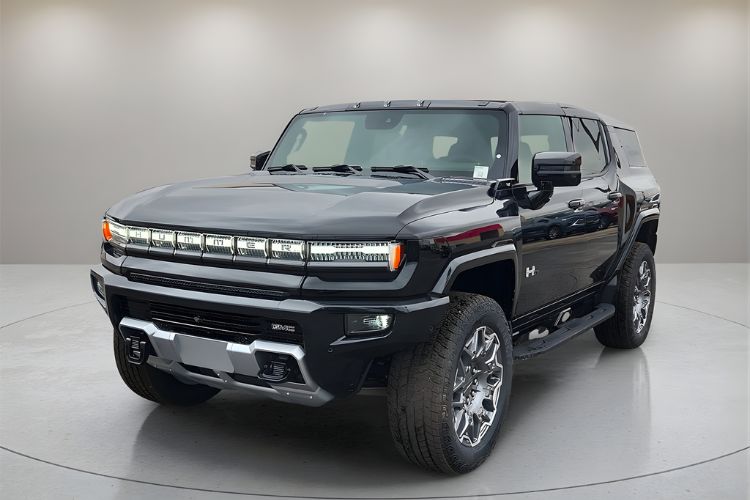
You’re lying in bed, phone glowing in the dark, watching a 9,000-pound electric beast crab-walk sideways up a mountain like it’s breaking the laws of physics. Your heart’s racing. But then you see it: $97,000+ MSRP. And suddenly you’re not dreaming anymore. You’re doing math, questioning everything, wondering if this is brilliance or madness.
The confusion is real. Every YouTube review screams “INSANE PERFORMANCE!” while Reddit threads whisper warnings about charging nightmares and surprise repair bills. You’ve seen the glossy brochures that make promises, and you’ve read the owner forums where reality lives.
Here’s what we’re doing differently: We’re not selling you anything. We’re walking through the dream and the headaches together, pairing every thrilling spec with the practical truth that comes after you sign. By the end, you’ll know if this electric monument belongs in your life or if you’re about to dodge a very expensive mistake.
Keynote: 2025 GMC Hummer EV SUV for Sale
The 2025 GMC Hummer EV SUV delivers 830 horsepower tri-motor performance or 570 horsepower dual-motor capability with up to 315 miles of range. Current dealer inventory shows significant pricing flexibility, with transaction prices averaging 5.4% below MSRP due to market saturation. Buyers should pursue certified pre-owned 2025 models for optimal value, securing $30,000+ savings over new inventory while maintaining warranty coverage.
What You’re Really Buying Beyond the 830 Horsepower
It’s Not Transportation, It’s a Daily Statement You Can’t Take Back
This isn’t about getting from A to B. You’re shopping for presence, for capability that makes people stop and stare, for the kind of vehicle that changes how you see yourself. Think of it like a superhero suit that you wear in public every single day.
But ask yourself this: Will that attention still feel good in three years? On the school run? At the office? When you’re apologizing to yet another parking attendant?
The 2025 GMC Hummer EV SUV isn’t subtle. It’s a 9,000-pound announcement. Make sure you want to make that announcement every day.
The Power Fantasy vs. The Parking Lot Reality
Yes, the 3X trim delivers 830 horsepower and 11,500 lb-ft of torque. Yes, “Watts to Freedom” mode launches you to 60 mph in 3.4 seconds. That’s supercar performance in something that weighs as much as three Honda Civics.
CrabWalk moves diagonally. Extract Mode lifts 6 inches for obstacles. Seventeen UltraVision cameras show you everything. Removable sky panels turn it into a convertible with moon-landing vibes.
But here’s the question nobody asks: Do you actually use this capability, or do you just like knowing you could? Because daily driving it feels like piloting a massive, quick couch with numb brakes and highway efficiency worse than most gas trucks.
The Eco Credentials Myth You Need to Abandon Now
Let’s get honest: This is not your climate hero. At 59 MPGe city and 46 highway, it’s one of the least efficient EVs on the road.
It’s a luxury electric toy with genuine off-road capability. Zero tailpipe emissions? Yes. But it’s energy-hungry, massive, and heavy. The 212 kWh battery pack and 9,000-pound curb weight mean you’re moving a small building every time you press the accelerator. Set your expectations accordingly, or you’ll feel betrayed by your own purchase.
The Trims Decoded: Stop Guessing What You Actually Need
2X vs. 3X: The $8,100 Question That Changes Everything
2X Trim: $96,550 base (plus $2,295 destination) | Dual motors | 570 hp | 315 miles range
What you’re getting: Hummer EV presence with slightly more manageable power and cost. Still hits 60 mph in under 6 seconds. Still has CrabWalk and Extract Mode. Still turns heads.
3X Trim: $104,650 base (plus $2,295 destination) | Tri-motor | 830 hp | 310 miles range
What you’re getting: Maximum bragging rights, that 3.4-second launch, better resale story, peak off-road capability.
| Feature | 2X | 3X |
|---|---|---|
| Base Price | $96,550 | $104,650 |
| Motors | 2 | 3 |
| Horsepower | 570 | 830 |
| 0-60 mph | ~5.5 sec | 3.4 sec |
| Range | 315 mi | 310 mi |
| Best For | “I want the experience without total overkill” | “I need maximum everything” |
The honest take: Unless you’re hitting serious trails or need that party-trick launch, the 2X gives you 90% of the experience for $8,000 less. Match the trim to your real life, not your Instagram fantasy.
The Extreme Off-Road Package: $10K You Probably Don’t Need
This adds 35-inch Goodyear Wrangler Territory mud-terrain tires, underbody armor, locking differentials, and enhanced suspension. It looks incredible. It also howls on pavement, murders your range (dropping it from 315 miles to 282-289 miles), and punishes your spine on normal roads.
If you’re actually crawling boulders every weekend, it’s essential. If you’re doing occasional dirt roads and beach access? Skip it and save your comfort.
The Money Talk: What Signing Actually Costs You
Real Numbers, Not Marketing Numbers
MSRP is just where the pain begins. Here’s what you’re actually facing:
- Base Price: $96,550 to $104,650
- Destination Fee: +$2,295
- Extreme Off-Road Package: +$9,995 (optional but tempting)
- Paint Options: +$0 to $595
- Dealer Markup: Varies wildly (but inventory is rising, giving you leverage)
- Taxes, Registration, Fees: Figure another $8,000 to $12,000+
Real out-the-door: $110,000 to $130,000+ depending on your choices and negotiation skills.
But here’s the plot twist: The market has shifted dramatically. With over 4,400 GMC Hummer EVs sitting unsold on dealer lots and production halted through the end of 2025, buyers now have serious negotiating power. Some dealers are advertising discounts of $10,000 or more off MSRP just to move inventory.
The Tax Credit That Doesn’t Exist Anymore
Bad news: The Hummer EV SUV no longer qualifies for the $7,500 federal EV tax credit for purchases. It exceeds the $80,000 MSRP cap for SUVs under IRS tax credit eligibility rules.
Possible exception: Leasing may unlock the $7,500 commercial tax credit through manufacturer incentives passed to you. GMC advertises leases starting at $999/month for 36 months, though you’ll need $10,879 due at signing. This lease structure lets GM capture that $7,500 credit and pass some savings to you.
Your strategy: Don’t count on tax credits for a purchase. If you find lease incentives, treat them as a bonus. And absolutely explore the growing used 2025 market, where lightly used units with under 10,000 miles are selling for $70,000 to $78,000. That’s $30,000 to $40,000 below original MSRP for essentially new vehicles.
The Hidden Costs Nobody Warns You About
Home Level 2 charger installation: $1,000 to $2,500 (non-negotiable for sanity)
Insurance: Expect premiums 40-60% higher than a comparable gas SUV due to that 9,000-lb weight classification
The mandatory $225 NACS adapter: Required for accessing Tesla Supercharger Network after 2025
Tires: Those 35-inch specialty tires? $400+ each, and they wear fast
Electricity: Budget $60 to $100/month for typical driving (still cheaper than gas, but meaningful)
Five-year cost of ownership estimates hover around high luxury SUV territory. This isn’t a budget choice, even compared to other EVs.
Range Reality: Can You Actually Live With 300ish Miles?
EPA Says One Thing, Reality Says Another
EPA estimates: 310 to 315 miles depending on trim and configuration.
Real-world highway testing: 220 to 250 miles at 75 mph when you’re driving it like a normal person.
Factors that kill your range:
- Cold weather: Chop 30% off immediately
- Highway speeds: Aerodynamics of a brick
- Off-roading: All those toys consume serious energy
- 35-inch tires: Worse efficiency than standard
- Aggressive driving: You bought 830 hp, you’re going to use it
- Towing: That 7,500-lb capacity comes with 30-50% range reduction
Who this works for: Home charger owners with predictable routes under 150 miles daily. Weekend warriors who plan trips around charging.
Who struggles: Apartment dwellers relying on public charging. People towing regularly. Brutal cold-climate commuters without garage charging.
The Charging Experience: From Dream to Nightmare and Back
Best Case Scenario: 350kW DC fast charger adds 100 miles in 10 minutes. You’re back on the road before you finish your coffee.
Typical Reality: Most stations top out at 150kW. Finding working 350kW stations is a treasure hunt. Real-world charging sessions take 45 to 90 minutes for meaningful range.
| Scenario | Equipment | Time to 80% | Notes |
|---|---|---|---|
| Home Level 2 (240V) | Your garage | 12-16 hours overnight | Non-negotiable baseline |
| Public Level 2 | Parking lots | 24+ hours | Emergency only |
| DC Fast 150kW | Common stations | 90-120 min | Typical road trip reality |
| DC Fast 350kW | Rare unicorns | 45-60 min | When everything works |
The truth: Home charging is mandatory. Road trips require planning and patience. The 212 kWh Ultium battery pack is so large that even “fast” charging feels slow compared to smaller EVs. Some owners report actual charging speeds averaging only 78-98 kW due to thermal management limitations.
One Critical Design Flaw: The Charge Port Location
The CCS charging port is on the rear driver’s side. Sounds minor, right? It’s not. This placement means:
- Your home charger cable needs to reach the back of the vehicle
- Many public stations require parking backwards or won’t reach
- Some garages become unusable for charging without expensive rewiring
Check your garage layout before you buy, or this becomes a daily frustration. And remember, you’ll need that $225 NACS adapter by late 2025 to access the expanding Tesla Supercharger Network.
Daily Life Reality: Owning This Beast Long After the Honeymoon
The Size Problem That Never Goes Away
The Hummer EV SUV is wider than a Suburban. Longer than most parking spots expect. Taller than some garage clearances allow.
Real-world challenges owners report:
- Tight city streets become stress tests
- Parking garages reject you or make you sweat every turn
- Drive-throughs designed for sedans create awkward moments
- Your neighbors will have opinions about it in the driveway
Four-wheel steering helps with tight turns, but this is not a “whip it into any spot” vehicle. It’s a vehicle that makes you check dimensions constantly.
Ask yourself: Will you feel proud or will you feel like you’re constantly apologizing for taking up too much space?
The Performance That Defies Everything You Know
Here’s the cognitive dissonance: This 9,000-pound vehicle accelerates to 60 mph in 3.4 seconds. That’s faster than a Porsche 911. It handles corners like it weighs 4,000 pounds. It’s like watching an elephant do ballet.
One-pedal driving and regenerative braking feel intuitive once you trust them. Super Cruise hands-free highway driving actually works well on compatible roads.
But the braking reality check: That massive curb weight requires longer stopping distances than rivals like the Rivian R1S. Physics always wins eventually. That mass takes distance to stop, especially when you’re descending mountain grades or navigating emergency situations.
The experience: Pure grin factor on acceleration. Unsettling on emergency braking.
The Reliability Wild Card
This is first-generation tech on a complex Ultium platform built at Factory Zero Detroit-Hamtramck Assembly. Some owners worship it. Others are making monthly dealer visits.
Common issues reported:
- Software glitches: Screen freezes, connectivity drops, mysterious errors
- “Brakes Overheated” warnings appearing without obvious cause
- Battery drain issues while parked
- Squeaks and rattles from roof panels and interior
- Water leak reports (scary in a high-voltage EV)
- Some reports of total power loss while driving
GMC has issued recalls. Check any VIN you’re considering against the NHTSA vehicle classification database.
The owner sentiment: 90% say the thrill factor makes them forgive the quirks. The other 10% deeply regret not waiting for the bugs to be worked out.
How to Shop Smart Without Getting Played
Start Online, Filter Ruthlessly
Use GMC’s official dealer locator and inventory system to search confirmed 2025 SUV units in your region. Inventory is actually rising in 2025, which means leverage is shifting to buyers.
Check CARFAX dealer listings, Cars.com marketplace, and Edmunds pricing data to compare availability across platforms.
Filter before falling in love:
- Trim level based on your honest needs (2X vs 3X)
- Colors you can live with for years
- Must-have packages only (resist everything else)
Cross-check pricing across multiple dealer websites. Watch for mandatory add-ons disguised as “market adjustments.” Question everything in writing.
Negotiation Is Real Again
The market is changing. With production halted and thousands of units sitting on lots, dealers are offering significant discounts to move inventory. Average transaction prices currently run around $93,724, which is 5.4% below MSRP. This is no longer a “pay full price or walk” situation.
Your power moves:
- Get written quotes from 3+ dealers in your state
- Walk away if they won’t negotiate seriously
- End-of-month and end-of-quarter timing improves flexibility
- Bring pre-approved financing from your credit union
- Reference the growing used 2025 market as leverage
The dealers that respect your time will earn your business. The ones that play games will watch you leave.
The Test Drive That Tells You Everything
Don’t just drive around the parking lot. Replicate your real life:
- Your actual commute route including traffic and hills
- Your actual parking spots at home and work
- Highway speeds for extended periods to feel the ride quality
- Tight turns in realistic scenarios
Checklist to experience:
- CrabWalk mode in a parking lot (is it genuinely useful or just cool once?)
- Extract Mode to see suspension changes (will you actually use this?)
- Watts to Freedom launch (does it still thrill you after the second try?)
- All 17 cameras during parking (does this genuinely help or overwhelm?)
- One-pedal driving and regenerative braking feel
- Super Cruise on compatible highway routes
Bring your family. Put car seats in. See if everyone who uses this vehicle feels confident, not intimidated.
The Alternatives You Should Consider Before You Sign
The Rivian R1S: The Smarter Choice for Most People
Let’s be honest: The Rivian R1S offers 400 miles range, better efficiency, superior braking performance, and starts around $75,000. It’s faster in the quarter-mile, more practical daily, and won’t punish your wallet as hard.
When Hummer wins: Maximum power (830 hp), maximum torque (11,500 lb-ft), CrabWalk and Extract Mode uniqueness, the presence and styling that nothing else matches, up to 7,500 lb towing capacity with the dual-motor powertrain.
When Rivian wins: Pretty much everything related to practicality, efficiency, range, braking, and cost of ownership.
Test drive both. Seriously. The Rivian might confirm your Hummer love by contrast, or it might save you $30,000+ in smarter capability.
Other Worthy Considerations
If you’re open to exploring:
- Tesla Cybertruck: Different flex, similar “what is that thing?” energy, established Supercharger network access
- Kia EV9: Vastly more practical and affordable, still impressively capable, better efficiency
- Mercedes EQS SUV: If luxury matters more than off-road, refined where Hummer is raw
The exercise isn’t to talk you out of the Hummer. It’s to make sure you’re choosing it for the right reasons, not just because you saw it first.
Conclusion: Sign Awake, Not Hypnotized
You’re not shopping for an SUV. You’re choosing an identity, a capability set, a cost structure, and a complexity level that will shape your daily life for years.
The 2025 GMC Hummer EV SUV is outrageous, electric, genuinely capable, and deeply flawed. It makes no rational sense. It also makes you grin like an idiot every time you launch it. Wanting something this excessive can be perfectly valid. But only if it actually fits: your charging situation (home Level 2 minimum), your parking reality (space that accommodates 9,000 lbs of width), your budget (not just purchase, but insurance premiums 40-60% higher than comparable vehicles, electricity, tires, repairs), and your tolerance for being a beta tester on first-gen Ultium platform tech.
You now have the questions most sales pages pray you never ask. You have the real numbers behind the marketing. You know about the federal tax credit limitations, the lease loophole, the hidden post-purchase costs, and the collapsing market creating unprecedented negotiating power. Open four tabs right now: GMC dealer inventory search filtered for your must-haves, your electric utility’s website to calculate charging costs, a measuring tape listing (you’re measuring that garage), and insurance quote requests for this specific vehicle. Run your real life through these numbers. Not the fantasy. Not the Instagram moments. Your actual daily routes, parking spots, and budget. If it still makes sense, if your heart still races and the numbers actually work, then schedule two test drives this week. One in the city, one on your favorite back road.
If you sign for a 2025 GMC Hummer EV SUV, sign with your eyes open. Know what you’re getting into. Own the choice completely. Because six months from now, when you’re parallel parking this beast for the fifteenth time or explaining to your partner why the electric bill jumped, you’ll remember this moment. You’ll remember that you knew. That you chose it anyway. And if you chose it for the right reasons, for capability you’ll actually use, for presence you genuinely want, for an experience that aligns with your real life, you’ll still be grinning. That’s the difference between a great decision and an expensive mistake. You’re now ready to know which one this is for you.
2025 Hummer EV SUV for Sale (FAQs)
What is the MSRP of the 2025 GMC Hummer EV SUV?
Yes, it starts at $96,550 for the 2X trim. The 3X trim starts at $104,650. Both prices exclude the $2,295 destination charge. Real-world pricing on optioned models typically ranges from $110,000 to $130,000+ out the door. However, current market conditions show significant dealer discounts available.
Does the Hummer EV SUV still qualify for the federal tax credit?
No, not for direct purchases. The vehicle exceeds the $80,000 MSRP cap for SUV tax credit eligibility under IRS rules. However, leasing may allow you to benefit from the $7,500 commercial tax credit through manufacturer incentives. This makes leasing worth serious consideration versus buying outright.
What’s the difference between Hummer EV SUV 2X and 3X trims?
Yes, it’s mainly powertrain. The 2X has dual motors producing 570 hp with 315 miles range. The 3X adds a third motor for 830 hp but only 310 miles range. Both include CrabWalk, Extract Mode, and Super Cruise. The 3X adds that 3.4-second launch capability but costs $8,100 more.
Where can I find the best deals on 2025 Hummer EV SUV?
Yes, shop the used 2025 market first. Lightly used units with under 10,000 miles are selling for $70,000 to $78,000, representing $30,000+ savings over new inventory. Check dealer inventory across Cars.com, CARFAX listings, and GMC’s official dealer locator for certified pre-owned options with warranties.
How much should I pay for a GMC Hummer EV SUV?
No, don’t pay MSRP. Average transaction prices currently run $93,724, about 5.4% below sticker. Target $10,000+ off for new 2025 models or pursue certified pre-owned 2025 units in the $70,000 to $78,000 range. With over 4,400 units sitting unsold and production halted, negotiating power favors buyers dramatically.