You’re lying awake, phone glowing, toggling between EV and PHEV listings like your future depends on it. Because maybe it does.
That knot in your stomach isn’t about cars. It’s about fear. What if you waste $40,000 on the wrong choice? You’ve read a dozen articles that felt like robots arguing with other robots. Social media screams “go full electric,” but your wallet whispers “be careful.”
Here’s the truth nobody’s telling you, backed by data from thousands of actual owners.
We’re cutting through noise with cold facts and warm honesty. No jargon, no agenda. Just a clear path so you can breathe easy and choose confidently.
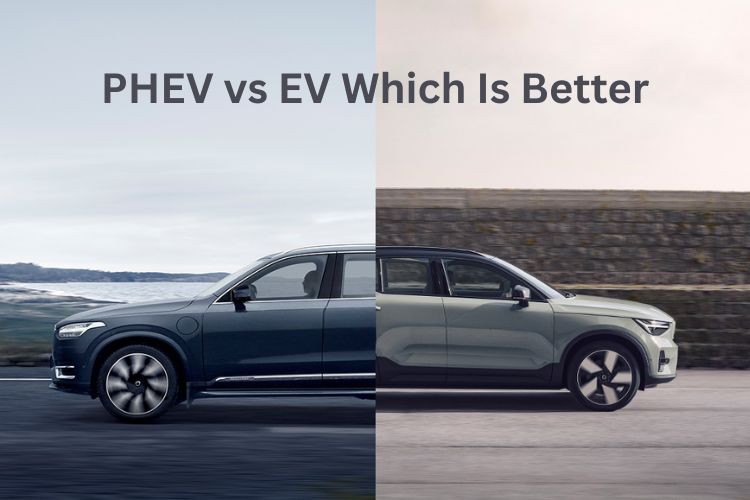
Keynote: PHEV vs EV Which Is Better
Plug-in hybrid electric vehicles combine gas engines with smaller batteries for short electric range. Battery electric vehicles use large batteries for 300-plus mile all-electric range. PHEVs offer flexibility but require dual-powertrain maintenance and disciplined daily charging. EVs provide simplicity with lower operating costs but need charging infrastructure planning. Your daily driving patterns and charging access determine which technology delivers better value, reliability, and environmental performance for your specific situation.
The Honesty Test Nobody Wants to Take
Before we compare anything, let’s talk about the question that determines everything: Will you actually plug it in?
The Brutal Finding That Changes Everything
Here’s a stat that’ll wake you up faster than cold coffee. J.D. Power’s 2025 data shows PHEVs now have MORE problems than EVs. Yeah, you read that right.
PHEV reliability clocks in at 237 problems per 100 vehicles versus EVs at 212. Owner satisfaction? PHEV owners rate happiness at 669, while EV owners cruise at 716 to 738. And get this: dragging 400 pounds of battery you never charge feels ridiculous when you’re paying for gas anyway.
Most PHEV regret stems from one thing. Forgetting to plug in nightly.
The European Emissions Scandal
Remember when PHEVs were sold as the eco-friendly compromise? Real-world PHEV emissions average 3.5 times higher than official lab ratings. A new 2025 analysis shows many plug-in hybrids pollute nearly as much as petrol cars.
The company car trap exposed this perfectly. Drivers had fuel cards but no charging access at work, so they never plugged in. Those “eco” savings mostly vanished into thin air.
If you won’t charge every single night, you’re hauling dead weight and burning gas like it’s 2015.
What You’re Really Choosing: Two Different Philosophies
Think of it like committing to a new diet versus being flexitarian. One requires full commitment, the other offers flexibility with hidden costs.
The EV Promise: Simplicity and Silence
“It’s not just transport, it’s a different way to move through the world.”
One powertrain, zero tailpipe emissions, lowest energy waste per mile driven. You wake up with a “full tank” every morning if you charge at home. The silent acceleration feels addictive. No gas station visits for months.
But here’s the trade-off. You must plan longer trips around charging infrastructure and time. That’s the price for simplicity.
The PHEV Safety Net: Flexibility With Complexity
It’s like carrying an umbrella everywhere because it might rain.
Electric for daily commutes under 40 miles, gas engine for everything else. Range anxiety? Completely eliminated. Drive cross-country without charging stress at all.
The hidden cost? Maintaining two complete powertrains instead of just one. And it works brilliantly only if you plug in religiously. Otherwise, you’ve just bought an expensive hybrid that’s hauling extra battery weight on every highway mile.
Follow the Money: What You’ll Actually Spend
Let’s strip away marketing and look at what hits your bank account over five years.
The Upfront Reality Check
Entry PHEVs run $29,000 to $40,000 for models like the Ford Escape PHEV or Kia Niro. Entry EVs? $25,000 to $45,000 for the Nissan Leaf or Chevy Bolt equivalents.
Plot twist: many EVs now cost similar or less than comparable PHEVs.
And that federal PHEV tax credit everyone talks about? That ship sailed. It ended September 30, 2025. Gone. The EV credit is still hanging on by a thread for qualifying vehicles, offering up to $7,500, but it’s scheduled to sunset soon too.
The Five-Year Cost That Tells the Truth
Annual EV fuel costs when charging at home overnight: $500 to $650. Annual PHEV fuel if you plug in daily: $1,000 to $2,000 blended. Annual PHEV fuel if you forget: $2,000 to $2,400. Basically gas car costs.
Recent total cost of ownership studies show battery electric vehicles saving around $9,300 over plug-in hybrids across the ownership period. That’s real money that stays in your pocket instead of disappearing into complexity and dual-system maintenance.
The Maintenance Wildcard
EVs require no oil changes, no transmission fluid, no spark plugs to replace. PHEVs? You maintain both systems. Electric motor plus full gas engine.
Long-term data shows EV maintenance averages half the cost per mile of gas vehicles. The complexity tax is real, and it compounds over every year you own it. You’re not just paying for two systems. You’re paying for the software and control units that make those systems talk to each other.
The Environmental Elephant in the Room
You want to do the right thing, but which choice actually helps the planet?
The Lifecycle Emissions Reality
PHEVs show a 46% emission reduction only if you charge them consistently and often. The Transport & Environment report delivered a gut punch: typical PHEVs pollute almost as much as petrol vehicles.
Why? Because most owners don’t plug in enough. That nightly ritual becomes a chore. Bottom line: EVs beat PHEVs on lifecycle CO₂ as grids continue getting cleaner. The math doesn’t lie.
The Greenwashing You Need to Know About
“The best PHEV is one you actually plug in religiously.”
Real-world PHEV CO₂ averages 135 grams per kilometer versus official lab claims. Many PHEV owners bought for environmental reasons, then rarely charged their car. The self-honesty checkpoint hits hard here: if you’re buying for the planet, will you plug in every night?
Battery production is dirty, no question. But EVs win long-term as electricity gets cleaner. Coal plants are shutting down. Renewables are expanding. Every year your EV gets greener without you doing anything.
Range Anxiety vs. Plug-In Guilt: Pick Your Poison
Every choice has a shadow side, so let’s face them both head-on with honesty.
The EV Owner’s Secret Confession
A UK 2025 study revealed that 26% of EV owners report some purchase regret. Top complaint? Charging stress on long trips, cited by 64% of owners.
Road trip reality means adding 15 to 45 minutes every few hours for charging stops. And here’s the two-car truth: most satisfied EV owners also keep a gas vehicle available for those epic cross-country drives or spontaneous weekend getaways.
The PHEV Owner’s Hidden Frustration
That nightly plug-in ritual you thought you’d love becomes an actual chore. Winter reality hits different: 30-mile electric range becomes 15 miles when the heat kicks on.
The shame spiral is real. Owning an eco car you never actually charge properly feels terrible. And the weight penalty compounds the guilt when you’re hauling dead battery weight on the highway with the engine running alone.
Who Actually Succeeds With Each
PHEV sweet spot: daily commute under 30 miles plus weekend road warrior mentality. You’re disciplined enough to plug in every night and you genuinely need that gas backup for frequent longer trips.
EV sweet spot: predictable routine, reliable home charging, maybe a second vehicle for trips. Your daily life fits within a 250-mile radius most of the time.
The trap zone? Apartment dweller considering either without guaranteed charging access daily. Be brutally honest about your habits now, not your fantasy future self. Future you is exactly like current you, just older.
Your Decision Framework: The 5-Minute Clarity Test
Stop reading comparison charts and start answering these questions about your actual life.
The Daily Reality Audit
Do you park within 50 feet of an outlet every single night? Is your typical commute under 40 miles on most weekdays? Do you take more than four road trips over 300 miles yearly?
Can you install Level 2 home charging or are you renting currently? These aren’t theoretical questions. Your answers determine everything.
The Best Match-Ups That Work
Homeowner with garage plus second gas car: EV wins on cost and simplicity. Predictable 25-mile commuter with home outlet: PHEV maximizes savings if you’re disciplined about charging.
Sales rep driving 400-mile days: EV only if fast-charge dense routes, else PHEV temporarily makes sense. Apartment without reliable plugs: honestly, neither is ideal right now. Consider a traditional hybrid instead.
The Worst Match-Ups to Avoid
Apartment dweller plus EV equals charging nightmare and daily stress you’ll hate. Apartment dweller plus PHEV equals you’ll never plug in, wasted premium paid.
Road warrior plus EV equals constant charging anxiety stealing your peace entirely. Forgetful person plus PHEV equals expensive hybrid you’ll never optimize at all.
Don’t fight your nature. Work with it.
The Charging Reality: From “What If?” to “I’ve Got This”
Infrastructure matters more than specs, so let’s get practical about your daily rhythm.
Home Charging Is the Secret Weapon
Level 2 home charger adds 25 miles of range per hour overnight. Even a regular 120-volt outlet works for EVs with short commutes consistently.
Workplace charging programs are expanding everywhere. Check your employer’s current benefits and policies before you buy. If home charging is impossible, a PHEV becomes a short-term bridge, not a forever solution.
The Public Network Reality Check
The public fast-charging network is growing at 14% compound annual rate through 2025. Tesla’s Supercharger network is opening to most EV brands now, with over 34,000 ports available nationwide.
Highway corridors are well-covered now. Rural areas? Still catching up in many regions. Apps and roaming networks exist, but set up accounts before your very first road trip. Future you will thank current you.
Conclusion: Your New Reality With Confidence, Not FOMO
You came here worried about picking wrong, now you’ve got clarity that won’t lie to you.
We’ve journeyed from that 3 AM panic to a clear map. The “better” choice whispers through your actual habits, not through headlines or hype. PHEVs work brilliantly as bridges if you’ll plug in religiously. EVs deliver simplicity and savings when your life supports home charging consistently.
Track your actual driving for one full week starting tomorrow. Write down daily mileage and note where you park each night. That data will tell you more than any article ever could, including this one.
That knot in your stomach? It wasn’t really about PHEVs versus EVs at all. It was about whether you’re ready to change your behavior for a car, or need a car adapting to your life exactly as it actually is right now. Be honest with yourself. Your wallet, your stress levels, and the planet will all thank you for that honesty.
EV vs PHEV (FAQs)
How much does it cost to charge a PHEV vs EV per month?
EVs cost $40 to $55 monthly charging at home with average rates. PHEVs run $85 to $165 monthly if you plug in daily, mixing electricity and gas. If you forget to charge your PHEV regularly, expect $165 to $200 monthly, basically matching gas car costs. Your discipline determines your savings.
Do PHEVs require less maintenance than regular cars?
No, they require more. PHEVs need all the maintenance of a gas engine plus electric system inspections. Oil changes, filter replacements, spark plugs, and high-voltage battery checks stack up. You’re maintaining two complete powertrains, which costs more over time than either a pure EV or gas car alone.
Can you drive a PHEV without ever plugging it in?
Yes, but you shouldn’t. A PHEV operates as a regular hybrid when not charged, but it’s hauling extra battery weight for no benefit. Fuel economy drops below standard hybrids in this mode.
You’re paying a premium for plug-in capability you’re not using, wasting both money and the vehicle’s core advantage.
What happens when PHEV battery runs out?
Nothing dramatic. The gasoline engine seamlessly takes over and the car continues driving normally. You’ll notice slightly more noise and vibration as the engine kicks on. The transition is smooth in modern PHEVs, and you can refuel at any gas station. The battery recharges slightly through regenerative braking during driving.
Is PHEV or EV better for the environment?
EVs are definitively better long-term. Real-world data shows PHEVs emit 3.5 times more CO₂ than advertised because owners don’t charge enough. EVs have zero tailpipe emissions and get cleaner as electricity grids add renewables.
PHEVs depend entirely on your charging discipline to deliver environmental benefits, which most owners fail to maintain consistently.