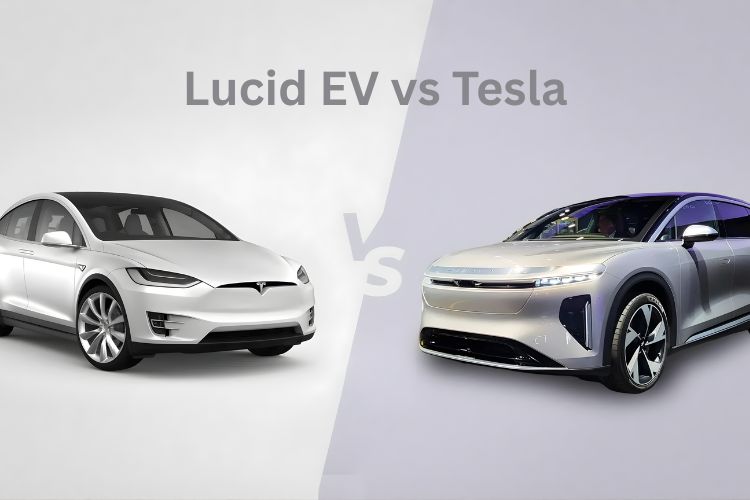
You’ve been staring at your laptop for three hours now. Two browser tabs open. One shows a sleek Lucid Air gliding through mountain roads. The other, a Tesla Model S launching like a rocket at a stoplight.
Your finger hovers over the “Configure” button on both sites. You refresh the pages. Again. The price difference shifts by thousands depending on which trim you pick. Your spouse asks what you’re thinking for dinner. You barely hear them.
This isn’t just car shopping. This is a six-figure identity crisis wrapped in battery packs and leather seats. You’re tired of reading sterile spec sheets written by people who’ve never felt the knot in their stomach when dropping this much money on anything. You’re exhausted by the fanboy wars in Reddit threads where everyone’s already made up their mind.
Here’s what you actually need. Cold numbers backed by EPA data. Real-world charging nightmares and triumphs. The honest truth about what it feels like to own these cars when the new-car smell fades and you’re stuck at a broken charger in the rain.
Let’s cut through the noise so you can finally click that order button with confidence instead of regret.
Keynote: Lucid EV vs Tesla
The Lucid Air versus Tesla Model S comparison reveals two distinct philosophies in luxury electric vehicles. Lucid delivers industry-leading 512-mile EPA range through advanced 900-volt architecture and exceptional 4.5 mi/kWh efficiency. Tesla counters with unmatched Supercharger network access and mature software integration. Buyers must choose between Lucid’s cutting-edge hardware engineering and opulent interiors versus Tesla’s proven ecosystem reliability and lower entry pricing at $79,990 versus Lucid’s $69,900 base.
The Uncomfortable Truth: You’re Not Just Buying a Car
The Identity Crisis No One Admits
Here’s the thing nobody wants to say out loud. When you buy a Tesla Model S, you’re buying into a specific story about yourself. You’re the person who got it early. Who understands that minimalism equals intelligence. Who doesn’t need fancy leather or wood trim to feel validated because you’re too busy disrupting industries in your head.
Lucid Air whispers something completely different. It says you’ve arrived. You’ve done the Tesla thing, maybe, or you skipped it entirely because you refuse to compromise on craftsmanship. You’re not just tech-forward. You appreciate the way Swiss watchmakers obsess over a single gear.
Neither choice makes you better or worse. But one will feel like home when you slide behind the wheel every morning. The other will feel like someone else’s borrowed suit. And that feeling compounds over 60 monthly payments.
The question isn’t which car is objectively superior. It’s which philosophy matches the voice in your head when nobody’s listening.
Where Your Money Actually Goes
Let’s talk cold, hard cash. Because this is where things get interesting.
The Lucid Air Pure starts at $69,900. The Tesla Model S? $79,990. Right out of the gate, Lucid undercuts Tesla by ten grand for the base model. That’s not pocket change.
But climb the performance ladder and watch what happens. The Lucid Air Grand Touring sits at $112,400 with its 512-mile EPA range rating and dual-motor AWD configuration. The Tesla Model S Plaid counters at just $89,990 with a tri-motor configuration that hits 60 mph in 1.99 seconds.
For pure speed per dollar, nothing touches the Plaid. It’s the performance bargain of the century if you’re chasing 0-60 times. But here’s the twist most buyers miss. That “cheaper” Tesla might cost you thousands more in frustration when you’re hunting for service appointments or dealing with panel gaps on delivery day.
Factor in the federal tax credit situation too. The IRS Form 8936 eligibility has an $80,000 MSRP price cap for sedans. The Lucid Air Pure qualifies. The Tesla Model S? It exceeds that limit entirely as of 2025. And with the credit expiring September 30, 2025, timing your purchase becomes part of the value equation.
Sometimes the sticker price is just the opening bid in a longer negotiation with reality.
Range Isn’t Just a Number—It’s Your New Peace of Mind
The One Stat That Changes Everything
Ready for the number that changes this entire conversation? The Lucid Air Grand Touring delivers 516 miles of EPA range on a single charge. Let that sink in for a second.
The Tesla Model S Long Range? 402 miles. Some configurations dip to 368 miles depending on wheel choice and trim.
That’s not a small gap. That’s 28% more range. That’s the difference between one charging stop and two on your drive to see family. That’s arriving with 40% battery instead of anxiety-sweating the last 20 miles.
Real-world highway testing tells an even more honest story. The Lucid Air maintains around 390 miles in actual driving conditions. The Tesla Model S drops to roughly 320 miles when you’re cruising at 75 mph with the heat on and your kid’s iPad draining the 12V system.
Imagine thinking about charging once a week instead of calculating every trip like a math problem. That’s what Lucid’s 900-volt architecture and industry-leading efficiency buys you. Not just miles. Mental space.
The Efficiency Edge No One Talks About
Let’s get nerdy for exactly one paragraph because this actually matters. The Lucid Air achieves around 4.5 miles per kWh efficiency. The Tesla Model S hits about 4.0 miles per kWh. That doesn’t sound dramatic until you multiply it across 50,000 miles of driving.
That efficiency comes from obsessive engineering. A drag coefficient of just 0.197 makes the Air one of the most aerodynamic production cars ever built. The Model S? Still impressive at 0.208, but physics doesn’t round up.
But here’s where Lucid’s battery technology background really shows. That 900-volt electrical system isn’t just marketing. Higher voltage means lower current for the same power. Lower current means less heat wasted in the wiring. Less heat means more electrons actually reach the wheels. It’s thermodynamics working in your favor on every acceleration.
| Model | EPA Range | Highway Reality | Efficiency | What It Actually Means |
|---|---|---|---|---|
| Lucid Air GT | 516 mi | ~390 mi | 4.5+ mi/kWh | One less charging stop per road trip |
| Tesla Model S LR | 405 mi | ~320 mi | 4.0 mi/kWh | Still excellent, just not the king |
| Lucid Air Pure | 419 mi | ~320 mi | 4.1 mi/kWh | Base model beats Tesla’s best range |
| Tesla Model S Plaid | 396 mi | ~310 mi | 3.9 mi/kWh | Speed has its price in electrons |
That efficiency gap translates to one critical thing. Freedom. The freedom to take the scenic route. To skip the sketchy charger and wait for the next town. To say yes to spontaneous detours without doing battery math in your head.
Why “Good Enough” Range Costs You More Than Miles
Tesla’s range is objectively excellent. Let’s be completely honest about that. 400 miles is more than most people drive in a week. For daily commuting, it’s complete overkill.
But here’s what the spec sheets won’t tell you. “Good enough” range creates a different ownership psychology. You start calculating. Every long trip becomes a route optimization puzzle. You find yourself hovering over the battery percentage display like it’s a heart rate monitor.
Lucid’s miniaturized battery technology isn’t just an engineering flex for reviewers to praise. It’s the difference between “Can I make it?” and “Of course I can.”
And yes, Tesla’s Supercharger network turns “enough” range into “plenty” because charging is fast and everywhere. That’s their genius move. They engineered the ecosystem to compensate for physics limitations.
But what if you didn’t need the compensation? What if the car just had enough range that charging infrastructure became less critical to your daily mental bandwidth? That’s the Lucid bet.
The Speed Trap Everyone Falls Into
The Numbers That Make Your Stomach Drop
Let’s get the absurd numbers out of the way. The Lucid Air Sapphire hits 60 mph in 1.89 seconds with 1,234 horsepower from its tri-motor setup. The Tesla Model S Plaid does it in 1.99 seconds with 1,020 horsepower.
Both numbers are clinically insane. Both will make your passengers scream. Both will have exactly zero impact on your daily commute.
You’ll use this party trick exactly twice. Once when you first get the car and giggle like a child. Once to show your friend who still thinks EVs are golf carts. Then never again because launching that hard on public roads is terrifying and pointless.
Here’s what actually matters. The Lucid Air Grand Touring does 0-60 mph in 3.0 seconds with 819 horsepower. The dual-motor Tesla Model S AWD does it in 3.1 seconds with 670 horsepower. For 99% of real-world driving, this difference is completely invisible.
How Speed Actually Feels on Tuesday Morning
MotorTrend tested the Plaid and described it as “blurry in every sense.” That’s not a compliment. It’s a warning. The acceleration is so violent it crosses from thrilling into uncomfortable. It feels like a theme park ride, not transportation.
The Lucid Sapphire delivers what reviewers call “private jet thrust.” Effortless. Composed. Smooth surge of power that feels controlled rather than chaotic. Like the car has infinite reserves it’s barely tapping.
But let’s zoom out from the performance models entirely. Because most buyers will never option these cars. They’ll buy the dual-motor variants with “only” 670-820 horsepower. And at that level, the driving experience diverges in a completely different way.
The Daily Drive Reality Check
Tesla feels like an economy car with a rocket engine bolted underneath. The interior is spartan. The suspension is taut and sporty. The steering communicates every bump and crack in the road. Some people love this. It feels focused. Purposeful. Like a tool designed for a specific job.
Lucid drives like a European performance sedan that happens to be electric. Think BMW M5 refinement but with better balance and less front-end weight. The ride is smooth without being floaty. The cabin stays quiet even at 80 mph. The steering has weight and precision without beating you up.
Which one turns your commute from punishment into peace? That’s entirely personal. But one philosophy prioritizes speed above comfort. The other refuses to make you choose.
The Cabin: Where You’ll Actually Live for 5+ Years
Tesla’s Minimalist Gamble
That revolutionary 17-inch portrait touchscreen that launched with the 2012 Model S was genuinely groundbreaking. In 2025? It’s dated. Every luxury brand has caught up with bigger, sharper displays and better materials wrapped around them.
Tesla’s 2021 Model S refresh was bizarre. They stripped money out of the interior instead of adding it. Extreme minimalism that feels more like cost-cutting than intentional design. Everything lives behind that touchscreen now. Climate controls. Wipers. Glove box. Steering wheel adjustment.
Try adjusting your mirrors while merging on the highway. It’s as distracting as it sounds.
The materials themselves don’t whisper “luxury” to anyone who’s owned a Mercedes S-Class or BMW 7 Series. Plastics. Synthetic leather options. Clean lines that read as “sterile” more than “premium.” Owner forums consistently describe it as “improved but austere.”
And here’s the kicker. No Apple CarPlay. No Android Auto. Tesla steadfastly refuses to integrate the phone interfaces most people actually want to use. You’re stuck with Tesla’s native navigation and music apps whether you like them or not.
Lucid’s Opulent Bet on Your Comfort
Slide into a Lucid Air and the difference is immediately physical. The seats are heated, ventilated, and offer massage functions in higher trims. Real Nappa leather. Alcantara headliner. Open-pore wood that actually feels like wood instead of textured plastic.
The 34-inch curved cockpit display stretches across your field of vision with standard wireless Apple CarPlay and Android Auto integration. You can actually use the apps and navigation you’re already familiar with. Revolutionary concept, apparently.
But it’s the small details that separate luxury from performance. The retractable lower touchscreen for climate controls. The way the door handles feel when you grab them. The ambient lighting that adjusts to time of day without looking like a nightclub. The sound insulation that creates what reviewers call an “inviting, mid-century modern vibe.”
This isn’t a racing simulator. It’s a first-class airline seat that happens to have a steering wheel.
The Space You’ve Been Promised
Numbers don’t lie about interior volume. The Lucid Air offers 32.1 cubic feet of combined cargo space. The Tesla Model S? 28.2 cubic feet. That extra space comes from Lucid’s miniaturized powertrain, which frees up a massive front trunk.
But the real difference shows up in the back seat. Adults can actually sit comfortably behind tall drivers in the Lucid Air. The Model S? Taller passengers start feeling the pinch on road trips. Knees get cramped. That lack of space compounds over hours.
| Interior Reality | Lucid Air | Tesla Model S |
|---|---|---|
| Rear Legroom | Adults sit comfortably for hours | Taller adults feel the squeeze |
| Total Cargo | 32.1 cubic feet | 28.2 cubic feet |
| Physical Buttons | Climate and essential controls | Everything buried in touchscreen |
| Phone Integration | Wireless CarPlay and Android Auto | None. Tesla’s ecosystem or nothing. |
Test the back seat before you buy. Sit there for ten minutes with the person who’ll actually be your passenger. The difference between adequate and spacious becomes obvious fast.
The Tesla does have one practical advantage. That rear liftback design opens wide for loading large items. The Lucid’s traditional sedan trunk opening is more restrictive. If you regularly haul big boxes, this matters.
The Charging Nightmare No One Wants to Admit
Tesla’s Unbeatable Supercharger Fortress
Over 50,000 Tesla Superchargers scattered across the globe. Reliable equipment that actually works. Seamless payment through your car’s touchscreen. You plug in. Walk away. Grab coffee. Come back. It’s charged. Done.
This fortress of infrastructure is Tesla’s most powerful competitive advantage. It keeps people locked in the ecosystem by choice, not force. Because charging anxiety evaporates when you know a working charger is always 100 miles away maximum.
The navigation system pre-conditions your battery for optimal charging speed while you drive to the station. You arrive and hit peak charging rates immediately. No app wrestling. No payment failures. No standing in the rain wondering if the screen will ever wake up.
This single advantage has sold more Teslas than any 0-60 time ever could.
Lucid’s Electrify America Reality
During a 1,000-mile road trip test by automotive journalists, the Lucid Air actually won by 33 minutes over the Tesla Model S. But that victory came with a price. Multiple charging failures. Broken stations showing as available in the app but dead in person. Chargers delivering 50kW instead of the advertised 350kW.
Lucid owners get three years of free Electrify America charging, which sounds amazing on paper. In practice, you’re gambling every road trip on whether the infrastructure actually works when you need it.
The Plug and Charge functionality now works flawlessly after rocky early months. When it works, it’s seamless. But “when it works” is doing heavy lifting in that sentence.
One owner described the difference perfectly. “Tesla road trips feel like having a reliable friend in every city. Lucid feels like adventure travel where half the fun is solving problems.”
That’s not the kind of adventure most people want on a family vacation.
The NACS Adapter Bridge
Starting in 2025, Lucid vehicles get native access to the Tesla Supercharger network through the North American Charging Standard adoption. This should be the game-changer that eliminates Lucid’s biggest weakness.
Except there’s a catch nobody’s talking about loud enough. The NACS adapter available now for current Lucid owners? It limits charging to just 50kW at most V3 Supercharger stations.
Think about that. Your Lucid Air is capable of accepting 300-350kW through its native CCS1 charging port. But at a Tesla Supercharger, you’re throttled to 50kW. Meanwhile, the Tesla Model S at the stall next to you is pulling 250kW.
Better than nothing? Absolutely. A true solution? Not even close.
That 50kW limitation turns the world’s best charging network into a slow convenience option instead of a fast-charging solution. It’s the automotive equivalent of having a gigabit internet connection but being forced to use dial-up speeds at your friend’s house.
The Service Reality Check That Breaks Hearts
Tesla Service: The Horror Stories Are Real
Let’s confront the elephant in the showroom. Tesla’s service experience has become legendary for all the wrong reasons.
Owners report 20+ service visits for the same recurring issues. Delivery vehicles arriving with panel gaps you could fit your finger through. Paint defects that require immediate correction. Service center waiting rooms that used to offer nice amenities now featuring cheap plastic chairs and $30 Uber credits instead of loaner cars.
J.D. Power studies show Tesla’s dependability actually declined from 242 to 252 problems per 100 vehicles recently. Consumer Reports consistently rates Tesla reliability as below average, citing recurring issues with body hardware, climate systems, and in-car electronics.
But here’s the most frustrating part. When something breaks, getting it fixed becomes a part-time job. Service appointments book weeks out. Mobile service shows up without the right part. The repair gets rescheduled. Repeat.
This is what “disruption” looks like when it’s your problem instead of someone else’s industry. Tesla prioritized scaling production over building service infrastructure. Now owners pay the price.
Lucid Service: The Early Adopter Tax
Lucid faces the opposite problem. The service when you get it is often praised as exceptional. White-glove treatment. Direct communication. Mobile service that comes to your driveway. Personal attention that Tesla stopped offering years ago.
The problem? There aren’t enough service centers. Period. If you don’t live near one of Lucid’s limited locations, you’re looking at potentially hundreds of miles of travel for maintenance or repairs.
And then there’s the reliability data that’s impossible to ignore. Consumer Reports predicts the 2025 Lucid Air will be less reliable than other new cars, giving it a dismal 7 out of 100 predicted reliability score. MotorTrend’s long-term test revealed the Air as “among both the best and worst cars” they’d tested. Too many software bugs for a $180,000 vehicle.
Owner forums overflow with reports of glitches. Proximity unlock that stops working randomly. Loud charging fans that wake the neighbors at 2 AM. Software updates that fix one problem and create two new ones.
The car’s bones are exceptional. The execution is rough around every digital edge.
The Question of Who This Car Is Actually For
This is where you need to get brutally honest with yourself. Are you an early adopter who forgives cutting-edge technology’s growing pains? Do you get excited troubleshooting problems or do they make you want to throw your phone through a window?
If you want unbeatable bang-for-buck straight-line speed with a proven ecosystem, nothing touches the Model S Plaid at $89,990. It’s the performance bargain of the automotive world.
If you want a true luxury performance sedan that feels special every time you approach it, the Lucid Air is the clear winner. But you need to embrace being an early adopter with all the frustrations that entails.
The worst mistake? Buying a Lucid expecting Tesla’s ecosystem maturity. Or buying a Tesla expecting Lucid’s luxury refinement. Both paths lead to disappointment.
Making the Choice That Actually Fits Your Life
Buy the Tesla Model S If
You take frequent road trips and charging infrastructure reliability matters more than peak charging speed. The Supercharger network isn’t just good. It’s so good it removes an entire category of anxiety from EV ownership.
The minimalist, tech-forward aesthetic actually excites you. You see the sparse interior as purposeful rather than cheap. You appreciate that everything lives in software because you’re comfortable navigating digital interfaces.
Being one of many Teslas in every parking lot doesn’t bother you. You bought the car for the technology and ecosystem, not to turn heads.
Autopilot and FSD’s billions of real-world data miles matter more to you than cabin luxury. You’re betting on Tesla’s AI advantage over the next decade.
You need a car that works today with minimal friction. Battle-tested reliability trumps bleeding-edge engineering in your value system.
Buy the Lucid Air If
You want people stopping you in parking lots asking “What IS that?” Exclusivity matters. Being one of the first with something special matters. The post-luxury positioning resonates with how you see yourself.
Interior refinement, ride quality, and material choice matter more than ecosystem lock-in. You judge a luxury car by how it feels, not by how many apps it integrates.
Most charging happens at home overnight. Road trips are occasional adventures, not weekly necessities. When you do travel, you’re willing to plan around Electrify America’s inconsistencies.
You want the absolute maximum EPA range rating and efficiency available in a production vehicle. That 512-mile capability provides psychological peace that no amount of charging infrastructure fully replicates.
You’re willing to be an early adopter. You understand this means software quirks, occasional service headaches, and explaining to friends what brand you’re driving. You’re okay with that tradeoff for exceptional engineering.
The Choice Nobody Considers: Wait
Sometimes the smartest six-figure decision is six months of patience. Both cars have significant compromises right now. Tesla’s service reputation continues declining. Lucid’s reliability remains unproven and its service network sparse.
Lucid’s native NACS access starting in 2025 will eliminate their biggest infrastructure weakness. But will it be full-speed access or the current 50kW limitation? We don’t know yet.
Tesla’s next-generation platform is reportedly in development. Will it finally move to a more efficient architecture? Will they refresh the aging Model S design that’s fundamentally over a decade old?
If you’re not in a rush, waiting gives both companies time to address their weaknesses. The market isn’t going anywhere. These cars will still be here in six months, potentially improved and with clearer long-term trajectories.
Conclusion: Your New Reality, Not Just a New Car
You came here hoping someone would just tell you the answer. Buy this one. Not that one. Simple.
But the truth is more personal than any spec sheet can capture. The 2025 Lucid Air wins on range with 516 miles. It wins on luxury refinement and interior space. It wins on efficiency and that intangible feeling of driving something truly special. Tesla Model S counters with the industry’s best charging network, proven ecosystem integration, and a decade of software development that shows. Both will turn heads. Both will occasionally make you curse at the sky.
The difference is whether you’re the type to embrace cutting-edge luxury with early-adopter growing pains or prioritize ecosystem reliability with minimalist philosophy. Neither choice is wrong. They’re just different bets on what matters most in your daily life.
Your first step today: Schedule test drives of both cars back-to-back on the same day. Don’t just drive them around the block. Sit in traffic. Fiddle with the touchscreen. Spend ten minutes in the back seat. Adjust the climate settings. Feel the steering wheel. One will whisper “home” in a way the other won’t. Trust that instinct.
Here’s what I know for certain. In five years, you won’t remember the 0-60 time. You’ll remember every service center visit. Every charging mishap on a road trip where you had somewhere important to be. Every morning you smiled walking to your driveway because your car still makes you happy. Choose accordingly.
Tesla vs Lucid EV (FAQs)
Does the Lucid Air qualify for the $7,500 federal tax credit?
Yes, partially. The Lucid Air Pure qualifies because its MSRP sits below the $80,000 sedan cap required by IRS Form 8936. However, the Grand Touring and Sapphire trims exceed this limit and don’t qualify. The Tesla Model S doesn’t qualify at all. This credit expires September 30, 2025, so timing matters if you’re shopping now.
How fast does Lucid Air charge at Tesla Superchargers?
Only 50kW maximum with the current NACS adapter at most V3 Supercharger locations. This is drastically slower than the Air’s native 300-350kW capability through CCS1 charging ports, and far below the Tesla Model S’s 250kW Supercharger speed. Native NACS integration coming in 2025 models may improve this, but current owners face significant speed limitations making Supercharger access more of a backup plan than a primary solution.
Which is more reliable: Tesla Model S or Lucid Air?
Tesla Model S has a longer track record but faces consistent quality issues. Consumer Reports rates it at 35 out of 100 for predicted reliability, citing problems with body hardware and electronics.
Lucid Air scores even lower at just 7 out of 100 due to early-production software bugs and component issues. Neither car excels in reliability right now. Tesla has more service locations, which makes repairs more accessible despite the quality concerns.
What is the real-world highway range of Lucid Air vs Model S?
Lucid Air Grand Touring achieves approximately 390 miles of real-world highway range at 75 mph. Tesla Model S Long Range delivers around 320 miles under the same conditions. That 70-mile difference translates to one fewer charging stop on most long road trips.
The efficiency gap comes from Lucid’s superior aerodynamics with a 0.197 drag coefficient and its 900-volt architecture reducing thermal losses compared to Tesla’s 400-volt system.
Is Lucid Air cheaper to own than Tesla Model S over five years?
It depends on the trim and your charging habits. The Lucid Air Pure starts $10,000 cheaper than the base Model S and qualifies for federal tax credits the Tesla doesn’t. Over five years, Lucid’s superior efficiency means lower electricity costs.
However, Tesla’s extensive Supercharger network and better service infrastructure reduce potential ownership headaches. Projected depreciation favors Tesla due to brand recognition and proven resale values, though Lucid’s rarity may preserve value in the ultra-luxury trims.