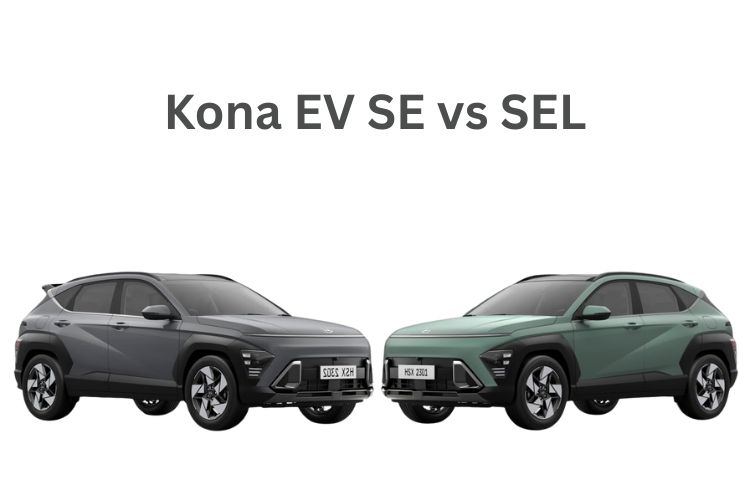
It’s 2am. You’ve got two browser tabs open, a calculator beside your laptop, and you’re paralyzed. The Kona Electric SE trim looks responsible, practical, financially smart. The SEL trim whispers promises of freedom, confidence, no regrets. You refresh the Hyundai configurator for the fifteenth time, hoping the numbers will magically make the decision for you.
Here’s what’s really happening. You’re not comparing trim levels. You’re wrestling with the ghost of future regret. You want to be smart with money, absolutely. But that quiet voice asking “what if I run out of charge?” won’t shut up, no matter how many times you tell yourself 200 miles is plenty.
The tension is real and valid. The SE saves you about $4,000 upfront but might haunt you every time you glance at the range indicator. The SEL costs more today but promises the peace of mind that comes with 33% more battery capacity and 30% longer range. One feels responsible. The other feels right.
We’re cutting through the spec sheets together. Using real data, honest feelings, and the kind of clarity that only comes from understanding what you’ll actually live with for the next five years. Let’s find your right answer.
Keynote: Kona EV SE vs SEL
The Kona EV SE vs SEL decision hinges on battery capacity and real-world range tolerance. The SE’s 48.6 kWh battery delivers 200 miles for urban commuters, while the SEL’s 64.8 kWh pack provides 261 miles for versatile ownership. Both share identical tech and safety suites. The SEL’s superior resale value and 33% range advantage justify its $4,000 premium for most buyers.
The Fork in the Road: Battery, Power, and What Actually Changes
The numbers that define everything
The SE rolls with a 48.6 kWh battery pack feeding a 133-horsepower motor that delivers 200 miles of EPA-estimated range. Real-world winter conditions? That drops to 170-180 miles when you’re preheating the cabin, fighting headwinds, or pushing 70 mph on the highway.
The SEL upgrades to a 64.8 kWh battery powering a significantly stronger 201-horsepower motor for 261 miles EPA range. In actual tough conditions, you’re still looking at 220-240 miles of breathing room. That 61-mile EPA gap and 68 extra horses matter way less than you think for some buyers, and absolutely everything for others.
| Spec | SE Trim | SEL Trim | Real Difference |
|---|---|---|---|
| Battery | 48.6 kWh | 64.8 kWh | 33% more capacity |
| Power | 133 hp | 201 hp | 51% more horses |
| EPA Range | 200 miles | 261 miles | 61 miles on paper |
| Winter Range | 170-180 miles | 220-240 miles | 50-60 mile buffer |
What this feels like on Tuesday morning
Think of it like your phone battery. You never really want to drop below 20%, right? That psychological buffer isn’t irrational. It’s survival instinct meeting modern technology.
The SE feels adequate merging onto highways. Competent. Fine. The SEL feels confident passing on two-lane roads, surging past slower traffic without that moment of “will I make it?” doubt.
The real question isn’t about horsepower charts or kilowatt-hours. It’s this: How far do you drive, how often does it vary, and does planning stress you out? Because the SE demands planning. The SEL forgives improvisation.
The Money Reality: What You’re Actually Paying For
The sticker shock breakdown
The 2024 model year saw the SE starting in the low-to-mid $32K range, with the SEL landing around mid-$36K. For 2025, you’re looking at the SE around $34,470 and the SEL at roughly $38,470. That’s about $4,000 separating them, or roughly $67 per month if you’re financing over 60 months.
Destination fees and dealer markups shift this math fast. Always, always check your local inventory for real-world pricing. The advertised MSRP is a starting point, not your out-the-door number.
The hidden value translation
You’re not paying four grand for heated seats and a power driver’s seat alone. Let’s be clear about what that money actually buys.
You’re purchasing 30% more battery capacity, 50% more power, and mental freedom from obsessive range planning. Every single morning. For years.
Break it down differently and the math gets interesting. That works out to about $1.06 per extra mile of range. The SEL delivers $147 per EPA-rated mile versus the SE’s $173 per mile. The more expensive trim is actually the better value per mile of capability.
Federal tax credit and the 2025 reality check
Here’s the hard truth that changes everything: because both the SE and SEL are assembled in South Korea, neither trim qualifies for the $7,500 federal tax credit as of January 2025. That incentive requires North American final assembly, and the Kona Electric doesn’t meet that threshold.
Critical insight for budget-conscious buyers: if purchasing doesn’t unlock federal incentives anyway, leasing sometimes captures manufacturer incentives as instant cap cost reduction. The SEL’s monthly payments might surprise you when dealer lease specials factor in. Run both lease quotes before dismissing the SEL as “too expensive.” Sometimes that gap closes to under $30 per month.
Daily Comfort: The Small Stuff That Quietly Transforms Your Mornings
What SE gives you without apology
Both trims get the impressive dual 12.3-inch displays that dominate the dashboard. The SE doesn’t skimp on screen real estate or digital sophistication. You’re getting the full high-tech cockpit experience.
The cloth seats are actually decent. Not penalty-box material that screams “base model.” They’re comfortable enough for most commutes.
But those manual seat adjustments feel surprisingly dated by 2025 standards. You’ll notice it every time someone else drives your car and you spend two minutes cranking levers to get your perfect position back.
The SEL comfort package that compounds daily
Heated front seats and a leather-wrapped steering wheel. Imagine that 7am January commute without cold-hand regret, without waiting for the cabin to warm up and watching your range indicator drop as the heater devours battery.
The 8-way power driver seat with lumbar support isn’t exciting until month two, when your lower back thanks you. Getting the exact right position with one button becomes a small daily luxury you didn’t know you needed.
Roof rails unlock gear-carrying capability for bikes, skis, kayaks, or that rooftop cargo box you’ll eventually talk yourself into buying. Second-row air vents and rear privacy glass complete the picture.
As Car and Driver notes, “the SEL is the sweet spot” where comfort, capability, and value converge.
The indefinable “this feels nicer” factor
The SEL isn’t luxury. Let’s be honest about that. Hard plastics still dominate the cabin on both trims. Hyundai spent the budget on batteries and screens, not soft-touch door panels.
But the SEL removes daily minor irritations that add up over years of ownership. These aren’t features you shop for in the showroom. They’re comforts you miss when they’re gone, week after week, commute after commute.
Range, Charging, and Your Road Trip Sanity Plan
The EPA numbers vs your real life
The SE’s 200 miles EPA rating becomes 170-180 miles when you factor in cold weather, highway speeds above 65 mph, or hauling cargo. That gap compounds brutally when you’re preheating the cabin before leaving and fighting winter headwinds.
The SEL’s 261 miles EPA drops to 220-240 miles under those same tough conditions, but still leaves breathing room. Still gives you options. Still lets you skip a charging stop on that longer-than-usual day.
Both trims run about 29 kWh per 100 miles in mixed driving, making charge stop planning predictable once you learn your car’s personality.
| Scenario | SE Real Range | SEL Real Range | Your Mental State |
|---|---|---|---|
| Ideal conditions | 200 miles | 261 miles | Confident |
| Highway 70+ mph | 170-180 miles | 220-230 miles | SE: planning needed |
| Winter, heater on | 150-160 miles | 200-220 miles | SE: anxiety likely |
DC fast charging reality check
Both trims hit 10-80% charge in roughly 41 minutes at DC fast chargers, assuming you find one that’s working properly and not surrounded by waiting EVs. Peak rate hits around 100 kW when conditions cooperate.
The SEL’s larger pack can sustain higher charging rates slightly longer during the charging curve. In practice, the difference is minimal.
The real mental overhead difference? The SEL lets you choose restaurants based on what you want to eat, not just whatever happens to be near the working charger. That freedom matters on road trips more than you think.
The Supercharger game changer
Hyundai is rolling out free NACS adapters to 2025 Kona Electric owners in early 2025. Request yours through MyHyundai when eligibility opens. This isn’t minor news.
That unlocks the massive Tesla Supercharger network nationwide. More stations, better-maintained equipment, fewer detours, way less range anxiety for both trims.
This changes the calculation significantly. The charging infrastructure anxiety that plagued early EV adopters is evaporating fast.
The Honest Decision Framework: Which Trim is Actually Your Car
You’re the SE buyer if this sounds like you
Your daily round trip genuinely stays under 100 miles, and you know it. Not “probably” or “usually.” You know it.
You charge at home nightly with a Level 2 charger, or you have rock-solid reliable workplace charging. This isn’t negotiable for the SE.
You own another vehicle for longer trips. Or you simply don’t take them. Your life fits neatly into predictable patterns.
That $4,000 gap makes a real, meaningful difference to your budget right now. Not “it’d be nice to save,” but “I genuinely need that money for other priorities.”
The SEL is undeniably your match if you recognize yourself here
You want one car that handles everything without constant mental math about whether you’ll make it.
You face cold winters where battery performance tanks and that 200-mile SE rating becomes a 150-mile anxiety generator.
You’ve ever ignored your phone’s “20% battery” warning and kept scrolling. Range anxiety isn’t theoretical for you. It’s real, and you know it’ll drive you crazy.
Road trips happen, even if just twice a year, and you genuinely hate planning every stop around charger locations.
The lifestyle litmus test nobody mentions
Are you a meticulous planner who loves spreadsheets, or someone who wings it and figures things out?
Does your commute vary week to week with spontaneous detours, or is it locked in like clockwork?
How do you genuinely feel when your phone hits 15% battery? If that triggers immediate stress, you need the SEL.
The leasing wild card
Run both lease quotes before dismissing the SEL as “too expensive.” Dealer incentives on higher trims can flip the monthly math surprisingly.
Sometimes aggressive SEL lease deals close the gap to under $30 per month difference. That completely reframes the decision from “can I afford the upgrade?” to “why wouldn’t I take it?”
Quick Truths and Gotchas Most Buyers Miss
The range gap compounds in real life
That 61-mile EPA difference becomes 80+ miles in winter highway driving. Speed, cargo, preheating, and headwinds all eat range faster than EPA testing captures.
Forum data shows SEL owners skip charges on commutes where SE owners are planning their charging strategy. That mental overhead difference is invisible on spec sheets but massive in daily life.
Tech and safety stays consistent
Core SmartSense driver assists come standard on both trims. Forward collision warning, blind-spot monitoring, lane keeping, adaptive cruise control with stop-and-go. The safety foundation is identical.
The SEL adds Highway Driving Assist and Navigation-based Smart Cruise for long-haul comfort. Nice upgrades, but not deal-makers.
Two 12.3-inch screens, wireless Apple CarPlay and Android Auto, navigation. Your phone stays the hero either way. Don’t chase buzzwords. Chase what you’ll touch every single morning.
MPGe and efficiency realities
Both trims achieve similar efficiency ratings around 116-118 MPGe combined. The SE edges slightly ahead due to lower weight.
Always verify local dealer inventory specs because regional variations exist. Destination and accessory fees change out-the-door totals faster than you expect.
The resale reality that changes everything
Both trims depreciate at similar rates over time, around 57-58% over five years. But here’s the brutal truth: the SE loses $24,163 in value, leaving you with just $10,307 after five years according to Kelley Blue Book analysis.
The SEL’s broader buyer appeal and usable range after battery degradation makes private resale dramatically easier later. That initial $4,000 gap evaporates completely when you factor in real-world depreciation.
A five-year-old SE with degraded battery might offer 150 real-world miles. Nobody wants that on the used market. The SEL still delivers practical 200+ mile capability, maintaining buyer interest and value.
Conclusion: Your New Normal with the Right Kona EV
You started this journey paralyzed by choice and haunted by the fear of choosing wrong. SE or SEL. Save money or sleep better. The rational choice or the confident one.
Here’s the truth that finally sets you free: you can’t make a wrong choice between these two genuinely capable EVs. You can only make the wrong choice for your specific habits, patterns, and honest self-knowledge about what stresses you out.
The SE is brilliant for the disciplined urban commuter with predictable patterns and home charging. The SEL is essential for everyone else who wants one versatile car that removes worry instead of adding it.
Your single, incredibly actionable first step for today: track your actual driving for one full week. Not what you think you drive. What you actually drive. Then circle your longest trip and add 40 miles to it for real-world buffer. That number tells you everything.
Three months from now, you’ll forget the price difference. The monthly payment becomes invisible, just another line in your budget. But you’ll remember every single time the range matters, or every cold morning those heated seats save you from waiting for the cabin to warm up while watching your range drop.
Choose the car that removes the worry you’ll actually face, not the one you think you should want.
SEL vs Kona EV SE (FAQs)
What is the main difference between Kona EV SE and SEL?
Yes, the battery and range. The SE has a 48.6 kWh battery with 200-mile range, while the SEL packs 64.8 kWh for 261 miles. The SEL also delivers 201 hp versus 133 hp in the SE. Everything else the dual screens, safety tech, and core features stays remarkably consistent.
Does the Kona Electric SE qualify for federal tax credit?
No, unfortunately not. Because both SE and SEL trims are assembled in South Korea, neither qualifies for the $7,500 federal EV tax credit under current Inflation Reduction Act requirements. North American final assembly is mandatory for the credit. Check state and local incentives instead.
How long does it take to charge a Kona EV SE vs SEL?
Nearly identical for DC fast charging: both hit 10-80% in about 41 minutes at 100 kW chargers. Level 2 home charging differs: the SE takes roughly 4 hours 55 minutes for 10-100%, while the SEL needs 6 hours 5 minutes. Overnight, that gap becomes irrelevant.
Is the 200-mile range on Kona SE enough for daily driving?
Depends brutally on your definition of “daily driving.” For a predictable 80-mile round-trip commute with home charging, absolutely yes. But factor in cold weather, highway speeds, and the psychological need for buffer, and that 200 miles shrinks to an uncomfortable 150-160 real-world miles fast.
Which Kona Electric trim has better resale value?
The SEL, significantly. KBB projects the SE will lose $24,163 over five years, leaving just $10,307 in value. The SEL’s longer range makes it far more appealing to used buyers, especially after battery degradation. That $4,000 initial saving completely evaporates when depreciation hits.