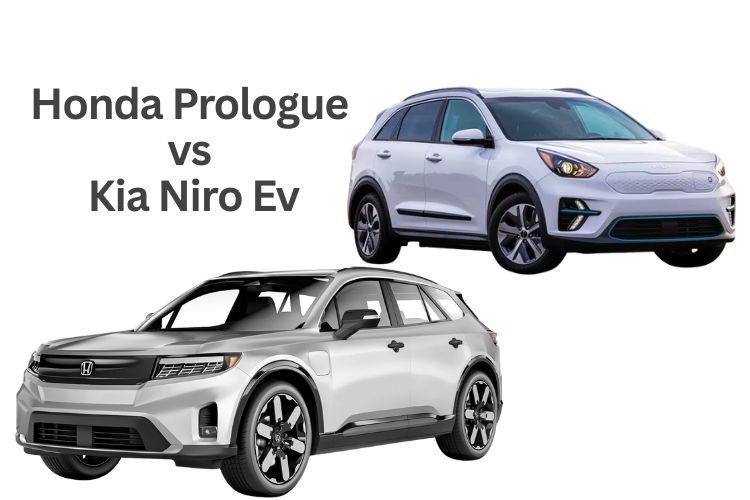
You’re staring at two electric SUVs that couldn’t be more different if they tried. One’s a Honda that doesn’t quite feel like a Honda. The other’s a Kia punching way above its weight class with a warranty that makes you wonder what they know that you don’t.
Here’s what nobody’s telling you at the dealership. That late-night scroll through specs isn’t just research paralysis. It’s your brain screaming that this decision involves real money, real daily life, and a commitment that’ll shadow every morning commute for the next five years. You’re not just picking a car. You’re choosing which version of your life you’ll wake up to.
And here’s where it gets messy. The sticker price says one thing. The federal tax credit flips the entire calculation upside down. The charging speed matters until it doesn’t. The warranty sounds boring until you’re staring at a $6,000 battery repair quote in year nine.
So here’s our path: feelings first, cold hard data second, clarity by the end. Because the right EV isn’t hiding in a spec sheet. It’s waiting in your actual calendar, your actual driveway, your actual winter mornings.
Keynote: Honda Prologue vs Kia Niro EV
The Honda Prologue versus Kia Niro EV comparison hinges on the temporary $7,500 federal tax credit advantage for the Tennessee-assembled Prologue, flipping the value equation before September 30, 2025. The Prologue delivers superior range at 308 miles, faster 150kW DC charging, and available AWD for winter capability. The Niro EV counters with better efficiency at 113 MPGe, easier urban parking, and Kia’s exceptional 10-year/100,000-mile powertrain warranty. Choose the Prologue for space, range, and all-weather confidence if you qualify for the tax credit. Select the Niro EV for lower operating costs, urban maneuverability, and long-term warranty protection.
Why This Comparison Feels Impossibly Confusing (And Why That’s Good News)
They’re Playing Two Completely Different Games
The Prologue is a proper mid-size SUV stretching 192 inches long, built on the same General Motors Ultium platform as the Cadillac Lyriq. The Niro EV is a nimble compact crossover at 174 inches, designed from the ground up by Kia to maximize urban efficiency.
That 18-inch length difference isn’t just numbers. It’s the difference between confidently hauling five adults on a road trip versus squeezing into that downtown parking spot without holding your breath. Neither is objectively better until we map your actual daily life onto these metal boxes.
The Real Worry You’re Bringing to the Dealership
You’re terrified of making a $40,000 mistake you’ll curse every time you turn the key. This is Honda’s first genuine swing at a mass-market EV, born from a partnership they needed to make happen fast. This is Kia’s refined compact winner, the product of years of iterative EV development.
The question haunting your 2 AM Google sessions isn’t which is better. It’s which fits you. And that answer lives in places spreadsheets can’t reach.
The Money Talk: Where That $8,000 Price Gap Actually Lives
Sticker Shock Reality Check
The Prologue EX starts at $47,400. The Niro EV Wind opens at $40,995. That’s a $6,405 gulf before you even sit in either vehicle. Over a five-year loan at 6% interest, that gap translates to roughly $125 more per month for the Honda.
But wait. Here’s where the game changes completely.
The Federal Tax Credit That Rewrites Everything
The Honda Prologue qualifies for the full $7,500 federal EV tax credit because it’s assembled in Spring Hill, Tennessee with compliant battery sourcing. The Kia Niro EV, built in South Korea, doesn’t qualify for a single dollar when you purchase it.
Let that sink in. If you’re an eligible buyer who can use the credit before September 30, 2025 when the program expires, the effective price flips:
| Vehicle | MSRP | Federal Tax Credit | Effective Price |
|---|---|---|---|
| Honda Prologue EX FWD | $47,400 | -$7,500 | $39,900 |
| Kia Niro EV Wind | $40,995 | $0 | $40,995 |
Read that again. The bigger, more powerful, longer-range Honda becomes cheaper than the Kia. This isn’t a typo. It’s a legislative quirk creating a massive, temporary value opportunity.
If you’re leasing, the Niro EV can access that credit through the dealer, often showing up as lower monthly payments. But for purchase? The Prologue wins on pure math.
What You’re Actually Buying with Each Dollar
The Honda gives you 18 more inches of vehicle, 20.2 more kWh of battery, optional all-wheel drive, and 55 more EPA miles of range. You’re buying space, capability, and long-trip confidence.
The Kia gives you superior efficiency at 113 MPGe versus the Prologue’s 104 MPGe combined, easier parking, and a warranty so good it borders on suspicious. You’re buying lower operating costs and long-term peace of mind.
Range Anxiety: What You’ll Actually Experience on Day 100
The Numbers Everyone Quotes But Nobody Lives
The EPA says the Prologue FWD delivers 308 miles. The AWD trims drop to 283 miles for Elite and 294 miles for EX and Touring. The Niro EV is rated at 253 miles.
Real-world highway testing at 75 mph? The Prologue Elite AWD managed 240 miles. The Niro EV hit 210 miles. Both lose roughly 15-20% from their EPA ratings when you’re cruising at interstate speeds.
The Question That Actually Decides This
Pull up your calendar. What does your real driving look like? If most days clock under 100 miles with nightly home charging, both vehicles work flawlessly. You’ll wake up to a full battery every morning like your phone.
Between 150-200 miles twice weekly? The Prologue’s extra cushion means you’re not obsessively watching the battery percentage drop. That psychological calm is worth real money.
Regularly pushing over 200 miles? You need workplace charging or you’ll be visiting DC fast chargers weekly. Neither vehicle is ideal for extreme range warriors without charging infrastructure backup.
| Daily Driving Pattern | Prologue FWD | Niro EV | Winner |
|---|---|---|---|
| Under 100 miles/day | Perfect | Perfect | Tie |
| 100-150 miles/day | Comfortable | Comfortable | Tie |
| 150-200 miles/day | Relaxed | Requires planning | Prologue |
| Over 200 miles/day | Frequent charging | Very frequent charging | Neither ideal |
Efficiency Is Where the Niro Quietly Crushes It
The Niro EV squeezes 3.7 to 4.2 miles from every kilowatt-hour. The Prologue manages 2.9 to 3.5 miles per kWh. That gap compounds fast.
At $0.14 per kWh for off-peak home charging, filling the Prologue’s 85 kWh battery costs about $12. The Niro’s 64.8 kWh pack? Around $9. Annual charging costs assuming 12,000 miles: the Niro runs under $450, the Prologue closer to $570.
Over five years, the Kia saves you roughly $600 in electricity alone. Not life-changing money, but it keeps adding up alongside lower insurance premiums from its smaller size.
Charging Reality: Coffee Break or Full Lunch?
Here’s Where the Prologue Pulls Ahead Literally
The Prologue supports 150 kW DC fast charging. Plug into a capable charger and it adds 65 miles of range in 10 minutes. A 20% to 80% charge? About 35 minutes.
The Niro EV peaks at 85 kW. That same 10-minute stop nets you roughly 30 miles. A 10% to 80% charge takes 43 to 45 minutes.
On a road trip requiring two charging stops, you’re talking about 20 to 30 extra minutes sitting at chargers in the Kia. That’s real time with restless kids or a schedule to keep.
| Charging Metric | Honda Prologue | Kia Niro EV |
|---|---|---|
| Peak DC Fast Charge | 150 kW | 85 kW |
| 10-Minute Charge (miles added) | ~65 miles | ~30 miles |
| 20-80% DC Charge Time | ~35 minutes | ~43-45 minutes |
| Level 2 Onboard Charger | 11.5 kW | 11 kW |
| Level 2 Full Charge | ~9.5 hours | ~7.5 hours |
But Most Charging Happens at Home Anyway
Both vehicles charge overnight on a Level 2 home charger in 6 to 9 hours. The Prologue delivers about 34 miles per hour of charging, the Niro around 30 miles per hour. For your daily commute, this difference evaporates.
Think of it like phone charging. Fast charging matters when you’re on the go. But most nights, you’re just plugging in and forgetting about it.
The Tesla Supercharger Access Wild Card
Both vehicles gain access to Tesla’s Supercharger network with included NACS adapters starting in 2025. This dramatically expands charging options, especially in rural areas where Tesla has invested heavily.
The Prologue’s faster charging capability means it’ll maximize those Supercharger speeds better than the Niro. But both benefit from suddenly having access to the most reliable, most extensive fast-charging network in North America.
This levels the charging infrastructure playing field in a way that didn’t exist even two years ago.
Space and Daily Life: The “Will It Actually Fit?” Test
The Honda Is Genuinely Huge and That’s Perfect or Problematic
The Prologue is 18 inches longer, 6.4 inches wider, and 1,200 pounds heavier than the Niro EV. That’s not rounding error. That’s a fundamentally different vehicle.
Cargo space behind the seats: 25.2 cubic feet for the Prologue versus 22.8 for the Niro. Respectable, but not a massive difference. Fold those seats down? The Niro’s boxy design delivers 63.7 cubic feet versus the Prologue’s 57.7 cubic feet. The smaller vehicle paradoxically swallows more when you need maximum cargo capacity.
| Dimension | Honda Prologue | Kia Niro EV | Difference |
|---|---|---|---|
| Length | 192.0 in | 174.0 in | +18.0 in |
| Width | 78.3 in | 71.9 in | +6.4 in |
| Wheelbase | 121.8 in | 107.1 in | +14.7 in |
| Rear Legroom | 39.4 in | 36.9 in | +2.5 in |
| Cargo (Seats Up) | 25.2 cu ft | 22.8 cu ft | +2.4 cu ft |
| Cargo (Seats Down) | 57.7 cu ft | 63.7 cu ft | -6.0 cu ft |
The Prologue’s long wheelbase creates exceptional rear legroom at 39.4 inches. Six-foot-tall adults sit comfortably in back. Multiple car seats install without spatial Tetris.
But that size shows up in parking lots. Tight city spots become a daily frustration. Parallel parking requires focus.
The Kia Is the Goldilocks Option for Urban Warriors
The Niro EV maneuvers like a regular compact crossover. It’s 1,500 pounds lighter, which you feel immediately in nimble handling and easier parking.
It still seats five adults with solid headroom throughout. Front legroom at 41.5 inches actually beats the Prologue’s 41.4 inches by a hair.
For urban dwellers fighting for street parking or navigating tight garage ramps, the Niro’s compact footprint saves daily sanity.
Picture Your Most Chaotic Weekly Errand
Think about your messiest Sunday. Groceries for the week, plus a Costco run, plus sports equipment. Does the Prologue’s extra width and rear-seat space swallow everything effortlessly? Or does the Niro’s efficient packaging and boxy cargo area work just fine?
If you’re hauling kids in car seats regularly, the Prologue wins. If you’re navigating downtown parking wars five days weekly, the Niro saves your blood pressure.
The Driving Experience: Power Meets Purpose
The Prologue’s Performance Advantage and Identity Questions
The base Prologue FWD delivers 220 horsepower and 243 lb-ft of torque. Adequate but not exciting. Step up to the dual-motor AWD versions and you get 300 horsepower and 355 lb-ft of torque. Zero to 60 mph happens in about 6 seconds.
But here’s the uncomfortable truth. The Prologue doesn’t feel like a Honda from behind the wheel. It shares the GM Ultium platform with Chevrolet and Cadillac EVs, and that DNA shows. The steering lacks Honda’s typical precision. The suspension prioritizes comfort over engagement.
You get a smooth, quiet cruiser that isolates you from the road. If you loved your old Honda Accord’s driving dynamics, prepare for disappointment. If you want a relaxed, comfortable family hauler, this delivers beautifully.
The GM parts bin sourcing is visible throughout the cabin. Switch gear, controls, even the way the headlight controls are buried in touchscreen menus feels distinctly non-Honda.
The Niro EV Knows Exactly What It Is
The Niro EV puts out 201 horsepower and 188 lb-ft of torque. Zero to 60 mph takes 6.7 to 7.1 seconds. It’s peppy around town with instant electric torque for confident merging.
The ride is comfortable, the cabin quiet. Steering is accurate if not particularly engaging. This isn’t a sports car pretending to be an SUV. It’s an efficient commuter that does its job exceptionally well.
The regenerative braking system controlled via steering wheel paddles earns consistent praise. Multiple levels of energy recuperation allow true one-pedal driving where you can accelerate and brake to a complete stop using only the accelerator pedal.
Not exciting. Never disappointing. Consistently confidence-inspiring for daily drives.
All-Wheel Drive: The Prologue’s Ace for Snow Belt Buyers
The Prologue offers AWD. The Niro EV doesn’t. Period.
If winter is a verb where you live, this single feature decides the comparison. Combined with 1,200 extra pounds of mass and 2 more inches of ground clearance, the Prologue AWD becomes a confident all-weather vehicle.
The Niro EV with front-wheel drive handles light snow fine. But deep snow, icy hills, and unplowed roads? You’re taking the bus.
Tech, Safety, and the Daily Magic
The Infotainment System Showdown
The Prologue features an 11.3-inch touchscreen with Google Built-in integration. Native Google Maps and Google Assistant work seamlessly. Critically, Honda included wireless Apple CarPlay and Android Auto, unlike its GM platform cousin the Blazer EV.
The Niro EV counters with a stunning dual 10.25-inch panoramic curved display under a single piece of glass. It looks like it belongs in a German luxury car costing $20,000 more. Standard Apple CarPlay and Android Auto integration rounds out the package.
But here’s where the Prologue stumbles. Headlight controls are buried in touchscreen menus. You’ll curse this design on your first rainy drive when you want to flash your high beams and instead cycle through three menu screens.
Safety: Weight, AWD, and Guardian Angels
Both vehicles come loaded with comprehensive driver assistance features. The Prologue includes Honda Sensing with adaptive cruise control, automatic emergency braking, lane keeping assist, and blind zone steering assist.
The Niro EV counters with Kia’s Drive Wise suite featuring similar capabilities. Its standout feature is Highway Driving Assist, which combines adaptive cruise with lane-centering to reduce fatigue on long drives. Reviews consistently praise how smoothly Kia’s system operates.
| Safety Feature | Honda Prologue | Kia Niro EV |
|---|---|---|
| Adaptive Cruise Control | Standard | Standard |
| Automatic Emergency Braking | Standard | Standard |
| Lane Keeping Assist | Standard | Standard |
| Highway Driving Assist | Not available | Standard |
| 360-Degree Camera | Higher trims | Available |
| Blind Spot Cameras | Available | Not available |
The Prologue’s 1,200 extra pounds generally provide better crash protection according to NHTSA principles. But both vehicles earn strong safety ratings.
The Features That Become Daily Non-Negotiables
The Prologue Elite adds a head-up display projecting speed and navigation onto the windshield. Hands-free power liftgate operation makes grocery unloading easier.
The Niro EV includes vehicle-to-load charging on the Wave trim, letting you power camping gear or tools from the battery. Digital Key 2.0 allows unlocking and starting via smartphone.
Both offer remote climate preconditioning through smartphone apps. On winter mornings, starting your car from inside the house while it warms up plugged in becomes a small luxury you’ll never surrender.
Warranty and Ownership: The Long Game That Builds Trust
Kia’s Warranty Is Almost Obnoxiously Good
Honda offers a basic 3-year/36,000-mile warranty and 5-year/60,000-mile powertrain coverage. The battery gets the federally mandated 8-year/100,000-mile warranty.
Kia crushes this with a 5-year/60,000-mile basic warranty, and an industry-leading 10-year/100,000-mile warranty covering both the powertrain and EV battery components.
That’s five additional years and 40,000 more miles of coverage on the most expensive parts of the vehicle. If you’re keeping this car for a decade, that warranty difference represents massive financial protection.
| Warranty Type | Honda Prologue | Kia Niro EV |
|---|---|---|
| Basic | 3yr/36,000mi | 5yr/60,000mi |
| Powertrain | 5yr/60,000mi | 10yr/100,000mi |
| EV Battery | 8yr/100,000mi | 10yr/100,000mi |
What This Means for Your Actual Bank Account
Budget an extra $150 to $200 yearly for an extended warranty on the Honda if you plan to keep it past year five. Or accept the risk.
Honda’s dealer network is about 35% larger nationwide, making service appointments potentially easier to schedule. But Kia dealers are increasingly common and well-equipped for EV service.
Kia’s warranty transfers to subsequent owners, adding real resale value. Buyers pay more for used Kias knowing they’re still covered.
The Ownership Caveats to Check Before Signing
The 2023-2025 Niro family had a wiring recall for airbag issues. Verify your specific VIN has been addressed before purchase.
Real-world highway efficiency often trails EPA estimates by 15-20% in both vehicles. Plan trip charging buffers accordingly.
Neither has proven long-term resale value yet as relatively new EV platforms. Depreciation remains uncertain but likely steep like most EVs.
The Head-to-Heart Map: Which One’s Actually You?
Get the Honda Prologue If You’re This Person
You haul a family of five regularly and need genuine rear-seat space. Those extra 2.5 inches of rear legroom matter when adults are back there for hours.
You live in snow country and need or want AWD capability. The dual-motor system provides confident traction that FWD simply cannot match.
You take frequent road trips over 250 miles and value the range cushion. That extra 55 EPA miles and significantly faster DC charging transform long-distance travel.
You’re an income-eligible buyer who can purchase before September 30, 2025 and claim the $7,500 federal tax credit. This temporarily makes the larger, more capable Prologue effectively cheaper than the smaller Niro.
Get the Kia Niro EV If You’re This Person
You’re budget-conscious but refuse to compromise on quality or long-term security. That 10-year/100,000-mile warranty provides unmatched peace of mind.
You drive mostly city or suburban routes with shorter daily commutes under 150 miles. The Niro’s efficiency saves money on every charge.
You value easy parking and urban maneuverability. That 18-inch length difference makes tight spots dramatically easier.
You’re leasing rather than purchasing. The $7,500 tax credit can be applied by the dealer to lower your monthly payments, creating real savings.
Walk Away from Both If You Need This
You require consistent 300-plus mile highway range without anxiety. Neither vehicle delivers this reliably, especially in winter.
You need AWD but can’t afford the Prologue’s price premium. The Niro EV simply doesn’t offer this configuration.
You can’t charge reliably at home or work. This applies to most EVs but it’s critical. Without consistent Level 2 charging access, EV ownership becomes frustrating fast.
Conclusion: Your Answer Lives in Your Calendar, Not the Spec Sheet
Look back at your last month of driving. Not what you might do someday during that theoretical cross-country road trip. What you actually did. The grocery runs, the kid pickups, the commute, the weekend errands.
If most days clocked under 100 miles with nightly home charging, the Niro EV saves you $6,400 upfront and keeps saving on every charge with superior efficiency. If you regularly push 200-plus miles or battle snow six months yearly, the Prologue’s extra range and AWD justify the premium, especially if you snag that $7,500 tax credit.
You’re not buying a battery pack and a motor. You’re buying calm weekends when the car just works. Easy Tuesdays when parking doesn’t spike your blood pressure. Confident winters when you know you’ll get home.
Do this today. Map two typical weeks of your actual driving. Check PlugShare for nearby DC fast chargers. Test drive both vehicles on the same route. Your gut will know by sunset which one disappears into your life seamlessly.
The right EV isn’t the one that wins on paper. It’s the one you forget you’re driving electric.
Kia Niro EV vs Honda Prologue (FAQs)
Which EV has better range, Honda Prologue or Kia Niro EV?
Yes, the Honda Prologue has superior range. The Prologue FWD delivers 308 EPA miles versus the Niro EV’s 253 miles. That’s 55 extra miles, meaningful for road trips or range anxiety. AWD Prologue trims drop to 283-294 miles but still exceed the Niro. Real-world highway driving reduces both by 15-20%.
Does the Kia Niro EV qualify for the $7,500 federal tax credit?
No, not when purchased. The Niro EV is assembled in South Korea, disqualifying it from the federal Clean Vehicle Credit requirements for North American assembly. However, if you lease, the dealer can claim the credit and often passes savings through lower monthly payments. The Prologue qualifies fully for purchase.
Is Honda Prologue bigger than Kia Niro EV?
Yes, significantly bigger. The Prologue is 18 inches longer, 6.4 inches wider, and rides on a 14.7-inch longer wheelbase. It’s a mid-size SUV versus the Niro’s subcompact classification. The Prologue weighs 1,200 pounds more. Rear legroom favors the Prologue by 2.5 inches. Paradoxically, the Niro offers more maximum cargo space with seats folded.
What is the charging speed difference between Prologue and Niro EV?
The difference is substantial. The Prologue peaks at 150 kW DC fast charging, adding 65 miles in 10 minutes. The Niro EV maxes at 85 kW, adding about 30 miles in the same timeframe. That’s nearly double the charging speed. On road trips requiring multiple stops, the Prologue saves 20-30 minutes overall charging time.
Does Honda Prologue have an all-wheel drive option?
Yes, the Prologue offers dual-motor AWD on EX, Touring, and Elite trims. The AWD system delivers 300 horsepower versus 220 hp for FWD models. This adds confident winter traction and performance. The Kia Niro EV offers only front-wheel drive across all trims. For snow-belt buyers, this single feature can determine the winner.