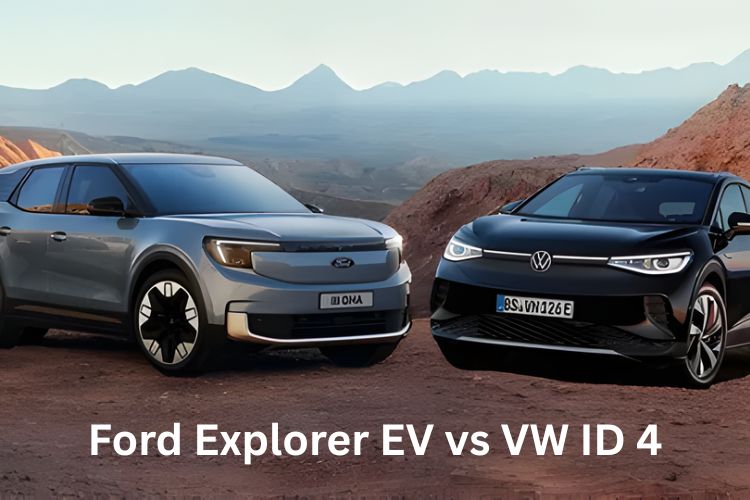
You’re staring at two browser tabs. Two nearly identical price tags. Two electric SUVs that promise to fix your gas station anxiety and save the planet while hauling your family around. And yet, here you are, frozen.
Because they look so similar on paper that you’re terrified of picking the wrong one. The one that will make every family trip just a tiny bit more annoying for the next five years.
I get it. That sinking feeling when you’ve read a dozen reviews, and they all sound like spreadsheets. You don’t want specs. You want to know which one feels like home.
Here’s the secret most articles bury: the Ford Explorer EV is actually built on Volkswagen’s MEB platform. Same bones, different soul. That changes everything about how you should think about this choice.
We’re going to cut through the platform confusion, compare what actually matters to your daily life, and help you find the EV that fits your chaos like a glove. No jargon. No BS. Just the truth about these two platform siblings that somehow ended up being completely different cars.
Keynote: Ford Explorer EV vs VW ID.4
The Ford Explorer EV and Volkswagen ID.4 share VW’s MEB electric platform but diverge significantly in execution. The Explorer offers sportier handling, innovative interior storage, and a superior 14.6-inch SYNC Move touchscreen. The ID.4 counters with 70 liters more cargo space, a softer ride, and established market presence. Both deliver 26-30 minute DC fast charging and real-world range around 240-280 miles. US buyers benefit from the ID.4’s $7,500 federal tax credit eligibility through Tennessee assembly.
The Platform Twin Paradox Nobody Wants to Talk About First
Let’s address the elephant in the room. You’ve probably heard whispers that these two are basically the same car with different badges. Is Ford just selling you a rebadged VW? And if they share so much, what are you really choosing?
Understanding the Shared DNA
Both ride on VW’s MEB skateboard chassis. The Explorer is built in Ford’s Cologne plant in Germany using VW engineering. Ford invested $2 billion in Cologne for these EVs, which tells you this isn’t some lazy rebadge job.
Think of it like two houses on the same foundation but with totally different interiors, finishes, and vibes. Same bones, wildly different personalities.
The wheelbase is nearly identical (276.7cm vs 276.6cm), battery tech is shared, but here’s what matters: the tuning, software, interior design, and daily feel are where your real decision lives.
Why This Actually Works in Your Favor
No weird reliability roulette. Both score high on build quality because they’re using proven German engineering that’s already been tested in thousands of Skoda Enyaqs and Audi Q4 e-trons.
Ford saved billions by partnering instead of reinventing the wheel, and some of that cost savings gets passed to you. They could focus their money on the stuff you actually touch: screens, seats, and suspension.
You’re not choosing between experimental tech and safe tech. You’re choosing between two well-engineered EVs with different recipes using the same quality ingredients. That’s actually reassuring.
The Numbers That Actually Change Your Life
Forget the marketing fluff. Let’s talk about the specs that affect whether you make it to grandma’s house without range anxiety and whether you’re stuck at a charger for 20 minutes or an hour.
Range Reality Check: WLTP vs. EPA (and Why It Matters)
- Ford Explorer Extended Range RWD: up to 602 km (374 miles) WLTP rating
- VW ID.4 Pro RWD: up to 291 miles EPA rating with 82 kWh battery
Here’s the catch that trips everyone up: WLTP and EPA aren’t the same test. WLTP (European) is typically more generous than EPA (American). Comparing them directly is like comparing Celsius to Fahrenheit.
Real-world translation: In actual winter driving, expect both to drop about 20-30% from their official ratings. The Explorer’s efficiency hovers around 4.1 mi/kWh in mixed conditions. Cold weather will knock you down to 3.1 mi/kWh on a bad day. The ID.4 shows similar behavior, with real-world highway range settling around 240 miles at 75mph.
Both are honest electric SUVs. Neither will strand you if you understand their real capabilities.
Charging Speed: The Coffee Break Test
Explorer ER AWD: up to 185 kW peak, 10-80% in approximately 26 minutes (DC fast charging)
Explorer ER RWD: 135 kW peak, 10-80% in approximately 28 minutes
ID.4 (82 kWh trims): 175 kW peak, 10-80% in approximately 30 minutes
Bottom line: Both get you from 10% to 80% charge in the time it takes to grab coffee and use the restroom. The difference between 26 and 30 minutes? You won’t notice it on the road.
Here’s what nobody tells you: both vehicles significantly throttle charging speed above 80% battery state. That last 20% takes forever on any EV. Plan your stops to the 80% mark and you’ll be golden.
| Model/Trim | Battery (usable) | Peak DC kW | 10-80% Time | Test Cycle |
|---|---|---|---|---|
| Explorer ER RWD | ~77 kWh | 135 kW | ~28 min | WLTP |
| Explorer ER AWD | ~79 kWh | 185 kW | ~26 min | WLTP |
| ID.4 Pro RWD | ~77 kWh | 175 kW | ~30 min | EPA |
The Daily Drive: Does It Feel Like a Ford or a Volkswagen?
Numbers tell you if it works. The drive tells you if you’ll love it. And here’s where these platform siblings start to feel like completely different cars.
The Explorer’s Agile Confidence
Ford tuned the Explorer to feel more planted and engaging, true to the brand’s “fun to drive” heritage. They didn’t just slap a blue oval on a VW and call it a day.
The RWD model hits 282 hp (some sources say 286 hp), with a nimble, almost hot-hatch feel. It completes 0-62 mph in about 6.4 seconds, which is quick enough to make merging fun rather than stressful.
The steering is lighter and more accurate. The suspension is tauter, resisting body roll in corners. If you miss the grin-per-mile factor from your old car, the Explorer whispers “I’m the fun uncle.”
Ford’s engineers played with spring rates, damper settings, and bushing stiffness to create something that feels genuinely sporty. You turn the wheel, and the car responds immediately. No lag, no mush, just direct connection.
The ID.4’s Zen-Like Composure
The VW is known for being smooth, silent, and easy. It’s a very zen driving experience, the automotive equivalent of a really good yoga instructor.
Base RWD delivers 201 hp. It’s calmer, more refined, perfect for relaxing during your daily commute. The suspension is softer, soaking up bumps like a luxury sedan.
Think of it as the difference between hiking boots and running shoes. Neither is better, they’re just asking different questions about what you want from your drive.
The ID.4 doesn’t beg you to take the long way home. It just gets you there comfortably, quietly, and without drama.
Safety and Assistance
Both pack advanced driver assistance, smart cruise control, and lane-keeping tech. The Explorer adds extra knee airbags for that peace-of-mind factor parents crave.
Both vehicles have been criticized for slightly spongy brake pedal feel, a common challenge when blending regenerative and friction braking. You’ll adjust after a week.
The key question: which one feels less jerky in stop-and-go traffic? Test this yourself, because your sanity during the daily commute depends on it.
Space and Practicality: The Stroller, Groceries, and Car Seat Test
This is where the rubber meets your actual life. Because cargo space isn’t about liters, it’s about whether your folded Bugaboo stroller fits flat and if the front passenger is comfortable with a rear-facing car seat behind them.
The Trunk Tetris Challenge
Explorer boot: 470 litres. Clever, boxy design despite being about 10 cm shorter overall.
ID.4 boot: about 540 litres (roughly 70 litres larger). Wide opening makes loading easier.
Honest take: The ID.4 wins on sheer trunk volume. That extra 70 liters means the difference between fitting four suitcases or five. It’s not trivial.
But the Explorer’s upright shape can sometimes pack awkward items better. Think camping gear, flat-pack furniture, or that weird shaped thing you bought at IKEA without measuring first.
With seats folded, the ID.4 balloons to 64.2 cubic feet while the Explorer maxes out at 50.2 cubic feet. If you’re hauling lumber or moving a college student, the VW is your vehicle.
The Interior Vibe Check
Explorer’s “MegaConsole”: This is a game-changer. It fits a laptop, has lockable storage behind that giant 15-inch portrait screen. Perfect for family clutter and phones/keys that always go missing.
That hidden “My Private Locker” behind the tilting screen? It’s where you’ll stash the stuff you don’t want the kids finding. Or your emergency snacks. No judgment.
ID.4’s minimalist cabin: It’s like a clean, modern Scandinavian apartment. Spacious and open, but sometimes that “clean” can feel a bit sterile or empty. Where do your snacks actually go?
Both seat five comfortably, but the Explorer’s softer seats hug you after a long day, while the ID.4’s firmer perches keep you alert. The Explorer feels more like your living room. The ID.4 feels more like a really nice hotel lobby.
The Tech Experience: Helpful Friend or Annoying Backseat Driver?
Your entire relationship with these cars lives in the software. A bad infotainment system can turn a great car into a daily frustration.
The Explorer’s Command Center
That giant 14.6-inch vertical touchscreen runs Ford’s SYNC Move software. And it physically tilts through 30 degrees, which is both cool and genuinely useful for reducing glare.
The screen is sharp and responsive. SYNC Move is faster and more logical than VW’s system. But sometimes finding climate control still feels like a scavenger hunt through nested menus.
- Pro: The portrait orientation is perfect for maps. Apple CarPlay and Android Auto work wirelessly and pair fast.
- Con: Some icons are small, and you might miss physical buttons for volume during the first week.
The good news? Ford learned from VW’s mistakes. They watched customers complain about the ID.4’s interface for two years, then built something better.
The ID.4’s Functional (But Improving) Approach
VW’s 12.9-inch screen (on higher trims) is more conservative, designed for straightforward usability. When it works, it works fine.
Let’s be blunt: the ID.4’s early software and touch-button controls were frustrating. VW has improved it with updates and backlit sliders, but the reputation lingers like smoke.
The fundamental issue is that VW went all-in on touch controls, including basic stuff like volume and temperature. At night, in winter, with gloves on, this becomes genuinely annoying.
Many ID.4 owners just use CarPlay/Android Auto 100% of the time and ignore VW’s native software. That’s telling.
Try This Before You Buy
Go to both dealerships. Don’t even drive them at first. Just sit for 10 minutes in each.
Try to pair your phone. Try to adjust the temperature. Try to find the cup holder that actually holds your specific travel mug size.
The best EV for your family is the one that makes your chaotic life feel simpler, not more complicated. If you’re wrestling with the interface at the dealership, imagine wrestling with it in January rain with three kids screaming in the back.
The Money Talk: Sticker Price and What Happens After
They both cost about the same to buy. But what about the stuff that happens after you sign the paperwork?
Initial Investment
- Explorer starting price: approximately $41,745 (base trim European pricing, converted)
- ID.4 starting price: approximately $41,420 (base trim US pricing)
Add roughly $2,000 for AWD on either. Factor in Ford’s lease deals and VW’s potential federal tax credit eligibility in the US, which varies by year and trim.
In Europe, the Explorer Extended Range models start around £45,875 or €47,000-€49,500 depending on market. Ford later introduced cheaper “Style” and “Select” trims to broaden appeal.
The Depreciation Reality Nobody Wants to Discuss
Here’s the shocking stat from a UK whole-life cost analysis: the ID.4 is predicted to have the highest depreciation at £27,730, while the Explorer wasn’t far behind at £25,935.
Neither is holding value like a Toyota Camry. EVs generally depreciate faster due to battery anxiety and rapid tech improvements. It’s just the reality of early adoption.
Cost per mile in the same analysis: Explorer at 53.09p versus ID.4 at 57.42p. Neither wins the efficiency crown, but they’re close enough that it shouldn’t sway your decision.
Translation: You’re not choosing poverty with either option. Both deliver value that pays back in gas savings within two years if you’re replacing a 25-mpg SUV.
Market Availability Context (The US Problem)
Here’s where things get complicated for American buyers.
Explorer EV is primarily a European-market model. Ford is building it exclusively in Cologne, Germany. Ford is even trimming Cologne plant shifts amid softer EU demand.
ID.4 has strong presence in the US with proven EPA ratings, broad dealer network, and established charging infrastructure partnerships. Crucially, it’s assembled in Chattanooga, Tennessee.
That Tennessee assembly? It makes the ID.4 eligible for the full $7,500 U.S. federal Clean Vehicle Tax Credit. The German-built Explorer? Zero dollars in federal credits.
If you’re in the US, the ID.4 is the safer bet for service, support, and that massive $7,500 incentive. If you’re in Europe and want fresh tech, the Explorer shines.
For confused US shoppers searching “Ford Explorer EV”: Ford is developing a future three-row electric Explorer for North America. That’s a different vehicle. For now, if you want a Ford EV in the States, look at the Mustang Mach-E.
Conclusion: Finding Your Electric Soulmate
You now see why the Explorer feels long-legged in EU tests and why the ID.4’s EPA rating reassures American buyers. You understand that shared platform doesn’t mean shared personality. Software, tuning, and daily details change everything.
Your EV, Your Values
Choose the Explorer if you value engagement, clever storage solutions like the MegaConsole, a modern tech-forward vibe, and you’re willing to tolerate some infotainment friction. It’s for the driver who wants that “grin factor” back. It’s the sportier choice, the one that makes you take the long way home just because.
Choose the ID.4 if you prioritize proven space, a smoother zen-like ride, straightforward functionality, and you value VW’s established EV track record. It’s the practical choice, the one that maximizes utility and minimizes drama. Plus, if you’re in America, that $7,500 tax credit makes the financial math incredibly compelling.
Your One Action Today
Forget the specs for one hour. Go sit in both of them. Touch the screens. Open the boot. Imagine your messy Tuesday morning in one, then the other. Which one makes that mental movie feel easier?
Then, pick your test cycle (EPA if you’re in the US, WLTP if you’re in Europe) and compare charge times at your nearest 150-200 kW station using PlugShare or a similar app.
This is not about finding the “best” car on some universal ranking. It’s about finding the best car for you. The one that matches your road-trip patterns, your cargo reality, and your daily vibe.
The platform they share? That’s actually good news. It means you’re choosing between two well-engineered EVs, not trying to spot the lemon.
You’ve got this. When the numbers match your life and the seat feels right, range anxiety turns into road serenity. Now stop overthinking it and go drive them.
VW ID.4 vs Ford Explorer EV (FAQs)
Are the Ford Explorer EV and VW ID.4 the same car?
No, they’re not the same. Yes, they share Volkswagen’s MEB electric platform—the same foundation, battery tech, and basic architecture. But Ford completely redesigned the interior, wrote different software, and tuned the suspension to feel sportier and more engaging.
The Explorer has a 14.6-inch tilting touchscreen and the clever MegaConsole storage. The ID.4 focuses on maximum cargo space and a softer, more comfortable ride. Think of them as siblings raised in different households. Same DNA, totally different personalities.
Can I buy the Ford Explorer EV in the United States?
No, not currently. The Ford Explorer EV is built exclusively in Cologne, Germany, and sold primarily in European markets. Ford has not announced plans to bring this specific model to the US.
If you’re an American buyer searching for this vehicle, you’re likely thinking of the traditional gas-powered three-row Explorer (which is getting an electric version eventually), or you should consider the Mustang Mach-E as Ford’s current US-market electric SUV.
The confusion is real, and Ford hasn’t helped by using the Explorer name for two completely different vehicles.
Which has better range Explorer EV or ID.4?
It depends on which test cycle you trust. The Explorer Extended Range RWD claims 374 miles WLTP (European testing), while the ID.4 Pro RWD offers 291 miles EPA (US testing).
But you can’t compare these directly WLTP is more optimistic than EPA. In real-world mixed driving, both deliver similar efficiency around 3.5-4.1 mi/kWh. In winter, expect both to drop 20-30% from official ratings.
Cold weather doesn’t care about badges. Both are honest electric SUVs that’ll get you 240-280 real-world miles in good conditions, less in winter highway driving.
Do Explorer EV and ID.4 charge at the same speed?
Almost. The Explorer AWD peaks at 185 kW while the ID.4 tops out at 175 kW for DC fast charging. In practice, both charge from 10% to 80% in about 26-30 minutes under ideal conditions.
The real-world difference is negligible maybe one extra sip of coffee. Here’s the important part both articles miss: after 80% battery charge, both vehicles throttle charging speed dramatically.
That last 20% takes forever on either car. Plan your road trip stops to the 80% mark, grab food, and you’ll never notice which charges “faster.”
Is the Explorer EV worth €6,000 more than the ID.4?
That’s the wrong question. It’s not about raw price, it’s about what you value. The Explorer’s premium (when comparably equipped) gets you a more engaging driving experience, that massive tilting touchscreen, superior interior storage with the MegaConsole, and a more distinctive design.
The ID.4 counters with significantly more cargo space (540L vs 470L), a proven track record, and in the US, eligibility for a $7,500 tax credit that the German-built Explorer can’t touch.
In Europe, if you prioritize driving enjoyment and tech, the Explorer justifies its price. In America, the tax credit math makes the ID.4 an absolute no-brainer.