You’re standing in your driveway at 6:47 AM, coffee going cold in your hand, staring at your beat-up SUV. The “check engine” light’s been winking at you for three weeks. Gas just hit $4.20 again. And you know, deep in your gut, that your next vehicle needs to be electric.
But here’s where the panic sets in. Ford or Tesla? The Explorer EV with its familiar buttons and Ford badge, or the Model Y with its sleek touchscreen and Supercharger magic? Your neighbor swears by his Tesla. Your brother-in-law’s Ford forum post has 247 replies debating panel gaps. Reddit’s a war zone. YouTube reviewers contradict each other. And every bone in your body is screaming: “What if I pick wrong and hate this thing every single morning for the next seven years?”
I get it. I’ve been there. That paralysis where the spec sheets blur together and you can’t tell if you’re making a $50,000 mistake or a brilliant choice.
Here’s what we’re going to do together. We’ll cut through the hype, pair your gut feelings with cold facts, and map out which compromises you can actually live with. By the end, you’ll know exactly which vehicle fits your messy, beautiful, real life. Let’s go.
Keynote: Ford Explorer EV vs Tesla Model Y
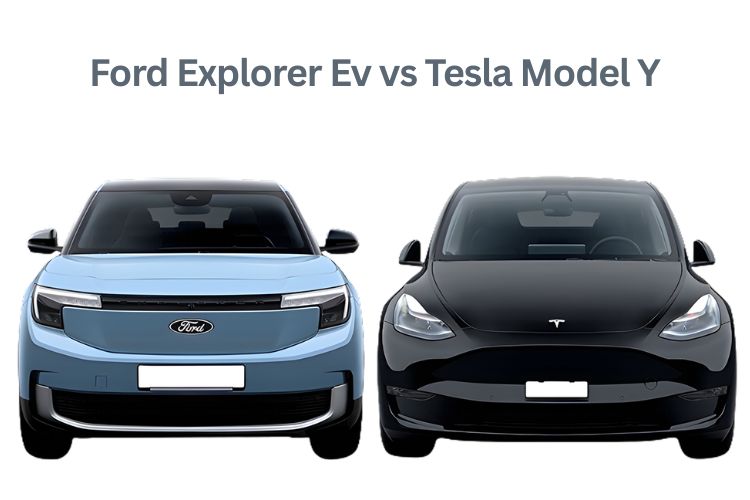
The Ford Explorer EV versus Tesla Model Y comparison represents a fundamental choice between traditional automotive comfort and tech-forward innovation. Tesla dominates in cargo space, charging infrastructure, and proven efficiency. Ford counters with superior predicted reliability, extensive dealer networks, and a more conventional user experience. Neither is definitively better. The Model Y excels for tech enthusiasts prioritizing seamless charging and maximum utility. The Explorer suits buyers valuing familiar ergonomics and European-tuned comfort. Your decision hinges on whether you embrace Tesla’s radical minimalism or prefer Ford’s evolution of traditional automotive values.
The Identity Crisis: Which Story Do You Want to Live In?
The Minimalist Future vs. The Comfortable Present
The Model Y is that sleek downtown loft where everything, including the thermostat and the lights, runs through one app. One giant touchscreen controls literally everything. Want to open the glove box? Touchscreen. Adjust the mirrors? Touchscreen. It’s like living inside a tech demo, and you either love that sci-fi vibe or you don’t.
The Explorer EV is the renovated family home with crown molding and smart upgrades. It’s got Ford’s SYNC 4 system with that massive 14.6-inch screen, sure. But it also has physical buttons for climate control, a proper gauge cluster in front of you, and knobs that just work. No hunting through menus to turn down the heat while you’re merging onto the highway.
This isn’t about which car has better specs on paper. It’s about which room feels like yours when you’re stuck in traffic, late for pickup, with a crying toddler in the back seat.
The Platform Secret Nobody Talks About
Here’s the thing nobody tells you upfront: the Explorer EV is essentially a Ford-badged Volkswagen. It’s built on VW’s MEB platform, the same bones that hold up the ID.4 and Audi’s Q4 e-tron. Ford borrowed the recipe, added their own spices, and tuned the suspension to feel like a Ford.
This isn’t necessarily bad. It’s smart business, actually. Ford got a proven electric platform without spending five years and billions of dollars inventing their own. They focused their energy on making the interior, the ride, and the tech feel distinctly Ford.
The Model Y? Pure Tesla, stem to stern. Every nut, bolt, and line of code is theirs. This vertical integration lets them push software updates that actually improve your car overnight. But it also means when something breaks, you’re at Tesla’s mercy for parts, timelines, and service quality.
Translation: Ford borrowed proven bones but controls your service experience. Tesla controls everything but gambles on its own quality.
The Availability Reality Check
Before we go any further, we need to address the elephant in the driveway. The Ford Explorer EV is not available in the United States. Period. Full stop.
It’s a Europe-only vehicle, built in Cologne, Germany. If you’re reading this from Detroit, Denver, or Dallas, this entire comparison just became theoretical unless you’re willing to wait. Ford has hinted at potential US plans, but there’s no confirmed launch date, no confirmed pricing, and no guarantee the US version would even use the same platform.
If you’re in the US and you need an EV now, the Model Y wins by default. It’s here, it’s available, and you can drive one off the lot next week.
For European buyers? Keep reading. You’ve got a genuine choice to make.
Range Anxiety: The Numbers That Actually Let You Sleep
The Brochure Promises vs. Your Winter Commute
Let’s talk about the numbers that keep you up at night. How far can these things actually go?
The Explorer EV Extended Range boasts a mouthwatering 602 km (374 miles) on the WLTP cycle with its 77 kWh battery. That’s the number Ford plasters on every billboard. The Standard Range model with its smaller 52 kWh pack manages 374 km (233 miles). The AWD Extended Range, with its bigger motors and 79 kWh battery, slots in at 529 km (329 miles).
The Model Y Long Range RWD claims 337 miles on the EPA cycle. The Long Range AWD delivers 311 miles. The Performance variant, with all that power, drops to 277 miles.
But here’s the catch: WLTP and EPA are different tests. WLTP, the European standard, is typically 10 to 15 percent more optimistic than EPA. So that 374-mile Explorer? In real EPA terms, you’re looking at 300 to 320 miles. Still excellent. Still competitive with the Model Y. But not the magical 50-mile lead the brochure suggests.
And neither of these numbers account for winter. Or highway speeds. Or that lead foot you swear you don’t have.
Charging Speed: “Can I Get Back on the Road…Fast?”
When you’re three hours into a road trip and the battery’s at 18%, charging speed becomes religion.
The Explorer EV can gulp electrons at up to 185 kW peak power. From 10 to 80 percent, you’re looking at about 26 to 28 minutes. Ford gives you access to the BlueOval Charge Network, which aggregates public chargers across Europe, and yes, that now includes Tesla Superchargers with an adapter.
The Model Y charges even faster at Tesla’s V3 Superchargers, hitting 250 kW peak. The 10 to 80 percent dance takes roughly 15 to 20 minutes. Add 280 km in 15 minutes, and you’re back on the road before you finish your bathroom break and overpriced rest-stop sandwich.
| Feature | Ford Explorer EV | Tesla Model Y |
|---|---|---|
| Peak DC Charging | 185 kW | 250 kW |
| 10-80% Charge Time | 26-28 minutes | 15-20 minutes |
| Network Access | BlueOval + Supercharger (adapter) | Native Supercharger access |
| Typical Range Added (15 min) | ~180-200 km | ~230-280 km |
Here’s where Tesla’s vertical integration shines. You roll up to a Supercharger, plug in, and it just works. No app. No fumbling with payment. The car talks to the charger, billing happens automatically, and you’re charging.
With the Explorer, even at a Supercharger, you need the adapter, the FordPass app, and sometimes a little prayer. It works. But it’s not seamless.
Winter Is Coming (And So Is Your Range Panic)
Real talk: every EV loses range in the cold. Batteries hate winter. The Explorer’s official consumption ranges from 15.5 to 23 kWh per 100 km depending on conditions. That’s like your phone battery draining twice as fast when it’s freezing outside.
Both vehicles will lose 15 to 20 percent of their range when temperatures drop below freezing. Some extreme cases report 30 to 40 percent losses at minus 10 degrees Celsius. Factor this into every winter road trip fantasy, or you’ll be that person at the charger, panicking while your range estimate drops faster than your body temperature.
Space, Towing & the Daily Chaos: “Can It Swallow Our Weekend?”
The Cargo Reality That Matters More Than 0-60 Times
Acceleration numbers are fun for bragging rights. But cargo space? That’s where life actually happens.
| Feature | Ford Explorer EV | Tesla Model Y |
|---|---|---|
| Cargo (Seats Up) | 450-470 L (15.9-16.6 cu ft) | 854 L (30.2 cu ft) |
| Cargo (Seats Folded) | 1,400 L (49.4 cu ft) | 2,158 L (76.2 cu ft) |
| Front Trunk | None | 117 L (4.1 cu ft) |
| Towing Capacity | 1,200 kg AWD | 1,600 kg (3,527 lbs) |
The Model Y absolutely destroys the Explorer in practical space. That 854-liter trunk is nearly double Ford’s 450 liters. Plus, Tesla gives you a frunk, a brilliant 117-liter bonus space perfect for charging cables, groceries, or hiding birthday presents from nosy kids.
If you’re the family that road-trips with bikes, strollers, coolers, and half your garage “just in case,” the Model Y is your answer. The Explorer works fine for daily life and weekend errands. But Tesla engineered every millimeter for maximum utility.
Interior: Where You’ll Actually Spend Thousands of Hours
The Explorer’s party trick is that sliding 14.6-inch touchscreen. Push it up, and it reveals a hidden storage cubby big enough for a purse, wallet, or that road-trip snack stash you don’t want the kids to find. Gimmick? Maybe. But it’s also genuinely useful and shows Ford thought about real human problems.
The Model Y’s interior is stark. Minimalist. Some call it elegant. Others call it “an Apple Store on wheels.” Everything runs through that 15.4-inch screen. Even the speedometer lives in the corner of the center display, not directly in your line of sight. You either love the clean aesthetic or you spend six months wishing for a single, blessed volume knob.
Material quality? Ford’s expected to deliver traditional soft-touch materials and consistent panel gaps. Tesla’s been improving, but Consumer Reports still gives Model Y body hardware a brutal 1 out of 5 score. Panel gaps, paint issues, and misaligned trim are not urban legends. They’re documented complaints.
The Build Quality Lottery Nobody Wants to Play
Tesla’s Infamous Quality Control Russian Roulette
Let’s be brutally honest: buying a Tesla is playing quality roulette. Some owners pick up flawless cars. Others discover panel gaps you could fit a credit card through, water leaks after the first rain, or doors that don’t quite align.
The 2023 Model Y alone racked up over 605 complaints with NHTSA. That’s not a typo. 332 of those were about forward collision warnings and phantom braking, where the car slams on the brakes for invisible threats. That’s terrifying when you’re driving in traffic.
One owner on Reddit summed it up perfectly: “Mine had slightly misaligned doors. They give you 10 days to report problems. LOL.” That’s not a customer service experience. That’s a dare.
Consumer Reports gives Tesla’s body hardware a 1 out of 5. For context, that’s the lowest possible score for a brand charging premium prices.
Ford’s MEB Platform: Borrowed Genes, New Problems
Ford’s not perfect either. That borrowed VW platform comes with inherited quirks. One European owner reported a brand-new Explorer throwing an engine fault code on day one. The fix? A three-month wait for parts shipped from Germany.
The touch-sensitive steering wheel controls are another daily frustration. They activate accidentally when you adjust your grip, changing the volume or skipping songs mid-drive. It’s the kind of tiny annoyance that compounds into rage over six months.
Autocar praised the Explorer’s efficiency and ride quality but rated its charging experience as just “so-so,” which is polite British code for “could be better.”
Safety & Warranty: The Peace-of-Mind Equation
Both vehicles are exceptionally safe. The Explorer EV earned an 89 percent score for adult occupant protection from Euro NCAP. The Model Y holds IIHS Top Safety Pick+ honors for five straight years and a 5-star NHTSA rating.
Warranty coverage is nearly identical. Both offer 8-year battery warranties. Model Y extends that to 192,000 km for the entire powertrain, which is genuinely outstanding.
| Warranty Feature | Ford Explorer EV | Tesla Model Y |
|---|---|---|
| Battery Warranty | 8 years | 8 years / 192,000 km |
| Service Network | Extensive Ford dealer network | Limited Tesla service centers |
The real difference is service access. Ford has thousands of dealers across Europe. Tesla has a fraction of that. When something breaks, Ford’s infrastructure means shorter wait times and more convenient locations. Tesla’s sparse network can mean driving 100 km to the nearest service center and waiting weeks for an appointment.
Money Talk: Beyond the Sticker to the Real Cost
The Price Tag That Makes You Wince
Let’s talk cold, hard cash.
| Model | Starting Price (Europe) |
|---|---|
| Ford Explorer EV Standard Range | €39,875 / £39,875 |
| Ford Explorer EV Extended Range | ~€49,500 |
| Ford Explorer EV Extended Range AWD | ~€57,200 |
| Tesla Model Y RWD | €44,990 |
| Tesla Model Y Long Range AWD | ~€54,990 |
| Tesla Model Y Performance | ~€60,995 |
The Explorer starts cheaper, especially at the entry level. But once you step up to the Extended Range model most people actually want, pricing converges with Tesla’s RWD Model Y.
And here’s the psychological torture: Tesla prices move like cryptocurrency. Buyers from six months ago are watching their resale values drop in real time as Elon tweets out surprise price cuts.
The Five-Year Truth (Ownership Costs That Sneak Up)
Resale value? The Model Y has a proven track record of holding value better than most EVs. The Explorer’s too new for solid data, which means you’re gambling on Ford’s brand strength versus Tesla’s cult following.
Maintenance costs should favor Ford. That vast dealer network means competitive pricing and more service options. Tesla’s specialized centers can charge premium rates because, well, where else are you going to go?
Insurance varies wildly by market and personal history. Run your own quotes before assuming anything.
Financing That Changes the Game
Monthly payment deals can completely flip this comparison. European incentives, regional subsidies, and manufacturer financing offers change faster than gas prices. The Explorer might start cheaper, but if Tesla’s offering 0.9 percent APR and Ford’s at 4.5 percent, your total cost just shifted dramatically.
In the US, if the Explorer ever arrives, tax credit eligibility could make or break it. The Model Y qualifies for the full $7,500 federal credit. A German-built Explorer on a VW platform? Not a chance. That’s an immediate $7,500 disadvantage that’s nearly impossible to overcome.
The Decision Framework: Stop Looking for “Best”—Find Yours
Choose the Explorer EV If…
You’re in Europe and crave that familiar Ford feel with physical buttons and a proper instrument cluster. You want 370+ miles of WLTP range without paying for AWD. Ford’s massive dealer network gives you peace of mind for service and repairs. You’re deeply skeptical of Tesla’s quality control lottery and would rather bet on Ford’s century of manufacturing experience.
You value a top-rated, hands-free driver assistance system in BlueCruise over Tesla’s more ambitious but less polished Autopilot. You don’t need maximum cargo space and prefer a slightly more compact SUV footprint.
Choose the Model Y If…
Road trips are your life, and Supercharger network density is non-negotiable. That seamless plug-and-charge experience, where you roll up and it just works, is worth every penny. You need maximum cargo space (854 liters plus a frunk) for hauling family, gear, and your entire garage. You’re okay playing quality roulette in exchange for Tesla’s tech ecosystem, over-the-air updates, and that minimalist aesthetic.
You love screen-first living and don’t need physical controls. The 15-minute charge that adds 230 to 280 km makes long-distance travel genuinely viable. You want the fastest acceleration (3.5-second 0-60 in the Performance) for the sheer thrill of it.
The Honest “Maybe Wait” Consideration
The Model Y “Juniper” refresh is landing in Europe in 2025 with promised efficiency and suspension upgrades. If you’re not in a rush, seeing what that brings could be smart.
For the Explorer, if you’re in the US, you’re waiting regardless. And even in Europe, those early reports of parts delays and quality hiccups suggest letting the first wave of buyers work out the kinks might save you headaches.
Conclusion: Your Garage, Your Rules—and Your Peace of Mind
You arrived here paralyzed by specs, fanboy wars, and that gnawing fear of a $50,000 mistake. We’ve named that fear, faced the build quality truth, mapped every trade-off, and paired emotional pulls with hard evidence. Neither car is perfect, and that’s okay. The Model Y is the tech-forward athlete with cargo dominance and charging superpowers. The Explorer is the comfortable, European-tuned veteran with range that eases anxiety and a familiar face.
Your incredibly actionable first step for today: Write down your three non-negotiables. “Supercharger speed.” “Cargo for two kids and a dog.” “Quality I can see and touch.” Match them to the facts above. Then schedule back-to-back test drives on the same route, same weather. Trust your gut when you close the door and sit in silence.
Remember that knot in your stomach from the driveway? This choice unties it. You’re not picking the “best” EV. You’re choosing which compromises fit your family’s messy, beautiful, real life. Whichever you choose, you’re driving into wide-open roads with worries left in the dust. You’ve got this.
Tesla Model Y vs Ford Explorer EV (FAQs)
Is the Ford Explorer EV coming to America?
No confirmed launch date exists. The Explorer EV is currently Europe-only, built in Germany on VW’s platform. Ford has hinted at US electric SUV plans, but nothing official for this specific model. If you’re in the US and need an EV now, the Model Y is your only option in this comparison.
Which has better range: Ford Explorer EV or Tesla Model Y?
The Explorer EV Extended Range claims 374 miles WLTP, but that translates to roughly 300 to 320 miles EPA. Model Y Long Range RWD delivers 337 miles EPA. They’re nearly identical in real-world range, with Tesla having a slight edge in proven, conservative EPA testing.
Can you use Tesla Superchargers with Ford Explorer EV?
Yes, in Europe, Ford EV owners can access Tesla Superchargers using an NACS adapter through the FordPass app. However, it’s not as seamless as native Tesla access. You need the adapter, the app, and sometimes patience. Native Tesla owners just plug in and go.
What is the real charging speed after 80 percent?
Both vehicles drastically throttle charging power after 80 percent to protect battery longevity. Model Y drops from 250 kW to around 40 kW. Explorer drops from 185 kW to roughly 50 kW. This is why road-trippers plan stops from 20 to 80 percent, not 10 to 100 percent.
How much does cold weather reduce EV range?
Expect 15 to 20 percent range loss in typical winter conditions for both vehicles. Extreme cold at minus 10 degrees Celsius can push losses to 30 to 40 percent. Batteries perform poorly in cold weather. Always plan winter trips with buffer range and expect longer charging times as batteries need warming.