You’re standing between two showrooms, palms sweating, about to drop more money than your first house cost on a car that defines who you think you are.
The real fear isn’t picking wrong specs. It’s becoming the person who bought yesterday’s tech at tomorrow’s prices. Or worse, the person who chose “sensible” and regretted every boring commute for five years. You’ve bookmarked seventeen comparison articles. You’ve watched every YouTube review. And somehow, you’re more confused than when you started.
Every comparison you’ve read feels like marketing copy or spec-sheet regurgitation. Nobody’s answering what you’re actually asking: “Which one feels like me?”
Here’s the path forward. We’re cutting through the noise together. You’ll get the cold, hard data wrapped in warm, human truth. By the end, you’ll know which keys belong in your pocket. No jargon. No corporate fluff. Just the stuff that matters when you’re handing over a check that could’ve bought a small sailboat.
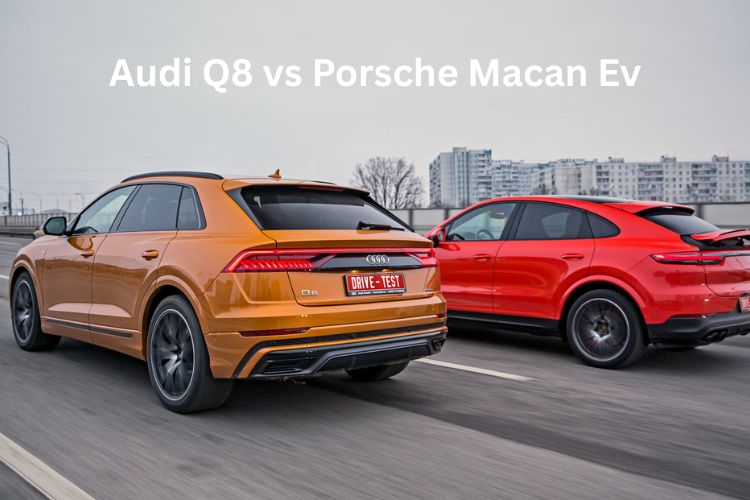
Keynote: Audi Q8 vs Porsche Macan EV
The Audi Q8 e-tron versus Porsche Macan EV comparison reveals two distinct German EV philosophies. The Q8 e-tron prioritizes luxury comfort and maximum space but faces discontinuation concerns. The Macan EV delivers superior PPE platform technology with 40% faster charging, better efficiency, and cutting-edge 800V architecture. Both excel at their intended missions. Your choice depends on whether you value serene spaciousness or future-proof performance dynamics.
The Uncomfortable Truth About Timing: Swan Song vs. Opening Act
Why This Comparison Exists at an Awkward Moment
These aren’t natural competitors. They’re caught in different life stages. One’s playing its farewell tour while the other’s dropping its debut album.
The Audi Q8 e-tron and Porsche Macan EV share corporate DNA through Volkswagen Group, sure. But they’re separated by an entire generation of electric vehicle thinking. And that gap matters more than you’d think.
The Audi’s Beautiful Goodbye
The Audi Brussels factory closed its doors in February 2025. Production ended. Just 66,000 total units were ever built. The Q8 e-tron is officially discontinued, and you’re looking at whatever inventory remains on dealer lots.
Here’s what stings: The Q8 e-tron was built on the MLB Evo platform, a modified version of the architecture that underpins Audi’s gas-powered Q7 and Q8. It’s a brilliantly executed adaptation, don’t get me wrong. Audi took a combustion engine platform and transformed it into a capable luxury EV. But you’re paying luxury electric SUV prices for what is fundamentally recycled architecture.
This matters for resale value. History isn’t kind to discontinued models. When parts availability becomes spotty three years from now, when warranty support gets transferred to “legacy vehicle” departments, when the next owner sees “discontinued 2025 model” on the Carfax, your trade-in value takes a hit. The data from other discontinued luxury EVs shows first-year depreciation curves that make your stomach hurt.
And there’s that nagging feeling. You know the one. Is this already obsolete? Am I buying the automotive equivalent of an iPhone the day before the new one drops?
The Porsche’s Expensive Hello
The Macan EV is Porsche’s answer to that question. It’s purpose-built on the Premium Platform Electric (PPE), an 800-volt architecture co-developed with Audi specifically for electric vehicles. This is ground-up EV engineering. No compromises. No borrowed bones from the parts bin.
That Porsche badge isn’t just bragging rights. It’s a $5,000 to $30,000 premium depending on which trim levels you’re comparing. The Macan 4 starts at $78,800 versus the Q8 e-tron Premium at $76,095. Nearly identical. But by the time you reach performance trims, the gap explodes. The SQ8 e-tron tops out around $93,000. The Macan Turbo Electric? $105,300.
You’re beta-testing Porsche’s electric future. And they’re charging you handsomely for the privilege.
Charging Speed: The 10-Minute Difference That Changes Everything
The Numbers That Steal or Give You Back Your Life
Let’s talk about the thing that matters most on road trips and the thing you’ll barely think about 90% of the time.
Porsche Macan EV: 270 kW peak DC fast charging. The battery goes from 10% to 80% in 21 to 33 minutes depending on conditions. That’s 800-volt superpower at work.
Audi Q8 e-tron: 170 kW peak charging rate. Same 10-80% session takes about 31 minutes.
Here’s the plain English translation. The 800-volt electrical architecture in the Macan moves electrons faster and more efficiently than the Q8 e-tron’s 400-volt system. It’s the difference between gigabit fiber internet and old-school cable broadband. Both get the job done, but one feels like you’re living in the future.
What This Means on Your Actual Road Trip
Ten minutes doesn’t sound like much. But let’s do the math that actually matters.
On a single charging stop, the Macan gets you back on the road while you’re still deciding whether you want a second coffee. The Audi? You’ve finished that coffee and you’re scrolling Instagram waiting for the percentage to climb.
Over a 1,000-mile road trip with three charging stops, you’ve just saved 30 minutes. Over a year of quarterly road trips? That’s three hours of your life reclaimed. Three hours not standing in a Walmart parking lot in July heat. Three hours closer to the beach, the mountains, or wherever you’re actually trying to go.
The Porsche’s bank charging technology is the secret weapon nobody talks about. When you pull up to an older 400-volt DC fast charger (which is most of them), the Macan’s battery pack splits itself into two 400-volt banks and charges them in parallel. You still get up to 135 kW, which beats the Q8 e-tron’s theoretical maximum. It’s backwards compatibility done right.
The Home Charging Reality Check
Now let’s be brutally honest about something. If 95% of your charging happens overnight in your garage on a Level 2 home charger, you will literally never notice this difference.
Your car sits for eight hours. It charges fully whether it can accept 270 kW or 70 kW because you’re asleep anyway. The 800-volt advantage only matters when you’re standing next to the car waiting for it to charge. For daily commuters who rarely road trip, this entire section might as well not exist.
Ask yourself: How often do you actually take trips over 250 miles? Be honest, not hopeful.
Range Anxiety: Paper Promises vs. What You’ll Actually See
The EPA Ratings Everyone Quotes
| Model | EPA Range | Real-World Range |
|---|---|---|
| Audi Q8 e-tron | 272-285 miles | 245-265 miles |
| Porsche Macan 4 EV | 308 miles | 240-280 miles |
| Porsche Macan RWD | 315 miles | 275-290 miles |
The Audi Q8 e-tron delivers between 272 and 285 miles on the EPA cycle, depending on whether you got the 19-inch wheels or splurged for the 21-inch rollers that look amazing and cost you 13 miles per charge.
The Porsche Macan EV claims 288 to 315 miles depending on configuration. The base rear-wheel-drive model hits that 315-mile figure. The Macan 4 AWD sits at 308 miles. The performance models drop to 288 miles because physics doesn’t care about your ego.
But here’s the thing about EPA numbers. They’re like menu photos at chain restaurants. Technically accurate under very specific conditions you’ll never replicate in real life.
Real-world testing shows both vehicles lose 10-15% of their EPA range in typical mixed driving. Cold weather? Highway speeds over 75 mph? Aggressive acceleration because you paid for the performance? Knock off another 10-20%.
What 40 Miles of Difference Really Means
On paper, the Macan’s extra range looks decisive. Let’s translate that into your actual week.
The average American drives about 40 miles per day. That extra 40 miles of theoretical range means one less charging session every seven to ten days if you’re running the battery down close to empty before recharging. Over a year, that’s potentially 40-50 fewer times you need to think about plugging in.
But the Q8 e-tron has a secret weapon: mature thermal management. Audi’s been building this platform since 2018 (when it was the e-tron). The battery temperature management system is refined, predictable, and consistent. In winter testing, the Q8 e-tron’s range holds up better in sub-freezing temps than many newer EVs still working out the bugs.
The Macan’s PPE platform is theoretically more efficient. But it’s first-year technology. Early owner reports will tell the real story.
The Wheel and Aero Trap
This deserves its own section because it catches everyone.
Both vehicles offer wheel upgrades that murder your range. The Q8 e-tron loses 13 miles going from 19-inch to 21-inch wheels. Porsche’s 21-inch and 22-inch sport wheel options similarly tank efficiency by reducing aerodynamics and adding rotating mass.
Always, always, always lock in your exact trim with your exact wheel size before comparing EPA numbers. The difference between the best and worst configuration on the same model can exceed 30 miles.
The “sporty package” with bigger wheels and lowered suspension might look incredible in photos. But you’ll see that 30-mile penalty every single time you check your remaining range.
The Feel: Bank Vault Serenity vs. Electric Scalpel Precision
How the Audi Hugs You
There’s a famous phrase in the luxury car world: “the Audi waft.” It’s that sensation of floating over imperfections. The Q8 e-tron delivers it in spades.
The adaptive air suspension isolates you from the chaos of bad pavement. Potholes that would rattle your fillings in other cars get absorbed into nothingness. The cabin is tomb-quiet. Wind noise is minimal. Road noise barely registers. It’s a decompression chamber on wheels.
The SQ8 e-tron cranks up the performance with a tri-motor setup making 496 horsepower and 717 lb-ft of torque. Zero to 60 mph happens in 4.2 seconds. That’s properly quick for a 5,800-pound SUV. But it’s still a silent, effortless surge rather than a violent shove in the back.
This is built for the person who treats their car as a sanctuary. You’ve had brutal meetings all day. Client called you at 6 AM. The last thing you want is a car that demands your attention. You want the automotive equivalent of a first-class flight that coddles you home.
How the Porsche Talks to You
The Macan EV has rear-wheel steering. Let that sink in for a second. The rear wheels turn up to three degrees to tighten the turning circle at low speeds and improve high-speed stability. It’s a $1,600 option that fundamentally changes how the car moves.
The standard Macan 4 makes 402 horsepower. It hits 60 mph in 4.9 seconds. The Macan 4S bumps that to 509 hp and 3.6 seconds. The Macan Turbo Electric unleashes 630 horses and gets there in 2.9 seconds. That’s supercar territory. In an SUV.
But raw acceleration numbers miss the point. The Macan EV weighs 550 pounds less than the Q8 e-tron despite being bigger than the old gas Macan. It has a lower center of gravity thanks to the floor-mounted battery. The steering is direct and communicative. Body roll is tightly controlled even in Comfort mode.
Every input feels connected. Turn the wheel and the car rotates eagerly. Brake and the regenerative system blends seamlessly with friction brakes. Accelerate and power delivery is linear, predictable, utterly controllable. This is for people who take the long way home on purpose.
The Question Only You Can Answer
Here’s the uncomfortable truth you need to face. Your actual daily driving reality versus your driving fantasy might not match.
Do you drive twisty canyon roads on weekends, or do you sit in stop-and-go traffic on the 405? Do you attack freeway on-ramps, or do you merge cautiously while checking your blind spot three times? Be honest about how you actually drive, not how you imagine you drive.
If your commute is 90% highway drone and you measure success by arriving less stressed, the Audi’s serene isolation is worth more than the Porsche’s sharp responses. If you genuinely enjoy driving and get excited about a good road, the Macan’s dynamics justify every penny of the premium.
Space, Practicality, and Real-Life Fit
Cargo Reality: Groceries, Golf Clubs, and Grown-Ups
| Measurement | Audi Q8 e-tron | Porsche Macan EV |
|---|---|---|
| Cargo (seats up) | 28.5 cu ft | 18-19 cu ft |
| Cargo (seats down) | 57 cu ft | 47 cu ft |
| Frunk | None | 3 cu ft |
| Overall Length | 193.5 inches | 188.3 inches |
The numbers tell a clear story. The Audi Q8 e-tron is a genuinely spacious mid-size SUV. The rear seat has legitimate legroom for adults. Headroom is generous even with the panoramic sunroof. Three across in back is tight but doable for shorter trips.
The Macan EV is honest about its priorities. It’s a large compact SUV that sacrificed some rear-seat space for that sleek, coupe-like roofline and lower drag coefficient. Reviewers consistently describe the back seat as “cramped” for taller passengers. If you’re over 6 feet and sitting behind a 6-foot driver, your knees will have opinions.
Cargo space follows the same pattern. The Q8 e-tron swallows your life. Costco runs, airport trips, moving your college kid into the dorm. It all fits. The Macan’s 18 cubic feet behind the second row is adequate for daily errands and weekend bags, but you’ll play Tetris trying to fit four full-size suitcases.
That 3-cubic-foot frunk in the Macan is clutch though. Charging cables, a gym bag, groceries you don’t want sliding around. The dedicated space up front keeps your main cargo area cleaner.
The Family Hauler Test
Let’s run the scenarios. Two rear-facing car seats in the second row? Both cars handle it fine, though the Audi gives you more breathing room for the front passengers. A golden retriever in the cargo area with the seats up? The Audi does it comfortably. The Macan works if your dog is a medium size or smaller.
A full Costco run plus sports equipment plus passengers? The Audi doesn’t break a sweat. The Macan requires strategic packing and possibly leaving someone at home.
But ask yourself honestly: How often are you actually packing to the ceiling? Most daily driving involves one or two people and maybe a backpack. If your kids are teenagers or older, the Macan’s rear-seat limitations matter less. If you’ve got two kids under ten in car seats and a dog, the Audi’s practicality advantage becomes non-negotiable.
The Cabin Vibe
The Audi’s interior is Starship Enterprise. Multiple touchscreens dominate the dashboard. The 12.3-inch Virtual Cockpit digital gauge cluster. The 10.1-inch center screen. The 8.6-inch lower screen for climate controls. It’s impressive. It wows passengers. It also collects fingerprints like a crime scene.
The Porsche takes a driver-focused approach. You sit 1.1 inches lower than in the gas Macan, putting you in a sportier, more connected position. The curved 12.6-inch digital instrument cluster sits directly in your sight line. The 10.9-inch center screen handles infotainment. Optional passenger screen lets your co-pilot navigate or watch video without distracting you.
Porsche also finally brought back physical climate controls after the touch-sensitive disaster in the Taycan. Real buttons for temperature and fan speed. Hallelujah.
The materials in both are excellent. Audi feels more overtly luxurious. Porsche feels more purposeful, though some reviewers note the base Macan’s cabin can feel less opulent than the price suggests until you add expensive leather packages.
The Money Math That Actually Matters
Sticker Shock Breakdown
| Trim | Audi Q8 e-tron | Porsche Macan EV |
|---|---|---|
| Base AWD | Premium: $76,095 | Macan 4: $78,800 |
| Mid-range | Premium Plus: $80,495 | Macan 4S: $84,900 |
| Top tier | Prestige: $86,495 | Macan Turbo: $105,300 |
| Performance | SQ8 e-tron: ~$93,000 | Macan Turbo: $105,300 |
Let’s start with the shocking part. The base all-wheel-drive models are virtually identical in price. Q8 e-tron Premium at $76,095 versus Macan 4 at $78,800. A $2,700 difference is a rounding error at this price point.
But here’s where it gets tricky. Audi’s trim walk adds comfort and tech features. Premium Plus gets you better seats, upgraded sound system, fancier interior trim. Porsche’s ladder is performance-based. You move from Macan 4 to 4S for more horsepower, faster acceleration, and bigger brakes.
Real transaction prices after options? Both typically land in the $85,000 to $95,000 range. Porsche’s options list is legendary (notorious?) for adding cost quickly. Want that Burmester sound system? $5,690. Sport Chrono package? $710. Premium Package Plus? $3,090. Suddenly your $78,800 Macan 4 is knocking on $95,000.
Audi bundles more features as standard, which means the as-equipped price climbs less dramatically. But here’s the trap: You’re buying end-of-production inventory. Dealers might have significant discounts to move remaining stock, or they might hold firm knowing supply is finite. The leverage depends on your local market.
The Depreciation Bomb Nobody Talks About
This is the part that should keep you up at night.
Discontinued models tank in resale value. Historical data from other discontinued luxury EVs shows brutal depreciation curves. When production ends, perception shifts from “current model” to “old model” overnight. Three years from now, a used Q8 e-tron buyer will wonder about parts availability, warranty support, and whether Audi still cares about this platform.
The Macan EV rides on a platform Volkswagen Group invested billions developing. The PPE architecture will underpin multiple future Audi and Porsche models over the next decade. Production run is projected to last through the early 2030s. Parts will be plentiful. Software updates will continue. Warranty claims get handled through a well-supported platform.
First-year depreciation for new platforms typically holds better than final-year old platforms. Industry data suggests you might lose 5-7% more in year one owning a discontinued Q8 e-tron versus a current-generation Macan. On an $85,000 purchase, that’s $4,250 to $5,950 in vanished equity.
Total Ownership Over Five Years
Let’s build a realistic TCO (total cost of ownership) scenario assuming $85,000 purchase price for both:
Audi Q8 e-tron:
- Depreciation (5 years): ~$42,000-$47,000 (50-55%)
- Maintenance: ~$1,200 (minimal, but traditional dealer service)
- Insurance: ~$9,500 (slightly lower due to more IIHS testing data)
- Electricity: ~$5,500 (87 MPGe, 12,000 miles/year)
- Total: ~$58,200-$63,200
Porsche Macan EV:
- Depreciation (5 years): ~$38,000-$42,000 (45-49%)
- Maintenance: ~$1,800 (premium service costs, fewer dealers)
- Insurance: ~$10,500 (Porsche tax on premiums)
- Electricity: ~$4,800 (98 MPGe, more efficient)
- Total: ~$55,100-$59,100
The Macan’s better resale value and superior efficiency potentially save you $3,000 to $4,000 over five years. That’s real money, though not enough to overcome the upfront price gap if you’re comparing a loaded SQ8 e-tron to a Macan Turbo.
Here’s the charging cost wildcard: The Macan’s 270 kW charging speed means shorter DC fast-charging sessions. If you road trip frequently and use Electrify America’s per-minute pricing, those ten-minute time savings add up. Conservatively, 20 road trips per year save you $200-$300 annually in charging fees. Over five years? Another $1,000-$1,500 in the Macan’s favor.
The Reliability Wild Card
J.D. Power’s 2024 study ranked Porsche above average in initial quality while Audi came in below average. Consumer Reports placed Porsche 11 spots higher in their reliability rankings. Audi showed 70 more problems per 100 vehicles in initial quality surveys.
Translation: You’re statistically more likely to have fewer issues with the Porsche. Whether that’s worth the premium depends on how much you value peace of mind. Unexpected repairs on a luxury vehicle get expensive fast, even under warranty (because your time sitting at the dealer isn’t free).
Both vehicles come with 4-year/50,000-mile basic warranties and 8-year/100,000-mile battery warranties. Audi has more dealers nationwide (around 54% more locations), making service access easier. Porsche dealers are fewer but typically offer white-glove treatment and loaner vehicle programs.
Safety and Peace of Mind
Crash Protection: The Weight Advantage
Here’s something nobody wants to think about but everybody should: crash safety. The Q8 e-tron weighs 5,798 pounds. The Macan EV comes in around 5,247 pounds. That 550-pound difference matters in a collision.
Physics is ruthless and doesn’t care about brand prestige. In a two-vehicle crash, the heavier vehicle transfers more force to the lighter one. The Q8 e-tron’s mass is a passive safety feature. Both vehicles pack advanced high-strength steel structures, multiple airbags, and crush zones. Both have received strong safety ratings from IIHS and NHTSA. But weight still matters.
That said, both vehicles are loaded with active safety tech to prevent crashes in the first place. Adaptive cruise control, automatic emergency braking, blind-spot monitoring, lane-keeping assist. The Q8 e-tron Prestige adds Remote Park Assist Plus that lets you park the car from outside using your phone. The Macan EV includes driver attention monitoring standard.
Technology Future-Proofing
This is the silent killer for the Q8 e-tron. The Macan EV has comprehensive over-the-air software update capability. New features can appear overnight. Bug fixes happen seamlessly. Tesla proved this matters.
The Q8 e-tron’s older architecture? Limited OTA capability. Most updates require a dealer visit. Three years from now, the Macan will feel fresher because Porsche can push improvements remotely. The Audi will feel exactly like it did on day one. Possibly more dated.
Be honest, not hopeful: Which one ages better? A platform Porsche will support with software updates for the next decade, or a discontinued model on borrowed architecture that got its last major update before production ended?
Conclusion: Your New Reality With the Right Choice
We started with paralyzing confusion between two German luxury EVs that look similar on paper but couldn’t be more different in philosophy. Now you know the truth.
The Audi Q8 e-tron is a beautiful, spacious, comfortable goodbye to Audi’s first serious electric attempt. It’s built on borrowed bones, facing discontinuation, carrying legitimate concerns about long-term resale value and support. But it’s also mature, proven, genuinely luxurious, and potentially available at steep discounts as dealers clear remaining inventory. If you prioritize supreme comfort, maximum space, serene isolation from the world, and need a vehicle that handles family duties without compromise, the Q8 e-tron delivers right now. Just go in with eyes open about the depreciation reality and timeline.
The Macan EV is Porsche’s thrilling, tech-forward, expensive hello to their electric future. Sharper handling, 40% faster charging, cutting-edge 800V PPE platform, over-the-air updates, and the confidence your vehicle won’t feel like yesterday’s news next year. But it’s pricier to own, tighter on space, and you’re paying a premium to beta-test Porsche’s newest technology. If you want driving joy, cutting-edge EV efficiency, and a platform designed for the next decade, pay the Porsche premium without regret.
Your first step today: Stop reading reviews. Book test drives of both on the same day at the same dealership group if possible. Drive the Q8 e-tron first and sink into that bank-vault serenity. Let it coddle you for twenty minutes. Then immediately drive the Macan and notice what you miss. Or what suddenly clicks. Your body will tell you the answer your brain is overthinking. One will feel like home. The other will feel like compromise.
Here’s the final truth nobody wants to say: You’re not choosing the “better” car. You’re choosing which version of yourself you want to be for the next five years. The money’s real either way. But the regret of choosing wrong costs way more than any depreciation curve. You’ve got this.
Porsche Macan EV vs Audi Q8 (FAQs)
Which charges faster Porsche Macan EV or Audi Q8 e-tron?
Yes, the Macan EV charges significantly faster. The Porsche’s 800-volt PPE platform enables 270 kW peak DC charging versus the Audi’s 170 kW maximum. In real-world terms, the Macan goes from 10-80% in about 21 minutes, while the Q8 e-tron takes 31 minutes for the same charge session. That’s roughly 40% faster charging for the Macan, saving you meaningful time on road trips. The Porsche’s bank charging system also lets it split into dual 400V banks on older chargers, maintaining 135 kW on legacy infrastructure.
Is Audi Q8 e-tron still available to buy in 2025?
No, not as new production. The Audi Brussels factory closed in February 2025 and production has ended permanently. Only 66,000 total units were ever manufactured. You can still find remaining dealer inventory and used models, but you’re buying a discontinued vehicle. This matters for long-term parts availability, warranty support perception, and resale value. Some dealers may offer aggressive discounts to clear remaining stock, which could make the Q8 e-tron a value play if you’re comfortable with the end-of-life reality.
Does Porsche Macan Electric qualify for federal tax credit?
No, neither the Macan EV nor the Q8 e-tron qualifies for the $7,500 federal EV tax credit. Both vehicles are manufactured in Europe (the Macan in Leipzig, Germany and the Q8 e-tron was built in Brussels, Belgium), which makes them ineligible under current IRS rules requiring North American final assembly. Some states offer additional EV incentives regardless of assembly location, so check your local programs. But don’t factor the federal credit into your purchase decision for either vehicle.
Why is Porsche Macan EV more expensive than Audi Q8 e-tron?
The base prices are nearly identical, actually. But the premium grows in upper trims because you’re paying for next-generation technology and the Porsche badge. The Macan rides on the new 800V PPE platform versus the Q8 e-tron’s adapted MLB Evo combustion architecture.
That means superior charging speed, better efficiency, lighter weight, and over-the-air updates. The Macan Turbo at $105,300 costs significantly more than the SQ8 e-tron because it delivers supercar-level performance (630 hp, 2.9-second 0-60) versus the Audi’s 496 hp. You’re also paying Porsche’s premium for brand cachet, better reliability ratings, and stronger resale value.
What is PPE platform and why does it matter?
PPE stands for Premium Platform Electric, an 800-volt architecture co-developed by Porsche and Audi exclusively for electric vehicles. It’s not an adapted gas-car platform with a battery shoved in. The PPE is ground-up EV engineering with optimized battery packaging, lighter weight, superior aerodynamics, and faster charging capability.
Think of it like the difference between renovating an old house versus building a new one with modern electrical, plumbing, and insulation from the start. The PPE platform enables the Macan’s 270 kW charging, improved efficiency (98 MPGe vs 87 MPGe), and over-the-air updates. It’s future-proof technology that will underpin multiple Volkswagen Group EVs through the 2030s.