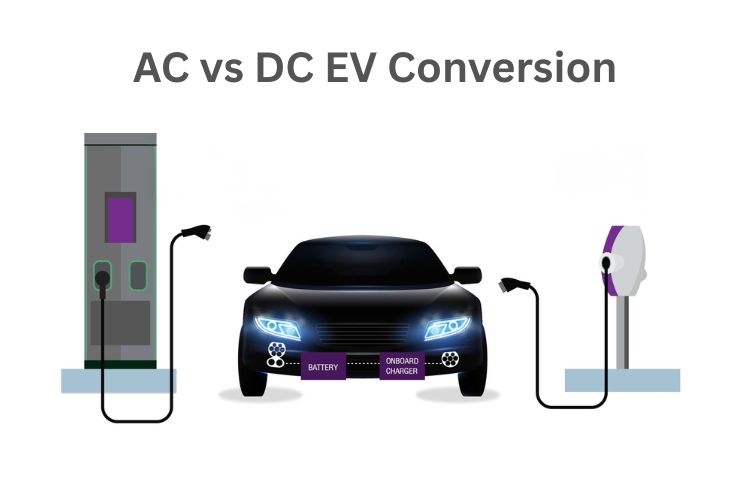
You’re finally doing it. Converting your classic car into an electric vehicle. You’ve watched the YouTube videos, joined the forums, scrolled through build diaries at 2 AM. Then someone asks: “AC or DC motor?” And suddenly you’re paralyzed.
Your heart races with visions of zero emissions and instant torque. But the technical jargon drowns you. Promises of cheap thrills clash with warnings about efficiency losses and maintenance nightmares. The real fear nobody names out loud: “What if I waste $15,000 on the wrong choice?”
Here’s the truth: this isn’t about picking the “best” motor type. It’s about matching your actual driving needs, budget reality, and tolerance for weekend wrenching to the right technology. We’ll cut through the noise using cold, hard data to find warm solutions that actually work for your build.
Keynote: AC vs DC EV Conversion
Choosing between AC and DC motors for electric vehicle conversion depends on budget and driving needs. DC motors cost $2,000-$5,000 less upfront but require brush maintenance and lack regenerative braking. AC motors deliver 85-95% efficiency, maintenance-free operation, and 60-70% energy recovery through regen. Modern salvaged OEM AC motors from Nissan Leafs or Chevy Bolts now cost $3,000-$5,000 complete, closing the traditional price gap. Match motor type to actual use: DC excels in budget weekend builds, while AC dominates daily drivers requiring reliability, efficiency, and long-term value.
What AC and DC Actually Mean (No Engineering Degree Required)
The Simple Truth Behind the Alphabet Soup
Let’s strip away the complexity. AC motors use inverter-driven systems where the controller creates alternating current to spin the motor smoothly through its entire range. DC motors rely on brushed series designs with commutators, those segmented rings that physically switch current direction as the motor spins.
Think of AC like a smooth DJ spinning endless grooves. The inverter seamlessly adjusts frequency and voltage, creating effortless power shifts across the RPM range. DC punches steady like a boxer delivering raw, reliable hits, but it needs constant tweaks and attention to keep fighting at peak form.
One number changes everything: modern AC systems like the HyPer 9 reach 94-95% motor efficiency. That’s not marketing fluff. That’s real electrons doing actual work instead of heating your motor casing.
The difference isn’t just academic. Your motor controller acts as the translator between your battery pack and the motor’s language. Variable frequency drives for AC motors handle complex three-phase power choreography. DC controllers? They’re glorified rheostats managing voltage and current to brushed motors. Simpler, but with clear trade-offs.
Why This Choice Feels Like Life or Death
Your motor impacts everything downstream. Range? Check. Maintenance schedule? Absolutely. Resale value when you eventually part with your build? You bet. Both AC and DC motors can work brilliantly in electric vehicle conversions, but they deliver completely different driving experiences and ownership realities.
“Choosing between AC and DC hinges on your project goals more than any inherent superiority,” says every veteran builder who’s completed multiple conversions. The forums rage with tribal arguments, but successful conversions exist on both sides. Your job isn’t picking the winner of an internet debate. It’s matching technology to your specific vehicle, budget, and how you’ll actually drive the thing.
DC Motors: The Scrappy Underdog Everyone Underestimates
Why DC Keeps Showing Up in Garage Builds
Let’s talk money. DC motor systems run $2,000-$5,000 cheaper than comparable AC setups upfront. That’s not pocket change when you’re already hemorrhaging cash on battery cells, adapters, and fabrication.
Basic DC motor kits start at just $200 for reconditioned forklift motors. Controllers? Budget $300-$600 for reliable Curtis or Kelly units. Compare that to AC systems where the inverter alone costs more than an entire DC drivetrain.
Simple installation means you can actually finish the project yourself without an electrical engineering degree. Wire the controller, mount the motor, connect the throttle. If you can read a wiring diagram and turn a wrench, you can install a DC system. That instant, tire-spinning torque off the line? Pure mechanical satisfaction. The kind that makes you grin like an idiot at every stoplight.
DC series motors deliver their peak torque right from zero RPM. It’s the same reason forklifts use them. They need to lift heavy loads from a dead stop, and DC motors excel at exactly that. In your conversion, it translates to launches that pin you back in your seat before the motor even gets spinning.
The Regenerative Braking Problem (And Why It Hurts)
Here’s the painful truth: most DC series motor systems don’t do regenerative braking. Period. You’re leaving 10-20% of your potential range on the table every single day in city driving. That’s potentially 1,000+ miles per year you’ll never recover.
More brake pad replacements every 5,000-8,000 miles instead of 20,000+ with regen. More charging stops when you’re already range-anxious. More frustration watching your battery gauge drop faster than it should.
One builder’s confession from a DIY forum: “Loved the grunt off the line, hated brake jobs every 5,000 miles. The smell of hot brake pads on steep descents made me nervous. Should’ve spent the extra cash upfront for AC with proper regen.”
Some advanced DC controllers claim regen capability. But here’s the reality: implementing it on brushed DC motors requires complex field control and perfect timing. Most budget DC builds skip it entirely because adding proper regen negates the cost advantage that made DC attractive in the first place.
The Maintenance Reality You Need to Hear
Brushes and commutators wear out. Expect replacement every 2-3 years depending on mileage and driving style. Budget $200-$500 per service interval over five years for brush maintenance. Those copper-graphite blocks literally rub against spinning metal thousands of times per minute. Physics always wins.
More heat generation under hard use means watching temperature gauges on spirited drives. Overvolting DC motors for extra performance accelerates brush wear and risks commutator damage. Every burst of extra power carries a maintenance cost.
But here’s the flip side: straightforward troubleshooting. Brushes wearing? You can see it, measure it, replace it. No cryptic error codes. No inverter firmware updates. Just honest, hot-rod simplicity. If you grew up wrenching on carbureted V8s, DC motor maintenance will feel familiar and manageable.
When DC Actually Makes Perfect Sense
Budget-tight weekend toy where cost matters most? DC is your realistic path. You want to finish the build without maxing credit cards, and you’re okay performing periodic maintenance. You love to wrench and sprint drag races at local events.
Low-speed neighborhood cruisers or farm trucks with simple needs? DC shines. No need for high-RPM capability or maximum efficiency when you’re putting around at 25 MPH. The forklift motor heritage means DC handles constant low-speed torque beautifully.
Classic builds where raw torque and DIY spirit matter most? Absolutely DC. Hot rodders converting vintage roadsters appreciate the mechanical simplicity and that immediate punch off the line. These builds prioritize character over maximum efficiency, and DC motors deliver character in spades.
AC Motors: The Modern Choice That Makes You Second-Guess Your Budget
Why Tesla (And Everyone Else) Went All-In on AC
Efficiency stats that actually matter: AC induction motors and permanent magnet synchronous motors deliver 85-95% efficiency versus DC’s 75-85% range. That 10-15% difference accumulates over thousands of miles into real range gains and lower electricity bills.
Regenerative braking recovers 60-70% of kinetic energy during city driving. Every time you slow down, you’re putting electrons back in the battery instead of generating brake dust and heat. The round-trip efficiency through regen sits around 69% after accounting for motor and controller losses, but that’s still free range you’d otherwise waste.
No brushes means zero motor maintenance. Just sealed, IP-rated reliability. Modern AC motors in production EVs routinely hit 200,000+ miles without opening the motor housing. Tesla Model 3 motors, Nissan Leaf EM57 units, and Chevy Bolt drives all run AC technology for exactly this reason.
That smooth power delivery, higher RPM capability, and modern EV feel? AC motors can spin to 10,000+ RPM with field-oriented control managing torque precisely across the entire range. The driving experience mimics production EVs because it’s the same underlying technology.
The Sticker Shock Reality Check
Complete AC motor systems start around $8,000-$15,000+ for quality setups. HyPer 9 AC kits with inverter and controller run $1,500-$4,000 minimum for just the motor side. Add batteries, adapters, fabrication, and you’re deep into serious money territory.
Complex inverter tuning and wiring often requires professional help. Budget another $2,000-$5,000 for someone who actually knows three-phase motor control and can tune field-oriented algorithms. The DIY crowd can handle it with study, but expect a steep learning curve.
Inverter failures down the road can cost $1,500-$3,000 if things go wrong. These are sophisticated power electronics with IGBTs switching hundreds of amps thousands of times per second. When they fail, replacement isn’t cheap. Though modern units prove reliable, the potential repair cost stings more than replacing worn brushes.
The Hidden Long-Term Wins
AC conversions command 20-30% higher resale prices in the used EV conversion market. Buyers know they’re getting modern, low-maintenance technology. The premium reflects real value, not just perception.
Brake pad longevity differences save AC owners $300-$500 annually. With aggressive regen tuning, some drivers report 50,000+ miles on original brake pads. The savings accumulate year after year, offsetting some of that initial AC premium.
Low maintenance means fewer weekends stolen from family for garage tinkering. If you converted your daily driver, that reliability matters immensely. No surprise maintenance forcing you to scramble for alternative transportation.
Regenerative braking stretches usable range in stop-and-go traffic, adding 15-20% more miles. In real-world city driving, that’s the difference between range anxiety and confident errand running. The psychological benefit alone justifies AC for many converters.
When AC Is Worth Every Penny
Daily commuter where reliability comes first? AC with proper regen braking for city driving makes sense. You need the car running every morning without drama. The maintenance-free operation means one less thing to worry about.
Performance builds where efficiency and range actually matter? AC handles sustained power better. The higher voltage systems and better thermal management mean you can push hard without immediately overheating.
Heavier vehicles, highway miles, conversions you’ll keep long-term? AC efficiency shines on sustained highway cruising. The ability to run higher voltages (300V-400V typical) means lower current draw for the same power, reducing resistive losses throughout the entire system.
If you’re converting a vehicle you might eventually sell, AC significantly improves marketability. The next buyer will pay premium prices for modern, proven technology that won’t require immediate attention.
The Head-to-Head Breakdown: Cost, Feel, and Real-World Impact
The Money Truth (With No Sugarcoating)
| Factor | AC Motor System | DC Motor System |
|---|---|---|
| Upfront Cost | $8,000-$15,000+ complete system | $2,000-$5,000 less than AC |
| Motor Kit Only | $800-$2,500 | $200-$800 |
| Controller | $600-$1,200 | $300-$600 |
| Motor Efficiency | 85-95% (HyPer 9: 94-95%) | 75-85% typical |
| Regen Braking | Native, recovers 60-70% kinetic energy | Rare/limited on typical series DC |
| 5-Year Maintenance | Low, sealed/IP ratings | Medium, $200-$500 brush costs |
| Installation Complexity | Inverter tuning, professional help often needed | Straightforward, DIY-friendly |
| Resale Value Premium | 20-30% higher | Standard baseline |
Look at those numbers closely. The upfront savings with DC seem massive, but amortize the maintenance costs, efficiency losses, and resale value over 10 years. The total cost of ownership gap narrows considerably. DC only breaks even after 250,000+ miles for most builds, and by then you’ve replaced brushes multiple times and accepted the efficiency penalty daily.
What It Actually Feels Like Behind the Wheel
AC gives smooth power ramps like a modern production EV’s refinement. Stomp the accelerator and power builds progressively, controlled, pulling harder as RPMs climb. The inverter creates many “virtual gears” through frequency control, making the power delivery feel incredibly linear.
DC hits hard off the line with that classic hot-rod punch you can’t help but grin at. Maximum torque from zero RPM means instant wheelspin if you’re not careful. But power tapers as RPMs climb, and you feel the motor reaching its limits. It’s visceral and mechanical in a way AC isn’t.
Think of gears on a bicycle: AC’s inverter lets the motor always operate near its sweet spot by adjusting electrical frequency. DC is like being stuck in one gear, amazing at low speeds but struggling at high RPM.
HyPer 9 specs showcase AC capability: up to 88 kW peak power, 750-760 A controller output for serious performance. These aren’t theoretical numbers. Builders routinely hit sub-6-second 0-60 times in lightweight vehicles with proper AC setups.
Efficiency That Sticks With You Day In, Day Out
Imagine pulling into your driveway after a full day knowing fewer charging sessions means more time for actual adventures. AC’s 95% efficiency at the motor combined with modern inverter efficiency around 95% means 90%+ of battery electrons become wheel motion. That’s set-it-and-forget-it confidence for daily drivers.
DC shines with low-end torque in stop-and-go city traffic but overheats on sustained overvolt pushes. Push the voltage 20% over rated for extra performance and watch efficiency drop 5-10%. The motor gets hot, brush wear accelerates, and you’re trading long-term reliability for short-term thrills.
“AC isn’t fancy technology anymore. It’s future-proof engineering,” says a veteran EV retrofit specialist who’s built both types. “Every production EV uses AC or permanent magnet motors because the efficiency and reliability math simply works better at scale.”
The real-world impact shows in daily use. AC drivers report 20-30% better real-world range than equivalent DC conversions with identical battery packs. That difference translates to one less charge per week for commuters, or making that weekend trip without range anxiety.
The Hidden Costs and Future-Proof Factors Nobody Warns You About
Beyond the Motor Price Tag
Battery voltage compatibility dictates your entire pack configuration. DC systems typically run 96V-192V nominal. AC systems need 300V-400V for efficient operation. That’s not just a number, it changes everything. Higher voltage means series strings with more cells, different BMS requirements, and electrical code compliance concerns.
Weight and mounting considerations change your entire fabrication budget. AC motors tend to be more compact for equivalent power, but the controller and cooling systems add mass elsewhere. DC motors run heavier but controllers stay simple and light. Calculate your front-to-rear weight distribution carefully, as motor placement affects handling dramatically.
Controller compatibility and wiring harness complexity varies wildly between motor types. Curtis controllers for DC motors use straightforward six-wire connections. AC inverters need shielded three-phase cables, resolver feedback, temperature sensors, and careful grounding. One builder spent an extra $800 on proper shielded cables alone after initially using cheap wire that created electromagnetic interference nightmares.
The Coming Wave: Bidirectional Charging (V2G & V2H)
Game-changing technology lets you power your home during outages or sell energy back to the grid during peak demand. Vehicle-to-grid could earn EV owners up to €9,000 over the car’s lifetime according to European energy studies. Vehicle-to-home capability means your conversion becomes a mobile backup generator.
This future is primarily enabled by AC systems and advanced power electronics. The same inverters managing motor control can reverse power flow to grid-tie systems. DC motor controllers simply can’t do this without completely separate hardware.
Charging infrastructure continues evolving rapidly: 90-A Level 2 charging, bidirectional capability, and 600 kW DC fast charging announcements from major manufacturers. While DIY conversions won’t hit those extremes immediately, choosing AC architecture positions your build for future upgrades.
Charging Reality for DIY Conversions
Most DIY builds rely on AC Level 2 onboard charging for simplicity and affordability. You’ll install a 7.2 kW or 11 kW onboard charger that accepts standard SAE J1772 connector input. Plan for robust Level 2 at home, treat DC fast charging as an advanced/rare capability.
DC fast charging requires high-voltage architecture plus CCS or NACS integration. That means 400V+ battery packs, complex battery management systems meeting safety standards, and expensive charge controllers. Most garage conversions skip DCFC entirely because the complexity and cost don’t justify the convenience for weekend drivers.
Budget reality: a proper Level 2 home charging setup costs $500-$2,000 installed. Adding DCFC capability to a DIY conversion pushes costs up $5,000-$10,000 minimum. Know your priorities before chasing every feature.
Real Parts and Proven Players: What to Google and Why
The AC Workhorses
NetGain HyPer 9 SRIPM kits deliver IE4-class efficiency with sealed construction and regen-ready capability. These switched reluctance motors offer professional tuning support and proven reliability. Builders report 50,000+ trouble-free miles routinely.
AC systems deliver that smooth, Tesla-like feel with minimal maintenance headaches. EV West and EVolve Electrics catalog complete AC packages for serious builds, including the increasingly popular salvaged Nissan Leaf EM57 motor swaps. These salvaged OEM motors from crashed vehicles now provide budget-friendly AC solutions at $3,000-$5,000 complete with controller, eliminating the traditional DC cost advantage.
Chevy Bolt motors are another emerging option. More compact than Leaf motors, higher RPM capability, and readily available from salvage yards as Bolts age out. The challenge remains adapting OEM controllers or sourcing aftermarket inverters that speak the motor’s language.
The DC Proven Warriors
WarP 9 series DC motors offer proven torque and simpler systems for budget-friendly builds. These are the workhorses of the DC conversion world, based on decades-old forklift motor designs refined for automotive use.
Electric Cars Parts Company and Advanced DC Motors offer double-ended shaft options, 72-156V operating ranges, and 500A continuous capacity. These motors handle substantial power when properly cooled and maintained.
Read builder guides on DIY Electric Car Forums to match motor choice to your vehicle weight, gearing, and project goals. Real builders share real problems and solutions, not just glossy marketing specs. You’ll learn which motors fit which transaxles, what adapter plates actually work, and who to call when you’re stuck.
Legacy EV, NetGain Motors, and Thunderstruck Motors all supply DC components with reasonable support. Expect lead times of 4-8 weeks for popular models, longer for custom configurations. Call them, ask questions, verify compatibility before buying.
Your Decision Framework: “If This Is You, Do This”
Start With Your Brutal Truth Budget
| Your Realistic All-In Budget | The Smart Motor Choice | Why |
|---|---|---|
| Under $12,000 total | DC is your realistic path | Leaves room for batteries, fabrication, contingencies without compromising safety |
| $12,000-$18,000 | Gray zone, either works | Weigh daily use vs. weekend toy priorities carefully, lean AC for commuters |
| Above $18,000 | AC becomes smarter long-term | Efficiency, resale value, future-proofing justify the premium investment |
Be honest about your budget. Not the number you wish you had, the number actually sitting in your account. Conversions always cost more than initial estimates. Budget 20-30% contingency for surprises, because surprises always happen.
If you’re genuinely budget-limited, DC lets you finish the conversion and drive it. An incomplete AC build sitting in your garage for years helps nobody. Sometimes done beats perfect.
How You’ll Actually Drive This Thing
Daily commuter in city traffic? Regenerative braking adds 15-20% range you’ll actually use every single day. That’s not theoretical, it’s electrons back in your battery making the next morning’s commute possible without charging.
Weekend cruiser for car shows and occasional drives? DC’s simplicity wins. No software degree needed, straightforward troubleshooting, and that visceral torque makes every launch entertaining. You’re not chasing maximum efficiency, you’re chasing grins.
Heavier vehicle, highway miles, long-term keeper? AC with higher-voltage architecture scales better. Efficiency matters when you’re pushing 4,000+ pounds down the highway at 65 MPH for hours. The math heavily favors AC here.
Performance goals requiring quick 0-60 times and sustained power? AC handles repeated hard launches better. Better thermal management, higher RPM capability, and smoother power delivery at speed make AC the obvious choice for serious performance builds.
The “Sleep Well at Night” Test
Ask yourself honestly: can I afford to redo this if I choose wrong? If the answer is no, lean toward the safer choice. AC for reliability and resale, DC for immediate budget constraints. Neither decision ruins your conversion if you’re honest about priorities.
Would I rather have “good enough now” or “excellent in two years”? DC gets you driving sooner but with compromises. AC takes longer and costs more but delivers a more refined experience. Know which timeline matters to you.
Am I converting for fun, utility, or eventual resale value? Fun builds can absolutely run DC and embrace the hot-rod character. Utility demands reliability, pointing toward AC. Resale value strongly favors AC’s market premium.
What’s my tolerance for tinkering? Love spending Sunday mornings in the garage chasing small issues? DC maintenance won’t bother you. Prefer maintenance-free operation? Pay the AC premium and enjoy your weekends elsewhere.
Don’t Skip This (Sanity Checklist)
Confirm proper insulation, fusing, contactors, and IP ratings for your climate. High-voltage DC and AC systems require different safety approaches per NEC Article 625 electrical code requirements. Skimping on safety components is where people get hurt.
Brake balance plus regen tuning means you stop safely in wet conditions and on steep terrain. Too-aggressive regen can lock wheels or upset chassis balance. Plan for proper brake proportioning regardless of motor choice.
Documentation matters for inspections, insurance, and resale down the road. Keep receipts, take photos, document your build process. Future buyers or inspectors will thank you. Your insurance company might actually cover your conversion if you can prove it was done properly.
What parts can you actually get? Supply chain issues can kill projects dead. Before committing to any motor, verify current availability and lead times. Forums are littered with abandoned builds waiting for backordered components that never arrive.
The Pre-Purchase Shortlist Template (Fill This Out Before Buying)
Your Build Profile Self-Assessment
Write these down before shopping:
Vehicle curb weight, target 0-60 feel, and gearing you’ll keep or change. Weight dictates power requirements. A 2,000-pound roadster needs far less motor than a 4,500-pound truck. Be realistic about performance expectations.
Daily route specifics matter more than you think: hills requiring sustained power, traffic patterns affecting regen opportunities, parking situations, and home charging amperage available at your electrical panel. These real-world factors should drive motor selection, not forum bench racing.
Budget split honestly: battery percentage, motor/controller percentage, contingency percentage. Batteries typically eat 40-50% of total budget. Motor and controller grab 20-30%. Fabrication, adapters, cooling, and contingency take the rest. Adjust ratios based on your skills and access to equipment.
Upgrade path planning: Level 2 charging today with possible DCFC later? Choose components that can grow. Starting with 96V but planning eventual 144V upgrade? Make sure your motor can handle the higher voltage. Think two builds ahead.
The Four Must-Ask Questions Before You Buy
What is the lead time for this motor right now? Not what the website says, what the actual current lead time is when you call. Supply chains remain unpredictable. Plan accordingly.
Is the controller validated and readily available for troubleshooting? Exotic motor/controller combinations sound cool but become nightmares when you need support. Stick to proven pairings where knowledge exists.
Can I get local or online support if something goes wrong? DIY Electric Car Forums, EV builders’ groups, Facebook communities, or direct vendor support. Know your lifeline before you need it desperately at 10 PM on a Saturday.
What’s the warranty, and does it match my project timeline? A one-year warranty is useless if your build takes 18 months. Understand coverage terms and plan your build schedule accordingly.
Conclusion: Your New Calm With AC vs DC EV Conversion
You started in that garage, paralyzed between two paths, buried in forum arguments that never end. But here’s what actually matters now: you understand that DC means upfront savings with ongoing tinkering, while AC means upfront investment with long-term confidence. Neither choice will ruin your conversion if it matches your actual needs, budget, and the way you’ll really drive.
The forums will keep arguing forever about which motor is “better.” But you now have clarity. If you crave quiet, low-maintenance miles with regenerative braking and modern features, AC will likely fit your life. If you want a thrifty, torque-happy weekend build and don’t mind brush maintenance, DC can absolutely deliver smiles. The data, the kits, and the charging reality all point to this simple truth: match the drivetrain to the way you’ll actually use the car, not the comment-section myths.
Your actionable first step for today: Write down your top three driving realities (commute length, charging access, wrenching tolerance) and circle the one that matters most. Then shortlist two AC kits and one DC option that meet those needs. Calculate your realistic all-in budget including contingency, then revisit the decision framework in Section 8 with that number staring you in the face.
And remember the feeling we started with: you’re not building a headache. You’re building your favorite drive, the one that makes every silent mile feel like freedom. The hum of your electric motor is waiting, whether it’s the smooth purr of AC inverter control or the mechanical buzz of DC brushes spinning. Now you have the knowledge to choose the one that will sing your song.
DC vs AC EV Conversion (FAQs)
Can you use a DC motor for EV conversion?
Yes, absolutely. DC motors work great for EV conversions, especially budget builds and weekend cruisers. They’re simpler to install, cheaper upfront, and deliver incredible low-end torque that makes every launch fun. The trade-offs include regular brush maintenance every 2-3 years and no regenerative braking on most systems. If you’re converting a lightweight classic car on a tight budget and love wrenching, DC motors remain a smart, proven choice that thousands of builders have used successfully.
How much does regenerative braking actually save?
Regenerative braking recovers 60-70% of kinetic energy during deceleration, but real-world savings are more modest than many claim. Actual energy recovery is 5-10% of total consumption in typical mixed driving, which translates to roughly 15-20% range extension in stop-and-go city traffic. At $0.10/kWh electricity rates, that’s approximately $0.50 saved per operating hour in city driving. The bigger wins come from dramatically extended brake pad life, 50,000+ miles versus 8,000 miles, saving $300-$500 annually on brake maintenance.
What voltage should I run my conversion motor at?
DC motors typically run 96V-192V nominal, with 144V being the sweet spot for street performance. AC motors need 300V-400V nominal for efficient operation and proper inverter function. Your motor choice essentially locks in your system voltage, which then dictates battery configuration, charging infrastructure requirements, and electrical safety protocols. Higher voltage means lower current for equivalent power, reducing resistive losses and allowing smaller gauge wiring. Match voltage to your motor’s rated range and your comfort level with high-voltage electrical systems.
Are forklift motors good for EV conversions?
Yes, forklift motors make excellent budget DC options. They’re designed for constant duty cycles, high torque at low RPM, and years of industrial abuse. Series-wound forklift motors deliver instant torque perfect for vehicle launches. The challenges include weight (they’re heavy), mounting configurations (not designed for automotive use), and the need for proper adapters. Many successful budget conversions use forklift motors from brands like Advanced DC or salvaged units. Just ensure you get the motor specs, ratings, and proper cooling for automotive duty cycles.
How long do brushed DC motors last in EVs?
Brushed DC motors typically last 50,000-100,000+ miles before needing major rebuild work, with brush replacements required every 20,000-40,000 miles depending on driving style and maintenance. Each brush service costs $200-$500 and takes a weekend if you DIY.
Running motors at higher voltages for extra performance significantly reduces lifespan. Properly maintained DC motors in gentle street use can exceed 150,000 miles total, but aggressive driving, overvolting, and poor cooling dramatically accelerate wear. Budget for periodic maintenance as part of ownership costs when choosing DC.