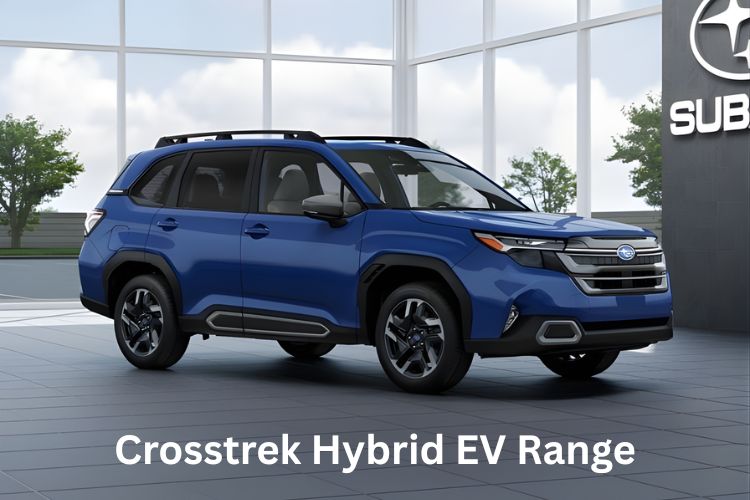
You searched “Crosstrek hybrid EV range” hoping for one clean number, and instead you’re staring at a mess. One forum swears it’s 17 miles, another dealer site promises 35, and a brand-new review says zero electric-only miles but 600 total.
Here’s the truth nobody’s saying upfront: there have been three completely different Crosstrek Hybrids, and the answer to your range question depends entirely on which generation you mean. The internet mixes them all together like a bad game of telephone, and you’re left wondering if anyone actually knows what they’re talking about.
Here’s how we’ll untangle this mess together. First, we’ll separate these three very different animals so you finally understand what you’re actually looking at. Then we’ll dig into the real numbers for each version, what they mean for your daily life, and which one (if any) deserves a spot in your driveway. By the end, you’ll stop feeling confused and start feeling confident.
Keynote: Crosstrek Hybrid EV Range
The Crosstrek Hybrid EV range question requires clarification between two distinct models. Only the discontinued 2019-2023 PHEV offered 17-mile EPA electric range with plug-in capability, though real-world testing achieved 21+ miles under optimal conditions. The new 2026 Crosstrek Hybrid HEV has zero plug-in range but delivers 597 miles total per tank through self-charging hybrid technology and improved 36 mpg efficiency.
The Identity Crisis Nobody Warned You About
Three Generations, Three Completely Different Promises
Let’s clear the air right now with a table that ends the confusion once and for all:
| Generation | Years | Type | Electric Range | Can You Plug It In? | Total Range |
|---|---|---|---|---|---|
| First Attempt | 2014-2016 | Mild hybrid | 0 miles | No | ~450 miles |
| Plug-In Era | 2019-2023 | PHEV | 17 miles EPA | Yes (Level 1 & 2) | ~480 miles |
| Fresh Start | 2026+ | Strong HEV | 0 miles | No | ~597 miles |
The first attempt barely counts. It gained 2 mpg over the gas model and disappeared quietly. Forget it existed.
The plug-in era gave us that infamous 17 electric miles everyone complained about. It required nightly charging, used an 8.8 kWh lithium-ion battery pack, and died after 2023 when Subaru discontinued it entirely.
The fresh start arrives fall 2025. Zero plug, zero electric-only range, but nearly 600 total miles per tank. It’s a completely different philosophy wrapped in the same name.
Here’s the twist: your expectations need to match the tech or disappointment is guaranteed.
Why Search Results Feel Like Gaslighting Right Now
Dealers are mixing old inventory listings with new 2026 announcements in the same search results. Forums are debating 2021 plug-in models while ads scream about the upcoming self-charging hybrid. Think of it like googling “iPhone” and getting specs for models five years apart, all labeled with the same name.
Once you know which generation matches your timeline, clarity finally arrives. But until then, you’re drowning in numbers that contradict each other because they’re describing three fundamentally different vehicles.
The worst part? Some dealer sites still show the old plug-in specs next to new 2026 pricing. Others claim 42 mpg for the new model when the real EPA rating is 36 mpg combined. It’s not just confusing, it’s actively misleading.
The One Question That Changes Everything
Do you want to plug in and drive short distances on electricity alone? Or skip the charging ritual and just drive farther on less fuel?
Your answer determines which Crosstrek hybrid story even matters to you. The 2019-2023 plug-in hybrid gave you 17 miles of battery-only operation before switching to 35 mpg hybrid mode. The 2026 model gives you zero plug-in capability but 36 mpg everywhere you go, automatically.
Neither choice is wrong, but mixing them up guarantees buyer’s remorse. One requires you to remember charging every night. The other asks nothing except occasional fuel stops every 600 miles.
The Plug-In Years: Decoding That Infamous 17-Mile Range
The Official Numbers That Made Reviewers Grimace
Let’s talk about what the EPA officially rated for the 2019-2023 Crosstrek Hybrid PHEV: 17 miles electric range, 90 MPGe combined efficiency when running on electrons, 35 mpg in hybrid mode after battery depletion, and 480 total miles combining a full 8.8 kWh battery pack plus a full 13.2 gallon tank.
Seventeen miles electric. Among the shortest plug-in ranges ever sold in America. For comparison, competitors like the Mitsubishi Outlander PHEV offered 25 miles, the Kia Niro PHEV delivered 26 miles, and the Toyota RAV4 Prime crushed them all with 42 electric miles. All in the same price range.
Be honest, though. Seventeen miles sounds pathetic until you map your actual errands. Your morning coffee run? Three miles round-trip. Dropping kids at school? Five miles. Grocery store visit? Four miles. Gym after work? Six miles. String those together and suddenly that underwhelming number starts covering most of your weekday driving.
The total system output was 148 horsepower from the 2.0-liter SUBARU BOXER engine paired with dual electric motors using StarDrive hybrid technology. Not exactly thrilling, but adequate for daily commuting with Symmetrical All-Wheel Drive still intact.
What Real Owners Actually Experienced Day to Day
Here’s where things get interesting. Car and Driver’s real-world testing achieved 21.4 miles electric range in their Ann Arbor to Dearborn test loop. That’s 26% better than the EPA estimate.
Gentle drivers reported 21-25 electric miles in perfect spring weather conditions, coaxing every electron out of that lithium-ion battery pack through careful regenerative braking and smooth acceleration. But highway speeds above 65 mph forced the gas engine on immediately, no pure electric option available. The electric motors simply couldn’t sustain interstate speeds alone.
Winter dropped range to 10-12 miles. Cabin heat became a range vampire, sucking battery power to keep you warm while cold temperatures below 30°F reduced battery output by 30-40%. One owner in Michigan watched their summer 21-mile range shrink to barely 12 miles once December arrived.
Short-commute owners who charged twice daily, once at home and once at work, rarely bought gas for weeks. Their fuel tanks sat full while they drove on electricity for 80-90% of their miles. But that required religious charging discipline and access to 240-volt Level 2 charging at both locations.
The Scenarios Where 17 Miles Became a Superpower
Imagine your work commute: 8 miles each way, garage with a standard outlet available. You wake up, unplug, drive to work on pure electric power in zero-emission driving mode. You plug in at work for the 2-hour Level 2 charge time, drive home again on battery power, plug in overnight using your 5-hour 120V charge routine.
Grocery runs, school drop-offs, gym visits all fit inside that electric bubble. Your gas engine mostly rests, acting as a security blanket for longer surprise trips to visit family or weekend adventures. The battery handles predictable daily patterns while the 13.2-gallon tank extends your total driving range to 480 miles for those unplanned excursions.
One owner I know hit 600+ miles per tank by charging religiously at home and work. Their monthly fuel costs dropped from $180 to about $45. The electricity cost roughly $1 per full charge at national average rates of 16.94 cents per kWh, so even charging twice daily only added $60 monthly to their electric bill. Total transportation energy cost: $105 versus $180, a $75 monthly savings.
Where the Plug-In Crosstrek Genuinely Failed People
“I expected eco-friendly adventure, got complicated range math instead.” That’s how one disappointed owner described it online.
The vehicle could not lock into EV-only mode. The engine kicked in unpredictably with hard acceleration, even if you had 15 miles of battery remaining. You’d be silently cruising through a parking lot, then mash the throttle to merge onto a highway, and suddenly hear the Boxer engine roar to life. It felt inconsistent and defeated the purpose of electric-only driving.
The battery pack consumed vertical cargo space, reducing maximum storage from 55.3 cubic feet down to 43.1 cubic feet. That’s a 12.2-cubic-foot loss. Subaru owners buy Crosstreks specifically for adventure capability and cargo hauling. Losing a quarter of your trunk space for an underwhelming 17-mile battery felt like a bad trade.
No spare tire included. The charging port sat on the wrong side of the car, creating awkward parking situations at every public charger. And then Subaru discontinued it in 2023, tanking resale values and making owners feel abandoned.
The 2026 Plot Twist: No Plug, No Electric Range, No Problem
What Changed Under the Hood and Why It Matters
Subaru ditched the 8.8 kWh plug-in battery for a tiny 1.1 kWh total capacity helper pack with just 0.6 kWh usable capacity. This new system pairs a 2.5-liter Atkinson/Miller-cycle engine with two electric motors, generating 194 total horsepower. That’s 46 more horses than the old plug-in and 12 more than the gas-only 2.5L model.
You never plug it in. The car handles charging automatically as you drive and brake, using regenerative braking to recapture energy and storing it in that small battery. Compare it to trading an external power bank that needs nightly charging for an integrated phone battery boost that manages itself.
This is Toyota Hybrid System technology, co-developed through Subaru’s partnership with Toyota. Think Prius hybrid reliability and engineering maturity, but with Subaru’s mechanical Symmetrical All-Wheel Drive system instead of Toyota’s electric rear axle.
So What IS the EV Range on 2026 Models, Really
Zero miles of pure electric-only range. This is not a plug-in hybrid anymore. Let me be crystal clear about that because dealer confusion is rampant right now.
The electric motor assists during parking lots, coasting, and gentle acceleration under 25 mph. There’s even an “EV Drive mode” button, but it’s not good for much beyond inching around in a garage. Any significant throttle input starts the gasoline engine immediately. This mode exists for extremely low-speed, low-load situations, not for general driving.
Some early dealer claims of 35 electric miles are complete misunderstandings or wild speculation. Those numbers have zero basis in reality. Think Prius hybrid operation, not Prius Prime plug-in capability. That’s the new Crosstrek hybrid reality.
If you’re searching for plug-in EV range in a 2026 Crosstrek Hybrid, you’re looking for something that doesn’t exist. This vehicle is a self-charging hybrid, period.
The Number That Actually Matters: 597 Miles Per Tank
The EPA estimates 36 mpg city, 36 mpg highway, perfectly balanced efficiency across all driving conditions. That’s a massive improvement over the standard gas Crosstrek’s 26 city / 33 highway mpg rating.
Combine that 36 mpg combined rating with the kept full-size 16.6-gallon tank and you’re looking at range that crushes most rivals. Do the math: 36 mpg times 16.6 gallons equals roughly 597 miles between fuel stops. Some reviewers are reporting real-world range pushing 600+ miles in mixed driving.
Real-world drivers are seeing 32-34 mpg in varied conditions, which is still impressive. That translates to 530-565 miles per tank, even accounting for less-than-perfect efficiency. Fewer fuel stops, more weekend trails, less mental bandwidth wasted around constant trip planning.
Compare that to the old plug-in’s 480-mile total driving range, or the Toyota RAV4 Hybrid’s 445-mile range despite its superior 42 mpg rating. The Crosstrek’s massive tank turns decent efficiency into class-leading total range.
What You Gain and Lose in the Transformation
You gained freedom from charging anxiety, no lifestyle changes required, and mechanical Symmetrical All-Wheel Drive stays intact with full X-MODE off-road capability and 8.7 inches ground clearance. The hybrid system adds torque and responsiveness without asking you to remember nightly plugging rituals.
You lost electric-only commute dreams. No more silent, zero-emission driving through your neighborhood. Federal tax credits disappeared along with the plug. The old PHEV qualified for a $4,502 IRS Form 8936 tax credit, but standard hybrids don’t get federal incentives.
The small battery lives under the floor, reducing cargo space from 19.9 to 18.6 cubic feet behind the rear seats. That’s only a 1.3-cubic-foot loss, vastly better than the plug-in’s 12.2-cubic-foot reduction. But you still lose the spare tire, replaced by a tire repair kit.
Starting price hits $35,415, a notable premium over the gas Crosstrek’s base price and slightly higher than some hybrid rivals like the $30,745 Corolla Cross Hybrid.
City Errands or Highway Adventures: Your Real-World Range Story
The Perfect Match: Short Commuter with Garage and Plug
Picture this: 10-mile round-trip commute, outlet waiting in your garage, and you’re shopping for a used 2019-2021 plug-in model. Most weekday driving sits comfortably inside that 17-mile electric window. Your fuel use nearly vanishes for five days a week.
Describe that satisfying feeling watching the gas gauge barely move all month long. You fill up in March, and by May you’re still on the same tank because 90% of your miles came from wall power costing a dollar per full charge. Your friends ask how often you visit gas stations, and you honestly can’t remember the last time.
Simple rule: if you can charge twice daily at home and work using Level 2 charging with that 2-hour charge time, the plug-in pays back fastest. Your blended cost per mile drops to roughly 6 cents when combining cheap electricity miles with occasional gas miles, versus 12 cents per mile for the standard gas model.
But the moment your commute stretches past 20 miles one-way, or you lack charging access at work, that value proposition evaporates. You’re driving a heavier, slower, less spacious Crosstrek that operates as a 35 mpg hybrid most of the time.
The Road Tripper Who Lives on Highways
For the old plug-in, your electric portion evaporates during long freeway stretches above 65 mph. The system can’t sustain highway speeds in battery-only operation, so the gas engine fires up immediately. You become a 35-mpg crossover with reduced cargo space. Not a terrible outcome, but hardly worth the plug-in complexity.
For the 2026 hybrid, steady mid-thirties mpg and 597-mile tanks are the entire story. You cruise at 75 mph getting 33-34 mpg while the hybrid system quietly assists during acceleration and recovers energy during deceleration. At high speeds, aerodynamic drag beats most hybrid tricks, though the efficiency still helps versus older SUVs.
Highway-heavy drivers should see the hybrid as fuel savings plus range comfort, not silent electric cruising. The regenerative braking system helps on hilly interstate routes, recapturing some energy on descents. But you’re burning gasoline constantly, just doing it more efficiently than a traditional engine.
That 600-mile range means you can drive from Denver to Salt Lake City without stopping for fuel. Or San Francisco to Los Angeles with range to spare. The mental relief of not planning fuel stops around remote stretches is genuinely valuable.
Cold Winters, Steep Hills, and Other Range Assassins
Low temperatures below 30°F reduce battery output dramatically for both versions. The plug-in’s 17-mile range shrinks to 10-12 miles as chemical reactions slow in cold lithium-ion cells. The engine runs more frequently to generate cabin heat since electric heating would drain the already-limited battery too quickly.
The 2026 model loses 2-4 mpg in winter conditions, dropping from 36 mpg combined to 32-34 mpg in sustained cold weather. Frequent climbs and heavy loads increase fuel consumption for both versions, especially in mountains where even the hybrid mode can’t fully compensate for elevation gain.
Mentally knock a small cushion off any optimistic dealer range numbers you see. If they promise 17 miles electric, expect 14-15 in normal conditions and 10-12 in winter. If they quote 597 miles total range, plan for 530-550 miles in real-world mixed driving.
One comfort: hybrids recover some efficiency downhill thanks to regenerative braking capturing kinetic energy. On mountain passes, the descent recharges the battery while traditional gas vehicles simply waste that energy as heat through brake friction.
How Crosstrek Stacks Up Against Rivals You’re Cross-Shopping
The Comparison That Ends the Debate
Let the data speak for itself:
| Vehicle | Electric Range | Combined MPG | Total Range | Starting Price |
|---|---|---|---|---|
| Crosstrek Plug-In (used) | 17 miles | 35 mpg | 480 miles | ~$28K used |
| 2026 Crosstrek Hybrid | 0 miles | 36 mpg | 597 miles | $35,415 |
| Toyota RAV4 Hybrid | 0 miles | 42 mpg | 445 miles | ~$33K |
| Corolla Cross Hybrid | 0 miles | 42 mpg | 445 miles | $30,745 |
| RAV4 Prime (PHEV) | 42 miles | 38 mpg | 600 miles | ~$43K |
The Crosstrek lags dramatically in electric miles compared to the RAV4 Prime’s impressive 42-mile EV range. Yet it dominates on total distance per tank, beating both Toyota hybrids by 150+ miles despite lower fuel economy numbers.
The RAV4 Hybrid beats it on pure mpg efficiency, achieving 42 mpg combined versus the Crosstrek’s 36 mpg. That 6 mpg gap comes from Toyota’s electric rear axle creating less drivetrain friction than Subaru’s mechanical all-wheel-drive system. It’s a deliberate trade-off for capability.
The used plug-in Crosstrek offers the cheapest entry point with some plug-in capability, but you’re buying discontinued technology with uncertain parts availability and depreciated resale values. The new 2026 model costs $7,000+ more but gives you current technology and warranty coverage.
When Crosstrek Makes Sense Over a Full EV
If you have a home charger plus a predictable 40-mile daily loop, a pure EV like the Subaru Solterra might fit better. Zero fuel costs, 220+ miles of range, and genuine electric vehicle benefits without compromise.
The Crosstrek wins in rural areas with limited DC fast charging infrastructure, frequent long trips beyond 250 miles, and rough roads requiring 8.7 inches ground clearance plus Symmetrical All-Wheel Drive. If you regularly visit places where the nearest Level 2 charging is 100 miles away, the hybrid’s 600-mile range eliminates anxiety.
Be honest: if you dream about one-pedal driving and that satisfying feeling of regenerative braking doing all the work, the Crosstrek feels half-committed. It uses regenerative braking, but you’re still pressing the brake pedal normally. There’s no aggressive regen creating the EV driving experience.
Gentle rule: choose the Crosstrek if you want adventure capability first with electrons as a helpful sidekick, not the main attraction.
The Emotional Truth Behind Comparison Shopping
Parking next to a long-range EV makes you wonder if you bought the wrong thing. Their instant torque from zero RPM, their silent operation, their smug “I haven’t visited a gas station in six months” energy. It stings a little.
But some owners feel quietly proud when their fuel receipts drop 40% without requiring internet flexing about charge times and range calculations. They don’t post photos of charging sessions on social media. They just appreciate spending less money and visiting fuel stops half as often.
I encourage choosing a range profile matching your real week, not your aspirational social media persona. Track seven actual days of driving before deciding which story fits your life. Write down every trip: distance, speed, weather conditions. Then match that honest data against these vehicles.
You might discover your real driving fits a 17-mile plug-in perfectly. Or you might realize you need that 600-mile tank because you genuinely drive 400+ miles weekly. The numbers don’t lie, but you have to collect them first.
Charging, Fuel Stops, and What It Actually Costs You
How Often You Need to Plug the Old Plug-In
Charging once per day captures most of the benefit for many short-commute owners. Plug in overnight using a standard 120V outlet for the 5-hour charge time, wake up to a full 8.8 kWh battery pack, drive your daily routine on pure EV miles, return home, repeat.
Simple example: electric miles for weekday errands at 5.6 cents per electric mile based on EPA calculations, gas for weekend road trips at 8.8 cents per gas mile. Your blended cost stays low as long as most miles come from the cheaper energy source.
Compare your local electricity rates and current gas prices before judging plug-in value honestly. At the national average of 16.94 cents per kWh, filling that 8.8 kWh battery costs 97 cents. But California buyers paying 30.22 cents per kWh spend $2.66 for the same charge. That’s a 174% cost difference affecting your break-even calculations versus the gas-only Crosstrek.
Track one month of charging to see your real cost per mile versus spreadsheet guesses. Many owners discover their actual electricity costs sit higher than estimated because they charge during peak pricing hours when rates jump 50-100%.
Living With 2026: Just Drive and Refuel
The beauty for some people: no cords, no apps, no charge-sustaining mode anxiety. Just better mpg delivered automatically through blended operation you never think about. You drive it exactly like a regular car, except you visit gas stations half as often.
Describe the rhythm: 500+ miles between fills, routine stops on familiar routes creating a low-friction lifestyle. You know you’ll fuel up every second Thursday instead of every Thursday. That’s the only change. The regenerative braking system still quietly recycles energy even without an EV mile display to watch.
You don’t install a Level 2 charging station. You don’t download charging network apps. You don’t plan routes around ChargePoint locations. The car’s 3.3 kW onboard charger becomes irrelevant because there’s no plug. It’s almost boring in its simplicity.
For families who resist lifestyle changes, this emotional relief matters enormously. Your spouse doesn’t have to remember to plug in. Your teenagers can’t forget and leave you stranded with an empty battery. It just works.
Cost Per Mile: Simple Reality Check
For the plug-in, your cost estimate requires splitting miles by energy source. Electric miles multiply by your kWh rate divided by efficiency, while gas miles multiply by fuel price divided by 35 mpg. If 60% of your miles are electric at 5.6 cents and 40% are gas at 10 cents, your blended cost hits about 7 cents per mile.
For the 2026 hybrid, focus on 36 mpg combined, current gas price, and your annual distance. At $3.50 per gallon, you’re spending 9.7 cents per mile. At $4.50 per gallon, that rises to 12.5 cents per mile. Simple multiplication, no spreadsheet required.
Compare this with the non-hybrid Crosstrek getting 28 mpg combined before assuming the hybrid premium pays off. At $3.50 per gallon, the gas model costs 12.5 cents per mile. The $35,415 hybrid saves 2.8 cents per mile versus the $28,000 gas model. You’d need to drive roughly 265,000 miles to break even on the $7,415 price premium through fuel savings alone.
Clear takeaway: the more you drive annually and the higher fuel climbs, the more the hybrid range matters. But you’re not buying this purely for financial ROI. You’re buying it for convenience, capability, and reduced environmental impact.
The Hidden Time Costs Nobody Mentions
How often are you willing to detour for a charger or cheaper fuel? Some plug-in owners I know drive five miles out of their way to charge at a free workplace station instead of paying home electricity rates. That detour costs 15 minutes twice daily, or 2.5 hours weekly. Your time has value.
A tank lasting 597 miles reduces mental bandwidth around constant trip planning. You’re not checking range every morning, not calculating whether you have enough electrons for today’s errands plus tomorrow’s appointment. You glance at the fuel gauge once weekly instead of monitoring the battery twice daily.
Imagine one future trip where you absolutely refuse to think about charge levels, range calculations, or backup plans. You just drive. For many people, that mental freedom justifies the entire hybrid purchase despite imperfect spreadsheet economics.
Emotional ease can be just as valuable as a perfect spreadsheet win. I can’t quantify it in dollars per mile, but I see it in owners’ faces when they describe never worrying about range anymore.
Is Any Crosstrek Hybrid Range Enough for Your Actual Life
Three Lifestyle Profiles That Fit Best
Profile one fits the short commuter with home charging access. A used plug-in hybrid shines when delivering 80-90% electric miles through disciplined charging habits. You drive 8-12 miles daily, rarely venture beyond 30 miles from home during weekdays, and have guaranteed overnight charging. That 17-mile EPA electric range becomes your entire transportation solution five days per week.
Profile two describes long mixed driving with few public chargers available. The 2026 model delivers quiet mpg improvements and big-tank comfort without requiring infrastructure you don’t have. You cover 200-400 miles weekly across rural areas, small towns, and occasional highway stretches. That 597-mile range means you fuel up once weekly without stress.
Profile three captures adventure lovers valuing ground clearance and Symmetrical All-Wheel Drive more than pure EV miles. You need X-MODE off-road capability for trail access, 8.7 inches ground clearance for rough roads, and all-wheel traction for winter mountain passes. The hybrid’s electric motor assists and fuel savings are welcome bonuses, but capability comes first.
Circle which profile feels most like your actual week, not your dream week. Be ruthlessly honest about real driving patterns, not aspirational Instagram road trip fantasies.
Red Flags the Crosstrek Hybrid Might Frustrate You
You want to drive mostly electric and rarely visit gas stations. A long-range pure electric vehicle fits better than a 17-mile plug-in hybrid that switches to gas mode constantly. Look at the Subaru Solterra or wait for the upcoming Trailseeker with 260+ mile range.
You have no guaranteed place to charge yet still crave big electric miles. The plug-in will disappoint you constantly as you burn gas in hybrid mode while watching your neighbors charge their EVs overnight. Without reliable charging access, you’re paying the plug-in complexity premium for minimal benefit.
You hate doing mental math and resent watching displays all day. The plug-in’s constant switching between EV mode and hybrid mode, the charge-sustaining calculations, the range anxiety around battery depletion. It all requires attention and planning that might exhaust you.
See these feelings as helpful signals, not personal failures. The right vehicle matches your honest preferences, not the vehicle automotive journalists tell you to want.
Questions to Ask Dealers So You Avoid Getting Misled
Ask clearly which hybrid generation it is: used 2019-2023 plug-in model or new 2026 self-charging model. Do not accept vague “Crosstrek Hybrid” answers. Demand the specific model year and PHEV versus HEV designation.
Request printed EPA numbers from FuelEconomy.gov showing official electric-only miles, combined mpg in hybrid mode, and fuel tank size. Bring those EPA ratings to the dealership yourself if needed. Don’t trust verbal claims without documentation.
Challenge vague dealer claims like “up to 35 electric miles” or “42 mpg rating” by demanding the source data. If they can’t produce official EPA documentation, they’re speculating or confused. The 2026 model achieves 36 mpg combined and zero plug-in range, period. Any other numbers are fiction.
Take notes on how honest the salesperson seems. If they dance around direct questions, contradict themselves between statements, or pressure you to ignore specifications, trust your gut feeling and walk away. A good dealer relationship matters as much as the vehicle numbers.
Conclusion: From Range Confusion to Range Confidence
We’ve walked through the chaos together. You separated three completely different Crosstrek Hybrids, decoded the numbers hiding behind marketing language, and explored real-world scenarios matching your actual life. You saw where the plug-in falls short in electric miles yet quietly wins for the right short-distance commuter with dedicated charging access. You discovered the 2026 trades electrons for ultimate freedom, delivering nearly 600 miles per tank without charging drama, lifestyle changes, or range anxiety.
Your next small step: grab a piece of paper and sketch your actual weekly driving. Mark which days stay comfortably under 15 miles, which ones stretch past 100, and note where you’d charge if you owned a plug-in. Then match that honest map against the three lifestyle profiles we discussed. That simple exercise will tell you more than any dealer pitch, YouTube review, or internet forum debate ever could.
Leave yourself with this thought: the best range isn’t the number that looks impressive on paper or generates the most social media engagement. It’s the one that quietly fits how you actually live, the one that stops making you anxious and starts making you free. Whether that’s 17 electric miles charged religiously every night or 597 gasoline miles requiring zero thought, only your real driving patterns can answer.
Subaru Crosstrek EV Range (FAQs)
Can the Crosstrek Hybrid exceed 17 miles on a charge?
Yes. Real-world testing by Car and Driver achieved 21.4 miles in moderate conditions. Gentle drivers report 21-25 miles in spring weather with careful acceleration and regenerative braking use. However, cold weather below 30°F reduces range to 10-12 miles, and highway speeds above 65 mph force immediate gas engine engagement regardless of battery charge level.
How does cold weather affect Crosstrek Hybrid electric range?
No, absolutely not. Temperatures below 30°F trigger 30-40% range loss from reduced battery chemistry efficiency. Using cabin heating cuts range in half when combined with cold battery effects. Real-world Michigan winter testing showed 12-15 achievable miles versus 21-26 miles in 70°F conditions. The climate control system becomes the biggest range vampire.
Does the Crosstrek Hybrid work without plugging in?
Yes, but performance differs by generation. The 2019-2023 PHEV operates as a standard hybrid achieving 35 mpg when not plugged in, but you lose the 17-mile electric benefit. The 2026 model requires no plugging ever since it’s a self-charging hybrid, automatically managing its small 1.1 kWh battery through driving and regenerative braking.
What’s the difference between 2023 PHEV and 2026 Crosstrek Hybrid?
No, they’re fundamentally different vehicles. The 2023 PHEV offered 17 miles plug-in electric range from an 8.8 kWh battery, 148 hp, and 480-mile total range but sacrificed 12 cubic feet of cargo space. The 2026 HEV has zero plug-in capability, a tiny 0.6 kWh usable battery, 194 hp, 597-mile range, and loses only 1.3 cubic feet of cargo.
How much does it cost to charge a Crosstrek Hybrid at home?
It costs $0.97 to $2.66 per full charge depending on your state’s electricity rates. At the national average of 16.94 cents per kWh, filling the 8.8 kWh battery costs $0.97 and delivers 17 miles of driving. California buyers paying 30.22 cents per kWh spend $2.66 for the same range. This translates to roughly 5.6 cents per electric mile.