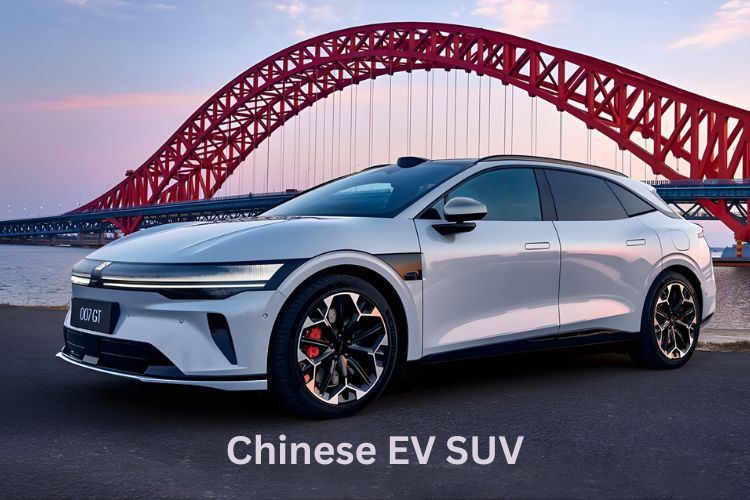
You’re scrolling through your feed late at night when you see it: a sleek BYD SUV with specs that make your jaw drop and a price tag that makes you blink twice. For a split second, you feel that rush of “Wait, is this the future?” But before you can even Google it, that little voice whispers, “What’s the catch? What am I missing here?”
Here’s what most guides won’t tell you: your excitement is justified. So is your skepticism. Because Chinese EV SUVs aren’t what you think they are anymore, but they’re also not the miracle everyone’s shouting about online. They’re somewhere in between, and that in-between is where the real story lives.
You’ve probably already seen the hype machine working overtime and the fear-mongers doing their thing. Some articles dump specs like you’re studying for an engineering exam. Others get weirdly political or just rehash press releases. Nobody’s actually helping you make a decision you can feel good about.
So here’s how we’ll tackle this together: First, I’ll show you what’s genuinely real about these vehicles, backed by actual data, not Reddit hysteria. Then we’ll walk through the standout models that matter for different types of drivers. We’ll use straightforward comparisons where your brain goes, “Finally, someone’s making sense.” And you’ll finish knowing exactly whether a Chinese EV SUV deserves a spot in your driveway or if you should keep looking elsewhere.
Keynote: Chinese EV SUV
Chinese electric SUVs represent the world’s most advanced EV technology at prices 30-50% below American competitors, but US buyers face 102.5% tariffs effectively banning direct imports. BYD’s LFP Blade Battery achieves superior safety ratings with 3,000+ charge cycles. Multiple models earned 5-star Euro NCAP ratings, with NIO ET5 recording the highest 2023 adult occupant protection score at 96%.
Why Chinese EV SUVs Went From Nowhere to Everywhere (And Why That Actually Matters to You)
The Numbers That Changed the Game Overnight
Here’s a stat that’ll make you pause: by mid-2025, over 51% of all new vehicles sold in China are electric or plug-in hybrid. That’s not a typo. More than half. The market crossed the same tipping point Norway hit years ago, the one that basically killed off gas cars in that country within three years.
This isn’t some government subsidy experiment anymore. We’re talking 1.2 million EVs exported from China in 2023 alone, up 400% from just two years prior. Over 100 manufacturers are now slugging it out in what’s become the most brutal automotive market on earth. When you have that many companies fighting for survival, innovation doesn’t just happen. It explodes.
And here’s the kicker: global automakers like Ford and VW aren’t competing against Chinese brands anymore. They’re partnering with them just to stay alive. That should tell you everything about where the real technology leadership sits right now.
Your Neighbor Might Already Be Driving One Without You Knowing
Think Chinese EVs are some distant future thing? Look closer at your street. That MG your coworker drives? Chinese-owned. The Polestar at the coffee shop? Built in China, owned by Geely. Even Volvo, that Swedish safety icon your parents loved, is now part of China’s Geely empire.
European sales of Chinese electric vehicles jumped 50% between 2023 and 2024. Australia’s right behind them. Even Tesla, the brand everyone thinks of as purely American, sources critical batteries and components from Chinese suppliers now. It’s like when Japanese cars arrived in the 1970s. Everyone doubted, made jokes, questioned the quality. Then everyone drove one.
The quiet revolution isn’t coming. It’s already happened, hiding behind badges you thought you knew.
The Price War That’s Reshaping Your Options
Here’s where it gets wild. Entry-level Chinese electric SUVs start around $15,000 in their home market. Not $45,000. Fifteen thousand dollars. Features that used to be exclusive to $80,000 luxury cars, like massage seats and panoramic touchscreens, now come standard on budget models.
But there’s a catch for Americans: 102.5% tariffs currently make these vehicles essentially unavailable in the US market. That $15,000 BYD would cost you $45,000 to $52,000 after tariffs, shipping, dealer markup, and compliance modifications. The value proposition evaporates completely.
Still, that pricing pressure is forcing every brand, including Tesla, to either innovate faster or drop prices drastically. You’re feeling the effects even if you can’t buy a Chinese EV directly. The competition is making everything better and cheaper, even for American-made vehicles.
Let’s Talk About What’s Really Keeping You Up at Night
“But Are They Actually Safe?” (Let the Data Do the Talking)
I know what you’re thinking. You’ve seen the headlines about battery fires and cheap manufacturing. So let’s look at what the actual crash-test engineers found, not what your uncle shared on Facebook.
Multiple Chinese EVs scored five-star Euro NCAP safety ratings in 2023-2025, including the BYD Sealion 7. The NIO ET5 achieved a 96% adult occupant protection score, the highest rating in 2023, beating out BMW, Mercedes, and every other luxury brand tested that year. The XPeng P7 scored 87% while BMW’s i4 only managed four stars.
Now, about those battery fires everyone talks about. Yes, eight EV fires occur daily in China. But context matters: that’s out of millions of vehicles on the road. Compare that to Tesla’s 232 total fires globally since 2013, or the thousands of gasoline vehicle fires that happen in the US every single year that nobody talks about because they’re so common.
BYD’s Blade Battery technology, which uses LFP chemistry, focuses specifically on thermal stability. In the industry-standard nail penetration test, where engineers literally drive a nail through the battery pack, the Blade Battery didn’t emit fire or smoke. Traditional NMC batteries? They exploded and hit temperatures over 500°C. That’s not marketing. That’s physics.
The Quality Question That Makes Your Stomach Knot
Let’s be honest about this part. J.D. Power’s 2025 study shows initial quality issues are higher in Chinese new energy vehicles compared to established brands. The gap is real. But here’s what that same study shows: the gap is closing fast. Like, year-over-year improvements that took Japanese brands a decade to achieve.
You need to separate the early cheap exports from today’s global-focused lineups. Those first-wave vehicles were rough. They were designed for a protected domestic market where quality standards were lower. The brands learned hard lessons when European buyers returned cars and social media roasted them.
Today’s BYD, NIO, and Geely vehicles going to Europe? They’re investing heavily in dealer networks, parts supply, and software support. BYD now maintains 90% parts availability within 48 hours in established markets. That’s better than some American brands manage domestically.
Here’s the honest truth some models feel stellar, approaching German build quality in fit and finish. Others still feel like beta versions where you’re the quality control tester. The brand matters. The specific model matters. And the market it’s designed for matters a lot.
“What If the Company Just Disappears?” (The Fisker Lesson)
This fear is 100% valid. We all watched Fisker’s bankruptcy leave Ocean SUV owners completely stranded with plummeting resale values and no parts support. Dealerships went dark. Software updates stopped. Those beautiful vehicles became expensive paperweights in just months.
But here’s the critical distinction: Fisker was a startup with no manufacturing experience and a business model built on borrowed technology. BYD has a 20+ year track record. They started as a battery manufacturer in 1995 before they ever built a car. Geely owns Volvo, Polestar, and Lotus, managing premium Western brands successfully for over a decade now.
NIO has over 3,445 battery swap stations globally. That’s physical infrastructure investment you can see and touch. When a company builds thousands of permanent charging stations, they’re not planning to disappear next quarter. XPeng trades on the New York Stock Exchange with full SEC disclosure requirements.
Parts availability for major brands now hits 90% within 48 hours in Europe. Dealer network expansion is happening faster than any previous automotive market entry in history. But you still need to be smart. Established Chinese brands like BYD, NIO, XPeng, and Geely are your safe bets. Unknown importers with no service network? Walk away.
The Brands You Actually Need to Know (Without the Marketing BS)
The Battery Giant That Builds Cars: BYD
BYD didn’t start as a car company. They began as a battery manufacturer in 1995, which means they understand power systems at a molecular level that traditional automakers are still learning. When they decided to build vehicles, they already had the hardest part figured out.
Their Blade Battery technology is now setting industry safety standards worldwide. Other brands are licensing it. Think about that: competitors are paying to use BYD’s battery design because it’s that much better. The technology eliminates the bulky modules traditional batteries need, packing more cells into the same space while making the whole pack structurally stronger.
BYD’s lineup ranges from the $10,000 Seagull city car all the way up to the $150,000+ Yangwang U8 luxury beast that can drive through water. They sold 85,817 units of just one model, the Li Auto L9, in China during 2024. That’s the scale we’re talking about here, not some boutique manufacturer making a few thousand vehicles.
The BYD Atto 3 is their global spearhead, the vehicle they’re using to establish the brand in mass markets worldwide. It packs a 60.5 kWh LFP Blade Battery delivering 420 km of real-world range. The powertrain is a 201 hp front-wheel-drive motor that’ll hit 100 km/h in 7.3 seconds. Nothing crazy, just solid and dependable. It earned a 5-star Euro NCAP safety rating and includes features like Vehicle-to-Load capability, meaning you can use your car to power your camping gear or even your house in an emergency.
The Tesla Rival With Battery Swapping: NIO
NIO’s entire strategy is to build a premium ecosystem, not just sell you a car. They’re targeting the established German luxury segment head-on, going after buyers who’d normally shop BMW, Mercedes, or Audi. And they’re doing it with technology that’s genuinely different.
The revolutionary Battery-as-a-Service model removes the battery from the vehicle’s purchase price. You buy the car without the battery, then either rent one monthly or pay per swap. With over 3,445 battery swap stations globally, you drive up, and in five minutes a machine swaps your depleted battery for a fully charged one. No 30-minute charging wait. You’re in and out faster than filling a gas tank.
The NIO EL6 is their core luxury contender, competing directly with the BMW iX3. You can choose either a 75 kWh battery (405 km range) or 100 kWh battery (529 km range). Both are swappable. The standard 483 hp dual-motor AWD system delivers a 4.5-second 0-100 km/h time. Starting price is €65,500 in Germany for the 75 kWh version.
The ES8 flagship is their technology showcase. The all-new 2026 model introduces NIO’s 900-volt high-voltage architecture, a 102 kWh battery, and a powerful 697 hp dual-motor AWD powertrain. It hits 100 km/h in under four seconds and delivers 635 km of range. This isn’t competing with Tesla. This is competing with Porsche.
The Company That Owns Volvo: Geely (and Their Wild Child, Zeekr)
When people worry about Chinese quality, I point them to one fact: Geely acquired Volvo in 2010. Not just bought the name, but successfully managed and grew a premium Western brand known for safety and engineering. They also own Polestar and Lotus. If they can handle brands with that much heritage and reputation, they know what global quality standards mean.
Geely operates in over 40 countries with established service networks and parts distribution. They’re not learning how to support customers internationally. They’ve been doing it for over a decade.
Their Zeekr brand is the high-tech answer to Porsche. The Zeekr X compact SUV was designed in Geely’s Gothenburg, Sweden studio and packs 428 hp in the dual-motor AWD version. Zero to 100 km/h in 3.8 seconds. It features a 14.6-inch touchscreen and a massive 24.3-inch augmented reality head-up display. This is European design and engineering with Chinese manufacturing efficiency.
The upcoming Zeekr 7X, launching in 2026, promises 802 km of range. That’s targeting the Tesla Model Y Performance head-on, and pricing it just below Tesla to steal market share. Geely knows exactly what they’re doing.
The Dark Horses: XPeng and Xiaomi
XPeng’s entire strategy is technology-first. Their XNGP driver assistance system rivals Tesla’s Full Self-Driving at a fraction of the cost. The company’s approach is bold: offer best-in-class autonomous features for free, even on affordable models, to drive adoption and gather real-world data faster than competitors.
The XPeng G6 is the most direct technological challenge to the Tesla Model Y that exists today. It’s built on a full 800-volt platform enabling 280 kW DC fast charging. That means 10-80% charge in under 20 minutes, far faster than Tesla’s 400-volt system. The 87.5 kWh version delivers 570 km of range compared to the Model Y’s 466 km. And unlike Tesla’s minimalist approach, the G6 includes a proper driver display and supports Apple CarPlay and Android Auto.
XPeng strategically undercuts the Model Y on price in Europe. The G6 starts at €42,990 in the Netherlands, while the Model Y costs €45,990. Same segment, better specs, lower price. That’s the competitive pressure legacy brands are facing.
Then there’s Xiaomi, the smartphone giant entering the automotive market in 2025 with their YU7 SUV. When your phone maker builds a car, connectivity becomes seamless. Your vehicle knows your calendar, your preferred climate settings sync from your phone, your music transitions perfectly from headphones to car speakers. Think Apple’s ecosystem integration, but for an electric SUV.
What It Actually Costs (Beyond the Viral Headlines)
The Sticker Price Is Just the Beginning of the Story
Those viral “$15,000 SUV” headlines you’ve seen? They’re real, but they’re also misleading if you’re shopping outside China. A BYD Atto 3 sells for approximately $19,000 in China but costs $42,800 in Germany. That’s a 125% markup. The XPeng G9 jumps from $36,200 domestically to $63,310 in Sweden.
This isn’t dumping. This is sophisticated pricing strategy. Chinese manufacturers are funding their brutal domestic price war by selling export models at significant premiums. BYD makes an estimated profit of €14,300 per Seal U sold in the EU, compared to just €1,300 for the same vehicle in China. That export profit buffer funds R&D and gives them the financial room to absorb tariffs or start price wars whenever they choose.
For American buyers, the math gets worse. That theoretical $20,000 Chinese EV would cost $45,000 to $52,000 after 102.5% tariffs, shipping, dealer markup, and US compliance modifications. The value proposition disappears completely.
But you also need to factor in the total ownership picture. Home charger installation runs $2,000 to $5,000 depending on your electrical panel and garage setup. Insurance premiums are often 30-50% higher initially because insurers don’t have actuarial data for these vehicles yet. Some insurers are refusing coverage entirely for lesser-known brands.
On the positive side, many models qualify for federal and state EV rebates where available, though US federal tax credits specifically exclude vehicles with Chinese battery components under the Inflation Reduction Act. You need to work through your local tax situation carefully.
The Insurance Surprise Nobody Warns You About
This is the number that’ll make you wince. Without extensive claims history, insurers price in uncertainty. That means premiums 30-50% higher than established brands for the same coverage level. I’ve seen quotes where a BYD costs more to insure annually than a BMW, purely because the insurance company doesn’t know what repair costs or theft rates look like yet.
Some regional insurers are flat-out refusing coverage for lesser-known brands. You might get approved by one company and denied by three others. It’s frustrating, but it’s also temporary. As more vehicles hit the road and claims data accumulates, premiums normalize. Major brands like BYD and MG are already seeing rates drop as insurers get comfortable with repair costs.
Your best move? Shop specialists who understand the Chinese EV market specifically, not just generic insurance agents working from standard databases. These specialists have relationships with underwriters who’ll actually evaluate the specific vehicle rather than just declining unfamiliar brands automatically.
Parts, Service, and the “What If” Scenarios
Authorized service centers are expanding rapidly but they’re still limited in many regions. If you’re in a major city, you’re probably fine. Rural areas? That’s where it gets dicey. You need to check actual locations, not just “coming soon” promises on a website.
BYD maintains 90% parts availability within 48 hours in established European and Australian markets. That’s genuinely impressive for a relatively new market entrant. But “established markets” is the key phrase. If you’re an early adopter in a new market, you should budget an extra $500 to $1,000 annually for maintenance contingencies until the service network matures.
Here’s your red-flag checklist: No service centers within 100 miles of you? Pass. Vague warranty terms with lots of exclusions? Pass. Online-only sellers with no physical dealer network? Definitely pass. You’re buying a complex piece of machinery that’ll need service. The vehicle itself might be great, but you need the support infrastructure behind it.
Safety, Batteries, and “Will This Thing Actually Last?”
Battery Chemistry Without the Engineering Degree
Every Chinese EV article throws around terms like LFP and NMC without explaining what they actually mean for you. So here’s the simple version: think of LFP batteries like a sturdy thermos that keeps your coffee hot all day but takes forever to fill. NMC batteries are like a high-performance sports bottle that fills fast and holds more coffee, but you need to be more careful not to drop it.
LFP stands for Lithium Iron Phosphate. It’s calmer, more durable, slightly heavier, and charges slower but incredibly stable. The thermal runaway threshold, the temperature where bad things happen, is over 500°C. That’s more than double the 150-200°C threshold for NMC (Nickel Manganese Cobalt) batteries. LFP batteries also last longer, delivering 3,000+ charge cycles versus 1,000-2,000 for traditional lithium-ion.
But here’s the trade-off: LFP batteries have lower energy density, meaning you need more weight to get the same range. They also perform significantly worse in cold weather. LFP charging speeds drop 30-40% below -10°C versus 15-25% for NMC. Real-world winter range loss reaches 35-45% for LFP versus 25-30% for NMC. If you live in Minnesota or Colorado and park outside, that matters.
One simple decision tree: daily commuter under 100 miles living in a warm climate? LFP wins on durability and cost. Road warrior doing long highway trips in cold weather? NMC makes more sense despite the higher cost.
Crash Tests That Actually Protect You (Not Just Marketing)
Several Chinese EVs scored five stars in Euro NCAP testing, including the BYD Sealion 7, NIO ET5 (96% adult occupant protection, the highest 2023 score), and the XPeng P7 (87% adult occupant). These aren’t theoretical safety ratings. These are vehicles that have been crashed repeatedly by independent European safety engineers who don’t care about protecting any brand’s reputation.
Let me translate what those percentages mean in real terms. A 96% adult occupant protection score means that in a high-speed frontal crash, the driver and passengers are extraordinarily unlikely to suffer life-threatening injuries. The cabin structure maintains integrity, airbags deploy correctly, and the restraint systems do their job. The NIO ET5 scored higher than every Mercedes, BMW, and Audi tested that same year.
You can verify all of this yourself. Always cross-check official test databases at Euro NCAP, IIHS for US vehicles, or your local safety authority. If a model has no official safety rating published anywhere, that’s a serious yellow flag. Don’t trust manufacturer claims. Trust independent crash-test data.
Will Support and Software Ghost You in Year Three?
Here’s something every EV specialist knows but buyers often miss: buy the network, not just the car. A vehicle with amazing specs but no local support infrastructure becomes worthless the moment something breaks or a software update fails.
Check the brand’s over-the-air update track record. How often do they push updates? Are they adding features or just fixing bugs? NIO and XPeng push major feature updates quarterly. Some smaller brands haven’t pushed a single update in six months. That tells you everything about their long-term software support commitment.
Your red-flag checklist: fewer than three service centers within reasonable driving distance, no OTA updates in six months, warranty terms that are vague about software support, or online forums full of owners complaining about unresolved issues. These are companies that took your money but aren’t investing in keeping you happy long-term.
The flip side? Brands with extensive dealer networks, active owner communities, regular software updates, and transparent parts availability tracking are demonstrating real commitment. They’re building for the long haul, not just a quick cash grab.
The Hidden Trade-Offs Nobody Talks About Until It’s Too Late
Resale Value in a World That’s Still Skeptical
Let’s acknowledge this anxiety directly: it’s completely reasonable. Some buyers are still suspicious of Chinese badges, which hammers resale values in certain markets. A three-year-old BYD might lose 50-60% of its value compared to 35-45% for an equivalent Toyota or Volkswagen.
But perceptions are improving rapidly as safety data spreads and real-world ownership experiences accumulate. Fleet adoption is the secret accelerator here. When taxi companies, ride-share drivers, and delivery fleets choose Chinese EVs by the thousands, regular buyers notice. These fleet operators run the numbers cold. They don’t care about brand prestige. They care about total cost of ownership, reliability, and minimizing downtime. When they choose BYD or MG over established brands, that sends a powerful signal.
Tesla faced the exact same perception problem from 2012 to 2016. Early Model S owners watched their vehicles depreciate faster than any luxury car in history. Then the tide turned as reliability data came in and the Supercharger network proved itself. Today, Teslas hold their value better than most luxury vehicles.
Buying strong-name models like BYD, NIO, or Geely reduces resale anxiety significantly. These brands have demonstrated staying power and are actively building the service networks that protect long-term value. Unknown brands or grey-market imports? Your resale value might crater completely.
Software, Data, and “Is My Car Spying on Me?”
Let’s talk about this calmly without the fear-mongering. Modern connected cars generally collect similar data regardless of country of origin. Your Ford, your Tesla, your BMW, they’re all collecting location data, driving patterns, infotainment usage, and diagnostic information. This isn’t unique to Chinese vehicles.
The legitimate question is what happens to that data and who has access to it. Chinese manufacturers are subject to Chinese data laws, which do require companies to provide data to the government under certain circumstances. American and European manufacturers are subject to different legal frameworks. You’re allowed to care about this and still appreciate the technology.
What can you actually do? Check privacy settings in your vehicle’s menus. Many brands let you disable data sharing for non-critical functions. Read transparency reports if the company publishes them. Understand your local data protection rules and whether the manufacturer complies with GDPR or equivalent standards in your market.
The honest truth? If data privacy is your absolute top priority, any connected car is going to create concerns. Chinese EVs don’t collect fundamentally different types of data, but the legal framework governing that data is different. Make your decision with eyes open to that reality.
When Geopolitics Hits Your Driveway
Tariffs, sanctions, or app bans can alter vehicle value or available services down the line. This isn’t paranoid speculation. We’ve seen it happen. The US implemented 102.5% tariffs on Chinese EVs in 2024. The EU is debating similar measures. If you own a Chinese EV and your country suddenly implements restrictions, your vehicle’s value can take an immediate hit.
Prefer brands with local assembly plans or strong global presence beyond just China. BYD is building factories in Brazil, Hungary, and Thailand. Geely has established European manufacturing through Volvo. NIO is investing in European infrastructure. These brands are diversifying their geographic footprint, which reduces your geopolitical risk exposure.
Think about a 5-8 year ownership window, not just the initial launch buzz and excitement. If you’re planning to keep the vehicle that long, you need a brand that’ll still be supporting it in your market years from now. Make it practical, not paranoid. Think contingency mindset, not doomsday prepping. Just factor it into your decision like you’d factor in any other long-term risk.
Build Your Shortlist: Match the Right SUV to Your Real Life
For Budget-Conscious First-Time EV Drivers
If you’re new to EVs and cost is your primary concern, focus on three proven models: the MG ZS EV, BYD Atto 3, and GAC Aion Y where available. These vehicles prioritize official safety ratings, dealer network depth, simple user experience, and fair warranty terms.
Why “good enough everywhere” beats “perfect in one spec” for your first electric vehicle? Because you don’t know yet what matters most to you. Maybe you’ll discover you care more about charging speed than you thought. Maybe range anxiety turns out to be less of an issue than you expected. Starting with a well-rounded, proven vehicle lets you learn what you actually value before committing to a more specialized second EV.
The MG ZS EV starts around £30,000 and successfully undercuts all mainstream rivals while offering a 5-star Euro NCAP rating and MG’s established UK dealer network. The BYD Atto 3 brings similar value with the added confidence of BYD’s battery expertise. Both vehicles have been on the market long enough that you can find real owner reviews, reliability data, and established service procedures.
If you’re lost and overwhelmed, start with these three and test drive back-to-back. You’ll immediately feel which one matches your comfort level, driving style, and practical needs.
For Tech-Loving Early Adopters Who Live for Updates
You want bleeding-edge features? The NIO ES6/EL6, XPeng G6/G9, and premium BYD Sealion 7 deliver cutting-edge ADAS, battery swap capability or ultra-fast DC charging, and rich user interfaces that get better with every software update.
The XPeng G6 offers 800-volt architecture enabling 280 kW charging speeds, meaning you can add 200+ km of range in the time it takes to grab coffee and use the bathroom. The XNGP driver assistance system handles complex urban scenarios that would make Tesla’s Autopilot hesitate. And you’ll get quarterly feature updates adding new capabilities long after you’ve driven off the lot.
NIO’s vehicles come with the Nomi AI assistant, a physical robot character on your dashboard that learns your preferences and anticipates your needs. It sounds gimmicky until you experience how intuitive it makes controlling your vehicle. Plus, battery swapping eliminates the entire “charging time” problem. Five minutes and you’re back on the road with a full battery.
You’re trading some simplicity and long-term proven reliability for the joy of being first. Perfect if you enjoy firmware updates and new features more than you ever enjoyed oil changes. Just make sure you’ve got good internet connectivity and patience for the occasional bug.
For Families and Long-Haul Road-Trippers
Roomy SUVs with proven fast-charging networks and five-star safety ratings from independent bodies are your priority. The NIO ES8, Li Auto L9, and BYD Tang offer the space and comfort families need with the safety credentials that let you sleep at night.
The NIO ES8 in its 6-seat or 7-seat configuration offers adult-sized comfort in all three rows, something most SUVs claim but don’t deliver. The 102 kWh battery provides 635 km of range, genuinely eliminating range anxiety on family road trips. And if you’re in a market with NIO’s swap stations, you can complete a 1,000 km journey with two 5-minute battery swaps instead of two 30-minute charging stops. That’s the difference between kids who are bored and kids who are melting down.
The Li Auto L9 is an EREV (extended-range electric vehicle), meaning it has a small gas generator that charges a massive 52.3 kWh battery. You get 280 km of pure electric range for daily driving, but you also get over 1,400 km total range for road trips. No charging infrastructure anxiety whatsoever. You can drive it like a gas car when you need to, and like an EV the other 90% of the time.
Include the “kids plus luggage plus stroller plus dog” mental test for honest space evaluation. Encourage test drives on rough roads and highway speeds, not just smooth dealer parking lots. Your family deserves a vehicle that works in real life, not just in the showroom.
The Models That Make Sense Right Now (Not in Three Years)
Here’s your practical shortlist based on what’s actually available and proven today:
Best Overall Value: BYD Atto 3
- Starting around $35,000 (varies by market)
- 261-mile (420 km) WLTP range
- Proven reliability with established dealer network
- 5-star Euro NCAP safety rating
- LFP Blade Battery technology for safety and longevity
Best Range Champion: NIO ET7
- 648+ miles real-world range tested
- Battery swap capability (5-minute “refuel”)
- Premium tech and materials
- 900-volt architecture for ultra-fast charging
Best Tech Integration: XPeng G6
- Advanced ADAS rivaling Tesla Full Self-Driving
- 435-mile (700 km) WLTP range
- 10-minute fast charging (10-80%)
- 800-volt platform technology
Best Luxury Experience: NIO ES7/EC7
- Starting around $63,000
- Premium features including air suspension
- European market success with strong support network
- Swappable battery ecosystem
Best All-Rounder: Geely EX5
- Solid engineering pedigree (Volvo ownership)
- Mid-range pricing
- Growing global service network
- European design and quality standards
What 2025 Actually Means for Your Next Car Decision
The Shift That’s Bigger Than One Country
China is projected to produce 60% of the world’s EVs by 2026. That’s not a market segment. That’s complete industry dominance. Traditional automakers aren’t competing against Chinese manufacturers anymore. They’re partnering with them because they have to.
Hyundai and Toyota are launching China-specific EV models just to survive in that market. Ford is partnering with CATL for battery technology. BMW sources critical components from Chinese suppliers. The battery technology that powers Tesla, Mercedes, and BMW today? It was developed in China by companies like CATL and BYD.
This shift is fundamentally reshaping what vehicles get made, what features become standard, and what prices consumers expect. The pressure from Chinese EV competition is making every brand innovate faster and price more aggressively. Even if you never buy a Chinese EV, you’re benefiting from the competitive pressure they’re creating.
The Tariff Reality Check (And What It Means for Your Wallet)
The 102.5% tariff in the US market makes Chinese EVs essentially unavailable there for now. European markets are feeling pressure to implement protective tariffs by 2026, which would raise prices but not eliminate Chinese EVs entirely. Mexico and Canada are potentially becoming North American entry points for Chinese brands trying to work around US restrictions.
A 30% duty on a BYD Seal U would still leave the company with a 15% profit margin, or €4,700 per vehicle, according to market analysis. Chinese manufacturers built their export pricing strategy with tariff buffers already included. Moderate tariffs slow them down but don’t stop them.
Prices will likely rise globally if tariffs expand, but Chinese EVs will still remain competitive overall due to their fundamental cost-of-goods-sold advantages from vertical integration and battery technology. The question isn’t if Chinese brands succeed globally. The question is which specific markets they dominate first and how quickly legacy brands can respond.
The Ethics Question You’re Probably Wrestling With
Amnesty International ranked BYD poorly on human rights due diligence in supply chain transparency. Limited transparency on sourcing practices remains an issue for many Chinese manufacturers. These are legitimate concerns you’re allowed to weigh in your decision.
Some buyers prioritize environmental impact over sourcing concerns. Others do the opposite. Some people refuse to buy certain brands based on ethical grounds. Others argue that supporting the EV transition, regardless of manufacturer origin, is the greater good. There’s no objectively correct answer here.
What I can tell you is this: informed decision-making beats willful ignorance. If ethics matter to you, research the specific brand’s labor practices, supply chain transparency, and human rights record. Don’t assume all Chinese brands are the same. And recognize that there’s no morally perfect choice in automotive manufacturing. Even the most ethical Western brands source components globally from suppliers with questionable practices.
Make your decision with eyes open, knowing what trade-offs you’re personally willing to accept.
Conclusion: Your Calm, Confident Next Step
We started with that flash of excitement when you first saw a Chinese EV SUV online, followed immediately by that wave of doubt and all those nagging questions. You’ve now seen the real mix: huge value and genuine innovation paired with real trade-offs around service networks, resale perception, and geopolitical uncertainty. You’re not rolling the dice anymore. You’re making a slow, informed decision with your eyes wide open.
Your one actionable step for today: Pick your life situation from above (budget-conscious, tech-loving, family-focused, or road-tripper) and grab the matching shortlist. Check the official safety ratings at Euro NCAP or your local authority, confirm dealer locations near you, and calculate your realistic total cost including insurance and charging setup. If three boxes tick “yes,” book one honest back-to-back test drive this week at a local dealer.
Remember that old gas guzzler sitting in your driveway? The one that made you start this search in the first place? You’re not abandoning it out of fear or jumping into something risky out of hype. You’re making the smartest move for your situation, and that confidence? That’s worth more than any spec sheet.
Chinese SUV EV (FAQs)
Why can’t I buy a Chinese EV in America?
No, you currently cannot. The US implemented 102.5% tariffs on Chinese EVs in September 2024, making them economically unviable. A $20,000 Chinese EV would cost $45,000-$52,000 after tariffs, shipping, and compliance modifications.
Additionally, the Inflation Reduction Act excludes vehicles with Chinese battery components from federal tax credits. Some Chinese brands are exploring manufacturing in Mexico to bypass these restrictions, but no Chinese EVs are available through official US dealer networks as of 2025.
Are Chinese electric cars safe in crash tests?
Yes, multiple Chinese EVs achieved 5-star Euro NCAP safety ratings. The NIO ET5 scored 96% adult occupant protection in 2023, the highest rating that year, beating BMW, Mercedes, and Audi.
The BYD Sealion 7 and XPeng P7 also earned 5-star ratings. These are independent crash tests by European safety engineers using the same standards applied to all vehicles. Always verify ratings through official Euro NCAP or IIHS databases rather than trusting manufacturer claims.
What is LFP battery technology and how does it differ from Tesla batteries?
LFP (Lithium Iron Phosphate) batteries are chemically safer and more durable than Tesla’s NMC batteries but have lower energy density. LFP batteries won’t catch fire in nail penetration tests and last 3,000+ charge cycles versus 1,000-2,000 for NMC.
The trade-off: they’re heavier for the same range and perform worse in cold weather (35-45% winter range loss versus 25-30% for NMC). LFP charging speeds drop 30-40% below -10°C. Tesla uses LFP in some standard-range models but relies on NMC for long-range variants.
How much would a BYD Atto 3 cost if sold in the US?
A BYD Atto 3 sells for approximately $19,000 in China but costs $42,800 in Germany. If sold in the US with 102.5% tariffs, shipping, dealer markup, and compliance modifications, the final price would likely be $45,000-$52,000, similar to the Tesla Model Y.
This eliminates the value proposition entirely, which is why BYD hasn’t entered the US market. If they manufactured in Mexico with 25% component tariffs instead of 102.5% vehicle tariffs, analysts project $38,000-$44,000 pricing would be possible.
Do Chinese EVs qualify for the federal tax credit?
No, Chinese EVs do not qualify for the US federal EV tax credit. The Inflation Reduction Act (IRS Notice 2024-05) explicitly excludes vehicles with battery components from “foreign entities of concern,” which includes China, effective January 2024.
Even if Chinese manufacturers built vehicles in North America, the battery component restrictions would disqualify them. Some Chinese brands are developing supply chains that comply with these rules, but no Chinese EV currently qualifies for the $7,500 federal credit.