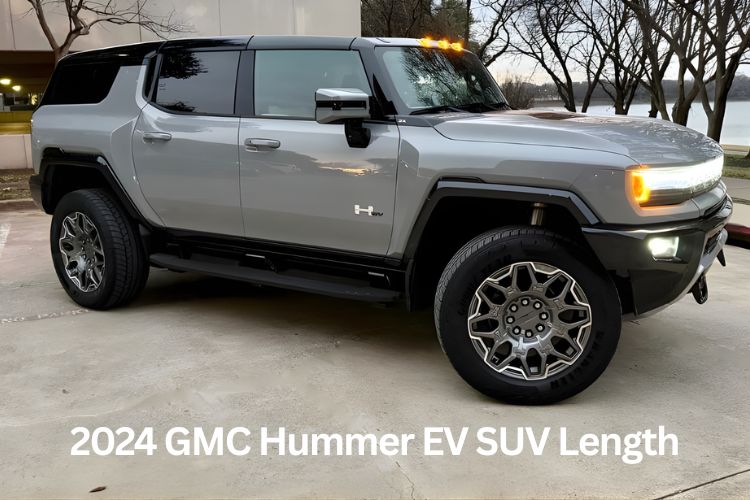
You’re lying in bed, phone glowing in the dark, zooming in on photos of the 2024 GMC Hummer EV SUV. It’s everything you want. Bold. Electric. Ridiculously capable. But your brain keeps whispering the same anxiety on repeat: Where the hell am I going to park this thing? You’ve seen the headlines scream “massive” and “beast,” but nobody’s actually telling you if it’ll squeeze past your garage door opening or turn you into that person hunting for parking spots in the back forty of every lot for the rest of your life.
Here’s what’s really happening. The confusion you’re drowning in right now? It’s because some sources say 206.7 inches, others say 196.8, and nobody explains which number actually matters for your Tuesday morning reality. Most reviews obsess over horsepower and CrabWalk party tricks while completely ignoring the question keeping you awake: Will this fit my actual life?
Let’s fix that together. We’re going to nail down the real numbers, compare them to vehicles and spaces you already know, and translate every inch into what it feels like when you’re backing into your driveway or threading through a parking garage. By the end, you’ll know exactly whether this electric giant is your kind of bold or just a beautiful mistake waiting to happen.
Keynote: 2024 GMC Hummer EV SUV Length
The 2024 GMC Hummer EV SUV length measures 206.7 inches with spare tire (196.8 without), spanning 17.2 feet of electric capability. Built on a 126.7-inch wheelbase, it’s 20 inches shorter than the Pickup variant, delivering superior maneuverability with four-wheel steering that achieves a 35.4-foot turning circle. Standard garage fitment requires 20+ feet depth and 9+ feet width to accommodate its substantial dimensions comfortably.
The Tale of Two Numbers (And Why Both Matter)
The Measurement That Shows Up Everywhere
The 2024 GMC Hummer EV SUV length without the rear spare tire is 196.8 inches. That’s about 16.4 feet total. This is what most comparison charts use because it represents the vehicle’s structural body length, the core dimensions before you add external equipment.
The wheelbase spans 126.7 inches, notably shorter than the Hummer EV Pickup’s 135.6-inch wheelbase. That 8.9-inch difference isn’t just a spec sheet detail – it’s why the SUV turns tighter and feels more agile on tight trails and in parking lots.
Height reaches 77.8 inches in standard configuration. With the adaptive air suspension lowered in Entry/Exit mode, that drops to about 75.8 inches, which matters when you’re squeezing under parking garage barriers that hover around 78 to 80 inches.
Width stretches 86.5 inches without mirrors. Here’s the thing – width creates more daily stress than length once you’re actually living with this vehicle. Standard parking spots run about 9 feet wide, and you’ll consume most of that real estate.
The Number Your Garage Actually Cares About
With the full-size spare tire mounted on the rear carrier, the 2024 Hummer EV SUV length jumps to 206.7 inches. That’s 17.2 feet of vehicle you need to accommodate. This isn’t some optional accessory most people skip – this is how the vehicle arrives from the factory, and it’s the configuration most buyers keep.
That 10-inch difference between 196.8 and 206.7 inches isn’t trivial. It’s your margin for error when backing into your garage. It’s the difference between “fits with room to spare” and “can’t close the garage door.”
The rear overhang tells the complete story. Without the spare tire, rear overhang measures 35.5 inches. Add that spare, and it extends to 45.3 inches. That extra 9.9 inches of overhang directly impacts your departure angle for off-roading and your clearance needs in everyday parking situations.
Compare this to your parking spot depth. Standard two-car garages built in the last 20 years typically run 20 to 24 feet deep. You’ll need at least 18 feet of usable depth plus walking room around the vehicle. If your garage is older and only 18 feet deep, the 206.7-inch configuration creates a non-starter situation.
Where the Internet Quietly Messes With Your Head
Spec sheets cherry-pick whichever number fits their narrative without context. Some listings emphasize the shorter 196.8-inch figure to make the SUV sound more manageable. Others lead with 206.7 inches to highlight its substantial presence.
Reviews talk about “surprisingly manageable” without defining what that actually means for your specific garage, your work parking structure, or your neighborhood streets.
The truth lives in understanding which configuration you’re really buying and measuring your actual spaces against that honest number. You need 206.7 inches of clearance in your garage, not 196.8. Period.
How It Stacks Against Everything Else You Know
The Reality Check: It’s Big, But Not Biggest
Let’s put the 2024 GMC Hummer EV SUV dimensions in context against vehicles you see every day and competitors in the electric SUV space.
| Vehicle | Length | Turning Circle |
|---|---|---|
| Hummer EV SUV (w/ spare) | 206.7″ | 35.4 ft |
| Chevy Tahoe | 210.7″ | 39.6 ft |
| Ford Expedition | 210″ | 39.8 ft |
| Hummer EV Pickup | 216.8″ | 37.1 ft |
| Rivian R1S | 200.8″ | 40 ft |
A Chevy Tahoe is actually longer at 210.7 inches, yet nobody loses sleep over parking those. The Ford Expedition stretches 210 inches. These are vehicles you see in suburban driveways everywhere, and they’re both longer than the Hummer EV SUV’s 206.7-inch length with spare tire.
Your fear might be about presence and visual mass, not pure length. The Hummer EV SUV sits taller and wider than traditional SUVs. It commands attention. But in actual measurement, it’s shorter than vehicles you probably drive past every day without a second thought.
The Hummer EV Pickup adds another 10 inches you don’t need to live with. At 216.8 inches overall length, the pickup is a full 20 inches longer than the SUV’s 196.8-inch body length. That’s nearly two feet of extra vehicle to park, maneuver, and store.
The Wheelbase Secret Nobody Emphasizes
That 126.7-inch wheelbase is 8.9 inches shorter than the pickup’s 135.6-inch wheelbase. This isn’t a minor trim difference. It’s a fundamental platform modification that GM made specifically to create a more agile vehicle.
Shorter wheelbase translates directly to tighter turning radius. The physics are simple: less distance between the front and rear axles means the vehicle can pivot more sharply around corners and in parking lots.
The SUV’s turning circle with four-wheel steering measures just 35.4 feet curb-to-curb. That’s genuinely impressive for a vehicle this size. Compare it to the Rivian R1S at 40 feet or the Hummer EV Pickup at 37.1 feet, and you start to understand why owners talk about the SUV feeling noticeably more nimble.
Without the four-wheel steering system engaged, that turning circle expands to 42 feet. The technology isn’t just marketing fluff – it’s a core component that makes the vehicle’s real-world maneuverability possible despite its intimidating footprint.
Width and Height: The Real Daily Challenges
Length gets all the attention, but width creates more daily stress once you’re actually living with the 2024 Hummer EV SUV.
At 86.5 inches wide (without mirrors), the vehicle barely threads through standard garage door openings. Most single-car garage doors measure 8 to 9 feet wide (96 to 108 inches). You’ve got clearance, but not much. Add the mirrors, and width expands to 93.7 inches – nearly 7.8 feet. Folding mirrors becomes mandatory habit, not optional convenience.
Standard parking spots measure 9 feet (108 inches) wide in most states. The Hummer EV SUV’s 86.5-inch width consumes 72% of that space before accounting for mirrors. You’ll consistently park near the lines, and door dings become a genuine concern in crowded areas.
Height sits at 77.8 inches in standard ride height. Most modern parking garages accommodate 7 feet (84 inches) or more, so you’ve got breathing room. But older structures, especially downtown garages built before 2000, sometimes max out at 78 to 80 inches clearance. You’re always playing height limbo in those situations.
The air suspension’s Entry/Exit mode lowers the vehicle to about 75.8 inches, giving you critical extra clearance. But here’s the catch – the system automatically raises the suspension back to normal height when you exceed 10 mph. If you forget and accelerate too early in a low-clearance structure, you’re risking expensive contact with the ceiling.
The Garage Door Nightmare (And The Relief)
Will It Actually Fit Through Your Door?
Standard single garage doors measure 8 to 9 feet wide (96 to 108 inches). The Hummer EV SUV needs 7.2 feet (86.5 inches) of clearance for the body alone. Add mirrors at 93.7 inches total width, and you’re threading a needle with just 2.3 to 14.3 inches of total side clearance.
Grab a tape measure today. Measure your actual garage door opening – not what you think it is, what it actually is. Write that number down. Now measure the depth from the door to the back wall. If you’ve got less than 18 feet of depth, the 206.7-inch Hummer EV SUV length with spare tire won’t fit with any reasonable walking room around it.
Older homes with 18-foot-deep garages create genuinely tight situations. You’ll be parking with precision every single time, using every camera angle, with maybe 6 to 12 inches to spare. Miss your mark by a few inches, and you’re either hitting the back wall or can’t close the garage door.
New builds with 20 to 22 feet depth offer real breathing room. You’ll still need to be deliberate about your parking, but it stops feeling like a high-stakes maneuver and starts feeling routine after a week or two.
The Width Problem Everyone Underestimates
Length worries people before they buy. Width frustrates people after they buy. This is the dimension that creates daily friction in ways you don’t fully anticipate until you’re living it.
Many owners end up choosing driveway parking by necessity, not preference. The vehicle fits through the garage door, technically, but the mental energy required for that precision parking twice a day becomes exhausting. The driveway offers freedom to just park and walk away.
Standard parking spots measure 9 feet wide. Compact spots drop to 7.5 to 8 feet. The Hummer EV SUV at 86.5 inches body width (93.7 with mirrors) means you’re always aware of the vehicles next to you. You park far from the building entrance. You hunt for end spots. You become that person who takes up one and a half spaces if you park even slightly off-center.
You will get door dings in crowded areas. It’s not a possibility, it’s an inevitability. The vehicle’s presence and proportions make it a target. You’ll develop habits – parking far away, choosing spots next to newer or more expensive vehicles, avoiding crowded mall parking on weekends.
Tech That Transforms Terror Into Confidence
Four-wheel steering is the game-changing technology that makes the 2024 Hummer EV SUV’s dimensions manageable in daily life. Without it, you’re piloting a 17-foot vehicle with a 42-foot turning circle. With it, that circle shrinks to 35.4 feet – comparable to a Honda Accord despite being 5 feet longer.
CrabWalk diagonal movement helps you squeeze into spots that looked impossible at first glance. The vehicle can move diagonally at low speeds, letting you adjust position in tight spaces without the usual back-and-forth dance. It’s genuinely useful, not just a party trick for YouTube videos.
The 18-camera UltraVision system gives you eyes everywhere. Front, rear, sides, overhead composite view, trailer view, bed view (for the pickup). You eliminate blind-spot panic. The first few weeks, you’ll rely on these cameras constantly. After a month, they become second nature – you glance, process, and move with confidence.
These technologies don’t make the vehicle smaller, but they make its size psychologically manageable. That’s the difference between living with constant low-grade anxiety and actually enjoying driving an impressive machine.
What All That Space Actually Buys You
The Interior Payoff for the Footprint
The 2024 GMC Hummer EV SUV length and proportions aren’t just about exterior presence. They create genuine interior space that translates to comfort on long trips.
Front legroom measures 45.6 inches. Rear legroom spans 39 inches. These aren’t “acceptable for the segment” numbers. They’re genuine adult comfort everywhere, with no knees-in-dashboard compromises even for six-footers in the back seat.
The vertical space and massive glass roof create a lounge-like openness. You don’t get that cave-like claustrophobia of some smaller EVs where the battery pack intrudes on interior volume. The cabin feels airy, light, and spacious in ways that surprise passengers who expected a darker, more utilitarian interior.
Five adults fit comfortably for real road trips. Not grudgingly, not with complaints after an hour. The width, height, and length all contribute to a sense of space that makes long highway drives pleasant rather than endurance tests.
Cargo Reality Check
Behind the rear seats, you get 35.9 cubic feet for groceries, sports gear, and everyday cargo. That’s comparable to a mid-size crossover – enough for a Costco run or a weekend camping trip without folding seats.
Fold those rear seats down, and cargo volume expands to 81.8 cubic feet. Some sources cite 47.2 cubic feet behind the second row and up to 93.1 cubic feet maximum, depending on measurement methodology (loading to the roof versus the beltline). Either way, you’ve got serious hauling capacity for furniture runs, vacation luggage for the whole family, or adventure gear for multi-day trips.
Compare this to the Hummer EV Pickup’s 5-foot open bed (60.1 inches long), and you understand the trade-off. The pickup offers more versatile cargo for dirty, bulky items you don’t want inside. The SUV provides more total enclosed space that’s secure, climate-controlled, and accessible without removing a tonneau cover or climbing into a bed.
There’s also an 11.3 cubic foot frunk (front trunk) where the engine would traditionally live. It’s perfect for charging cables, emergency gear, or keeping smelly items isolated from the main cabin. Not massive, but genuinely useful.
The Engineering Truth About This Size
The massive Ultium battery pack demands real estate. The tri-motor setup (or dual-motor on lower trims) requires substantial space for motors, inverters, cooling systems, and the complex 800-volt electrical architecture.
You can’t just shrink the vehicle significantly without sacrificing range, stability, payload capacity, or serious off-road geometry. The 2024 GMC Hummer EV SUV’s 206.7-inch length represents GM’s engineering compromise between outrageous capability (1,000 horsepower in tri-motor form, up to 11,500 pounds towing capacity, and legitimate rock-crawling prowess) and urban survivability.
The ground clearance range tells part of this story. Base ride height sits at 10.2 inches – plenty for rough trails and deep snow. Extract Mode raises it to 16 inches, giving you clearance for obstacles that would stop most vehicles. That adjustability requires sophisticated suspension with significant travel, which demands space for components and geometry.
The shorter 126.7-inch wheelbase compared to the pickup improves the breakover angle (34.4 degrees) and approach angle (49.6 degrees). Remove the spare tire, and departure angle hits 49 degrees. These are serious off-road numbers that let you tackle terrain far beyond paved roads. That capability comes from careful engineering of the length and proportions, not despite them.
Living With It: The Two-Week Reality Arc
Days 1-3: The “What Have I Done?” Phase
Every parking maneuver feels like threading an expensive needle through anxiety. You’re hyper-aware of every inch around you. You check mirrors constantly. You choose parking spots in the back of lots, not because you want the exercise, but because you’re terrified of tight spaces and careless door swingers.
The width causes more immediate stress than length. Pulling into your garage for the first time is genuinely nerve-wracking. You inch forward at a crawl, watching the side mirrors obsessively, convinced you’re about to scrape paint on the door frame.
Mild buyer’s remorse creeps in around day two or three. You start second-guessing the decision. Maybe you should have test-driven it more realistically. Maybe you should have gone with the Rivian R1S or just stuck with a traditional gas SUV. You wonder if you’ve committed to a vehicle that will frustrate you daily for the next 5 to 10 years.
Days 4-10: The Technology Starts Working for You
Four-wheel steering stops feeling like a gimmick you’ll never use. You discover it actually helps during tight U-turns and backing into your driveway at an angle. The vehicle pivots more sharply than you expected, and that 35.4-foot turning circle starts making sense in practice, not just on paper.
The camera systems earn your trust. At first, you were just watching them without really processing the information. Now your brain has learned to integrate all those views into spatial awareness. You’re less hesitant, more confident. You start trusting the proximity warnings instead of second-guessing them.
Your spatial awareness recalibrates faster than you thought possible. Your brain accepts the new footprint as normal. You stop comparing every parking spot to your old Accord or RAV4. The Hummer EV SUV becomes your baseline, and everything else feels tiny.
Week Two and Beyond: You’re Parallel Parking Like a Pro
The turning radius revelation hits around day 10. You attempt a parking maneuver you would have avoided in week one, and it just… works. The combination of four-wheel steering, cameras, and your adapted spatial sense makes the vehicle feel far more manageable than that first terrifying day.
Highway driving feels planted and confident. The length and 8,660-pound curb weight deliver stability at speed that lighter EVs can’t match. You’re not getting buffeted by crosswinds or feeling unsettled by semi-trucks passing. The mass that worried you in parking lots becomes an asset at 75 mph.
You start showing off CrabWalk to every passenger, grinning at their reactions. Friends get in and immediately comment on the size. By week two, you’re confidently demonstrating how it squeezes into spots they assumed were impossible. You’ve become an evangelist for the very dimensions that terrified you 14 days earlier.
My colleague Tom, who’s been driving his Hummer EV SUV for six months now, told me something that stuck with me: “After 10 days, I stopped thinking about the size constantly. It just became my normal.” That mental shift happens faster than you expect when the technology actually works and your brain adapts.
The Honest Scenarios: Where It Works, Where It Doesn’t
Places You’ll Avoid (Be Brutally Honest With Yourself)
Cramped downtown parking structures built before 2000 are genuinely problematic. Forget them entirely if they have tight spiral ramps, low clearances under 80 inches, or narrow spaces clearly marked for compact vehicles from a different era.
Drive-thrus with sharp 90-degree post-order turns become exercises in patience. You’ll need to take wider angles, sometimes requiring multiple adjustments. Fast food stops take longer. You learn which chains have generous layouts and which ones were designed for sedans.
Any residential street with cars parked on both sides becomes a one-way situation where someone has to wait. You’re always the one blocking partial flow. Neighborhood roads without marked lanes can feel tight, especially with oncoming traffic.
Compact parking spots are obviously out. But standard spots often feel tight too, especially in older shopping centers or apartment complexes where “standard” meant something different 30 years ago. You become a connoisseur of parking lot vintage and layout generosity.
Places That Work Better Than Your Fear Predicted
Modern shopping centers with generous parking layouts are totally manageable. Retail developments built in the last 15 years were designed for the truck and SUV era. Spots are wider, aisles are broader, and you fit right in among Suburbans, Tahoes, and F-150s.
Suburban driveways and garages under 10 years old were designed for exactly this vehicle profile. Builders anticipated larger vehicles. If your home was built after 2010, chances are good the garage accommodates the 2024 Hummer EV SUV dimensions without drama.
Highway rest stops and truck-friendly gas stations make you feel right at home. You can use the oversized parking spots designed for RVs and commercial trucks. The proportions that make you conspicuous in a Target parking lot make you just another vehicle at a travel plaza.
Off-road trails reveal the pleasant surprise where length becomes a stability advantage, not a liability. The 126.7-inch wheelbase and 206.7-inch overall length with low center of gravity (thanks to the Ultium battery platform) create confidence on technical terrain. You’re not tippy or unsettled. The mass plants you firmly on uneven surfaces.
The Social Reality of Commanding This Much Space
You will attract stares, comments, and occasional hostility from strangers who judge the vehicle as excess or environmental hypocrisy (even though it’s fully electric). Some people see the Hummer nameplate and immediately project assumptions about you.
Parking lot door dings become a genuine concern. The vehicle stands out. In crowded areas with careless shoppers, you’re a larger target. You’ll develop protective habits – parking far away, choosing end spots, favoring garages over surface lots.
Some people will assume overcompensation or make crude jokes. It’s tedious. Others approach with genuine curiosity and compliments, wanting to know about the electric powertrain, the off-road capability, or just admiring the design. You become an unofficial brand ambassador whether you signed up for it or not.
The attention is unavoidable. If you value blending in and not being noticed, this vehicle works against that goal every single day. If you’re comfortable with presence and even enjoy the occasional conversation about EVs with curious strangers, it becomes part of the ownership experience you either tolerate or embrace.
So Is 206.7 Inches Too Much for Your Life?
The Questions That Cut Through the Fantasy
Do you have predictable, generous parking at home and work? Write down those dimensions right now. Not tomorrow. Today. Measure your garage door width and depth. Measure your workplace parking spot or structure clearances. If either location creates daily stress with those measurements, this isn’t the right vehicle regardless of how much you want it.
Can you handle the attention this vehicle commands everywhere you go? It’s not subtle. You can’t make it subtle. If you prefer quietly going about your business without strangers commenting on your vehicle choice, the Hummer EV SUV works against your personality every single day.
Does “bold, unapologetic presence” excite you more than “blends in effortlessly”? Some people love commanding space and making a statement. Others find it exhausting and attention-seeking. Neither perspective is wrong, but you need clarity about which camp you’re in before committing.
Are you comfortable with precision parking becoming a daily ritual, not an occasional hassle? The first two weeks are an adjustment. After that, it becomes routine. But “routine” still means being deliberate, using cameras, and thinking about spatial relationships every time you park. If you want autopilot parking where you barely pay attention, this isn’t that vehicle.
When the Hummer EV SUV Is Exactly Right
You want super truck capability without the pickup bed compromises or the extra 10 inches of length. The SUV gives you serious towing (up to 7,500 pounds), genuine off-road geometry, and enclosed cargo space for families and weather-protected gear.
You have adequate space at home and work. Your garage measures at least 20 feet deep and 9 feet wide. Your workplace has generous parking or you’re comfortable parking farther away. You’ve measured and confirmed the 2024 GMC Hummer EV SUV length and width fit your reality.
The removable roof panels, tri-motor power (1,000 horsepower with WTF mode), and serious off-road geometry genuinely appeal to you beyond just bragging rights. You’ll actually use the capability, or at least the idea of that capability brings you genuine satisfaction every time you drive.
You’re building a lifestyle statement, not just solving basic transportation needs. The Hummer EV SUV is an emotional purchase as much as a practical one. If you connect with the brand heritage, the electric innovation, and the bold design enough that the compromises feel worth it, you’ll love ownership.
The Alternatives If the Honest Answer Is “Too Much”
Rivian R1S delivers adventure-focused capability in a package that’s 6 inches shorter at 200.8 inches overall length. It’s still substantial but slightly more urban-friendly, with a more refined interior and 314-mile range that matches real-world usability.
Ford F-150 Lightning offers truck utility in a more conventional footprint at 232.7 inches (longer than the Hummer EV SUV, but familiar proportions that don’t intimidate). It parks like a regular F-150, which millions of people manage daily without drama.
Tesla Model X provides EV performance and seven-seat capacity in a noticeably smaller package at 198.3 inches. The SUV length is about 8 inches shorter than the Hummer, with significantly less width and more conventional proportions for tight urban environments.
Chevy Silverado EV or GMC Sierra EV offer the same Ultium platform technology in traditional truck form factors with known dimensions. You get 440 miles of range in some configurations without the Hummer’s controversial styling or extreme proportions.
Conclusion: The Size That Grows On You
You came here terrified that the 2024 GMC Hummer EV SUV’s 206.7-inch length would turn your life into a daily parking nightmare. Now you know the real story: it’s 17.2 feet of electric boldness that sounds absolutely terrifying on paper and looks like a small spaceship in your driveway. But here’s what nobody tells you in the spec sheets. After two weeks of actual driving, something shifts. The four-wheel steering stops being a gimmick and becomes second nature. Those 18 cameras make you wonder how you ever parked anything without them. That 35.4-foot turning radius makes you laugh at how wrong your initial assumptions were about maneuverability.
The 126.7-inch wheelbase creates agility despite the footprint. The 86.5-inch width (not length) becomes your daily consideration. The technology doesn’t make the vehicle smaller, but it makes the dimensions psychologically manageable.
Grab a tape measure today. Measure your garage door opening width and height, your work parking spot, any structures you use regularly. Write those numbers down. Compare them to 86.5 inches wide, 93.7 with mirrors, and 77.8 inches tall. If those numbers work, the 206.7-inch length with spare tire will take care of itself with the tech that’s built in. You’ll adapt faster than you think possible, and the size that terrified you becomes the presence you love.
You’re not crazy for wanting this vehicle. You’re just doing your homework before making a bold decision. And that’s exactly the right move. The 2024 GMC Hummer EV SUV isn’t about fitting in. It’s about claiming space confidently, and now you know whether that space exists in your world.
2025 GMC Hummer EV SUV Dimensions (FAQs)
How much shorter is the Hummer EV SUV than the Pickup?
Yes, significantly shorter. The Hummer EV SUV measures 196.8 inches body length, while the Pickup stretches 216.8 inches – a full 20-inch difference. That reduction comes from a 8.9-inch shorter wheelbase and 11-inch shorter rear overhang. The SUV turns tighter and fits in spaces the Pickup simply can’t manage.
Will the Hummer EV SUV fit in my garage?
It depends on your specific measurements. You need minimum 18 feet depth for the 206.7-inch length with spare tire, ideally 20+ feet for comfortable clearance. Width requires 9+ feet for the 86.5-inch body. Measure your actual garage today – don’t guess. Many suburban garages built after 2010 accommodate it fine; older garages often don’t.
What is the turning radius of the Hummer EV SUV?
With four-wheel steering active, just 35.4 feet curb-to-curb. That’s remarkably tight for a 17-foot vehicle – comparable to a Honda Accord despite being 5 feet longer. Without four-wheel steering engaged, it expands to 42 feet. The CrabWalk feature and rear-wheel steering make urban maneuverability surprisingly good for the size.
Does the spare tire affect overall length?
Yes, dramatically. Without the rear-mounted spare, the SUV measures 196.8 inches. Add the spare tire carrier, and it extends to 206.7 inches – a 9.9-inch difference. Most vehicles ship with the spare mounted, so plan your parking around 206.7 inches. Removing it improves departure angle from 45.6 to 49 degrees.
How does Hummer EV SUV length compare to Rivian R1S?
The Hummer EV SUV is 6 inches longer at 206.7 inches versus Rivian R1S at 200.8 inches. The Rivian offers similar adventure capability in a slightly more compact package with better urban maneuverability. However, the Hummer’s four-wheel steering creates a tighter 35.4-foot turning circle versus Rivian’s 40-foot radius despite the extra length.