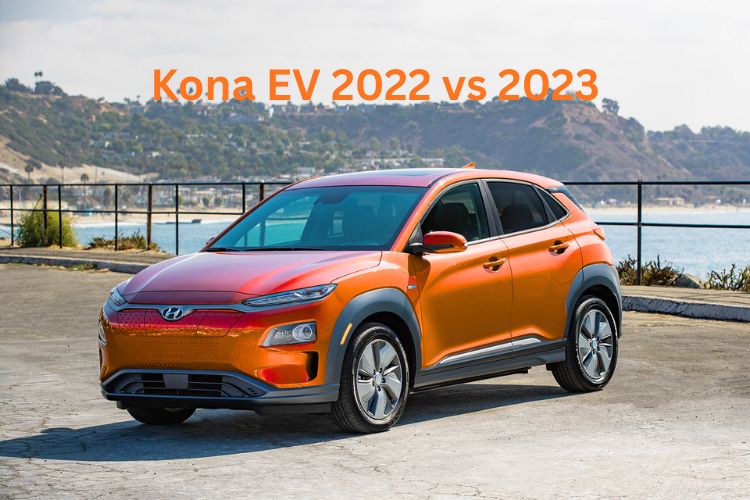
You’re done with gas station stops. You’re ready to plug in at home and never look back. But now you’re standing in front of two nearly identical Hyundai Kona Electrics, one from 2022 and one from 2023, and your brain is spinning.
One dealer swears the 2023 is totally upgraded. Your neighbor insists their 2022 is exactly the same car. And that Google rabbit hole you just fell down? It made everything worse.
Here’s the truth nobody leads with: these two are mechanical twins. Same motor. Same battery. Same 258-mile range. The real choice isn’t about the year badge on the hatch. It’s about features you’ll actually use, the deal you can actually get, and one massive financial plot twist that changes everything: the 2022 Kona Electric qualifies for a $7,500 federal tax credit that the 2023 model lost completely.
I’ll show you what genuinely changed, what stayed rock-solid the same, and how to pick the one that feels easy in your life every single day. Let’s cut through the confusion.
Keynote: Kona EV 2022 vs 2023
The Hyundai Kona Electric remained mechanically unchanged between 2022 and 2023. Both deliver 201 horsepower, a 64 kWh battery, and 258 miles of EPA range. The 2023 model standardized convenience features on the SEL trim. The critical difference was tax credit eligibility. The 2022 qualified for $7,500 federal credit under old rules. The 2023 lost eligibility due to Inflation Reduction Act requirements. In today’s used market, both qualify for $4,000 used credit, equalizing incentives and making condition and price the deciding factors.
The Plot Twist That Changes Everything: They’re Twins
Picture two editions of the same bestselling book. Different covers, maybe a tweaked introduction, but the story inside? Word-for-word identical. That’s the 2022 and 2023 Kona Electric.
The Identical Heart That Powers Both Years
Under that slightly different trim badging lives the exact same electric powertrain. Both years pack a permanent-magnet synchronous motor cranking out 201 horsepower and 291 lb-ft of torque. That instant, tire-chirping shove from a stoplight? Identical in 2022 and 2023.
The battery is a twin, too. Both use the same 64 kWh liquid-cooled lithium-ion pack mounted low in the floor for stability. The EPA gives both years the exact same 258-mile range rating and 120 MPGe combined efficiency. City drivers see 132 MPGe, highway cruisers get 108 MPGe, whether you’re in a 2022 or 2023.
Performance numbers don’t budge either. Both hit 60 mph in 6.4 seconds, making them notably quicker than their gas-powered siblings. The suspension was retuned for the 2022 model year to improve ride and handling, and that setup carried over unchanged to 2023. You get the same planted, confidence-inspiring feel at highway speeds, the same zippy moves through traffic.
Even the regenerative braking paddles behind the steering wheel work identically. Crank them up, and you get aggressive one-pedal driving that recaptures energy every time you lift off the throttle.
The Pricing Surprise Nobody Sees Coming
Here’s where things get interesting. The 2023 Kona Electric actually launched with an MSRP $950 lower than the 2022 model, starting at $34,900 despite being the “newer” car. Hyundai was smart about it, packaging more standard features while trimming the sticker price.
But both are now used or certified pre-owned vehicles, and the used market doesn’t respect model years the way new car lots do. Prices vary wildly based on mileage, condition, location, and which specific trim you’re looking at. A pristine 2022 SEL with low miles might cost more than a higher-mileage 2023 SE.
Judge by features and condition, not by year stickers. The model year matters way less than the trim level and what’s actually included.
Where 2023 Quietly Makes Your Day Better
The mechanical twins share DNA, but the 2023 model refined the daily-life stuff. Small conveniences that turn friction into flow.
The Convenience Package Becomes Your New Normal
In 2022, the mid-level SEL trim made you hunt for the optional Convenience Package to get the good stuff: heated front seats, a power sunroof, and wireless phone charging. You had to find a dealer who ordered it that way, or settle for less.
The 2023 SEL bakes all of those daily-life upgrades in as standard equipment. No hunting. No negotiating. No wondering if the used car you’re looking at has the package or not. You get more “just works” moments without the detective work.
It’s like going from a flip phone to a smartphone. Everything feels seamless because it was designed to be there from the start.
The Trim Lineup Gets Simpler
Hyundai reshuffled the deck for 2023, and understanding this is critical when you’re shopping used.
2022 offered two trims:
- SEL: Entry-level (but heated seats were standard, unlike most competitors)
- Limited: Fully loaded with ventilated leather, premium audio, adaptive cruise
2023 expanded to three:
- SE: The new base model (essentially the old 2022 SEL)
- SEL: The new sweet spot (essentially the 2022 SEL with Convenience Package)
- Limited: Still the luxury leader with all the premium touches
The 2023 SEL also added an 8-way power driver seat with lumbar support, a rear USB port, and auto up/down front windows as standard. The biggest tech jump? The massive 10.25-inch touchscreen with navigation, which was Limited-only in 2022, dropped down to both SEL and Limited trims for 2023.
| Daily Feature | 2022 SEL | 2023 SEL | Limited (Both) |
|---|---|---|---|
| Heated front seats | Standard | Standard | Standard + ventilated |
| Wireless charging pad | Package add-on | Standard | Standard |
| Sunroof | Package add-on | Standard | Standard |
| Power driver seat | Package add-on | Standard (8-way + lumbar) | Standard |
| Infotainment screen | 8-inch | 10.25-inch | 10.25-inch premium |
Tech and Safety Get Thoughtful Touches
The 10.25-inch screen upgrade is visually impressive, but there’s a catch: you lose wireless Apple CarPlay and Android Auto. The smaller 8-inch system in the base trims keeps wireless connectivity, which some drivers prefer for quick errands.
Blind-spot monitoring became standard across more 2023 trims, reducing the need to option-hunt. The larger screen’s navigation and overall usability scored a measurable jump in real-world testing, with less menu-diving to find what you need.
These aren’t reinventions. They’re thoughtful refinements that smooth out the daily grind.
The Charging Reality You’ll Actually Live
Both years behave identically at every plug. Set your expectations once, and you’re good for either model.
Home Charging: The Easy Part
The onboard 7.2 kW AC charger takes about 9.5 hours to fully replenish from 10% on a Level 2 (240V) home station. Perfect for overnight top-ups in your garage or driveway. You wake up to a full battery, ready for your commute.
Plug into a standard 110V household outlet? Painfully slow at just 2 to 3 miles of range per hour. Fine for maintaining charge if you rarely drive, but not practical for daily use.
Road-Trip Reality: Fast but Not Tesla-Fast
The Kona Electric uses a SAE Combo CCS1 DC fast-charge port. Hyundai lists it as “up to 100 kW,” but real-world peak charging speeds hover around 75 kW at most public stations.
Expect 47 minutes from 10% to 80% at a 100 kW charger. That’s a coffee-length stop, not a full lunch break. At a more common 50 kW charger, the same 10% to 80% stretch takes about 64 minutes.
It’s great for errands and decent for road trips if you plan your stops around Electrify America or other CCS networks. Just don’t expect Tesla Supercharger speeds.
The Winter Honesty Check
Real owners report hitting 290 to 310+ miles in good conditions, often exceeding the EPA’s 258-mile estimate in three-season driving. But cold weather is a different story.
One real-world winter highway test in Michigan recorded just 160 miles of range with an efficiency drop to 86 MPGe. Cold batteries don’t like highway speeds, and both years face the same winter physics. Plan extra charging stops if you’re in a northern climate.
What Real Owners Actually Say (Beyond the Brochure)
Let’s hear from people who live with these EVs every day, because specs don’t tell the whole story.
The Joys That Show Up in Both Model Years
Owners consistently praise the “zippy handling” and “instant torque” that makes merging onto highways feel effortless. The low center of gravity from the floor-mounted battery gives it a planted, confidence-inspiring ride that punches above its subcompact weight class.
That legendary 10-year, 100,000-mile battery and powertrain warranty protects both model years. It’s Hyundai’s safety net, and it’s the single most valuable feature on the car.
Satisfaction surveys show 85% of 2022 owners report zero regrets after a year of ownership. For those drivers, the Kona Electric delivered on its promise: efficient, fun, trouble-free electric motoring.
The Honest Gripes That Don’t Care About Year
Some owners report HVAC and heater failures in both model years, requiring warranty repairs. Dealer service can struggle with EV-specific issues, especially in smaller towns where electric vehicle expertise is thin.
The ride quality can feel stiff over rough pavement, and the rear seats are tight even by subcompact crossover standards. Cargo space is limited to 19.2 cubic feet with seats up, expanding to 45.8 cubic feet when folded.
There are documented reports of motor and gearbox noise (the “wheel of fortune” ticking sound), which in some cases led to complete powertrain replacement under warranty. Consumer Reports flags the electric motor as a potential weak point with a low predicted reliability score.
The Survey Data That Should Guide You
70% of EV buyers wish they’d read more owner reviews before purchasing. Skip the spec chase and dive into real experiences on forums and owner groups.
Battery degradation stays impressively low, under 5% after 30,000 miles in independent testing. The proven reliability of this first-generation platform outweighs the minor 2023 tweaks for most buyers.
But when issues do occur, wait times for replacement parts (especially high-voltage batteries) can stretch to four months. That’s why warranty coverage is everything.
The Money Question: Where Your Dollars Work Harder
Let’s slice through the pricing fog and uncover the real value story, because this is where the 2022 vs 2023 decision gets financially critical.
The $7,500 Elephant Everyone Misses
Here’s the plot twist that changes everything: the 2022 Kona Electric qualified for the full $7,500 federal EV tax credit. The 2023 model lost that eligibility completely on January 1, 2023.
The Inflation Reduction Act rewrote the rules. Final assembly had to happen in North America for a vehicle to qualify. The Kona Electric is built in South Korea, so it got cut from the list the moment 2023 arrived.
If you bought a new 2022 Kona Electric before the law changed, you could claim the full $7,500 credit on your taxes. If you bought a new 2023 model, you got zero federal incentive.
Now both are used vehicles, and the math shifts again. As of 2025, both the 2022 and 2023 Kona Electric qualify for the $4,000 used EV tax credit (assuming they meet price, income, and dealer requirements). That levels the playing field in today’s used market.
But understanding this history is critical when evaluating asking prices. A 2022 that someone bought new with the $7,500 credit might be priced higher because the original owner effectively paid $7,500 less. A 2023 never had that benefit, so its depreciation curve is different.
The New Math of “Older” vs “Newer”
In the used market, the 2023 SEL delivers more standard features per dollar than a base 2022 SEL. But a well-priced 2022 SEL that was optioned with the Convenience Package can match the 2023 SEL’s equipment list at a lower price.
Hunt by trim content and actual condition, not by year. Compare real asking prices in your area today. A 2022 Limited with low miles might offer better value than a higher-mileage 2023 SEL, even though the SEL has the bigger screen.
Some states offer additional rebates or incentives that can further change the real cost. California, Colorado, and others stack state rebates on top of federal credits. Factor your local incentives before comparing final out-the-door prices.
The 2024 Redesign Elephant in the Room
The 2024 Kona EV is a complete ground-up redesign with more interior space, updated styling, and modern tech. Both the 2022 and 2023 are now “last generation” vehicles.
But being “old” isn’t necessarily bad. It actually means less risk. The first-generation platform is proven, with known issues and established repair procedures. Depreciation has already hit hard, so you’re buying at a value point the original owners absorbed.
The 2024 redesign is great if you need more space and want the latest features. But if you prioritize a lower entry price and proven reliability, last-gen can be the smart play.
Your No-Regrets Decision Framework
Stop comparing years. Start comparing your life priorities. Here are the clear signposts for different buyer types.
Buy the 2023 SEL If You Want This
Frictionless features without hunting for option packages on used lots. Heated seats, wireless charging, the big 10.25-inch screen, and sunroof come standard. You know exactly what you’re getting.
Peace of mind from having the “newer” model year badge, even though the mechanical guts are identical.
More remaining warranty coverage. Being a year newer means more of that critical 10-year/100,000-mile powertrain protection still on the clock.
Buy the 2022 SEL If This Sounds Like You
You found a well-maintained example with significantly lower mileage and a price gap that exceeds $2,000 compared to equivalent 2023 models.
You’re fine with the smaller 8-inch screen and actually prefer wireless Apple CarPlay over the wired-only larger screen.
You care more about saving money upfront than having every convenience feature baked in. You can add accessories later if needed.
Grab the Limited (Either Year) If You’re Treating Yourself
Ventilated leather seats, premium Harman Kardon audio with eight speakers, and the full tech stack including adaptive cruise control with Highway Driving Assist.
The year matters even less at this trim level. The 2022 and 2023 Limited are nearly indistinguishable in equipment and feel.
Your comfort and smile factor justify the splurge. You deserve the upgraded cabin if it fits your budget.
Skip Both and Wait If This Is You
You need more cargo space and rear legroom. The subcompact platform’s 19.2 cubic feet won’t cut it for your family or gear hauling.
You don’t have reliable home charging capability. Level 2 charging at home is essential for stress-free EV ownership.
Cold climate range anxiety is genuinely keeping you up at night. If you regularly drive 200+ mile days in sub-freezing temps, the winter range penalty might be too steep.
Conclusion: The Easy Choice You’ve Been Searching For
We started with that gut-wrenching “what if” moment, staring at two nearly identical EVs and drowning in conflicting advice. Here’s what actually matters: the 2023 wins on daily-life features baked in standard, especially the SEL trim with its big screen, sunroof, and power driver seat. The 2022 wins if you find a pristine example with a real price advantage and you’re fine hunting for the Convenience Package.
But honestly, the mechanical twins mean you can’t pick wrong. Same motor, same battery, same 258-mile range, same instant torque. The $7,500 tax credit difference mattered hugely when both were new, but in today’s used market, both qualify for the $4,000 used credit.
Your single action step today: Compare real asking prices on a 2022 SEL with Convenience Package versus a 2023 SEL in your market right now. Bring this feature checklist to the lot or into your online search. The one with your must-haves for the least money, with the most remaining warranty, is your Kona.
You don’t need the perfect choice. You need the Kona that makes every commute, every errand, and every road trip feel effortless. The hard part was deciding to go electric. You’ve already figured that out. Now just pick the deal that makes you smile.
Kona EV 2023 vs 2022 (FAQs)
Why doesn’t the 2023 Kona Electric qualify for the federal tax credit?
No, it doesn’t qualify for the new $7,500 credit. The Inflation Reduction Act requires final assembly in North America. The Kona Electric is built in South Korea, so it lost eligibility on January 1, 2023. The 2022 model qualified under the old rules. Both now qualify for the $4,000 used EV credit as pre-owned vehicles.
What changed between 2022 and 2023 Kona Electric besides trims?
Very little mechanically. The motor, battery, range, and performance are identical. The 2023 model standardized features like heated seats, wireless charging, sunroof, and the big 10.25-inch screen on the SEL trim. Hyundai also renamed trims and dropped the MSRP by $950. That’s essentially it.
Can I still get $7,500 tax credit on a used 2022 Kona Electric?
No, the $7,500 credit was for new vehicles only. But both the 2022 and 2023 models now qualify for the $4,000 used EV tax credit (if under $25,000 purchase price and meeting income limits). This levels the incentive playing field in today’s used market.
Is the 2022 or 2023 Kona Electric a better used buy?
It depends on price and features. The 2023 SEL is simpler because key features are standard. The 2022 can be better value if priced significantly lower and equipped with the Convenience Package. Check remaining warranty coverage and actual condition over the model year.
Are the charging speeds the same on 2022 vs 2023 Kona Electric?
Yes, identical. Both use a 7.2 kW onboard charger for Level 2 home charging (9.5 hours full). Both support DC fast charging up to 100 kW (real-world around 75 kW), taking 47 minutes from 10% to 80%. Same CCS1 port, same charging curve.