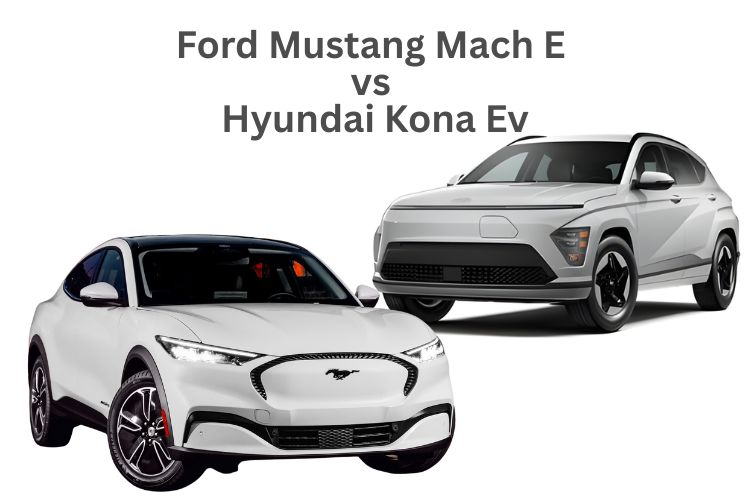
You’re standing in that showroom, palms sweating.
The Ford Mustang Mach-E catches your eye first. That badge. Those curves. That promise of instant torque that’ll pin you to your seat every morning on the way to work. Your heart says yes before your brain even gets a vote.
Then you spot the Hyundai Kona Electric. The price tag is $7,000 lower. Your logical brain screams “wait!” That’s a vacation. That’s your emergency fund breathing room. That’s the smart money talking.
Here’s the thing. This isn’t really an apples-to-apples comparison. It’s passion versus pragmatism. It’s the car you want versus the car your spreadsheet loves. And most reviews miss this human truth entirely, drowning you in spec sheets that don’t answer your real question: which one fits your actual life?
We’ll use cold, hard facts to find the warm, real answer for your actual life. No BS. No fluff. Just the truth about what it’s really like to live with these two very different electric dreams.
Final Keynote: Ford Mustang Mach E vs Hyundai Kona EV
The Ford Mustang Mach-E versus Hyundai Kona Electric comparison reveals two philosophies. The Mach-E delivers performance, space, and technology for buyers seeking driving excitement. The Kona Electric prioritizes efficiency, affordability, and industry-leading warranty coverage. Choose the Mach-E for thrilling acceleration, AWD capability, and BlueCruise hands-free driving. Choose the Kona for lower ownership costs, better efficiency, and practical V2L capability. Both vehicles offer excellent range, fast charging via CCS connectors, and upcoming NACS adapter compatibility for Tesla Supercharger access in 2025.
What’s Really Keeping You Up at Night (Let’s Kill These Fears With Facts)
The spec sheets don’t answer your 3 AM worries. Let’s talk about what actually matters when you’re living with this decision.
The Range Panic
Will it go far enough for your real commute, not some mythical road trip?
The Kona Electric delivers between 200 and 261 miles depending on which trim you choose. The base SE with its smaller 48.6 kWh battery gives you 200 miles, while the SEL and Limited trims pack a 64.8 kWh battery that stretches to 261 miles. That’s plenty for the average American’s 40-mile daily commute with room to spare.
The Mustang Mach-E plays in a different league. Its range spans from 240 miles in the entry eAWD models all the way up to 320 miles in the Premium RWD with the extended 88 kWh battery. That’s Tesla Model Y territory.
But here’s what the EPA won’t tell you. Winter steals 20 to 30% from both vehicles. Plan for that reality. If you live where it actually snows, that 320-mile summer range becomes 220 miles when it’s 20 degrees outside. The Mach-E now comes standard with a heat pump across all 2025 models, which helps preserve range in cold weather better than older EVs.
The Charging Wait
Are you grabbing coffee or eating lunch while charging?
On a DC fast charger, the Mach-E with its extended range battery charges from 10 to 80% in about 32 to 36 minutes, hitting peak speeds of 150 kW. The Kona Electric takes about 43 minutes for that same 10 to 80% charge, maxing out around 100 to 105 kW.
That seven-minute difference? It’s real, but it’s not life-changing. Both give you just enough time to use the restroom, grab a snack, and stretch your legs.
Home charging overnight works for both at Level 2 (240V). The Kona actually charges faster at home, filling its long-range battery in about 6.7 hours versus the Mach-E’s 9.9 hours for its bigger extended range pack. For most people, you plug in after dinner and wake up to a full battery. Daily anxiety vanishes.
Both vehicles now access Tesla Superchargers with the proper adapter. Game changer for 2025. Ford’s providing NACS adapters, and Hyundai’s rolling them out for 2024+ models. That means tens of thousands more charging stations just became available to you.
The “What If It Breaks” Spiral
This is where your logical brain needs to pay attention.
Hyundai’s warranty is double Ford’s coverage period. We’re talking 10 years or 100,000 miles on the powertrain and battery versus Ford’s 5 years or 60,000 miles on the powertrain. Ford does offer 8 years or 100,000 miles specifically on the EV battery with a 70% capacity retention guarantee.
But look at the basic bumper-to-bumper coverage. Hyundai gives you 5 years or 60,000 miles. Ford? Just 3 years or 36,000 miles.
If you keep cars past year five, Hyundai’s safety net feels like a warm blanket on a cold night. Plus, Hyundai throws in 3 years of complimentary scheduled maintenance. Ford doesn’t include that.
The Size Reality Check: Who Fits Your Life?
Numbers like “171 versus 185 inches” mean nothing until you picture your actual garage and grocery runs.
Parking Lot Wins and Losses
The Kona Electric measures 171.5 inches long. The Mustang Mach-E stretches to 185.6 inches.
That 14-inch difference? It’s the difference between confidently sliding into that tight city spot and circling the block three more times. The Kona’s 34.8-foot turning circle makes U-turns feel effortless. You know that relief when parallel parking actually works on the first try? That’s the Kona Electric in urban America.
The Mach-E’s bigger footprint means confidence on highways. You feel planted, stable, like the wind doesn’t push you around. But in cramped parking decks? That’s when you start sweating.
Test this yourself. Drive both through your tightest daily squeeze. The one that makes your shoulders tense up. That’ll tell you everything.
The Cargo Space Truth
This is where the numbers get confusing, so let me clarify what actually matters.
| What You’re Loading | Mach-E | Kona EV |
|---|---|---|
| Behind rear seats | 29.7 cu ft | 25.5 cu ft |
| Seats folded flat | 59.7 cu ft | 63.7 cu ft |
| Real-world win | Bulkier items, higher load floor | Long boxes, more total volume |
Wait, the smaller Kona has more total cargo space? Yes. When you fold those seats down, the Kona’s 63.7 cubic feet beats the Mach-E’s 59.7. That’s the power of efficient packaging.
But here’s the catch. The Mach-E’s higher load floor and wider opening make it easier to load bulky items like suitcases or a folded stroller. Access matters more than raw math when you’re juggling grocery bags and a toddler.
Don’t forget the Mach-E’s frunk. At 4.8 cubic feet, it’s one of the most practical in the business. Hard plastic lining, drain plug included. You can literally fill it with ice and use it as a cooler for tailgating. The Kona’s frunk? Just under 1 cubic foot, basically a spot for your charging cables.
The Family Squeeze Test
Rear legroom tells the real story for families.
The Mach-E offers 38.1 inches of rear legroom in a total passenger volume of 101.1 cubic feet. The Kona Electric provides 36.4 inches of rear legroom in about 99 cubic feet of total passenger space.
That 1.6-inch gap sounds tiny. But it’s the difference between “fine” and “can we stop yet?” on hour three of a road trip with kids in the back seat.
Honest take: solo driver or couple, either works beautifully. Family of four or more who actually take road trips? The Mach-E breathes easier. Your teenagers will thank you.
The Performance Personality Split: Sneakers vs Sprint Spikes
One makes errands thrilling, the other makes driving effortless. Neither is wrong. They’re just different souls.
The Mach-E’s Secret Superpower Kick
Instant torque turns merging into a grin.
The base Mustang Mach-E Select RWD delivers 264 horsepower and 387 lb-ft of torque. That gets you to 60 mph in 5.6 seconds. Quick enough to make every on-ramp feel like a victory.
Step up to the eAWD models and you’re looking at 325 to 370 horsepower with 500 lb-ft of torque. Zero to 60 in 5.4 seconds.
Then there’s the GT. 480 horsepower. 600 lb-ft of torque. Zero to 60 in 3.8 seconds. That’s supercar territory wrapped in an SUV that can haul your family and their gear.
The GT Performance Edition and Rally models unleash 700 lb-ft of torque and hit 60 mph in 3.3 to 3.4 seconds. That 860 Nm of torque isn’t just bragging rights at Cars and Coffee. It’s a daily mood booster that makes you smile every single time you press the accelerator.
The Mach-E was named 2021 North American Utility Vehicle of the Year because driving matters. This isn’t just transportation. It’s an experience.
The Kona’s Efficient Sprint
The base Kona Electric SE makes 133 horsepower from its 99 kW motor. The more popular SEL, N Line, and Limited trims bump that to 201 horsepower from a 150 kW motor. Both produce 188 lb-ft of torque.
Zero to 60 happens in about 7 to 8.6 seconds depending on the trim. That sounds modest on paper. Until you remember the Kona weighs about 800 pounds less than the Mach-E. That lighter body darts through traffic with zippy confidence.
Top speed? 107 mph for the Kona versus 124 mph for the Mach-E. Ask yourself honestly: when’s the last time you went 100?
The Daily Drive Truth
Think of it like this. The Kona’s grippy sneakers for errands. The Mach-E’s sprint spikes for the occasional thrill.
The Mach-E delivers that stronger punch every time. AWD confidence in snow and ice if you opt for eAWD. Tech like BlueCruise for highway zen on long trips. Drive modes that let you dial in the exact feel you want, from Whisper for efficiency to Unbridle for pure performance.
The Kona Electric’s efficient appliance vibes. FWD only, which limits you in truly harsh winter conditions. Highway Drive Assist eases stop-and-go stress but keeps your hands on the wheel. It’s competent. Comfortable. Composed.
Question for your gut: do you need to beat Teslas off the line at every stoplight, or just merge safely and efficiently?
Efficiency: The Number That Saves You Money Every Single Day
This boring stat is actually your bank account’s best friend over five years.
The MPGe Gap That Adds Up
MPGe (miles per gallon equivalent) tells you how efficiently the vehicle uses electricity.
The Kona Electric achieves 131 MPGe in the city and 105 MPGe on the highway. It sips electrons like a miser counting pennies.
The Mach-E manages 111 MPGe city and 100 MPGe highway in its most efficient configurations. Still good, but noticeably thirstier.
Real money: the Kona’s efficiency means fewer charging stops on road trips and lower electric bills at home. If you pay $0.15 per kWh at home and drive 12,000 miles per year, that efficiency difference saves you about $150 to $200 annually. Small, but it compounds.
Range Sweet Spot vs Overkill
The Mach-E Premium with extended range hits 320 miles. That’s freedom for spontaneous weekend road trips without range anxiety.
The Kona’s 261-mile maximum (SEL/Limited) crushes the average American’s 40-mile daily commute with a 200% cushion. Even the base SE at 200 miles covers five days of commuting without charging.
Base models tell the real story. The Kona SE delivers 200 miles. The Mach-E Select starts at 260 miles. Both handle daily life easily. The question is whether you want to pay for that extra 60 miles you might use twice a year.
Your Commute Math
Be brutally honest with yourself. How often do you actually drive 200 miles in one go?
Both vehicles lose range in winter cold. The heat pump in the 2025 Mach-E helps, but physics still wins. Expect 140 to 160 miles in freezing weather for the Kona, 180 to 240 for the Mach-E depending on trim.
The Kona’s efficiency cushion helps when temperatures drop. You lose less total range because you started with better efficiency.
Most EV regret comes from buying more range than needed and paying for it forever. Don’t buy a 320-mile battery if your longest regular trip is 100 miles.
The Money Truth: Sticker Shock, Hidden Savings, and What You’ll Actually Pay
Budgets aren’t just numbers. They’re that 2 AM panic about “did I overreach?” Let’s tally without tears.
The Entry Price Punch
The Kona Electric starts around $32,975 for the base SE. The popular long-range SEL begins at $36,975. The loaded Limited tops out at $41,150.
The Mustang Mach-E starts around $37,995 for the Select RWD. The Premium eAWD, the volume seller, begins at $44,995. The GT and Rally performance models exceed $54,000 and $58,000 respectively.
That’s a $7,115 gap at the entry level. That gap widens as you climb trim levels. The difference between comparable models can stretch to $8,000 or more.
Until September 30, 2025, there’s a massive asterisk. The federal tax credit of up to $7,500 applies to the Mach-E (assembled in Mexico) but not the Kona Electric (assembled in South Korea). For eligible buyers who complete their purchase before that deadline, the Mach-E’s price premium vanishes. A $44,995 Mach-E Premium becomes $37,495 after the credit, cheaper than a $41,150 Kona Limited.
After September 30, 2025, that credit expires completely. The Kona reclaims its affordability crown.
The Warranty Hug You’ll Feel in Year Six
This is where Hyundai pulls ahead decisively.
| Coverage Type | Hyundai Kona EV | Ford Mach-E |
|---|---|---|
| Basic bumper-to-bumper | 5yr / 60k mi | 3yr / 36k mi |
| EV powertrain/battery | 10yr / 100k mi | 8yr / 100k mi (70% capacity) |
| Complimentary maintenance | 3yr / 36k mi | None |
| Real-world translation | Double the safety net | Standard protection |
Hyundai’s 10-year, 100,000-mile powertrain and battery warranty is double Ford’s 5-year, 60,000-mile powertrain coverage. Ford does cover the battery specifically for 8 years or 100,000 miles with a 70% capacity guarantee, which is good. But that extra two years on the Hyundai matters.
The basic warranty gap hurts Ford. Three years versus five years of bumper-to-bumper coverage means you’re paying out of pocket for repairs sooner with the Mach-E.
Plus, Hyundai includes scheduled maintenance for three years. Oil changes don’t exist on EVs, but tire rotations, brake inspections, and fluid checks do. That saves you $300 to $500 over three years.
The Depreciation Monster Nobody Warns You About
This is brutal but essential to understand.
The Mach-E loses approximately 65% of its value in five years according to industry data. A $45,000 Mach-E becomes worth about $15,750 when you sell. Ouch.
The Kona Electric loses about 57.8%, holding 41.7% of its residual value. That same $45,000 purchase price becomes $18,765 at resale.
Translation: roughly $3,000 to $5,000 difference in your favor with the Kona when you sell or trade in. That’s a nice vacation fund or down payment on your next vehicle.
Data from iSeeCars shows the Kona Electric holds 60% of its value after three years, which is rare for EVs. The stronger warranty likely contributes to better resale values.
The Five-Year Reality
Let’s do the total ownership math.
Start with purchase price. The Kona costs $7,000 less (or the same if you grabbed the Mach-E before the tax credit expired).
Add charging costs. The Kona’s superior efficiency saves $150 to $200 per year, or $750 to $1,000 over five years.
Factor in warranty. Two extra years of powertrain coverage and three years of free maintenance save roughly $500 to $800 with Hyundai.
Subtract depreciation. The Kona holds value better, preserving $3,000 to $5,000 more at resale.
Winner for pure financial logic: Kona Electric by a significant margin, especially after the federal tax credit expires. Even if you got the credit on the Mach-E, the Kona’s efficiency, warranty, and resale advantages close much of that gap over five years.
The Tech & Daily Living Details Reviews Skip
Living with an EV isn’t about specs. It’s about whether you smile or sigh when you climb in each morning.
The Screen Showdown
The Mach-E’s vertical 15.5-inch touchscreen dominates the cabin. It runs Ford’s SYNC 4A software with cloud-connected navigation, wireless Apple CarPlay and Android Auto, and responsive graphics that rival Tesla. It’s impressive. It’s also your only interface for almost everything, including climate controls buried in menus. There’s a physical volume knob integrated into the screen’s bottom, which helps.
The learning curve is real. You’ll spend the first week hunting for buttons that don’t exist.
The Kona Electric takes a hybrid approach. Dual 12.3-inch displays, one for the instrument cluster and one for the infotainment touchscreen. The system is equally capable with crisp graphics and fast responses. The key difference? Physical buttons and knobs below the screen for climate and media controls.
That “wait, there are buttons?” setup is relief for people who just want to crank the heat without taking their eyes off the road for three seconds to navigate a menu.
The Everyday Vibe
The Mach-E is for the feeling. Panoramic glass roof that makes the cabin feel open and airy. Available B&O premium sound system that turns every commute into a concert. That Mustang badge on the steering wheel that means something when you grip it.
One’s a statement. The other’s stealth.
The Kona Electric focuses on real life. Better outward visibility thanks to thinner pillars. Easier city maneuvers because it’s smaller. Remote pre-cool via the Blue Link smartphone app so you don’t climb into a sauna after lunch.
The Kona’s standard Vehicle-to-Load (V2L) capability deserves special mention. Plug an adapter into the charging port and you’ve got 3.6 kW of portable power. Run power tools at a job site. Charge laptops and phones while camping. Power essentials during a blackout. It transforms the car from transportation into a mobile generator.
The Mach-E doesn’t offer V2L. It offers “Phone As A Key” so you can leave your key fob at home and use your smartphone to lock, unlock, and start the vehicle. Cool, but not as practically useful as V2L.
The Road Trip Truth
The Mach-E’s higher load floor and that practical frunk make packing smarter for long trips. You can organize gear better and keep valuables secure up front.
The Kona wins on total cargo volume when seats fold, but access matters more than math when you’re loading four people’s luggage.
Rear seat comfort: the Kona pinches after two hours. Your passengers start shifting. Asking “how much longer?” The Mach-E’s extra 1.6 inches of legroom doesn’t sound like much, but it’s the difference between comfortable and cramped on multi-hour drives.
BlueCruise on the Mach-E changes long highway slogs. Hands off the wheel, eyes on the road, while the car steers, accelerates, and brakes in traffic. It’s available on all trims with a 90-day trial, then requires a subscription. The Highway Drive Assist on the Kona is excellent, but it’s hands-on. You maintain contact with the wheel at all times.
The Decision Framework: Two Great EVs, One Right for You
Forget the specs for a moment. Answer these questions with your gut, not your brain.
Choose the Kona Electric If…
Your budget ceiling is firm at $35K to $42K and every dollar matters beyond that line.
Daily drive under 50 miles with rare road trips. You’re mostly navigating city streets and suburban parking lots.
That 10-year warranty gives you deep peace of mind. You’re the person who keeps cars until they die, not the person who trades every three years.
You want the lowest cost per mile and best efficiency. Math matters to you. Saving $150 per year on electricity feels good.
Maneuverability and easy parking matter daily. You parallel park regularly. Your grocery store’s parking deck has tight corners and narrow spaces.
You’d rather blend in than stand out. The Kona’s understated presence suits you perfectly.
The V2L feature excites you. You camp, tailgate, do DIY projects, or just like having backup power options.
Choose the Mustang Mach-E If…
You can comfortably afford $40K to $50K without budget stress or payment anxiety.
You want space for passengers and gear, non-negotiable. Five adults fit comfortably. Road trips don’t require Tetris-level packing skills.
The occasional thrill and spirited drive matter to your soul. You don’t just need to get there. You want to enjoy the journey.
Performance, tech features like BlueCruise, and that badge mean something. You’re buying an experience, not just transportation.
You take road trips often and want range cushion. Two hundred miles feels tight. Three hundred miles feels free.
The Mustang name gives you a daily smile. Brand matters. Heritage matters. You want to feel something when you walk to your car in the morning.
You need or want all-wheel drive for winter weather confidence.
The Wildcard Answer
Sometimes the right answer isn’t A or B. It’s “wait.”
If you’re torn this hard between these two, the perfect fit might exist just outside this comparison. The upcoming Chevrolet Equinox EV starts under $35,000. The Kia EV6 offers sportier handling than the Kona with more space than you’d expect. The Hyundai Ioniq 5’s retro-future styling might be your aesthetic.
Don’t force a choice between these two if neither feels quite right. The EV market is exploding with options. Your perfect match might launch in six months.
Conclusion: The Question That Ends the Debate
We’ve laughed at the thrills, sweated the costs, and mapped the fits that make or break your EV leap. You now hold the truth.
The Mustang Mach-E is the heart choice for exciting, spacious living. It delivers genuine performance, advanced technology, and the emotional resonance that comes with an iconic badge. If driving brings you joy, if road trips are adventures not chores, if you have the budget and want the experience, the Mach-E delivers daily smiles.
The Kona Electric is the smart money play with better efficiency, longer warranty, and lower total cost. It offers practical features like V2L capability, comfortable daily driving, and financial peace of mind that extends a decade into the future. If you’re making a logical investment in electric mobility, the Kona makes brilliant sense.
Neither is wrong. They’re built for different versions of you.
Your First Step Today
Book back-to-back test drives on the same day. Thirty minutes each minimum.
Don’t just drive them. Sit in the back seat with your actual family. Load your real groceries or gym bag. Try parking in your actual tight spot at work or home. Use the infotainment while stopped, not moving, and notice whether you’re hunting for buttons or finding them instantly.
The right choice will whisper itself when you stop thinking and start feeling.
The Real Question
It’s not Mach-E or Kona. It’s this: are you buying for your life as it is, or the life you wish you had?
Answer that honestly, and you’ll know which key to grab. You’ve got this.
Hyundai Kona EV vs Ford Mustang Mach E (FAQs)
Which EV has better warranty coverage?
Yes, the Hyundai Kona Electric wins decisively. Hyundai offers 10 years or 100,000 miles on the powertrain and battery versus Ford’s 5 years or 60,000 miles on the powertrain and 8 years or 100,000 miles on the battery. Hyundai also provides double the bumper-to-bumper coverage at 5 years versus Ford’s 3 years, plus includes 3 years of complimentary scheduled maintenance. This longer warranty protection significantly reduces long-term ownership costs and provides better peace of mind.
Does the Mustang Mach-E charge faster than Kona Electric?
Yes, but the difference is smaller than you’d think. The Mach-E’s extended range battery accepts up to 150 kW DC fast charging, completing a 10-80% charge in about 32-36 minutes. The Kona Electric maxes out around 100-105 kW, taking approximately 43 minutes for the same 10-80% charge. That’s roughly seven minutes difference for a typical road trip charging stop. Both charge fast enough for comfortable long-distance travel, though the Mach-E has a slight edge.
Is the Kona Electric more efficient than Mach-E?
Yes, significantly. The Kona Electric achieves 131 MPGe city and 105 MPGe highway, while the Mach-E manages 111 MPGe city and 100 MPGe highway in its most efficient configurations. This superior efficiency translates to lower electricity costs (saving roughly $150-200 annually for typical drivers) and fewer charging stops on long trips. The Kona’s smaller, lighter platform and focus on efficiency over performance gives it a measurable advantage in miles per kilowatt-hour.
Which vehicle qualifies for federal tax credits?
The Ford Mustang Mach-E qualified for the full $7,500 federal tax credit because it’s assembled in Mexico, meeting North American final assembly requirements. However, this credit expired on September 30, 2025.
The Hyundai Kona Electric, assembled in South Korea, was never eligible for the federal tax credit upon purchase. After the credit’s expiration, neither vehicle qualifies, returning the focus to their base MSRPs and long-term value propositions.
What is the real-world range difference in cold weather?
Both vehicles lose 20-30% of their EPA-rated range in cold weather below 20°F. The Kona Electric’s 261-mile summer range drops to roughly 180-200 miles in winter. The Mach-E’s 320-mile maximum summer range decreases to about 220-255 miles in freezing conditions. The 2025 Mach-E’s standard heat pump helps it preserve range better than earlier models, but physics still wins. Plan your winter charging stops accordingly, and both vehicles remain practical for daily use even in harsh climates.