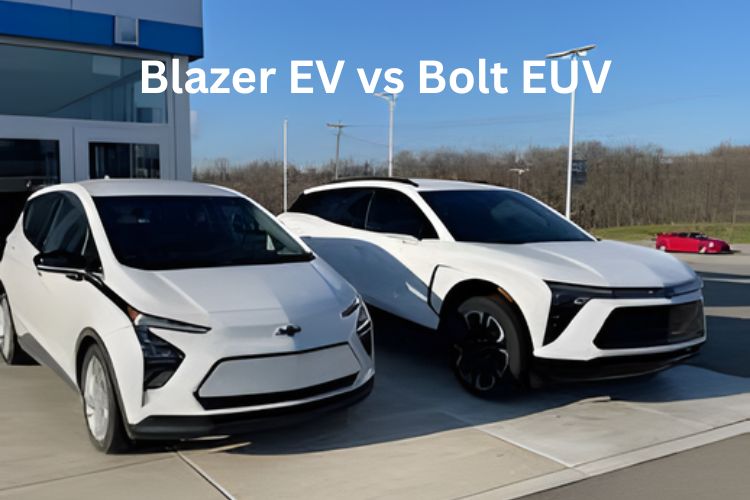
You finally made the decision. You were ready to go electric. You’d done the math on gas savings, felt that twinge of guilt every time you passed a Tesla, and decided this was the year. The Bolt EUV was sitting right there at $28,795, the people’s EV, the one that made sense.
And then Chevy pulled the rug out. Production stopped. Inventory vanished. Now they’re pointing you toward the Blazer EV, starting at nearly $50,000. That’s not an upgrade. That’s a different tax bracket entirely. That’s choosing between a sensible sedan and a luxury SUV when all you wanted was reliable electric transportation.
So here’s the question that’s probably keeping you up at night: Is the Blazer EV even meant for the same buyer? Are you being priced out of the EV dream you thought was finally within reach? Or is there something in that massive price jump that actually justifies the cost?
Here’s what we’re doing. We’re cutting through the marketing speak, ignoring the press releases, and showing you what these two Chevys actually feel like in your driveway, on your daily commute, and during that one road trip you take every summer. Not on a spec sheet. In your real life.
Keynote: Blazer EV vs Bolt EUV
The Blazer EV represents GM’s modern Ultium platform strategy: scalable, powerful, and premium-priced to compete with Tesla and Ford in the mainstream midsize electric SUV segment. The discontinued Bolt EUV proved that accessible electric transportation under $30,000 could deliver genuine practicality, efficiency, and advanced driver assistance technology to budget-conscious buyers.
Neither vehicle is objectively superior; the $20,000+ price gap reflects fundamentally different engineering platforms (Ultium versus BEV2), charging capabilities (190 kW versus 55 kW), and target demographics. The decision hinges on whether faster charging and extended range justify doubling your investment, or whether proven value and compact efficiency better serve your actual driving patterns and financial priorities.
The Vibe Check: Your Trusty Sneakers vs The Statement Boots
What These Cars Were Built to Be
The Bolt EUV is your favorite pair of broken-in sneakers. Compact, efficient, unpretentious. It doesn’t need to make a statement because it’s too busy getting the job done. You know that feeling when you slip into shoes that just work, that never let you down, that fit your life without demanding you change anything? That’s the Bolt EUV. It was built to be the reliable daily companion that makes electric driving accessible, not aspirational.
The Blazer EV is those sharp boots you wear when you want people to notice. Bigger, tech-forward, designed to turn heads in the parking lot. It’s not trying to blend in. It’s the vehicle that announces you’ve arrived, both literally and figuratively in the EV world.
This isn’t just about size or range numbers you can Google in thirty seconds. It’s about identity. Who each car was designed to serve, and whether that person is you.
The Platform Story You Need to Understand
Here’s where things get technical for exactly one minute, because this matters more than you think.
The Bolt EUV runs on GM’s older BEV2 platform. Simple. Proven. Dependable. It’s a dedicated electric architecture that does one thing really well: delivers affordable, efficient transportation. Think of it like a flip phone. It makes calls, it sends texts, and the battery lasts forever. No frills, zero drama.
The Blazer EV rides on GM’s brand new Ultium platform, the modular skateboard design that’s supposed to underpin everything from compact cars to heavy-duty trucks. This platform is the reason the Blazer can offer front-wheel drive, rear-wheel drive, and all-wheel drive configurations from the same basic vehicle. It’s why the batteries are bigger, the charging is faster, and yes, why the price is higher. Think of it like the latest smartphone with all the bells and whistles, the expandable storage, the app ecosystem, the future-proof connectivity.
One expert put it plainly: “Ultium enables a broad menu of choices for the Blazer EV, while BEV2 locks the Bolt EUV into its specific role as a high-value commuter vehicle.”
The platform isn’t just engineering nerd talk. It’s the foundation that determines what your car can do today and what it might do tomorrow. The Blazer’s Ultium platform supports Vehicle-to-Home charging, meaning it can power your house during an outage. The Bolt can’t do that. It’s a transportation tool, not an integrated energy system.
The Range Reality: Do You Need 334 Miles or Just Peace of Mind?
The Numbers That Actually Matter
The Blazer EV RS RWD delivers 334 miles on a full charge according to EPA estimates. That’s genuine long-weekend confidence. That’s “we’re visiting grandma three states away and I’m not even thinking about charging” territory. That’s the one number that fundamentally changes how you think about road trips.
The Bolt EUV offers a solid 247 miles EPA estimated. For context, that’s roughly the distance from Los Angeles to San Diego and back, with juice to spare. It’s Chicago to Indianapolis. It’s more than enough for every single day of your week, and most of your weekend adventures too.
But here’s the truth that most articles gloss over: your typical American commute is 41 miles round trip. You’re using maybe 20% of either car’s battery on a normal day. The range difference between these two vehicles matters far less in daily life than you think it will when you’re staring at spec sheets at midnight.
When Range Anxiety is Real (and When It’s Not)
If you’re the family that road-trips monthly, if you’re hauling gear and adults and dogs to the mountains every other weekend, that extra 87 miles of cushion is freedom. It’s the difference between carefully planning your charging stops and just driving like you would in a gas car. It’s psychological peace that’s hard to put a price on.
But if your reality is mostly commuting, errands, and the occasional dinner two towns over? That 247-mile range in the Bolt EUV just works. Week after week. Month after month. You wake up every morning to a full battery because you plugged in overnight. You’re not thinking about range. You’re just living your life.
You know that feeling when you stop checking your phone’s battery percentage because you charge it every night and it’s never been an issue? That’s what home charging does for range anxiety. The real anxiety killer isn’t 334 miles of range. It’s a Level 2 charger in your garage and realistic expectations about how you actually drive.
Size and Space: Will Your Life Actually Fit?
The Sensory Test You Can’t Ignore
Picture the moment you pull into a crowded Costco parking lot on a Saturday afternoon. The Blazer EV feels confident and spacious, commanding its spot. You’re not worried about clearance or presence. You’re the midsize SUV that belongs here. The Bolt EUV feels nimble, easy, like it can slide into that tight spot near the entrance that the trucks can’t touch. Neither is better. They’re just different realities.
Now imagine the carpool scenario. Three adults in the back seat for a 45-minute drive to the airport. The Blazer’s midsize two-row layout gives everyone real shoulder room at 58.3 inches across. Nobody’s fighting for armrest territory. The Bolt EUV surprises you. Despite being over 22 inches shorter overall, it delivers 39.1 inches of rear legroom, essentially matching the bigger Blazer. Adults fit comfortably. It’s one of those packaging miracles that makes you respect the engineers who designed it.
The Cargo Reality Check
Let’s put this in a table so you can stop wondering and just know.
| Measurement | Blazer EV | Bolt EUV |
|---|---|---|
| Cargo space (seats up) | 25.5 cubic feet | 16.3 cubic feet |
| Cargo space (seats down) | 59.1 cubic feet | 56.9 cubic feet |
| Rear legroom | 38.9 inches | 39.1 inches |
| Overall length | 192.2 inches | 169.5 inches |
| Width | 78.0 inches | 69.7 inches |
The Blazer gives you about 57% more cargo space with the seats up. That’s the difference between fitting your weekly Costco haul plus the kids’ hockey gear versus making a choice between the two. But fold those seats down and the gap nearly disappears. The Bolt EUV maxes out at 56.9 cubic feet, which is shockingly close to the Blazer’s 59.1.
Here’s what that actually means: the Blazer is the better family hauler for everyday life when people and stuff need to coexist. The Bolt EUV works brilliantly for couples, small families, or anyone who doesn’t regularly carry four adults plus a week’s worth of luggage.
Charging Without the Headache: How Long Are You Really Stuck?
The Fast Charging Face-Off
This is where the Blazer EV flexes its Ultium platform muscles. DC fast charging peaks at 190 kW on the larger battery models. Translation: roughly 78 miles of range added in just 10 minutes. That’s a coffee break. That’s checking your email. That’s stretching your legs and you’re back on the road.
The Bolt EUV tops out at 55 kW for DC fast charging. At that rate, you’re adding about 95 miles in 30 minutes. It’s slower, undeniably. But it’s still road-trip capable if you’ve got patience. The Blazer lets you grab a quick snack. The Bolt gives you time for a real meal break, maybe a walk around the rest stop.
For context, most modern EVs charge between 150 and 250 kW. The Bolt’s 55 kW rate is now considered significantly slower than the industry standard. It’s the single biggest practical limitation of the older BEV2 platform.
The Overnight Refill Rhythm
Here’s where the playing field levels out completely. Both vehicles support 11.5 kW Level 2 charging at home. Plug in when you get home from work, wake up to a full battery every single morning. This is how you’ll charge 90% of the time, and both cars handle it identically.
Let me be brutally honest here: most EV owners charge at home overnight and only use public fast charging on road trips. If you’re taking three long road trips per year, those charging speed differences matter for maybe 12 total hours annually. The rest of the time, it’s completely irrelevant.
One note worth knowing: both cars currently use the CCS charging standard. But the Bolt is coming back in 2027 with the NACS plug, the Tesla-compatible standard that’s becoming universal. If you’re buying used, that’s just context. If you’re planning long-term, it’s worth knowing the charging landscape is shifting.
The Math That Matters for Your Highway Trip
Let’s make this concrete. You’re driving 400 highway miles to visit family.
Blazer EV RWD (334-mile range, 190 kW charging): One 15-minute charging stop, maybe 20 if you want to grab food. Total trip time barely affected.
Bolt EUV (247-mile range, 55 kW charging): One 45-minute charging stop, possibly a second quick top-up depending on weather and highway speeds. Add an hour to your trip.
Is that hour worth $20,000? Only you can answer that. But now you know what you’re actually buying.
The Tech Truth: Cool Features You’ll Love vs The Dealbreaker No One Mentions
The Infotainment Divorce Story
Let’s talk about the elephant in the cabin. The Blazer EV uses Google Built-in infotainment. A massive 17.7-inch touchscreen dominates the dashboard, paired with an 11-inch digital instrument cluster. It looks stunning. Google Maps is deeply integrated and frankly excellent for navigation. Google Assistant actually understands you.
But here’s what Chevy doesn’t advertise loudly: no Apple CarPlay. No Android Auto. At all. You’re locked into the native Google system whether you like it or not.
A MotorTrend reviewer who lived with the Blazer for a year admitted: “I just didn’t think it was going to be an issue to live without CarPlay, but texting integration is the biggest shortcoming.” When you’re deep in a group text thread with your family or trying to respond to messages while driving, the Google system stumbles. It’s not seamless like CarPlay. It’s just not.
The Bolt EUV? Standard wireless Apple CarPlay and Android Auto. Your phone, your apps, your muscle memory. Plug it in and everything just works. It’s like slipping into perfectly broken-in jeans. Zero learning curve, zero frustration.
The Software Saga You Should Know About
The Blazer EV had early software hiccups. GM actually paused sales in late 2023 to fix issues. They resolved them, pushed updates, backed everything with warranty coverage, and even cut prices while regaining the $7,500 federal tax credit eligibility. The drama got handled.
The Bolt EUV’s appeal was always simplicity. It doesn’t try to be a smartphone on wheels. It just works, day after day, with the option to add Super Cruise hands-free driving on the Premier trim at a budget-friendly price. No drama, no headlines, no recalls for software glitches.
Living With the Tech Day-to-Day
If you live in the Google ecosystem, if your whole life runs through Gmail and Google Calendar and you’re comfortable adapting to new interfaces, the Blazer’s native integration might feel seamless and smart. It grows on people.
But if you’re an iPhone loyalist, if you just want to plug in your phone and have everything work exactly like it always has, the Bolt’s familiar mirroring approach feels like coming home. Sometimes the old way is the right way.
The Wallet Test: The Elephant Sitting in Your Driveway
The Price Canyon, Not a Gap
The original Bolt EUV MSRP hovered around $28,795 when it was still in production. Now it’s discontinued, but the used market offers incredible deals, often in the $18,000 to $22,000 range for low-mileage examples.
The Blazer EV starts at approximately $48,000 for the base LT trim and climbs quickly from there. The sweet-spot RS trim runs about $50,000 to $55,000. The performance SS model? Over $60,000.
That’s not a price gap. That’s a canyon. We’re talking over $20,000 more for the Blazer, enough to buy a decent used car outright. The Blazer EV did regain eligibility for the $7,500 federal tax credit after price cuts, which softens the blow. But after incentives, you’re still looking at roughly $17,000 more for the Blazer versus a new Bolt EUV when it was available.
What Does That Extra Cash Actually Buy You?
Let’s be specific about what you get for that premium:
With the Blazer EV, you’re paying for:
- Up to 87 extra miles of range (334 vs 247 miles)
- Charging that’s nearly 3.5 times faster (190 kW vs 55 kW)
- AWD or RWD options instead of just FWD
- Significantly more cargo space (25.5 vs 16.3 cubic feet with seats up)
- Modern Ultium platform with future tech like Vehicle-to-Home capability
- Premium styling and road presence
With the Bolt EUV, you’re keeping:
- Proven reliability with zero software drama
- Apple CarPlay and Android Auto that just work
- Compact maneuverability perfect for city parking
- 247 miles of range that’s still more than enough for 95% of driving
- Exceptional efficiency at 115 MPGe combined
| Feature | Bolt EUV (Used) | Blazer EV (New) |
|---|---|---|
| Typical price | $18K – $22K | $48K – $65K |
| Max EPA range | 247 miles | 334 miles |
| DC fast charging | 55 kW | 150-190 kW |
| Cargo (seats up) | 16.3 cu ft | 25.5 cu ft |
| Drivetrain options | FWD only | FWD, RWD, AWD |
| CarPlay/Android Auto | Standard | Not available |
| Federal tax credit | $4K (used, under $25K) | $7,500 (new) |
Is the upgrade worth the cost? That’s not a rhetorical question. Sit with those numbers. Think about how you actually drive. Only you can answer whether the Blazer’s capabilities justify doubling your investment.
The Future Factor Worth Knowing
Here’s a silver lining: the Bolt is coming back. GM confirmed a 2027 return under $30,000 with faster 150 kW charging and the NACS plug standard that’ll work with Tesla Superchargers. If you can wait two years, budget EV buyers will have hope again.
For now? The used Bolt EUV market offers incredible value if you can find one in good shape. Low mileage examples with the Premier trim and Super Cruise are out there, often qualifying for the $4,000 used EV tax credit if priced under $25,000.
The Head-to-Head You Can Feel: What Your Life Looks Like With Each
Choose the Blazer EV If Your Life Demands This
- You road-trip often, carrying adults and gear, and you need that extra space and range cushion for genuine peace of mind.
- You’re replacing a gas-powered midsize SUV and want an EV that feels premium, substantial, not practical-compact.
- You were already cross-shopping the Tesla Model Y, Ford Mustang Mach-E, or Hyundai Ioniq 5, and you’re comfortable spending $48,000 or more.
- You live deep in the Google ecosystem and you’re willing to commit to a new infotainment experience for legitimately excellent navigation.
- Charging speed on road trips genuinely matters because you take them regularly enough that those minutes add up to hours annually.
- You need AWD for winter weather or just want the option of spirited RWD driving dynamics.
Choose the Bolt EUV If This is Your Reality
- Your budget is tight, and maximizing value per dollar is your top priority, especially hunting the used market for deals.
- Your daily reality is mostly urban and suburban commuting with only occasional longer trips where 247 miles is plenty.
- You value the seamless, familiar feel of your smartphone plugged in over learning a new native interface, even a good one.
- You think spending $50,000 on a Chevy just feels like a lot, and you’re okay admitting that without shame. Financial sanity matters.
- You don’t need AWD, you live where FWD handles the weather just fine, and compact maneuverability actually helps your daily parking.
- You’re specifically hunting used EVs and a low-mileage Bolt EUV at $20,000 with the $4,000 tax credit sounds perfect.
The Lifestyle Fit Matrix
| Use Case | Better Fit | Why |
|---|---|---|
| Daily commute under 100 miles | Bolt EUV | Range is plenty, price is right, size is easier |
| Monthly road trips 300+ miles | Blazer EV | Faster charging saves hours, longer range reduces stops |
| Family of 4-5 with gear | Blazer EV | More cargo space with seats up matters weekly |
| Urban parking challenges | Bolt EUV | 22 inches shorter makes real difference in tight spots |
| Tech enthusiast on budget | Bolt EUV | Super Cruise available on Premier trim under $35K |
| Google ecosystem power user | Blazer EV | Native integration works brilliantly if you commit |
| Winter weather, snow belt | Blazer EV | AWD option provides confidence FWD cannot match |
| Budget under $25K | Bolt EUV (used) | Only realistic option, incredible value proposition |
This Isn’t About Better, It’s About Right for You
Let’s bring this full circle. The Blazer EV is the capable, tech-forward adventurer built for road trips, premium feel, and genuinely impressive versatility. It’s the vehicle that can be your only car, the one that handles school drop-offs Monday and a 600-mile weekend getaway Friday without breaking a sweat. The Bolt EUV is the smart, trustworthy city companion that just works without breaking the bank or demanding you learn new habits. It’s the vehicle that makes electric driving accessible, not aspirational.
Here’s the honest truth nobody wants to say out loud: the Blazer EV is not the new Bolt. It’s not the Bolt EUV’s successor. It’s a completely different car engineered for a completely different buyer with a completely different budget. Mourn the loss of that $28,795 accessible simplicity if you need to. It was a genuinely great value proposition, and Chevy discontinued it anyway. But understand that the Blazer’s appeal is real if it actually matches your life and your wallet can handle the jump.
Your single, incredibly actionable first step for today: Go sit in both vehicles if you possibly can. Find a used Bolt EUV at a dealer or through a private sale. Visit a Chevy showroom and spend real time in the Blazer EV. Feel the space. Touch the screens. Imagine your actual daily drive, not some idealized road trip you might take twice a year. Test the parking feel in a tight spot. Let your gut confirm what your head now knows.
Whichever you choose, you’re not just picking specs or chasing range numbers on a spreadsheet. You’re choosing the backdrop for your next chapter of daily drives, weekend adventures, grocery runs, carpool duties, and the quiet confidence of knowing your car fits your life perfectly. Not your neighbor’s life. Not some reviewer’s life. Yours. Your perfect EV is out there. It just might be the one you didn’t expect when you started this journey.
Bolt EUV vs Blazer EV (FAQs)
Is the Blazer EV bigger than the Bolt EUV?
Yes, significantly. The Blazer EV is over 22 inches longer and 8 inches wider than the Bolt EUV. It offers 25.5 cubic feet of cargo space versus 16.3, and weighs considerably more. Despite this, rear legroom is nearly identical at around 39 inches in both vehicles.
Which Chevrolet EV is cheaper to charge at home?
The Bolt EUV costs less per full charge due to its smaller 65 kWh battery versus 85-102 kWh in the Blazer EV. At average U.S. electricity rates of $0.14/kWh, a full Bolt charge costs about $9 compared to $12-14 for the Blazer. Both support 11.5 kW Level 2 overnight charging.
Does the Bolt EUV still qualify for federal tax credit?
No, new Bolt EUVs lost federal tax credit eligibility in January 2025 due to battery sourcing requirements. However, used Bolt EUVs priced under $25,000 may qualify for the $4,000 used EV tax credit if purchased from a licensed dealer and meet income requirements.
Can you still buy a new Bolt EUV in 2025?
No, Chevrolet discontinued Bolt EUV production in 2023. Only used inventory remains available through dealerships and private sales. GM has announced the Bolt nameplate will return in 2027 under $30,000 with faster 150 kW charging and the NACS Tesla-compatible charging port standard.
How much faster does Blazer EV charge than Bolt EUV?
The Blazer EV charges up to 3.5 times faster at public DC fast chargers. It accepts 150-190 kW versus the Bolt’s 55 kW maximum. In practical terms, the Blazer adds 78 miles in 10 minutes while the Bolt needs 30 minutes for 95 miles of range.