You just picked up your brand-new Tesla. The salesperson rattles off something about “NACS connectors” and “Level 2 charging.” Your head spins. You nod politely, but inside, you are wondering if you will ever figure this out. Here is the truth: 68% of new EV owners feel overwhelmed by charging terminology. You are not alone, and relief is closer than you think.
Keynote: Tesla EV Charger Type
Tesla vehicles in North America use NACS (North American Charging Standard, SAE J3400) for all charging. European Teslas use Type 2 for AC and CCS2 for DC fast charging. Wall Connectors deliver 11.5 kW home charging. Superchargers provide up to 250 kW. All major automakers adopted NACS.
Why Your Tesla’s Charging Port Feels Like a Mystery (Until Now)
The Moment Everything Clicks
Remember that first time you stared at your Tesla’s charging port, wondering if you are doing it right? That sleek little door hiding a plug that looks nothing like a gas nozzle. The relief when you realize it is simpler than you thought comes fast. It is just one clever plug for everything. Why does knowing your charger type matter? Because it transforms daily driving from stressful guessing games into seamless routine. No more range anxiety. No more wondering if you can charge at that station you just passed.
What “Tesla Charger Type” Actually Means for You
Think of it like choosing the right coffee maker. Some brew slow, some fast, but all get you caffeinated eventually. Your Tesla’s charging world breaks down into two key parts. First, the connector is your plug shape, the physical hardware that clicks into your car. Second, the charging level determines how fast the juice flows. Your three main players live simple lives: home trickle for overnight patience, home turbo for daily routine, and road trip rocket fuel for adventure. Understanding these pieces removes the mystery and puts you in control.
NACS: The Game-Changing Plug That’s Taking Over
Meet Your Tesla’s Native Language
NACS stands for North American Charging Standard. It is the sleek, simple plug your Tesla loves most. One elegant design handles both slow overnight charging and lightning fast road trips. Why does this matter? Because it is like having a universal remote that actually works with everything. No fumbling with different cables. No wondering if you grabbed the right adapter. Just plug in and go. The beauty lives in its simplicity: five pins do all the work, sharing duties between AC and DC power. Tesla designed this connector in 2012 for the Model S, and it has been getting smarter ever since.
The NACS Revolution Happening Right Now
The charging world changed forever in 2023. Ford made the first move, announcing they would adopt NACS. Then GM followed. Soon, every major automaker joined the party. Here is what the revolution looks like in numbers:
| Metric | Reality |
|---|---|
| DC fast chargers with NACS | Over 60% of network |
| Automakers switching by 2025 | Ford, GM, Rivian, Mercedes, Nissan, Honda, Hyundai, BMW, Volkswagen |
| Size vs CCS1 connector | 50% smaller and lighter |
| Supercharger uptime reliability | 99.95% |
The connector itself weighs less and fits your hand better than the old CCS1 standard. No more wrestling with bulky cables that feel like garden hoses. Tesla reported running over 900 amps through this little plug continuously. That means it can handle up to 1,000 kilowatts of power, way more than any charger delivers today. You are future proofed without knowing it.
Europe’s Different Dance: CCS2 and Type 2
Your Tesla speaks different languages depending on where you live. In Europe, DC fast charging uses CCS2. Think of it as NACS’s European cousin. For everyday AC charging at home and around town, Europeans use Type 2 connectors.
Why do regions differ? It comes down to local laws and grid standards, not Tesla playing favorites. European homes have three phase power, which pushes more electricity faster than North American single phase systems. A Type 2 connector can deliver 22 kilowatts at home, double what NACS typically manages. The technical reality makes a single global standard nearly impossible.
Home Charging: Your Two Champions Decoded
Wall Connector: The Set-It-and-Forget-It Hero
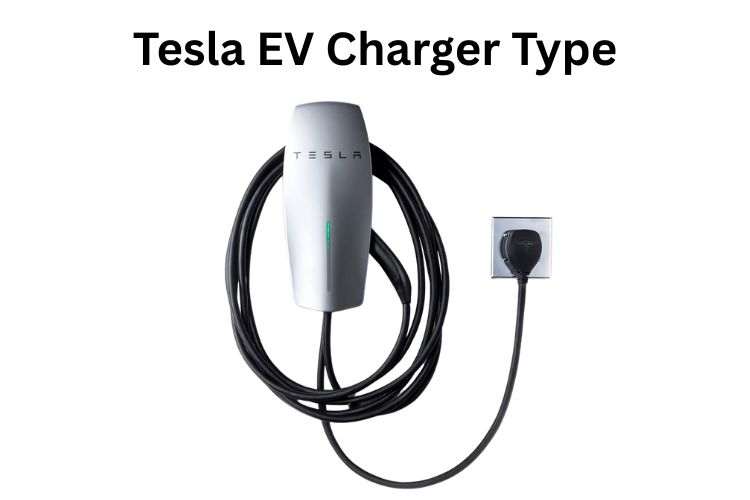
The Tesla Wall Connector mounts on your garage wall like a high tech piece of art. It adds up to 44 miles of range per hour while you dream. That means an overnight charge fills your battery completely, every single time. The unit connects to WiFi for app control and automatic updates. You can schedule charging during off peak hours when electricity costs 50% less. Perfect if you rack up serious daily miles.
Installation requires a 240 volt circuit, the same voltage your electric dryer uses. Most homes need a 60 amp circuit breaker, though the Wall Connector can handle up to 80 amps if your electrical panel allows it.
Mobile Connector: Your Flexible Freedom Friend
The Mobile Connector travels with you, tucked safely in your trunk. It plugs into different outlets, from regular 120 volt walls to RV style 240 volt sockets. You swap adapters based on what outlet you find. Adventure calls, and this connector answers. At 120 volts, you get about 3 miles of range per hour. Plug into 240 volts, and that jumps to 30 miles per hour. Ideal for renters who cannot install permanent equipment. Also perfect for anyone who values charging flexibility over maximum speed. You are not tied to one location or one outlet type.
Which Home Setup Matches Your Life?
Here is the real decision matrix:
| Your Situation | Best Choice | Why |
|---|---|---|
| Daily commute over 40 miles | Wall Connector | Speed matters for full overnight charge |
| Drive under 30 miles daily | Mobile Connector | Flexibility wins, speed is bonus |
| Rent your home | Mobile Connector | No permanent installation needed |
| Own home, high mileage | Wall Connector | Long term convenience pays off |
| Road trip often | Keep Mobile Connector in trunk | Backup charging everywhere |
The sweet spot surprises most owners: you need less speed than you fear. If you drive 40 miles daily and plug in for 8 hours overnight, even a basic 240 volt outlet at 30 miles per hour refills your battery completely. Installation costs for Wall Connector run between 750 and 1,500 dollars depending on your electrical panel and distance from your parking spot.
Superchargers: Your Road Trip’s Best Friend
V3 and V4: The Speed Demons
Tesla’s Supercharger network delivers road trip magic. V3 stations pump up to 250 kilowatts of power. That translates to 200 miles of range in just 15 minutes under perfect conditions. V4 cabinets push even higher, targeting future vehicles with bigger batteries and faster charging capability. Real talk time: you rarely see maximum speed. Your battery’s temperature and current charge level slow things down as you approach full. Cold batteries charge slower. Hot batteries need protecting. The car manages everything automatically to keep your battery healthy for 300,000 miles.
Picture charging like filling a swimming pool. The first 20% fills lightning fast. From 20% to 80%, water flows strong and steady. That last 20% to 100% slows to a trickle because physics demands it. Smart drivers stop at 80% and hit the road.
The Smart Charging Dance Your Tesla Does
Your car performs invisible choreography every time you Supercharge. Why does charging slow from 80% to 100%? Your battery says “I’m almost full” and protects itself from damage. Preconditioning magic happens when you navigate to a Supercharger. Your car warms its battery en route, preparing for maximum charging speed. You arrive, plug in, and watch the kilowatts flow faster than they would otherwise. Stall sharing on older V2 chargers means your neighbor affects your speed. Two cars on linked stalls split 150 kilowatts between them.
Finding the Right Supercharger
Your touchscreen map shows everything you need. Availability, speed ratings, even nearby coffee shops appear. Cable reach matters now because non Tesla vehicles joined the network. V4’s longer cables solve the parking puzzle when someone with a front mounted charge port pulls in. Payment happens automatically through your Tesla account. No fumbling with credit cards in the rain. No downloading another app. You plug in, charging starts, you unplug when ready, and the bill hits your card. That simplicity keeps 99.95% of Superchargers running smoothly.
Public Charging Beyond Superchargers
Destination Chargers: The Overnight Solution
Destination Chargers hide in plain sight at hotels, restaurants, and shopping centers. Places where you linger anyway become charging opportunities. These stations add 30 to 45 miles per hour while you sleep, eat, or shop. Often free because businesses cover costs to attract you through their doors. You wake up after a hotel stay to discover 300 miles added overnight. You finish dinner to find 60 miles appeared during dessert. The best part? You were going to be there anyway.
Using Non-Tesla Chargers
Your Tesla came prepared for the wider charging world. A J1772 adapter handles Level 2 AC charging at thousands of public stations. ChargePoint, EVgo, and other networks become accessible. For DC fast charging at Electrify America and similar networks, you need a CCS1 adapter. Tesla sells these, and they work reliably when properly certified. Never use cheap third party adapters because they lack thermal management and can damage your car. NACS adoption means fewer adapters needed every month as networks add native NACS plugs.
| Adapter Type | What It Does | When You Need It | Cost |
|---|---|---|---|
| J1772 to NACS | AC Level 2 charging | Public Level 2 stations | Included with car |
| CCS1 to NACS | DC fast charging | Non Tesla DC networks | $175 from Tesla |
| NACS to CCS1 | For non Tesla cars | At Tesla Superchargers | Varies by automaker |
Real-World Charging Times That Actually Matter
What You’ll Really Experience
Forget the marketing numbers. Here is what happens in your real life:
| Scenario | Time | Range Added | Reality Check |
|---|---|---|---|
| 20% to 80% at V3 Supercharger | 25-30 minutes | 200+ miles | Perfect coffee break |
| Overnight home Wall Connector | 8 hours | Full battery | Wake up ready daily |
| 2 hour destination charge | 2 hours | 60-90 miles | Dinner and shopping |
| Emergency 240V outlet | 4 hours | 120 miles | Hotel or friend’s house |
The 20% to 80% window is your road trip sweet spot. Charging below 20% and above 80% takes longer per mile added. Smart drivers arrive at Superchargers around 10% to 20% and leave at 80%. You spend less time charging and more time driving.
Temperature’s Hidden Impact
Cold batteries charge slower than warm ones. Your Tesla knows this and prepares accordingly. Winter charging at 20 degrees Fahrenheit might deliver 100 kilowatts instead of 250 kilowatts. Summer heat above 95 degrees can throttle speeds to protect long term battery health. The Goldilocks zone lives between 60 and 80 degrees Fahrenheit. That is where optimal charging performance happens. Cold weather can reduce your range by 20% to 30% too. Plan winter road trips with extra charging stops.
Common Charging Mistakes (And Your Easy Fixes)
The Overthinking Trap
Stop waiting for 100% when 80% handles tomorrow perfectly. You waste time at Superchargers for minimal benefit. Ignore free destination chargers while paying for Supercharging. Why spend money when the hotel offers free Level 2 charging overnight? Not plugging in nightly makes everything harder. Your battery stays healthier with frequent shallow charges than occasional deep cycles. Set your charge limit to 80% for daily use. Only charge to 100% before long road trips.
The Money-Saving Secrets
Schedule charging during off peak hours. Many utilities charge 50% less between midnight and 6 AM. Your Tesla can wait until rates drop, then charge automatically. Set your charge limit to 80% for daily driving. Your battery stays healthier longer, and you rarely need that last 20% anyway. Use free destination charging while shopping. Those 2 hours at the mall can add 60 miles completely free. These small habits add up to hundreds of dollars saved yearly.
Adapters: Your Universal Charging Insurance
The Essential Collection
Keep your Mobile Connector in the trunk always. It is your charging safety net when plans change. The J1772 adapter opens thousands of public Level 2 stations instantly. Keep it with your Mobile Connector. A CCS1 adapter for non Tesla DC fast charging provides flexibility when Superchargers are not nearby. You can charge at Electrify America, EVgo, and other major networks.
| Adapter | Use Case | Where to Buy | Pro Tip |
|---|---|---|---|
| Mobile Connector | Emergency charging anywhere | Tesla.com | Keep in trunk with multiple plug tips |
| J1772 adapter | Public AC charging | Included with car | Store in center console |
| CCS1 adapter | Non Tesla DC fast charging | Tesla.com $175 | Only buy certified adapters |
Non-Tesla Owners at Superchargers
Select Supercharger stations now welcome NACS equipped vehicles from Ford, GM, Rivian, and others. Check the Tesla app for availability and cable reach before arriving. Some stations have longer V4 cables that work better for cars with different charge port locations. More manufacturers are adding native NACS ports, which means simpler sharing without adapters. By 2026, most new EVs sold in North America will have NACS ports from the factory.
Future-Proofing Your Charging Setup
What’s Coming in 2025-2026
Bidirectional charging will turn your Tesla into home backup power during outages. Your car’s 75 kilowatt hour battery could run your house for days. V4 Superchargers with payment terminals enable universal access for any NACS equipped vehicle. Solar integration at home makes charging essentially free. Pair a Wall Connector with rooftop solar panels, and sunshine becomes miles.
“The shift to NACS represents the most significant standardization in EV charging history. Within three years, over 90% of new EVs in North America will use the same plug.” – Industry Analysis Report, 2024
Your Smart Investment Strategy
Start with the Mobile Connector that came with your car. Learn your daily charging patterns before investing in permanent equipment. Upgrade to a Wall Connector when convenience outweighs the 750 to 1,500 dollar installation cost. Keep adapters handy as the charging landscape evolves. The industry is moving fast, and flexibility wins during transitions. Your Mobile Connector works today and five years from now.
Your Personal Action Plan
For New Tesla Owners
Week 1: Test your Mobile Connector at home. Understand your daily charging needs by tracking miles driven. Month 1: Map local Superchargers and destination chargers using your car’s navigation. Find backup charging near your regular routes. Month 3: Decide if a Wall Connector investment makes sense based on your actual usage patterns, not assumptions.
For Daily Commuters
Install a Wall Connector on a 60 amp circuit for worry free mornings. You will never stress about charging again. Set scheduled charging for cheapest electricity rates in your area. Check with your utility for time of use plans. Keep your charge limit at 80% except before long trips. Your battery will thank you with longer life.
For Road Warriors
Download the PlugShare app for comprehensive charging options beyond Tesla’s network. Keep a CCS1 adapter for maximum flexibility on unfamiliar routes. Plan stops around the 20% to 80% charging window for fastest overall travel time. Precondition your battery by navigating to Superchargers in advance.
Conclusion: You’re Now a Charging Expert
You know exactly which charger fits your lifestyle and budget now. NACS for North America, Type 2 and CCS2 for Europe, and adapters bridge the gaps. No more range anxiety hangs over your head because you have options everywhere. You understand charging speeds, costs, and strategies. You are saving money and protecting your battery health simultaneously with simple habits. The confusion that felt overwhelming? Gone. Replaced with competent confidence.
Your Next Move
Tonight, plug in at home and set your charge limit to 80%. This week, explore one new charging location near you. This month, calculate your actual savings from optimized charging habits versus your old gas costs. Remember that every Tesla owner started confused about charging. Now you are ahead of the curve, ready to enjoy electric driving without the stress. The mystery solved itself once you learned the language.
Tesla EV Plug Type (FAQs)
Can non-Tesla vehicles use Tesla Superchargers in 2025?
Yes, non Tesla vehicles can use select Supercharger stations starting in 2024 and expanding through 2025. Ford, GM, Rivian, and other automakers provide NACS to CCS1 adapters for their customers. You need the Tesla app to initiate charging sessions and handle payment.
Not all Supercharger locations support non Tesla vehicles yet, so check the app before arriving. By 2026, most new non Tesla EVs will have native NACS ports and full access without adapters.
What is the difference between NACS and Type 2 connectors?
NACS is designed for North American electrical grids with single phase 240 volt power, delivering up to 11.5 kilowatts for home AC charging. Type 2 connectors serve European markets with three phase power systems, providing up to 22 kilowatts for AC charging. Both connectors handle DC fast charging differently too. NACS integrates AC and DC in one compact plug.
Type 2 uses CCS2 for DC fast charging, which adds two pins below the Type 2 connector. The regional power grid differences make each standard optimal for its market.
Does Tesla use CCS or CHAdeMO for fast charging?
Tesla uses NACS for DC fast charging in North America and CCS2 in Europe. Tesla does not use CHAdeMO, which is an older Japanese standard. CHAdeMO equipped vehicles like the Nissan Leaf cannot charge at Tesla Superchargers without third party modifications.
Tesla provides a CHAdeMO to NACS adapter for Tesla owners in Japan who need to use legacy CHAdeMO stations. However, the adapter only works one direction. CHAdeMO vehicles cannot access Superchargers.
How many amps do I need for a Tesla Wall Connector?
A Tesla Wall Connector requires a minimum 60 amp circuit breaker for optimal performance, delivering 48 amps continuously and adding up to 44 miles per hour. You can install it on a 40 amp circuit for slower 32 amp charging if your electrical panel cannot support 60 amps.
The Wall Connector supports up to 80 amps if your panel and local codes allow it, though most homes use 60 amps. Your electrician will assess your existing panel capacity and may recommend an upgrade if you are near maximum load.
Can I charge my Tesla at a CCS station with an adapter?
Yes, you can charge your Tesla at CCS1 stations using Tesla’s official CCS1 to NACS adapter, which costs 175 dollars. This adapter works at Electrify America, EVgo, ChargePoint DC stations, and other CCS networks. Always use Tesla certified adapters because cheap third party versions lack proper thermal management and can damage your vehicle.
In Europe, Teslas have native CCS2 ports and do not need adapters for public charging. The adapter enables DC fast charging only, not AC Level 2 charging.