You’ve done the math. The spreadsheet. The family vote. You’re ready to go electric.
Then you see that ₹9.99 lakh price tag on the MG Windsor with that tiny asterisk. The one that whispers “battery rental separate.” Your cousin texts you at midnight swearing by his Tata Nexon EV, saying it’s the best decision he ever made. But then you scroll through forums and see those breakdown stories. The Windsor looks spacious and premium in the YouTube reviews. Almost too good. Is someone lying to you?
Here’s the truth nobody wants to say out loud: you’re not choosing between a good car and a bad car.
You’re choosing between two different promises. Windsor says “bring your whole family, stretch out, pay different.” Nexon says “we’ve been here longer, we’re tested, pick your battery size.” Both will get you to work. Both will save you money on fuel. But only one matches how you actually live.
We’ll decode that battery rental confusion with actual math, not marketing speak. Compare what your family experiences on Tuesday morning school runs, not launch event fairy tales. Look at real owners who’ve driven 20,000 kilometers through monsoons, potholes, and highway road trips. Walk away knowing exactly which choice lets you sleep peacefully, not which one sounds better in a brochure.
Keynote: MG Windsor vs Tata Nexon EV
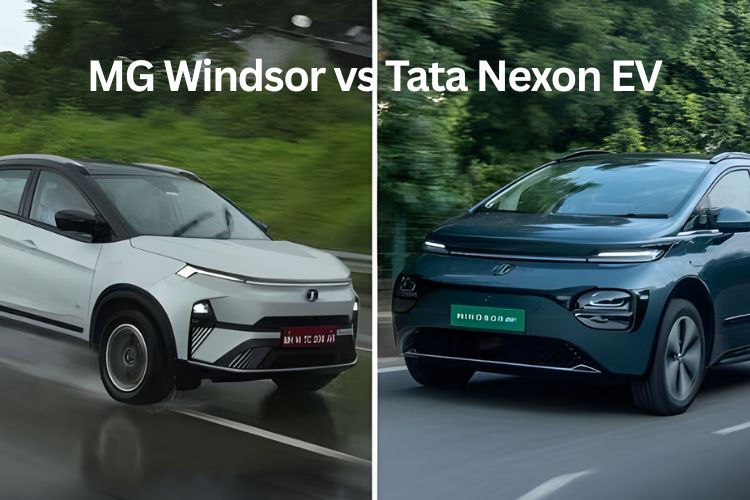
MG Windsor vs Tata Nexon EV represents India’s core electric SUV choice in 2025. Windsor delivers unmatched space and comfort for family-focused buyers willing to embrace newer technology. Nexon offers proven reliability, urban agility, and verified 5-star safety with flexible battery options. Both use reliable LFP battery chemistry enabling worry-free 100% charging. Real-world range differs minimally, both delivering 350-400km actual driving. Choose Windsor for passenger comfort and cargo capacity. Choose Nexon for proven track record and easier urban maneuverability.
The Battery Subscription Mystery Everyone’s Whispering About
What BaaS Actually Means for Your Monthly Budget
You keep seeing “Battery as a Service” everywhere and feeling more confused, not less.
Here’s what it actually is. Not a rental like renting furniture. It’s a finance scheme with MG’s partner companies where you buy the car without the battery, then pay per kilometer you drive. Windsor under BaaS starts at ₹9.99 lakh upfront. Then you pay roughly ₹3.50 to ₹3.90 for every kilometer driven, which works out to a minimum of ₹5,250 per month if you drive 1,500 kilometers.
Traditional Windsor pricing without BaaS ranges from ₹12.50 lakh to ₹14.00 lakh with the battery included from day one. No monthly bills. No kilometer tracking. Just own it.
Nexon’s straightforward path: ₹12.49 lakh to ₹17.49 lakh depending on battery size and features. Battery is yours. Period.
When Battery Subscription Makes Sense (And When It Doesn’t)
The math that actually matters to your wallet, not marketing slides.
| Your Driving Life | BaaS Windsor | Full-Price Windsor | Nexon EV |
|---|---|---|---|
| Low mileage city driver (1,000 km/month) | Saves ₹2.8L over 3 years | Higher upfront | Higher upfront |
| Daily highway warrior (2,500 km/month) | Costs more than buying battery | Better long-term value | Better long-term value |
| Resale in 5 years | Lifetime warranty (1st owner only) | 8yr/1.6L km warranty | 8yr/1.6L km warranty |
Truth bomb: 51% of 5,629 buyers polled said battery rental won’t work in India. The math just doesn’t click for most people’s driving patterns.
If you barely drive, maybe 8,000 kilometers a year, BaaS quietly saves money without that brutal upfront payment. But if you’re doing 20,000 kilometers annually, you’re essentially paying for the battery twice over five years. That’s real money vanishing.
The Financing Reality Nobody Explains Clearly
You cannot split the car payment and battery payment with different banks. It’s one package deal with MG’s finance partners.
Interest rates shift based on your credit score, affecting your true monthly cost more than the sticker price. Windsor’s lifetime battery warranty sounds amazing, but read the fine print. It only protects the first owner fully. Second owner gets standard 8-year coverage just like everyone else.
Nexon’s approach is brutally honest. Own it all from day one. No subscription math when you’re planning that Goa road trip. No wondering if you drove too much this month.
Space, Comfort & The Stuff Your Family Will Actually Notice Daily
The Boot Space Truth That Changes Weekend Plans
Forget abstract numbers for a second. Picture your actual life in these cars.
Windsor: 579 to 604 liters depending on variant. That’s two full-size suitcases, a stroller, weekend groceries, and your kid’s cricket kit without playing Tetris. The boot swallows everything.
Nexon: 350 liters. Gets the job done for daily errands and quick trips. But family holidays? You’re leaving stuff behind or investing in a roof carrier.
That’s 72% more luggage capacity in the Windsor. Not a rounding error. A fundamentally different vehicle when it comes to hauling your life around.
The Backseat Experience Your Kids Will Feel Instantly
Windsor’s 2,700mm wheelbase versus Nexon’s 2,498mm means real, measurable legroom gains.
Windsor’s rear seats recline 135 degrees. Actual business-class airline-style reclining. Your teenager can nap on long drives without that neck-craning awkwardness. Adults in the back aren’t negotiating for knee space.
Nexon’s fixed bench feels noticeably tighter. Good enough for your daily 30-minute commute with one kid. Cramped for three adults on a four-hour highway journey. The numbers tell the story: Windsor measures 4,295mm long, Nexon is a compact 3,994mm. That 301mm difference lives entirely in rear passenger comfort.
Who This Space Math Favors Most
Airport runs and weekend getaways? Windsor’s boot wins without compromise.
Chauffeur-driven or you spend time in the backseat during family trips? Windsor’s recline feature is genuinely game-changing. Not marketing hype. Actually changes how tired you feel after a long drive.
Tight city parking and narrow lanes? Nexon’s 301mm shorter body feels nimble threading through traffic. Fits into parking spots where the Windsor requires careful maneuvering.
Solo commuters who occasionally need cargo space: Nexon offers a clever front trunk (frunk) for small items that Windsor completely lacks.
Range & Charging: The Anxiety-Killer Numbers That Actually Matter
The Battery Reality Check Nobody Sugarcoats
Claimed range is marketing magic. Real-world miles are your truth.
| Spec | MG Windsor (52.9 kWh Pro) | Nexon EV (45 kWh LR) |
|---|---|---|
| Battery Pack | 52.9 kWh (one size Pro) | 30/40.5/45 kWh (three options) |
| ARAI Claimed | 449 km | 489 km |
| Real-World City | ~380-410 km | ~355 km |
| Real-World Highway | ~350-380 km | ~345 km |
| Efficiency | 6.2 km/kWh | 5.9 km/kWh |
See that gap between claimed and real? Welcome to EV ownership. Both cars promise more than they deliver by roughly 20-25%. Not lying exactly. Just testing under perfect conditions you’ll never replicate.
What Owners Actually Get After 20,000 km of Real Life
The older Windsor with 38kWh battery delivered around 300 to 310 kilometers real-world, not the claimed 332 kilometers.
Nexon 45kWh tests consistently show 350 to 375 kilometers, falling short of the 489km ARAI promise by a similar margin. One owner drove Mumbai to Pune expressway repeatedly and averaged 332 kilometers real-world with the 40.5kWh pack.
Both fall short of brochures by similar percentages. Plan accordingly. Always.
Windsor’s bigger 52.9kWh Pro battery improves your buffer significantly. Expect around 380 to 410 kilometers realistic range in mixed driving. That’s enough for most people’s weekly driving without range anxiety creeping in.
Charging Speed: The Morning Rush Factor
Both support 60 kW DC fast charging, giving you 10-80% charge in roughly 40-50 minutes.
Windsor Pro takes about 50 minutes for 20-80% on a 60kW charger. Nexon LR manages 40 minutes for 10-100% on the same setup. Close enough that it won’t matter for most highway stops.
7.2 kW AC home charger works for both overnight. Plug in after dinner, wake up to a full battery. This is how 90% of EV charging actually happens, not the dramatic fast-charging highway stops.
Apartment living without dedicated parking? Windsor’s BaaS model means you’re not worrying about battery aging. That’s MG’s problem, not yours.
Highway habits and long road trips regularly? Nexon’s multiple battery options let you match your budget to your range needs without overpaying.
The 3-Year Ownership Cost Everyone Forgets to Calculate
The Upfront Numbers vs The Quiet Monthly Bleed
Initial price feels like the only cost. Then three years quietly happens.
Windsor BaaS entry: ₹9.99 lakh upfront plus ₹1.89 lakh battery rental over 36 months assuming 1,500 km monthly. Total commitment: ₹11.88 lakh.
Windsor full purchase: ₹14.00 lakh for top Essence variant. No surprises. Battery included forever.
Nexon range: ₹12.49 lakh for base Medium Range up to ₹17.49 lakh for fully loaded Empowered Plus with ADAS.
Running cost advantage: Windsor costs roughly ₹1.18 per kilometer to run. Nexon comes in at ₹0.92 per kilometer. Both crush petrol’s ₹8-10 per kilometer brutally.
The EMI Reality Check for Your Monthly Budget
Numbers that show up on your bank statement every month, not just brochures you read once.
Nexon EMI: roughly ₹35,000 monthly for a mid-spec 40.5 kWh Long Range variant at standard interest rates.
Windsor EMI: roughly ₹37,000 monthly for comparable full-purchase Pro variant.
BaaS adds ₹5,250 minimum monthly on top of your lower car EMI. So you’re paying ₹25,000 car EMI plus ₹5,250 battery cost equals ₹30,250 total monthly outflow.
Factor in charging savings: 80% lower fuel costs compared to petrol equivalents. A Nexon petrol costs you ₹6,000 monthly in fuel for average driving. The EV version costs ₹1,200 for electricity. That’s ₹4,800 saved every single month.
Resale Value & Warranty: The Safety Net You’ll Need Eventually
Windsor offers lifetime battery warranty for first owners, which eases future resale anxiety considerably.
Second owners get standard 8 years or 1.6 lakh kilometers on Windsor, identical to Nexon’s baseline. Nexon’s wider service network with 450+ locations nationwide and proven four-year track record strengthens resale confidence. People know what they’re buying.
Both offer 3-year vehicle warranty standard. Battery remains the valuable long-term asset that makes or breaks resale value.
Honest truth? Nexon’s resale is currently stronger because it’s proven. Windsor is too new to know. That’s the price of being an early adopter.
Safety, Tech & The Reliability Conversation We Must Have Honestly
The Features That Change Your Daily Drive Feel
Windsor’s 15.6-inch touchscreen is the biggest in the segment. Genuinely impressive first time you see it.
Nexon’s 12.3-inch screen plus 10.24-inch driver cluster feels modern but smaller. Both get ventilated seats, 360-degree camera, panoramic sunroof (fixed glass on Windsor, actual opening sunroof on Nexon), and wireless charging standard.
Windsor exclusive perks: 256-color ambient lighting that looks premium at night. 9-speaker Infinity sound system. Those reclining rear seats. 6-way power-adjustable driver seat.
Nexon exclusive advantages: Vehicle-to-Load (V2L) power output turns your car into a mobile generator for camping or emergencies. Vehicle-to-Vehicle (V2V) charging can rescue stranded EVs. Actual frunk storage. Multiple drive modes for different conditions.
ADAS & Safety: The Peace-of-Mind Tech
Nexon earned 5-star Bharat NCAP rating, India’s toughest safety test yet. Adult occupant protection scored 29.86 out of 32. Child occupant protection hit 44.95 out of 49. These aren’t marketing claims. Independent crash test validation.
Windsor Pro adds Level 2 ADAS with 12 functions including adaptive cruise control and lane keep assist. Nexon’s top Empowered Plus variants include Level 2 ADAS features competing directly with Windsor’s system.
Both offer 6 airbags, electronic stability control, and tire pressure monitoring standard across all variants. Disc brakes on all four wheels. The safety basics are covered.
But here’s what matters: Windsor hasn’t been crash-tested by Bharat NCAP or Global NCAP yet. For buyers where safety is non-negotiable, that independently verified 5-star rating gives Nexon a massive psychological advantage.
The Reliability Truth Most Reviews Skip
Nexon owners report real issues that you need to know about. Drive selector failing from D to N while driving. That’s terrifying, not trivial.
Common complaints across owner forums: software glitches requiring multiple service visits. Battery calibration showing incorrect range. Charging connector faults after 20,000 kilometers. Tata’s service network is wide, but quality varies dramatically between locations.
Windsor launched in September 2024, so long-term reliability data is still emerging slowly. Early owners report mostly positive experiences, but it’s too soon to declare victory. One research finding noted: “Far fewer failure cases in MG’s EVs than Tata’s.” But sample size is smaller.
Service network reality: Tata has 450+ service points nationwide versus MG’s improving but smaller footprint of roughly 250 centers. If you live in tier-2 or tier-3 cities, this difference matters enormously when something breaks.
The Perfect Match Test: Which Car Fits Your Actual Life
Choose the MG Windsor If You Are
Prioritizing backseat comfort and massive boot space above everything else.
Okay with BaaS complexity or willing to pay full price upfront for peace of mind. Betting on newer technology with less proven but improving track record. Need that 604-liter boot for family trips, business equipment, weekend adventures, or just like having options.
Your typical drive involves highways more than congested city traffic. You want your passengers to arrive relaxed, not cramped and irritated.
Choose the Tata Nexon EV If You Are
Want flexibility of three battery sizes matching your budget and range needs precisely.
Prefer proven (if imperfect) technology with wider service network access everywhere, including your hometown. Value nimble city driving and compact parking over maximum rear legroom. Can tolerate reliability hiccups for better resale confidence and brand familiarity.
Safety is your top priority and that 5-star Bharat NCAP rating matters more than extra features. You drive solo or with one passenger most days.
The Middle Path Nobody Mentions Clearly
Wait 6 months for more Windsor long-term owner data if you’re genuinely risk-averse.
Test drive BOTH back-to-back, focusing on your exact daily route. Not the dealer’s demo loop. Your actual commute with its potholes, tight turns, and parking challenges.
Bring your family and typical luggage. Load the boot. Drive for 30 minutes minimum. Sit in the backseat yourself. Numbers don’t capture comfort like your own back does.
Ask to speak with actual owners at the dealership, not just salespeople. Get phone numbers if possible. Real owners tell you things reviews never cover.
Conclusion: Your New Normal Starts With One Simple Action
You’re not choosing between perfection and compromise. You’re choosing between two different philosophies. Windsor says “pay less upfront, enjoy more space, adapt payment to usage.” Nexon says “pay traditional price, get proven platform, choose your battery size.” The right answer isn’t which car is objectively better. It’s which trade-offs you can live with peacefully. Windsor’s innovation versus Nexon’s proven path. Spacious comfort versus urban agility. Newer technology versus established reliability. One will feel right when you stop reading and start experiencing.
Do this today: Book test drives at both dealerships for the same afternoon. Drive your actual commute route in both cars. Sit in the backseat. Load your typical luggage in the boot. The right car will feel obvious by the time you’re done, not because someone told you, but because your body knows.
Going electric isn’t just about the car. It’s about joining a movement rewriting Indian automotive history. Whether you choose Windsor’s innovation or Nexon’s proven path, you’re making a choice your wallet and the planet will thank you for. The imperfect EV you actually buy beats the perfect one you keep researching forever.
Tata Nexon EV vs MG Windsor (FAQs)
Which EV has better range, MG Windsor or Nexon EV?
No, neither has dramatically better range. Windsor Pro’s 52.9kWh delivers around 380-410km real-world versus Nexon LR’s 45kWh giving 350-375km. Both fall short of claimed figures by similar 20-25% margins. Windsor’s larger battery gives slightly more buffer for highway trips, but daily driving range is comparable enough that it shouldn’t be your deciding factor. Both require charging every 3-4 days for average 50km daily commutes.
Is MG Windsor bigger than Tata Nexon EV?
Yes, significantly bigger. Windsor measures 4,295mm long versus Nexon’s compact 3,994mm, that’s 301mm longer. Windsor’s wheelbase is 2,700mm versus 2,498mm for Nexon, giving 202mm more rear legroom. This translates to 72% more boot space (604 liters vs 350 liters) and genuinely spacious rear seating in Windsor. But Nexon’s compact size wins for tight parking and narrow city lanes where Windsor’s Innova-like width feels cumbersome.
What is the real charging time for Nexon EV 45kWh at home?
Plan for 6 to 7 hours with standard 7.4kW home AC charger. Nexon LR’s 45kWh battery takes 6 hours 36 minutes for complete 10-100% charge on home setup. Windsor’s larger 52.9kWh Pro needs roughly 9.5 hours for full charge overnight. Both work perfectly with evening plug-in for morning full battery. DC fast charging cuts this to 40-50 minutes for 10-80% at highway stops, but 90% of owners charge at home.
Does MG Windsor battery rental save money long term?
No, not for most drivers. BaaS saves money only if you drive under 12,000km yearly. At 1,500km monthly, BaaS costs ₹5,250 monthly or ₹1.89 lakh over 3 years. Full battery ownership adds ₹2.5-3 lakh upfront but eliminates monthly bills. Breakeven happens around 15,000km annual driving. Drive 20,000km yearly and BaaS costs significantly more over 5 years than buying battery outright. Low-mileage city drivers benefit most from BaaS structure.
Which electric SUV has better service network in tier 2 cities?
Tata wins decisively here. Nexon EV backed by 450+ Tata service centers nationwide including strong tier-2 and tier-3 city presence. MG operates roughly 250 service points, concentrated in metros and larger cities. Smaller towns often lack nearby MG service, requiring travel to larger cities for repairs. If you live outside major metros, Tata’s network density and local availability make ownership significantly less stressful when issues arise.