It’s 3 AM and you’ve got seventeen browser tabs open. Range estimates. Charging speeds. Owner forums where people argue about panel gaps and dealer experiences like it’s a religion.
You’re not choosing between two vehicles. You’re choosing between two completely different futures.
Here’s the thing nobody says out loud: you’re terrified. Not of the electric part. You’re scared of betting your hard-earned money on innovation that might strand you, or on “proven luxury” that might already be outdated. This decision feels heavier than any car purchase before because EVs eliminate your safety nets. There’s no “I’ll just fill up anywhere” backup plan.
But here’s the good news. We’ll cut through the noise together, pairing your gut feelings with cold, hard data to find the EV that actually fits your life, not just your spreadsheet.
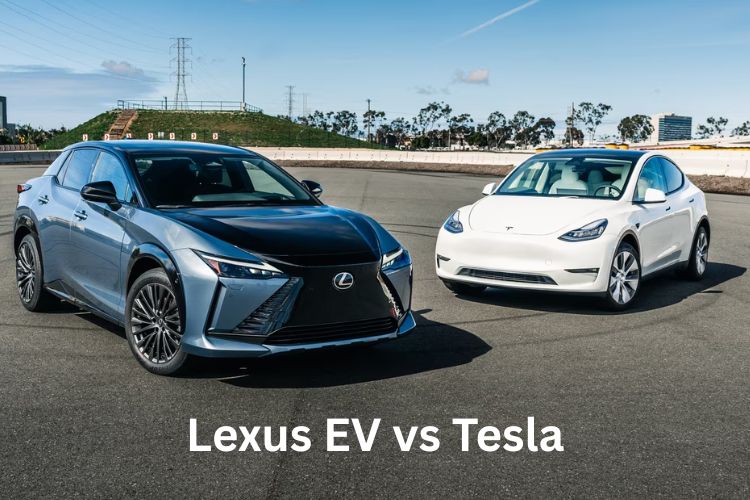
Keynote: Lexus EV vs Tesla
The Lexus EV versus Tesla decision centers on range versus refinement. Tesla dominates with 330-mile range and Supercharger access. Lexus counters with superior build quality, dealer service networks, and legendary reliability. The Model Y excels for road trips. The RZ delivers daily luxury. Choose based on your priorities: Tesla for technology and infrastructure, Lexus for craftsmanship and peace of mind.
Why This Choice Feels Different From Every Car You’ve Ever Bought
You’re Not Shopping for Transportation
Tesla means joining a tech revolution with millions of members now. It’s the iPhone on wheels. You’re buying into Elon’s vision, the Supercharger network, over-the-air updates that add features while you sleep, and a community that treats software version numbers like badges of honor.
Lexus means investing in a dealer relationship and proven luxury craftsmanship. You’re buying into Toyota’s 70 years of reliability data, a service advisor who’ll remember your name, and interiors assembled by Takumi artisans who’ve spent 60,000 hours perfecting their craft.
The Hidden Anxiety Nobody Talks About
This isn’t about horsepower anymore. It’s about trusting the disruptor or the institution.
Your choice locks you into an ecosystem for years with no easy escape. Tesla owners live inside Tesla’s digital world. No Apple CarPlay. No familiar dealer network. Just the app and the Supercharger map.
And here’s the honest truth: both paths come with regret. Tesla buyers miss having a human to call when something breaks. Lexus buyers feel late to the party, watching Teslas silently rocket past them on the highway while they’re nursing their limited range on 20-inch wheels.
The Range Reality: Where Numbers Meet Your Actual Life
The Stat That Changes Everything
Tesla Model Y Long Range delivers 330 miles EPA estimated. That’s your buffer. Your confidence. Your “I don’t need to think about charging today” peace of mind.
Lexus RZ spans 220 miles down to 196 miles depending on whether you choose 18-inch or 20-inch wheels. And here’s what the brochure won’t tell you: independent real-world highway testing recorded just 120 miles on those prettier 20-inch wheels.
Those larger Lexus wheels cut range sharply. If you’re range-sensitive, avoid them. Simple as that.
What These Numbers Mean on Tuesday Morning
Let’s get real about what these ranges actually mean in your life:
| Your Week | Tesla Model Y | Lexus RZ 450e |
|---|---|---|
| Daily commute: 40 miles | Charge every 8 days | Charge every 5 days |
| Weekend trip: 200 miles | No charging needed | Cutting it close |
| Road trip: 500+ miles | One 50-minute stop | Multiple anxiety stops |
See the pattern? For local life, both work fine. For everything else, Tesla’s range advantage compounds into genuine freedom.
The One-Pedal Driving Difference
Tesla offers full one-pedal driving. Lift off the accelerator and the regenerative braking is so strong, you rarely touch the brake pedal. It’s addictive.
Lexus doesn’t deliver the same experience. Their regenerative system works, but it won’t bring you to a complete stop. You’ll still use the brake pedal constantly.
This matters more for daily joy than any 0-60 time you’ll read about online.
Charging in the Real World: Access Beats Speed Every Time
The Supercharger Moat
Let me be blunt: Tesla’s Supercharger network is the current road-trip advantage. No question about it.
Over 50,000 Supercharger locations globally. Plug-and-charge simplicity. Real-time stall availability shown right in your navigation. Billing handled automatically.
If you’re in a Supercharger-dense region, your decision just got much easier.
Lexus Catches Up, But Not Yet
Good news: Lexus and the entire Toyota family are adopting NACS (that’s Tesla’s charging standard, now called SAE J3400). Adapters and native NACS ports roll out in 2025.
Bad news: you’ll need that adapter initially. And the RZ’s DC fast charging caps near 150 kW max. Compare that to the Model Y reaching 225 to 250 kW peak charging speeds.
What does this mean? At a fast charger, your Tesla hits 80% in roughly 27 minutes. Your Lexus needs about 30 minutes, but that assumes you find a charger delivering its maximum speed. In reality, most public fast chargers can’t match Supercharger consistency.
Day-to-Day Reality Check
Here’s what actually matters for 90% of your driving: both vehicles work perfectly fine on home Level 2 charging for normal weeks.
You park in your garage, plug in overnight, wake up to a full battery. Whether that’s 330 miles or 220 miles doesn’t matter for your 40-mile commute.
Long trips expose gaps fastest. Highway adventures reveal the Supercharger advantage immediately.
The Service Experience: Where Romance Dies or Deepens
What Really Happens When Your Tesla Needs Help
Tesla service takes an average of five weeks to fix a car according to recent data. Let that sink in.
Service appointments often wait 3 to 4 weeks minimum before someone even looks at your vehicle. Communication happens entirely through the app. No human voice unless something goes seriously wrong.
Some owners report excellent mobile service. A technician shows up at your house, fixes minor issues in your driveway, and you never miss a day. Others face getting shuffled between service centers and appointment glitches in the app.
It’s a lottery.
The Lexus Dealer Advantage
Lexus earns a 97 out of 100 dealer reputation score and 902 in J.D. Power service satisfaction ratings. Those aren’t just numbers. They’re peace of mind.
Lexus scores 87 out of 100 in the American Customer Satisfaction Index, the highest of any brand. They’ve built their entire reputation on making ownership effortless.
What you’re really buying with Lexus: a human to call when things go wrong. Someone who knows your name. A loaner car waiting for you. A service advisor who explains the issue without making you feel stupid.
The Service Comparison Table You Need
| When You Need Help | Tesla | Lexus |
|---|---|---|
| Scheduling | App-only, often weeks out | Phone call, typically within days |
| Loaner vehicle | Sometimes available | Usually standard |
| Communication style | App notifications | Advisor relationship |
| EV expertise level | Deep Tesla knowledge | Building EV technician knowledge |
Performance, Safety, and That Daily Drive Feeling
The Acceleration Numbers Everyone Obsesses Over
Model Y hits 60 mph in 4.8 seconds. Lexus RZ reaches it in 5.0 seconds.
Real talk: when did you last actually need sub-5-second acceleration on your Tuesday morning commute? Both are stupid quick by normal car standards.
Two Completely Different Driving Personalities
Tesla delivers feedback-heavy, sporty, tossable handling that keeps you engaged. The low center of gravity from the floor-mounted battery makes it feel like a sports sedan wearing an SUV costume. The ride is firm. You feel the road. Some love this. Some find it exhausting.
Lexus offers serene, competent, bank-vault-quiet comfort that isolates you from road chaos. The butter-smooth ride is legendary. The cabin is one of the quietest in the entire automotive industry. It floats over bumps that the Tesla would transmit straight to your spine.
Ask yourself: do you want excitement or calm at 7 AM on Tuesday?
Safety and Driver-Assist Reality
Both vehicles come loaded with advanced driver assistance, but they have completely different personalities.
Tesla’s Full Self-Driving is like a bold co-pilot who needs close babysitting. It can navigate city streets, change lanes on highways, and handle parking. It’s impressive and occasionally terrifying. Regulators are watching closely. You’re beta testing the future.
Lexus Safety System+ 3.0 is like a calmer co-pilot with lane-keeping, adaptive cruise control, and collision prevention. It’s included standard. It won’t try to drive for you. It just catches your mistakes.
Model Y earns top scores from IIHS and NHTSA for crashworthiness. Both are exceptionally safe vehicles.
Inside the Cabin: Your Living Room for the Next Five Years
Tesla’s Polarizing Minimalism
Everything controlled through one 15-inch center screen. No physical dials for basics like temperature or fan speed.
Clean. Tech-forward. Frequently updated over-the-air. And deeply polarizing among owners.
No driver display behind the steering wheel. Your speed shows in the corner of the center screen. No AM radio in base models. Synthetic leather seats in black or black-and-white.
It’s a commitment to Tesla’s vision of what a car should be. You either love it or you don’t.
Lexus Brings Traditional Luxury Forward
“If you want your car to feel custom-made, pick the RZ.”
Nine exterior colors including two-tone options. Multiple interior design schemes. Palomino leather. Macadamia trim. NuLuxe and Ultrasuede materials that feel expensive because they are.
Physical controls for temperature sit alongside the 14-inch touchscreen. Buttons you can find without looking. A proper digital gauge cluster directly in your sightline.
Materials and Quietness That Last
Lexus delivers plush, beautifully finished interiors where ride comfort becomes daily joy. The Dynamic Sky panoramic roof adds luxury without the harsh sunlight of a full glass roof.
Superior cabin refinement praised consistently across every review. This is what Takumi craftsmanship means in practice.
Here’s the question that matters: which aging do you prefer? Tech that stays fresh through software updates, or materials that don’t degrade?
The Money Question: Sticker Price vs Five-Year Reality
They Cost About the Same Upfront
2025 Model Y Long Range starts at $47,990 base. Options push past $50K easily with paint, wheels, and interior upgrades.
2025 Lexus RZ 450e starts at $59,650. That’s a significant gap on paper.
But here’s where it gets interesting.
The Tax Credit That’s About to Disappear
Until September 30, 2025, the Tesla Model Y qualifies for the $7,500 federal EV tax credit because it’s assembled in the United States. That credit can be applied as an upfront discount at purchase.
The Lexus RZ, assembled in Japan, does not qualify. This has given Tesla a massive effective price advantage.
After September 30, 2025? That credit terminates for new vehicle purchases. The playing field levels. Suddenly that $12,000 price gap looks very different.
The Hidden Costs Table
| Cost Factor | Tesla | Lexus |
|---|---|---|
| Insurance rates | Often shockingly high | More predictable, stable |
| Service frequency | Less frequent, longer waits | More predictable intervals |
| Battery warranty | 8 years, 120k miles | 8 years, 100k miles |
| Basic warranty | 4 years, 50k miles | 4 years, 50k miles |
| Resale value trend | More volatile, like tech stock | Legendary stability |
Dependability Leader Stats
Lexus tops J.D. Power’s 2025 dependability rankings among all brands. They’ve done this for years. It’s not luck.
Consider resale impact. Brand dependability and charging access shape used EV demand later. Lexus guarantees fewer “oh crap” repair surprises. That’s worth real money over five years.
Who Should Pick What: The Matchmaker Table
Your Philosophy, Not Your Spreadsheet
| Choose This | If You Value |
|---|---|
| Lexus RZ | Serenity, dealer network, top dependability, daily calm, luxury materials |
| Tesla Model Y | Road trips, Supercharger access, maximum range, tech updates, performance |
The Social Signaling You Pretend Not to Notice
Let’s be honest about the elephant in the showroom.
Lexus signals traditional success and taste. You’ve arrived. You value quality over flash.
Tesla signals something more complicated now. Early adopter. Tech optimist. Maybe Elon fan. Maybe just someone who did the math on Superchargers.
Which tribe actually matches who you are on Tuesday morning?
The Final Comparison Table You Can Screenshot
| Spec | Lexus RZ 450e | Tesla Model Y Long Range |
|---|---|---|
| Starting MSRP | $59,650 | $47,990 |
| EPA Range | 196-220 miles | 330 miles |
| Battery Capacity | 71.4 kWh | ~81 kWh |
| DC Fast-Charge Peak | 150 kW | 250 kW |
| 0-60 MPH | 5.0 seconds | 4.8 seconds |
| Total Horsepower | 308 hp | ~514 hp |
| Cargo Space | 34.9 cu ft | 34.3 cu ft |
| Towing Capacity | 1,653 lbs | 3,500 lbs |
| Battery Warranty | 8 yr/100k mi | 8 yr/120k mi |
| Apple CarPlay | Yes (wireless) | No |
The one-liner you need: Road-trip often? Tesla. Daily calm? Lexus.
Conclusion: Choose the Memory You Want Five Years From Now
You started with anxiety, spreadsheets, and confusion. We walked through the real feelings and the undeniable facts.
This isn’t good versus bad. It’s two legitimate philosophies about what a car should be.
Tesla if you crave maximum range, the Supercharger network, tech updates, raw performance, and can handle service uncertainty.
Lexus if you prize hushed luxury, dealer relationships, predictable dependability, and serenity over bleeding-edge features.
Your first step today: Stop comparing specs online. Book back-to-back test drives on the same route and charge once on each brand’s preferred network. Sit in both for ten minutes without even starting them. Your body will tell you which one feels like home.
Final thought: Five years from now, you won’t remember the 0.4-second acceleration difference or the extra 60 miles of range on paper. You’ll remember either the thrill of Tesla’s ecosystem or the relief of having a dealer who knows your name. Choose the memory you actually want to live with.
Tesla vs Lexus EV (FAQs)
Can the Lexus RZ charge at Tesla Superchargers?
Yes, starting in 2025. Lexus is adopting the NACS charging standard, which means RZ owners will gain access to Tesla’s Supercharger network through an adapter initially, with native NACS ports arriving in later model years. You’ll need to purchase or obtain the adapter from Lexus dealers.
Which has better range: Lexus RZ or Tesla Model Y?
Tesla Model Y wins decisively. The Model Y Long Range delivers 330 miles EPA estimated versus the RZ 450e’s 196 to 220 miles depending on wheel size. Real-world testing shows this gap widens further, especially on highways and with the RZ’s larger 20-inch wheels.
Is Lexus RZ more reliable than Tesla Model Y?
Based on historical data, yes. Lexus consistently ranks at the top of reliability surveys from Consumer Reports and J.D. Power, scoring 79 out of 100 in recent reliability ratings. Tesla has improved but still struggles with build quality consistency and ranks near average or below in most reliability studies.
What’s the real-world charging time difference?
At a DC fast charger, the Tesla Model Y charges to 80% in roughly 27 minutes at peak 250 kW speeds. The Lexus RZ takes about 30 minutes at its peak 150 kW rate. The bigger difference is charging infrastructure reliability, where Tesla’s Supercharger network significantly outperforms public charging stations.
Does Lexus RZ qualify for federal EV tax credit?
No, the Lexus RZ does not qualify for the $7,500 federal EV tax credit because it’s assembled in Japan. The Tesla Model Y qualifies because it’s assembled in the United States, though this tax credit terminates for new vehicle purchases on September 30, 2025.