You’re staring at the configurator, finger hovering, stomach tight. The trim 3 feels smart, responsible. The trim 4 whispers promises of heated rear seats and sunlit mornings through that panoramic sunroof.
Here’s the confusion that’s keeping you up: nearly three grand separates them, but they share the same 64.8 kWh battery, same 285-mile WLTP range, same quiet power. Every review calls the trim 3 the sweet spot, but then casually mentions the trim 4’s creature comforts like they’re nothing. The ventilated seats. The heads-up display. That premium Harman Kardon sound system.
And then there’s that nagging voice asking if you’re being cheap or being smart.
Here’s our promise: we’ll cut through the noise using cold, hard facts to find the warm, real answer. This isn’t about specs. It’s about which choice you’ll still smile about three winters from now, not regret every frozen Tuesday morning when you’re scraping ice off the windscreen while your neighbor’s heated steering wheel is already warming their hands.
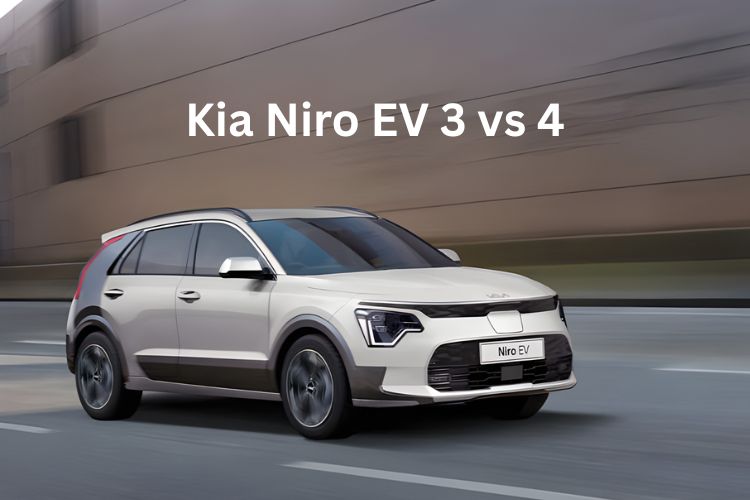
Keynote: Kia Niro EV 3 vs 4
The Kia Niro EV trim comparison centers on value, not performance. Both trims share identical 64.8 kWh batteries, 201 hp motors, and 285-mile WLTP range. Trim 4 adds £2,750 of premium features: heat pump efficiency, heads-up display, ventilated seats, and Highway Driving Assist 2.0. The critical differentiator? Vehicle Excise Duty. Trim 4 crosses the £40,000 threshold, triggering £2,050 in luxury supplements over five years. For most buyers, trim 3 delivers complete EV capability with superior value retention.
The Truth Nobody Leads With: They Drive Exactly the Same
Let’s start with what actually matters when you press the accelerator.
The Foundation That Doesn’t Change
Both trims deliver 201 horsepower through the same permanent magnet synchronous motor. Same 188 lb-ft of torque. Same front-wheel-drive setup getting you from 0-60 mph in about 7.8 seconds. That’s quick enough to merge confidently onto the M25, smooth enough to feel refined, but not so aggressive that it’ll chirp the tyres every time you leave a roundabout.
The battery? Identical 64.8 kWh pack delivering up to 285 miles on the WLTP cycle. Real-world testing shows around 253 miles in mixed driving, with city driving pushing closer to 300 miles thanks to regenerative braking. The EPA rates both at 113 MPGe combined, which translates to roughly 3.7 to 4.4 miles per kWh depending on your right foot’s discipline and the weather.
What This Actually Means for Your Life
Neither trim will strand you mid-commute or fail on weekend trips to the coast. Your weekly charging routine? Identical. One overnight top-up on your home wallbox gets both through seven days of normal driving.
Think of trim 3 versus 4 like two backpacks holding the same books, just different pockets. The weight’s the same. The journey’s the same. You’re choosing how comfortable you want to be carrying it.
The 11 kW onboard charger in both trims means a full charge takes about 7.5 hours from empty on a standard home charger. DC fast charging tops out at 85 kW, getting you from 10% to 80% in roughly 43 minutes. That’s slower than the newer EV6’s 18-minute sprint, but perfectly adequate for the occasional motorway service station stop.
What That Extra £2,750 Actually Buys You (And What It Doesn’t)
Let’s talk money. Real money.
The Cold, Hard Price Reality
Trim 3 starts around £37,745. Trim 4 jumps to £40,495. That’s £2,750 more, nearly 7.3% premium on top of an already substantial investment.
Insurance sits in the same group for both, so no hidden cost there. Your electricity bill? Identical, because they’re equally efficient. The difference is purely in what you touch, see, and experience every single day.
| Cost Element | Trim 3 | Trim 4 | Difference |
|---|---|---|---|
| Starting MSRP | £37,745 | £40,495 | £2,750 |
| Insurance Group | 29A | 29A | Same |
| Annual Electricity (12,000 miles @ £0.34/kWh) | ~£500 | ~£500 | Same |
The Daily Delights vs. One-Time Wows
Trim 4 gives you the lot. Head-up display projecting speed and navigation onto your windscreen. Panoramic sunroof flooding the cabin with light. Power tailgate that opens when you wave your foot under the bumper. That Harman Kardon premium sound system with its subwoofer turning your commute into a concert hall.
Ventilated front seats for those rare British heatwaves. Heated rear seats so the kids stop complaining on winter school runs. Highway Driving Assist 2.0 with lane-change capability, making motorway miles genuinely calmer.
But here’s what both trims already give you: 10.25-inch touchscreen with navigation. Heated front seats and heated steering wheel. Wireless phone charging. And here’s the kicker that nobody shouts about: Vehicle-to-Load capability at 3.6 kW is standard on trim 3. You can power your laptop, camping gear, or run emergency power for your home if the grid fails. That’s not a trim 4 exclusive.
What Both Trims Already Give You
The trim 3 is no stripped-out poverty spec. You get dual 10.25-inch displays, Apple CarPlay and Android Auto, comprehensive Forward Collision-Avoidance Assist, Blind-Spot Detection, Lane Following Assist, and Navigation-Based Smart Cruise Control with Stop and Go. The standard six-speaker system is genuinely good enough for most ears. The SynTex vegan leather seats are comfortable and easy to clean.
Kia hasn’t cheaped out on the base model to force you up the range. They’ve made the upgrade decision genuinely difficult.
The Tax Trap Everyone Forgets Until It’s Too Late
Here’s where things get sneaky.
The £40,000 Luxury Line
From April 2025, EVs pay Vehicle Excise Duty. And any car with a list price over £40,000 triggers an “expensive car supplement” of £410 annually for five years on top of the standard rate. Do the maths: that’s £2,050 extra over the period.
Trim 4, listed at £40,495, crosses this threshold. Trim 3, at £37,745, stays comfortably under. Unless you add options that push it over.
| Vehicle Excise Duty | Years 1-5 Annual Cost | 5-Year Total |
|---|---|---|
| Trim 3 (under £40k) | £0 (transitional rate) then standard EV rate | ~£0-200 |
| Trim 4 (over £40k) | Standard + £410 supplement | ~£2,050 extra |
The Resale Reality Check
Here’s the uncomfortable truth dealers won’t volunteer: trim 3 retains value better. Mid-spec always wins the secondhand market. Used buyers actively avoid that VED supplement ticking away for years. CAP residual value data suggests trim 4 depreciates slightly steeper, around 43% versus trim 3’s 40% over three years and 36,000 miles.
When you sell in 2028, that £2,750 premium you paid? You won’t get it back. Factor in the VED difference, and the real cost gap widens to over £5,000 across ownership.
The Heat Pump Dilemma: Your Winter Insurance Policy
This is where regional reality matters more than marketing.
The Range Anxiety Lurking in January
Real-world winter testing shows efficiency can drop from 4.4 miles per kWh in mild weather to 3.1 miles per kWh when temperatures plunge below freezing and the heater’s blasting. That’s your 285-mile WLTP range shrinking to around 200 miles on the motorway with the heating on full.
The heat pump option, typically bundled with trim 4 in cold-weather packages, aims to claw back 10 to 15 winter miles by heating the cabin far more efficiently than the standard PTC resistance heater. Norwegian EV Association testing shows heat pumps reduce heating energy consumption by 15 to 30% in temperatures below 5°C.
Does It Actually Pay for Itself?
Let’s be brutally honest: the financial case is weak. Owner calculations show about £80 to £100 saved in electricity over five years of winter driving. That won’t pay back the heat pump’s cost.
But the real value? Peace of mind on that one marginal journey in February when public charging’s tight and you need every last mile. It’s travel insurance for range, not a money-making investment.
Your Climate, Your Call
Southern England, mild winters, mostly urban driving? You’ll barely notice the difference. Skip it without guilt.
Scotland, northern England, frequent 180-mile winter trips with tight charging windows? Calculate your longest marginal journey first. If you’ve ever arrived at a charger with 3% battery showing, the heat pump’s worth it for stress reduction alone.
The Features You’ll Touch Every Single Day vs. The Ones That’ll Impress Your Neighbor Once
Let’s separate the wheat from the chaff.
Head-Up Display: Daily Convenience or Initial Novelty?
The HUD projects speed, navigation prompts, and safety alerts directly onto the windscreen in your line of sight. Genuinely useful for frequent motorway drivers who hate glancing down at the instrument cluster.
Reality check? Your brain adapts to looking at the digital display in about three days. Most drivers forget the HUD exists within a month.
Who actually benefits? Older drivers with neck mobility issues. Highway warriors doing 30,000 miles annually. Anyone who genuinely values keeping their eyes on the road during complex navigation.
That Sunroof Sitting Sealed 11 Months a Year
British weather reality: it’ll be open maybe 15 to 20 days annually. The rest of the time it’s a sealed glass panel adding weight, reducing headroom slightly, and introducing potential leak anxiety as the car ages.
The honest question: will this genuinely improve your Tuesday commute through drizzle, or just tick a box on the options list?
The Premium Sound System You Can’t Actually Test First
Harman Kardon’s eight-speaker setup with subwoofer on trim 4 versus the standard six-speaker system on trim 3. For audiophiles and long-distance drivers, this becomes a genuine stress reducer. Music sounds richer. Podcasts are clearer at motorway speeds.
For most podcast listeners dealing with typical cabin noise? The standard system through Bluetooth is honestly good enough. You’re not running a mobile recording studio.
Ventilated Seats and the Summer Sweat Factor
Trim 4 adds cooling for front seats, surprisingly useful during heatwaves and on vegan leather in July traffic jams. One owner quote captures it: “The ventilated seats became essential after one July traffic jam on the M6. Worth the upgrade just for that.”
Heated rear seats mean happier passengers on winter school runs. Small humans notice and remember these comforts.
The Backward Apple CarPlay Quirk Nobody Mentions Upfront
Here’s an odd one. Some earlier Kia models offered wireless CarPlay on lower trims, but trims 3 and 4 of the Niro EV use wired-only connections. This backwards logic means cable management becomes your new hobby if you rely on CarPlay navigation.
Actionable takeaway: factor in a good quality short Lightning or USB-C cable (depending on your iPhone generation) if this matters to your daily routine. Keep it plugged in permanently.
Decision Matrix: Here’s Your Regret-Proof Roadmap
Let’s cut through the paralysis.
Choose Trim 3 If This Sounds Like You
| Question | Your Answer |
|---|---|
| Is your longest regular journey under 180 miles even in winter? | Yes |
| Are you keeping the car 3 to 5 years maximum? | Yes |
| Could £2,750 fund three years of public charging or a home wallbox? | Yes |
| Are you a pragmatist who’d rather spend on actual adventures? | Yes |
| Do you genuinely not care about a sunroof or HUD? | Yes |
You’re the pragmatist who values capability over luxury. You recognize that trim 3 delivers the full Niro EV experience: the efficiency, the tech, the safety systems, the spacious 475-liter boot that beats most rivals. That £2,750 saving funds two years of home charging, a week in the Highlands, or just stays in your offset account earning interest.
Choose Trim 4 If This Is Your Reality
You regularly drive 200-plus mile winter journeys with tight charging windows. You live in Scotland, northern England, or genuinely cold rural areas where that heat pump’s winter efficiency gain matters weekly, not occasionally.
You’re planning to keep the car until the seven-year warranty expires, making depreciation largely irrelevant. You know yourself: the sunroof, HUD, and premium sound will bring daily joy, not occasional novelty. You’ve test-sat in both trims for 20 minutes, and the ventilated seats and memory function genuinely enhanced the experience.
Most critically: you can afford the upgrade comfortably without stretching your budget. The Vehicle Excise Duty supplement doesn’t sting. This is about quality of life, not proving a point.
The Third Option Everyone Overlooks
Nearly new trim 3 or 4 models with under 5,000 miles typically cost around £33,000 to £36,000 at approved Kia dealers. Save £2,000 to £4,500 by letting the first owner absorb the instant depreciation hit.
All the car, 95% of the warranty remaining, none of the new-car premium. For the savvy buyer, this is the genuine sweet spot.
Conclusion: Same Battery, Same Soul, Different Daily Experience
We’ve walked this path together, from that initial paralysis at the configurator to clarity about what actually matters. Here’s the truth: the trim 3 versus 4 decision isn’t about capability. Both deliver the same 285-mile WLTP range, the same quiet power, the same excellent 475-liter boot. Both get Vehicle-to-Load. Both have comprehensive safety systems. Both will serve you brilliantly for daily commuting and weekend adventures.
This is about paying £2,750 for convenience features you’ll use weekly versus admire occasionally. It’s about whether that head-up display genuinely improves your motorway experience or just looks good in photos. It’s about recognizing that the heat pump’s value is psychological as much as practical. And it’s about honest self-assessment: are you the person who’ll use that sunroof 20 times a year, or twice?
Your first step today: book a test drive, but don’t just drive them (they drive identically). Sit in trim 3 for 20 minutes with your family. Play the standard stereo. Imagine your winter commute. Check if the standard seats feel comfortable after 15 minutes. If you walk away thinking “I really wish this had that panoramic roof,” circle back to trim 4. If you think “This is actually perfect,” congratulations. You just saved £2,750 for the road trips you’ll actually take.
The best electric family car isn’t the one with every feature checked. It’s the one you can afford comfortably while still grinning every single morning when you press that start button and hear absolutely nothing but possibility.
Kia Niro EV 4 vs 3 (FAQs)
Does Trim 4 have better range than Trim 3?
No. Both deliver identical 285 miles WLTP range using the same 64.8 kWh battery and motor. The heat pump option on trim 4 can recover 10 to 15 miles in winter, but baseline range is identical.
Is the heat pump standard on Niro EV Trim 4?
Not always standard, often bundled in cold-weather packages. Check your specific configuration carefully. It’s the most valuable winter upgrade, reducing heating energy consumption by 15 to 30% below 5°C.
What safety features does Trim 4 add over Trim 3?
Highway Driving Assist 2.0 with automated lane-change function. Front parking sensors (trim 3 has rear only). Remote Smart Parking Assist for tight spaces. Parking Collision-Avoidance Assist for safer reversing.
Which Kia Niro EV trim holds value better?
Trim 3 retains slightly better residual values, around 57% versus trim 4’s 55% after three years and 36,000 miles. Mid-spec models traditionally win the used market, and buyers avoid the Vehicle Excise Duty supplement.
Should I upgrade from Trim 3 to Trim 4?
Only if you’ll genuinely use the premium features weekly, not occasionally. If you drive long winter journeys, value motorway comfort tech, and the £2,750 plus VED supplement won’t stretch your budget, trim 4 delivers daily quality-of-life improvements worth considering.