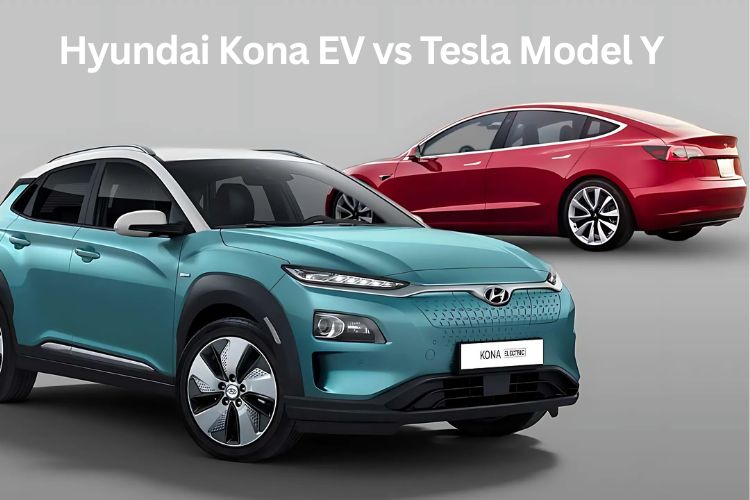
Picture yourself standing in a dealer lot, keys to two electric SUVs dangling in front of you. One promises cutting-edge tech and blistering speed. The other whispers value and peace of mind. Here’s the thing: 68% of first-time EV buyers agonize over this exact choice. You want range without breaking the bank. You need space without sacrificing city maneuverability. I’m here to walk you through every difference that actually matters in your daily life.
Keynote: Hyundai Kona EV vs Tesla Model Y
The 2025 Hyundai Kona Electric versus Tesla Model Y comparison reveals two philosophically opposed electric SUVs. The Kona delivers exceptional value with a $34,470 starting price, 261-mile range, and industry-leading 10-year warranty. The Model Y counters with 330-mile range, 250kW Supercharging, and thrilling performance starting at $46,380, but federal tax credits can reduce its effective price below the Kona’s for eligible buyers.
Your Electric Crossroads
Why These Two? The Real Story Behind Your Choice
You’re standing between a scrappy value champion and a tech-forward trendsetter. I’ve watched the Hyundai Kona Electric win over budget-conscious families with its $34,470 starting price and industry-leading 10-year warranty. Meanwhile, the Tesla Model Y converts performance enthusiasts with 330-mile range and that famous Supercharger network. Your perfect match depends on whether you crave savings now or innovation forever.
The Kona EV delivers 261 miles of range in a nimble subcompact body that fits tight parking spaces. The Model Y stretches into midsize territory with room for seven passengers and 76 cubic feet of cargo. One feels like your reliable daily companion. The other positions itself as tomorrow’s technology, available today at a premium price.
What You’re Really Choosing Between
These two vehicles represent fundamentally different philosophies. The Kona Electric embraces traditional controls with physical buttons you can find without looking. The Model Y strips everything down to a single 15-inch touchscreen that controls even your windshield wipers. The Kona offers wireless Apple CarPlay and Android Auto as standard equipment. Tesla forces you into its proprietary ecosystem, refusing smartphone integration entirely.
Budget-friendly reliability squares off against cutting-edge performance here. The gap starts at $11,910 in base pricing before incentives. But here’s where it gets interesting: federal tax credits can flip this entire equation upside down for eligible buyers.
| Feature | Kona Electric | Model Y Long Range |
|---|---|---|
| Starting Price | $34,470 | $46,380 |
| EPA Range | 261 miles | 330 miles |
| Seating | 5 passengers | 5-7 passengers |
| Cargo Space | 45 cu ft max | 76 cu ft max |
| Drivetrain | FWD | AWD |
The Money Talk: What You’ll Actually Pay
Sticker Price Reality Check
The Kona EV starts under $35,000 for the base SE trim with its 200-mile range. Most buyers gravitate toward the SEL at $36,975, which unlocks the larger 64.8kWh battery and that crucial 261-mile range. The sporty N Line sits at $38,375, while the fully loaded Limited tops out at $41,150. These figures feel refreshingly attainable in today’s inflated vehicle market.
Model Y pricing tells a different story. The Long Range rear-wheel-drive model begins at $46,630. Step up to all-wheel drive and you’re looking at $49,880. The Performance variant demands $53,380 for its 455 horsepower and 3.5-second sprint to 60 mph. Federal tax credits shift this math dramatically. The Model Y qualifies for the full $7,500 credit because Tesla assembles it in California and Texas. The South Korean-built Kona Electric doesn’t qualify at all.
That $7,500 credit drops the base Model Y to an effective $39,130. Suddenly you’re paying less for the Tesla than the top-trim Kona at $41,150. This reversal catches many shoppers by surprise. The credit works as an immediate point-of-sale discount now, not a tax-time refund. Income limits apply: $300,000 for married couples, $150,000 for singles. Legislation currently ends this program September 30, 2025.
The Long Game: True Cost of Ownership
Insurance premiums favor the Kona by roughly $600 annually according to industry data. Its lower replacement cost and less powerful motors translate to smaller monthly bills. The warranty coverage gap reveals Hyundai’s confidence versus Tesla’s calculated risk. Hyundai covers the entire powertrain for 10 years or 100,000 miles. Tesla stops at 4 years or 50,000 miles for basic coverage, though the battery warranty extends to 8 years or 120,000 miles.
Hyundai sweetens the deal with complimentary maintenance for 3 years or 36,000 miles. You’ll get scheduled services at no cost. Tesla offers no such program. You pay out of pocket for cabin air filters, tire rotations, and brake fluid checks. These costs seem minor until they accumulate over years of ownership.
Depreciation patterns historically favor Tesla thanks to strong brand loyalty and high demand for used models. However, the used EV market shifts rapidly as new competitors flood in. The Kona’s traditional dealership network means easier trade-ins. Tesla requires selling through their platform or private party, adding friction to the process.
| Cost Factor | Kona Electric | Model Y |
|---|---|---|
| MSRP (base) | $34,470 | $46,380 |
| After Tax Credit | $34,470 | $38,880 |
| Annual Insurance | ~$1,400 | ~$2,000 |
| Basic Warranty | 5yr/60k mi | 4yr/50k mi |
| Powertrain Warranty | 10yr/100k mi | 8yr/120k mi |
| Free Maintenance | 3yr/36k mi | None |
Value Per Mile Analysis
The Kona delivers 261 miles of EPA range for $34,470, working out to $132 per mile of capability. The Model Y offers 330 miles for $46,380, calculating to $141 per mile. This nine-dollar difference per mile adds up fast. Over the vehicle’s range, you’re paying nearly $2,400 more for similar per-mile capability with the Tesla.
These numbers shift dramatically after tax credits for eligible buyers. The effective Model Y price of $38,880 divided by 330 miles equals just $118 per mile. Suddenly the Tesla becomes the efficiency champion by this metric. Factor in the Kona’s superior warranty coverage and included maintenance, though, and the value equation balances again. Which math makes sense for your daily reality depends entirely on whether you qualify for that federal incentive.
Range and Charging: The Road Trip Truth
EPA Numbers vs Your Morning Commute
The Kona’s 261-mile EPA range handles 95% of daily driving scenarios without inducing anxiety. Your typical 40-mile round-trip commute barely scratches the surface. Even a 150-mile weekend getaway leaves comfortable buffer for unexpected detours. Real-world highway testing at a steady 75 mph returned 230 miles, proving the EPA figures hold up under sustained cruising.
The Model Y’s 330-mile Long Range rating brings psychological comfort that range-anxious drivers crave. This extra cushion means fewer charging stops on family road trips. However, independent testing revealed actual highway range closer to 220-230 miles for AWD models when driven aggressively. The Performance variant drops to 277 miles EPA due to its larger wheels and more powerful motors.
Winter reality hits both vehicles hard. Expect 20-30% range loss when temperatures plummet below freezing. Cold batteries resist charging and cabin heating drains power quickly. The Kona’s heat pump helps minimize losses. Tesla’s thermal management system does similar work. Neither escapes the fundamental physics of lithium-ion chemistry in the cold.
| Range Comparison | Kona Electric SEL | Model Y Long Range |
|---|---|---|
| EPA Rating | 261 miles | 330 miles |
| Real Highway Test | 230 miles | 220-230 miles |
| Winter Estimate | 183-209 miles | 231-264 miles |
| City Efficiency | 131 MPGe | 134 MPGe |
Charging Speed Showdown
Home charging overnight erases most differences between these vehicles. The Kona’s 10.8kW onboard charger refills the 64.8kWh battery in about 6 hours from 10% to full. Tesla’s 11.5kW charger takes 8-12 hours for its larger pack. Plug in when you get home, wake up to a full battery. This rhythm works for 90% of EV owners.
DC fast charging separates the contenders on road trips. The Kona maxes out at 100kW charging speed, managing 10-80% in approximately 43 minutes under ideal conditions. The Model Y screams to 250kW at V3 Superchargers, completing the same 10-80% charge in just 27 minutes. That 16-minute difference compounds over multiple stops on a cross-country drive.
Picture driving from Los Angeles to San Francisco, roughly 380 miles. The Kona requires two 40-minute charging stops. The Model Y needs two 25-minute breaks. You’ve saved 30 minutes on one trip. Over dozens of road trips annually, those minutes accumulate into hours returned to your life.
The Supercharger Advantage That’s Disappearing
Tesla’s Supercharger network dominated for years with over 17,000 plugs nationwide, each guaranteed to work seamlessly with your vehicle. Kona drivers faced the frustration of Electrify America stations with spotty reliability and confusing payment systems. This gap alone justified Tesla’s premium for road warriors.
The 2025 model year changes everything. Hyundai now provides complimentary NACS adapters, granting Kona owners access to Tesla’s Supercharger network. You’ll plug into those same reliable stations coast to coast. However, the Kona’s 100kW charging limit remains unchanged. Even connected to a 250kW Supercharger, physics prevents it from pulling more power than its hardware allows.
Third-party networks like Electrify America continue expanding rapidly with improved reliability. The charging landscape evolves toward standardization. Within two years, the Supercharger advantage may become a historical footnote rather than a decisive factor.
Interior Space: Where You’ll Actually Live
Front Seat Comfort Battle
The Kona’s driver-focused cockpit feels instantly familiar the moment you slide behind the wheel. Physical buttons line the center stack for climate control. You twist a knob for volume. Your muscle memory knows where everything lives without glancing away from the road. Dual 12.3-inch displays stretch across the dashboard, providing digital information while preserving tactile control.
The Model Y’s glass roof creates cathedral-like openness above your head. Light pours in, making the cabin feel significantly more spacious than its dimensions suggest. But that minimalist aesthetic demands sacrifice. Adjusting the side mirrors requires tapping through touchscreen menus. Opening the glovebox needs three screen presses. Some drivers call this elegant simplicity. Others find it needlessly complicated.
Ventilated seats appear only in the Kona, a crucial detail for hot climates where leather becomes a torture device in summer. The Model Y’s new Juniper refresh finally adds this feature as an option. Both offer heated seats front and rear. Both provide ample adjustment range for tall drivers and petite passengers alike.
Back Seat Reality for Families
The Model Y delivers 40.5 inches of rear legroom, creating genuine comfort for teenagers and adults on long trips. Three across seating works without too much complaint. The optional third row folds from the floor, adding two more seats for small children when needed. This seven-passenger capability exists nowhere in the Kona lineup.
The Kona provides 36.4 inches of rear legroom, adequate for kids but cramped for adults over six feet tall. Two car seats install easily. Three across gets tight fast. The rear seats fold 60/40 for cargo flexibility, but headroom suffers compared to the taller Model Y.
Access through rear doors favors the Kona with its higher roofline making entry and exit easier for elderly passengers or those with mobility challenges. The Model Y’s sleeker profile demands more ducking and bending.
| Interior Dimensions | Kona Electric | Model Y |
|---|---|---|
| Front Headroom | 39.6 inches | 41.0 inches |
| Front Legroom | 41.5 inches | 41.8 inches |
| Rear Headroom | 38.1 inches | 39.4 inches |
| Rear Legroom | 36.4 inches | 40.5 inches |
| Seating Capacity | 5 | 5-7 |
Cargo Space That Matters
The Model Y dominates here without contest. Behind the rear seats, you’ll find 30 cubic feet of space that swallows a week’s groceries plus sports equipment. Fold those seats flat and you’re looking at 72 cubic feet of volume that can accommodate furniture from IKEA or camping gear for four people. The 4.1 cubic foot frunk up front holds a carry-on suitcase or winter coats.
The Kona improved dramatically over its predecessor but remains compact at 25.5 cubic feet behind the seats. Fold them down and you reach 45 cubic feet total. The tiny 1 cubic foot frunk barely accommodates charging cables. This works fine for urban dwellers hauling groceries and gym bags. Families needing weekend adventure capacity will feel the squeeze.
Underfloor storage in both vehicles provides hidden spaces for valuables or emergency supplies. The Model Y’s additional compartments under the trunk floor create clever organization. The Kona keeps things simpler with less total volume to divide.
Technology Face-Off: Buttons vs Big Screen
Daily Interface Experience
The Kona’s approach honors decades of automotive ergonomic wisdom. You reach down for climate controls without looking. Volume knobs respond to your fingertips with reassuring clicks. Drive mode buttons sit on the center console within easy reach. Wireless Apple CarPlay and Android Auto connect automatically when you start the car, mirroring your phone’s familiar interface on the 12.3-inch touchscreen.
The Model Y forces every interaction through its 15-inch central display mounted landscape-style where the dashboard would traditionally live. The instrument cluster no longer exists. Your speed, navigation, and critical information all appear on that single screen to your right. Adjusting regenerative braking, mirror positions, steering feel, and even windshield wiper speed demands menu diving while driving.
Some owners adapt within days and praise the clean aesthetic. Others never stop missing physical controls for basic functions. Test drive both vehicles back-to-back. Your gut reaction to these opposing philosophies matters more than any reviewer’s opinion.
Software Updates and Future-Proofing
Tesla’s monthly over-the-air updates genuinely improve your vehicle while you sleep. New features appear overnight. Performance optimizations boost efficiency. Entertainment options expand. The car you own in 2028 will behave differently than the one you bought in 2025. This living, evolving nature creates unexpected delight and genuine added value over time.
Hyundai’s traditional approach means the car you drive off the lot remains functionally identical years later. Software updates require dealer visits for installation. New features debut in next year’s model, not your current vehicle. This predictability appeals to buyers who distrust constant change and prefer knowing exactly what they purchased.
The philosophical divide extends beyond preferences. Tesla’s approach requires trusting the company to improve your car rather than break it with buggy updates. Hyundai’s method guarantees stability but forgoes innovation. Neither approach is objectively superior. Your comfort with technology determines which suits your temperament.
Driver Assistance Showdown
Both vehicles include adaptive cruise control and lane-keeping assistance as standard equipment. These foundational features handle stop-and-go traffic and maintain your position within lane markers on highways. The Kona adds blind-spot monitoring with visual warnings in the digital cluster. Tesla oddly omits this feature, relying instead on its suite of cameras displayed on the center screen.
The real division emerges with optional systems. Tesla’s Full Self-Driving package costs $8,000 and enables Navigate on Autopilot, which suggests and executes lane changes on highways. Auto Lane Change responds to your turn signal by checking for traffic and moving over when safe. Traffic Light and Stop Sign Control recognizes signals and slows automatically, though you must confirm before stopping.
Hyundai includes its complete Highway Driving Assist system standard on higher trims at no additional cost. This combines adaptive cruise with lane centering for semi-autonomous highway driving. The 360-degree Surround View Monitor helps with parking. Blind-Spot View Monitor displays live camera feeds. You receive the full suite without negotiating extra packages or writing larger checks.
| Safety Tech | Kona Electric | Model Y |
|---|---|---|
| Adaptive Cruise | Standard | Standard |
| Lane Keeping | Standard | Standard |
| Blind Spot Monitor | Standard | Via cameras only |
| Highway Assist | Standard (SEL+) | Standard |
| Advanced Features | Included | $8,000 FSD option |
| IIHS Rating | Top Safety Pick+ | Top Safety Pick+ |
| NHTSA Rating | 5 stars overall | 5 stars overall |
Performance and Daily Joy
Acceleration That Makes You Smile
The Model Y Performance explodes from standstill to 60 mph in 3.5 seconds, a figure that embarrasses dedicated sports cars costing twice as much. Even the base Long Range model hits 60 mph in 4.4 seconds. This instant torque delivery never gets old. Every acceleration onto the highway brings a grin. Passing sluggish traffic requires barely a thought.
The Kona EV’s 201-horsepower motor reaches 60 mph in 6.5 seconds, feeling peppy without inducing terror in passengers unfamiliar with EV acceleration. This measured power delivery suits families and commuters who value smooth, predictable behavior over rollercoaster thrills. The base 133-horsepower SE model stretches to 8.6 seconds, adequate but unremarkable.
Which matches your driving personality matters here. Do you crave that visceral punch of acceleration that pins you to your seat? Or do you prefer a refined, comfortable pace that never startles or overwhelms?
Handling and Comfort Balance
Tesla engineers tuned the Model Y’s suspension for sporty handling that makes corners engaging and fun. The low-mounted battery pack creates a remarkably low center of gravity, resulting in just 7.9% rollover risk according to NHTSA testing. This stability inspires confidence when carving mountain roads. However, the firm suspension transmits bumps and imperfections directly to your spine on rough pavement.
The Kona’s comfort-focused tuning smooths out road imperfections beautifully, making it an easygoing commuter that coddles occupants over potholes and expansion joints. Highway cruising feels refined and isolated from the chaos outside. Push it hard through tight corners and body roll reminds you this isn’t a sports car. The experience stays planted and predictable but lacks the Model Y’s athletic engagement.
Road noise levels surprise here. The Kona remains noticeably quieter at highway speeds despite Tesla’s reputation for refinement. Wind noise around the Model Y’s frameless windows becomes intrusive above 70 mph.
Real-World Efficiency Winners
The Kona achieves better miles per kilowatt-hour in city driving thanks to its lighter weight and smaller frontal area. Urban stop-and-go traffic favors its efficiency, returning around 131 MPGe in EPA city testing. Aggressive regenerative braking recaptures energy beautifully, extending range in congested commutes.
The Model Y excels on highways where its superior aerodynamics slice through air resistance more effectively. EPA highway ratings show 134 MPGe, though real-world results vary based on speed and conditions. Both vehicles handle different driving styles gracefully, adapting to your habits.
Neither suffers the efficiency penalty of traditional gasoline engines in cold weather beyond the range loss from battery chemistry. Electric motors maintain consistent efficiency regardless of temperature. The losses come purely from heating the cabin and warming the battery pack.
| Efficiency Metrics | Kona Electric | Model Y Long Range |
|---|---|---|
| EPA Combined | 131 MPGe | 134 MPGe |
| Real Highway | ~3.6 mi/kWh | ~3.5 mi/kWh |
| Battery Size | 64.8 kWh | 75 kWh |
| Peak DC Charging | 100 kW | 250 kW |
| 10-80% Charge Time | 43 minutes | 27 minutes |
Ownership Experience: Living with Your Choice
Warranty and Peace of Mind
Hyundai’s warranty stands as the industry’s most comprehensive coverage, addressing the single biggest concern potential EV buyers express: battery longevity and replacement cost. The powertrain coverage extends 10 years or 100,000 miles. The battery warranty matches that duration. Basic bumper-to-bumper protection lasts 5 years or 60,000 miles. Factor in 3 years of complimentary maintenance and you’re looking at significant long-term value.
Tesla provides 8 years or 120,000 miles of battery and drive unit coverage, respectable but shorter on the calendar side. Basic warranty stops at just 4 years or 50,000 miles. No complimentary maintenance plan exists. You’ll pay for every service visit, every tire rotation, every cabin filter replacement from day one.
Warranty transferability matters when you sell. Both companies allow warranty transfer to subsequent owners, protecting resale values and providing buyer confidence in the used market.
Service Network Reality
Hyundai dealers blanket the country, making service appointments convenient regardless of location. You’ll find authorized service centers in suburban and rural areas where Tesla service centers don’t exist. Loaners or shuttles often come standard. Warranty repairs happen quickly through established networks.
Tesla service centers cluster in major metropolitan areas, leaving sparse coverage in secondary markets. However, mobile service represents their secret weapon for minor fixes. A technician drives to your home or workplace to handle tire rotations, small repairs, and software issues without requiring you to visit a service center.
Build quality consistency separates these brands historically. Kona Electric panels align precisely. Door gaps measure evenly. Interior plastics fit without rattles or squeaks. Quality control inspections catch issues before delivery. Tesla’s build quality improved dramatically in recent years but remains somewhat lottery-dependent. Some buyers receive perfect vehicles. Others discover panel misalignments or interior creaks requiring service visits.
Build Quality Truth
Owner forums reveal frustration patterns for both vehicles, though different in nature. Kona owners report unexpected 12V battery failures that leave vehicles unable to start despite full main batteries. This specific issue affects multiple model years. Otherwise, mechanical reliability inspires confidence with thousands of trouble-free miles being common.
Tesla owners document inconsistent panel gaps, paint imperfections, and occasional interior rattles at delivery. The company’s improving quality control reduces these issues, but they haven’t vanished entirely. However, owner satisfaction remains exceptionally high at 80% recommending the vehicle despite these cosmetic flaws. The driving experience and technology delight outweighs the frustration for most buyers.
Making Your Decision: The Moment of Truth
Choose the Kona EV If You…
Value maximum warranty protection and proven reliability above all else. That 10-year powertrain coverage provides genuine peace of mind that Tesla can’t match. Prefer familiar controls and the muscle memory of physical buttons for critical functions. Need those ventilated seats that keep you comfortable through scorching summers. Want wireless Apple CarPlay and Android Auto without negotiation or compromise.
Prioritize widespread service access with convenient dealer networks in your region. Need the best deal without sacrificing daily practicality and reasonable range. Appreciate a quieter highway ride and comfort-focused suspension tuning. Don’t qualify for federal tax credits or want the lowest possible upfront investment.
Choose the Model Y If You…
Crave cutting-edge technology and continuous improvements through over-the-air updates. Take frequent road trips requiring Supercharger convenience and faster charging speeds. Want thrilling acceleration that never fails to entertain and impress passengers. Need maximum cargo flexibility and the option for seven-passenger seating.
Value the prestigious Tesla brand and its devoted community. Qualify for federal tax credits that drop the effective price below the Kona’s. Prefer minimalist design aesthetics and don’t mind touchscreen-controlled everything. Need all-wheel drive for winter weather or rough terrain.
The Wild Cards Nobody Mentions
Resale values historically favor Tesla thanks to strong demand and brand loyalty in used markets. However, the EV landscape shifts rapidly as new competitors flood in with compelling alternatives. Predicting five-year residual values grows increasingly speculative as the market matures.
Social factors polarize around Tesla ownership. Some buyers love the statement the brand makes. Others avoid it specifically because of the CEO’s controversial public presence. The Kona flies under the radar, attracting no strong reactions either way.
Timing considerations loom large. Both manufacturers plan significant updates soon. The Kona just completed a major redesign for 2024. Tesla’s Juniper refresh brings meaningful improvements. Waiting six months could land you a better version of either vehicle, but you’ll miss months of EV ownership benefits while you wait.
Conclusion: Your Electric Future Awaits
I’ve seen both cars transform daily drives into something special for their owners. The Kona EV delivers exceptional value wrapped in familiar comfort, appealing to buyers who want a solid, reliable electric vehicle without drama or surprises. The Model Y offers tomorrow’s technology at today’s premium price, rewarding those who embrace constant evolution and accept some quality control uncertainty for cutting-edge capability.
Federal tax credits fundamentally alter this comparison for eligible buyers. Without incentives, the Kona represents superior value. With the full $7,500 credit applied, the Model Y becomes the financially logical choice for most families. This makes your tax situation as important as your driving needs when making this decision.
Your Next Move
Schedule test drives back-to-back. Bring the kids if you have them. Load groceries in both trunks. Check local charging infrastructure on your actual commute routes and favorite weekend destinations. Touch every button in the Kona. Navigate every menu screen in the Model Y. Your hands and instincts will tell you which interface feels right.
Remember: there’s no wrong choice here, just the right one for you and your unique circumstances.
Kona EV vs Model Y (FAQs)
Is Kona Electric cheaper to own than Model Y?
Without federal incentives, the Kona Electric costs significantly less upfront and carries lower insurance premiums of roughly $600 less annually. Its 10-year warranty and included maintenance add substantial long-term value.
However, eligible buyers can claim the $7,500 federal tax credit on the Model Y, which drops its effective price below the top-trim Kona’s MSRP. For buyers who qualify for incentives, the Model Y actually becomes the more affordable option when you factor in its superior range, faster charging, and larger size. Your individual tax situation determines which vehicle offers better financial value.
How fast does Kona Electric charge compared to Tesla?
The Kona Electric maxes out at 100kW DC fast charging, completing a 10-80% charge in approximately 43 minutes under ideal conditions. The Tesla Model Y reaches 250kW at V3 Supercharger stations, finishing the same 10-80% charge in just 27 minutes. This 16-minute difference compounds over multiple road trip charging stops. However, Hyundai now provides complimentary NACS adapters that let Kona owners access Tesla’s Supercharger network, though the vehicle’s 100kW limit remains unchanged even when plugged into a 250kW Supercharger. For daily home charging overnight, both vehicles perform similarly and wake up fully charged each morning.
Which has more cargo space Kona or Model Y?
The Tesla Model Y dominates cargo capacity with 30 cubic feet behind the rear seats and 72 cubic feet with seats folded flat. It also includes a useful 4.1 cubic foot front trunk that can hold a carry-on suitcase. The Hyundai Kona Electric offers 25.5 cubic feet behind seats and 45 cubic feet maximum with seats folded, plus a tiny 1 cubic foot frunk barely large enough for charging cables.
The Model Y’s additional space makes it suitable for families needing weekend adventure capacity, furniture hauling, or extended vacation trips. The Kona works well for urban dwellers with lighter cargo needs.
Can Kona Electric use Tesla Superchargers?
Yes, the 2025 Hyundai Kona Electric now receives access to Tesla’s extensive Supercharger network through complimentary NACS adapters provided by Hyundai to all EV owners. This grants access to over 20,000 charging stalls across North America, dramatically improving charging reliability and convenience compared to relying solely on third-party networks.
However, the Kona’s hardware limits charging speed to 100kW maximum, so it cannot take advantage of the 250kW capability that V3 Superchargers offer. The benefit comes from network access and reliability rather than increased charging speed.
What warranty does Hyundai offer on EV battery?
Hyundai covers the Kona Electric’s battery for 10 years or 100,000 miles, the most comprehensive battery warranty in the industry. This coverage addresses the primary concern of EV buyers regarding long-term battery degradation and expensive replacement costs. The same 10-year/100,000-mile warranty extends to the entire powertrain.
Basic bumper-to-bumper coverage lasts 5 years or 60,000 miles. Hyundai also includes 3 years or 36,000 miles of complimentary maintenance. By comparison, Tesla provides 8 years or 120,000 miles of battery coverage but only 4 years or 50,000 miles of basic warranty with no complimentary maintenance. Hyundai’s superior warranty provides exceptional peace of mind and represents significant long-term value.