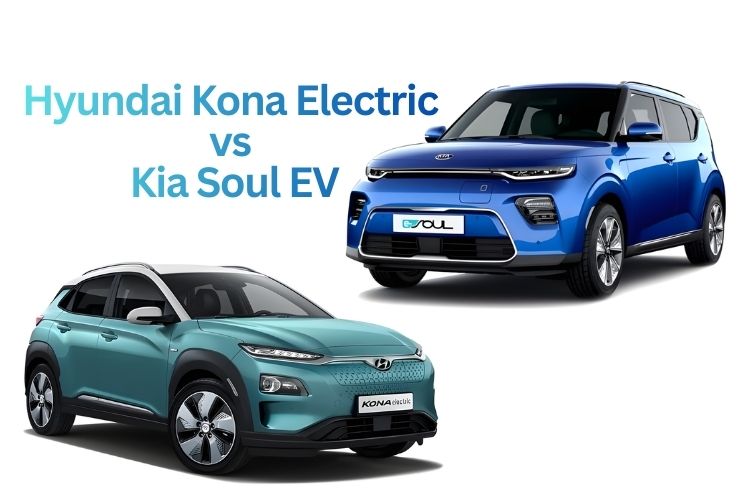
You’ve narrowed it down. Kona Electric or Soul EV. Both Korean, both electric, both sitting in that sweet spot between affordable and capable. And now you’re stuck, refreshing comparison pages at midnight, second guessing everything.
Here’s the uncomfortable truth nobody’s saying out loud: one of these cars is already gone. The Soul EV stopped production after 2023, and the entire Soul line wraps up in October 2025. Meanwhile, the Kona Electric just got a 2025 refresh and keeps rolling.
We’re not here to crown a winner. We’re here to help you find your match. You’ll get the hard numbers that matter, the winter range nobody advertises, the cargo space reality, and the one question that will make your decision crystal clear. Let’s cut through the noise together.
Keynote: Hyundai Kona Electric vs Kia Soul EV
The Hyundai Kona Electric and Kia Soul EV comparison reveals generational progress in electric vehicle technology. The Kona’s 261-mile range, CCS charging, and comprehensive safety systems represent modern EV standards. The discontinued Soul EV offers budget-conscious city drivers compelling used-market value at $16,000-$22,600 with transferable battery warranties. Choose based on your range needs and budget reality.
The Availability Reality: What “Discontinued” Actually Means for You
The Uncomfortable Market Truth
The 2025 Hyundai Kona Electric sits on dealer lots right now with fresh warranty coverage and updated tech. The Soul EV? You’re shopping used inventory or the last remaining dealer stock.
This isn’t just about new versus used. It’s about parts availability three years from now, software updates that never come, and whether your local dealer will even remember how to service it. When a model line gets discontinued, the manufacturer’s focus shifts elsewhere. Technical bulletins slow down. Specialized training for mechanics stops. You’re not buying an orphan immediately, but you’re buying a car on a countdown timer.
The broader Soul nameplate fades out completely by October 2025. That’s the gas version too. Kia’s shifting resources to dedicated EV platforms like the upcoming EV3 and EV2. The Soul EV becomes a time capsule from Kia’s transitional era, charming but frozen in 2019 technology.
2.2 The Silver Lining Nobody Mentions
Depreciation already happened to the Soul EV, and that’s your opportunity.
| Model | New Price | Used Price Range |
|---|---|---|
| 2025 Kona Electric | $32,425 – $35,000 MSRP | $25,000+ (2019 models) |
| Soul EV | No longer produced | $7,500 – $22,600 (2019-2023) |
If you’re comfortable with used and have a trustworthy service network, a certified pre-owned Soul EV at $18,000 beats a new Kona at $34,000 for pure value. That $16,000 gap buys a lot of peace of mind about its limitations. You could install a Level 2 home charger, prepay three years of insurance, and still come out thousands ahead.
The remaining factory battery warranty sweetens the deal dramatically. That 10-year, 100,000-mile coverage transfers to you as the second or third owner. A 2019 model in 2025 still has around four years and potentially 40,000 miles of battery protection left. That’s the single biggest risk eliminated.
Range Reality: When EPA Numbers Meet Your Actual Commute
The Numbers They Print Versus the Miles You Drive
The Kona Electric delivers 261 miles EPA on the long-range trim with 129 MPGe city efficiency. The Soul EV manages 243 miles EPA with the 64 kWh battery or just 111 miles on the base 30 kWh version.
Wait. Stop right there. Most Soul EVs sold in the U.S. came with the smaller 30 kWh battery and that brutal 111-mile EPA rating. Real-world highway testing shows the Kona achieving 230 miles at 75 mph, while the Soul manages 200-230 miles in mild conditions for the rare 64 kWh variant, but the typical 30 kWh Soul drops to around 90-100 miles in ideal conditions.
Here’s the gap that matters: range isn’t a single number. It’s a spectrum that shifts with temperature, speed, and how heavy your right foot feels. The Kona’s 261-mile rating means real-world capability of 200-230 miles in summer highway driving. The Soul’s 111-mile rating translates to 90-100 miles in perfect conditions, and that’s where anxiety lives.
The Cold Hard Truth About Cold Weather
That sinking feeling when your range drops 40% on a January morning? It’s real. Soul EV range can plummet from 100+ miles to just 66-70 miles in freezing temperatures, limiting real-world four-season usability to 60-105 miles depending on how brutal your winter gets.
The Kona Electric includes a standard heat pump across all trims, which helps claw back some winter efficiency. The Soul EV’s heat pump availability varies by model year and market. Neither performs miracles, but the Kona’s larger battery cushions the blow better. A 30% winter range loss on 261 miles still leaves you with 180+ miles. That same 30% hit on 111 miles drops you to 77 miles, and suddenly your comfortable 50-mile daily commute becomes a nail-biter.
Battery thermal management makes the difference here. The Kona’s newer system preconditions the battery when you navigate to a DC fast charger, warming it up for optimal charging speeds. The Soul EV lacks this sophistication. Its battery just sits there, cold and sluggish, accepting electrons slowly on winter road trips.
Your Personal Range Threshold
Think of range like phone battery. When do you start feeling nervous? Most people panic at 20%, not 5%. You don’t actually use that last sliver because the stress isn’t worth it.
Calculate your worst-case winter scenario and add a 20% buffer. If that number pushes past 180 miles regularly, you need the Kona’s 261-mile cushion. If your daily loop stays under 80 miles year-round, either car works, though the Soul demands more planning discipline. Be brutally honest about your life. Do you make spontaneous weekend trips? Visit family 120 miles away without thinking twice? The Kona handles that. The Soul requires calendar Tetris and route anxiety.
Charging Speed: The Stat That Changes Everything
DC Fast Charging: Road Trip Viability
The Kona Electric recharges from 10% to 80% in approximately 41-43 minutes using DC fast charging at up to 102 kW. The Soul EV takes 47-64 minutes at up to 100 kW for the 64 kWh version, or about 33-35 minutes for the smaller 30 kWh pack.
The real question: how often do you drive beyond your daily range? If the answer is “twice a year,” this gap doesn’t matter. If it’s “every other weekend,” those extra minutes waiting add up to hours of your life. But here’s the hidden trap nobody mentions until it’s too late.
The Soul EV uses CHAdeMO for DC fast charging. That’s the chunky plug standard that Nissan championed and the rest of the world abandoned. The Kona uses CCS, the modern standard that every new charging network installs. Walk into any Electrify America station built after 2020, and you’ll find eight CCS plugs and maybe one lonely CHAdeMO charger, if you’re lucky.
This isn’t a minor inconvenience. It’s a fundamental limitation that gets worse every year. CHAdeMO is dying. New stations skip it entirely. Existing stations let their CHAdeMO cables break and don’t replace them. Your Soul EV becomes progressively harder to fast charge as infrastructure evolves without you.
Home Charging: The Daily Routine Winner
| Charging Type | Kona Electric | Soul EV |
|---|---|---|
| AC Home (Level 2) | 11 kW onboard / ~6-9.5 hours full charge | 7.2 kW / ~9+ hours full charge |
| DC Fast (Public) | 102 kW / 41 min (10-80%) | 100 kW / 47-64 min (10-80%) |
| Level 1 (120V) | Not practical | 33 hours full charge |
The Kona’s 11 kW AC charging means you can top up significantly faster at home if you install the right equipment. That 7.2 kW versus 11 kW gap translates to waking up with more range after the same sleep. Install a 48-amp Level 2 charger at home, and the Kona drinks it eagerly. The Soul sips slower, maxing out at 32 amps.
For most EV owners, 90% of charging happens at home overnight. You plug in, sleep, wake up with a full battery. Both cars handle this ritual fine. But if you forget to plug in one night, or come home at 30% and need to leave early the next morning, the Kona’s faster AC charging saves you. It’s the difference between adding 50 miles in two hours versus 35 miles.
The Kona also brings Vehicle-to-Load capability, letting you export 1.7 kW of power through an adapter. Tailgate party? Camping trip? Power outage? Your car becomes a generator. The Soul offers nothing comparable. This feature feels gimmicky until you actually use it, then it becomes the party trick you show off constantly.
Space and Practicality: The Boxy Box Versus the Sleek Crossover
Cargo Space That Actually Fits Your Life
The Soul EV offers more interior volume with superior rear headroom, shoulder room, and legroom, thanks to its unapologetically boxy shape. But the Kona Electric wins on front legroom and pure cargo capacity. Kona delivers 466 liters (about 25.5 cubic feet) boot space versus Soul’s 315 liters (18.8 cubic feet) with seats up, though the Soul maxes out at 1,339 liters (49.5 cubic feet) versus Kona’s 1,300 liters (63.7 cubic feet) with everything folded.
Picture loading a week of groceries, a stroller, and a folded bike. The Kona’s 25.5 cubic feet boot plus its 27-liter frunk means less Tetris frustration. The Soul’s upright cabin means taller items slide in easier, even if total volume is smaller. That boxy shape creates visual space that feels bigger than the measurements suggest.
The Kona’s frunk is small but meaningful. Charging cables live there. Gym bag. Groceries you want separated from your trunk’s dirty hiking gear. The Soul has no frunk because its platform was born from a gas car, leaving that under-hood space occupied by electric motor components crammed into an engine bay designed for an internal combustion mill.
Daily Passenger Comfort
The difference between sitting “in” a car versus sitting “on” a car defines these two vehicles.
The Soul EV’s upright seating feels like furniture, perfect for taller passengers who hate that sinking-into-the-floor sensation. The high roofline creates a greenhouse of glass that makes the cabin feel airy and open. Your parents will love it. Anyone with knee problems will appreciate stepping into it rather than lowering down. The commanding view of the road makes parking intuitive.
The Kona Electric wraps around you in a sportier, more cocooned position that some love and others find cramped on long trips. The dashboard swoops dramatically, creating a driver-focused cockpit that feels modern and premium. But rear-seat passengers sit lower with less headroom despite the Kona being the newer, supposedly more advanced design.
The Small Stuff You’ll Notice Every Day
The Kona Electric comes standard with dual 12.3-inch displays, wireless Apple CarPlay and Android Auto, plus V2L capability to power your tailgate party. The Soul EV offers a cleaner, less overwhelming control layout with a reputation for a better sound system and warmer interior materials, but tech features freeze at its 2023 discontinuation.
Here’s what nobody tells you: the Soul’s older interface might actually be better for some people. Physical buttons for climate control. Knobs for volume. Intuitive layouts you can operate while driving without staring at a screen. The Kona buries everything in touchscreen menus that look gorgeous but demand your eyes leave the road.
Test both cabins for 15 minutes and notice which one you want to sit in for your actual commute, not a showroom sprint. The Soul feels welcoming and unpretentious. The Kona feels like it’s trying to prove something with its tech-forward design. Neither is wrong, they just serve different personalities.
Performance and Feel: Zippy Versus Smooth
The Acceleration That Makes You Grin
The Kona Electric delivers up to 201-215 horsepower with 188 lb-ft of torque, hitting 0-60 mph in 7.8 seconds. The Soul EV counters with 109 horsepower in base trim or up to 201 horsepower in the 64 kWh version, managing 0-62 mph in about 7.6 seconds in EU testing.
That instant electric torque never gets old in either car, but the Kona feels peppier and more eager. Press the accelerator and it surges forward with authority, throwing you back into your seat just enough to remember you’re driving something different. Highway passing maneuvers happen with confidence. Merging onto fast-moving freeways requires no prayer or planning.
The Soul EV focuses on smooth, refined comfort that absorbs city bumps like an old friend. Its 210 lb-ft of torque provides sprightly acceleration from stoplights, making it feel quicker than its modest horsepower suggests in urban environments. But ask it to accelerate from 50 to 70 mph for a highway pass, and it huffs and puffs noticeably. That 109-horsepower base engine especially feels underpowered by modern standards, taking over 11 seconds to hit 60 mph in some tests.
Real-World Highway Confidence
“Kona Electric lives in the shadow no more.” That’s from Car and Driver’s real-world testing that delivered 230 miles at a steady 75 mph cruise. The performance doesn’t just make you smile at stoplights. It provides genuine safety margin when you need to execute an emergency maneuver or accelerate out of a dangerous situation.
The Soul EV works brilliantly for urban dwellers and short commuters. Its regenerative braking system, especially in aggressive “B” mode, lets you drive with one pedal through stop-and-go traffic. The weight of the battery pack planted low in the chassis makes it feel more stable than the gas Soul it’s based on. But it never shakes the feeling that it was designed for city blocks, not open highways.
The Kona offers multiple regenerative braking levels controlled via steering wheel paddles, including a true one-pedal mode called i-PEDAL. This means you accelerate and decelerate to a complete stop using only the accelerator pedal. In dense traffic, this becomes addictive. Your right foot does everything. Your brake pedal gathers dust.
The Money Talk: Total Cost Over Five Years
Beyond the Sticker Shock
The 2025 Kona Electric starts at $34,470 MSRP including destination charges for the base SE trim, climbing to $41,150 for the top Limited. Federal tax credits complicate this significantly. The Kona Electric may qualify for up to $7,500 in federal EV incentives if you meet income and price limits, potentially dropping that entry price under $27,000 for eligible buyers.
Soul EV pricing lives in the used market now, with 2019-2023 models ranging from $16,000 to $22,600 depending on mileage and condition. Five-year total ownership costs run approximately $28,000 for Kona versus $22,000 for Soul per industry estimates, but that assumes similar usage patterns and doesn’t account for the Soul’s limited range forcing some owners to rent cars for longer trips.
Used Soul EVs represent immediate savings but come with uncertainty about battery degradation and future support. New Kona Electrics cost more upfront but deliver peace of mind through fresh warranties and the latest efficiency tech. That $15,000+ gap is real money. It’s a year of car payments. It’s the Level 2 home charger installed plus a few years of insurance.
Energy Costs and Hidden Savings
Both EVs run about 3-4 cents per mile for electricity versus typical gas car costs around 12-15 cents per mile. The Kona’s superior 129 MPGe city efficiency saves roughly $200 annually compared to the Soul’s slightly lower efficiency ratings.
Calculate your exact annual mileage and multiply by $0.04 to estimate your yearly charging bill, likely under $500 for most drivers. Compare that to $1,800+ annually for gas at current prices. The savings aren’t revolutionary per month, but they compound. Over five years, you’re pocketing $6,000+ compared to keeping your gas car.
Hidden costs lurk in unexpected places. The Soul EV’s dying CHAdeMO standard means public fast charging becomes progressively harder, potentially forcing you into longer charging sessions or less convenient charger locations. That’s time lost, frustration accumulated. The Kona’s modern CCS standard ensures compatibility with the expanding fast-charging infrastructure for the next decade.
Resale Value and Depreciation
The discontinued Soul EV already shows steeper depreciation curves, which is your opportunity as a buyer but your concern as a future seller. Three-year-old Soul EVs lose about 50% of original value, while Kona Electrics depreciate around 48-49%. Not a massive gap, but it matters.
The Kona Electric holds value better thanks to its current-model status, dealer support network, and name recognition. Five years from now, selling a 2025 Kona means offering a buyer a car that dealerships still service actively. Selling a 2019 Soul means explaining why its CHAdeMO plug isn’t a deal-breaker and hoping they don’t care about discontinued status.
Insurance costs favor the Kona significantly. Its comprehensive SmartSense safety suite qualifies for lower premiums with most insurers. Automatic emergency braking, blind-spot monitoring, and lane-keeping assist directly reduce accident risk, and actuaries price that reality into your rates. The Soul EV lacks these systems entirely, translating to $300-500 higher annual premiums depending on your demographics and location.
Decision Framework: Which Car Has Your Name On It
Choose the Soul EV If This Sounds Like You
Your daily driving stays comfortably under 80 miles in all seasons, and you have reliable home charging. You value quirky character, superior passenger headroom, and upright visibility. You’re comfortable buying used and found a certified pre-owned example under $20,000 with documented service history and at least four years of battery warranty remaining.
You prefer the Soul’s warmer interior materials and simplified controls over cutting-edge tech screens. You live in a mild climate where winter range loss won’t cripple your routine. You see your EV as a dedicated commuter car, not your only vehicle. You have access to a mechanic or dealer willing to service discontinued models. You appreciate distinctive styling and aren’t bothered by driving something nobody else has.
The Kona Electric Makes Sense When
You need that 230-261 mile real-world range for flexibility and peace of mind. Highway driving dominates your routine, and you want confident passing power. You value new car warranty coverage, the latest safety tech, and dealer support that won’t vanish.
You appreciate the 11 kW AC home charging for faster overnight top-ups and the 27-liter frunk for extra gear organization. You want Vehicle-to-Load capability to power camping trips or emergency backup scenarios. You prioritize modern active safety features like automatic emergency braking and adaptive cruise control. You live in a cold climate where the heat pump and larger battery buffer winter range losses. You want a vehicle with accessible CCS fast charging for the next decade.
The One Question That Decides Everything
| Your Priority | Best Match |
|---|---|
| Longest range and most power | Kona Electric (261 mi EPA) |
| Lowest upfront cost | Soul EV (used market value) |
| Maximum passenger headroom | Soul EV (boxy advantage) |
| Fastest home charging | Kona Electric (11 kW AC) |
| Best cargo versatility | Kona Electric (466L + frunk) |
| Most interior space feel | Soul EV (upright cabin) |
| Latest tech and features | Kona Electric (2025 updates) |
| Future charging compatibility | Kona Electric (CCS standard) |
| Best safety systems | Kona Electric (SmartSense suite) |
Open a spreadsheet right now. Calculate your actual driving patterns from the last three months. Be brutally honest about your maximum daily mileage, including that occasional weekend trip. Add 30% buffer for winter. If that number fits comfortably under 180 miles, either car works. If it pushes 200+ miles, you need the Kona.
Then answer this: would you rather save $15,000 upfront and live with limitations, or spend more for flexibility you might not use? There’s no wrong answer. Just your answer.
Conclusion: Your First Step Into Electric Freedom
Here’s what we uncovered together: you weren’t stuck between two identical cars. You were choosing between two different philosophies. The Soul EV charms with quirky character, spacious comfort, and bargain used pricing for city dwellers with predictable routines. The Kona Electric delivers confident range, modern tech, and dealer support for anyone who needs flexibility and peace of mind.
Both share that instant electric torque that transforms every stoplight into a small victory. Both prove you don’t need luxury pricing for solid EV fundamentals. The Kona brings 10-year battery coverage that erases the biggest electric anxieties. The Soul EV offers that same warranty protection on the used market, making it far less risky than typical six-year-old cars.
Do this today: Check local Kona Electric inventory and confirm 11 kW AC charging compatibility at your home, or search certified pre-owned Soul EVs within 50 miles and verify remaining battery warranty coverage.
You’re not picking a car. You’re claiming mornings without gas station stops and evenings with clearer air. Pick the one that makes your daily commute easier, not the one that handles the road trip you take twice a year. You can always rent for those.
And breathe. Five years ago, we agonized over 100-mile ranges and scarce charging networks. Today, you’re choosing between two proven EVs with supportive communities and real-world reliability. That’s progress worth celebrating.
Kia Soul EV vs Hyundai Kona Electric (FAQs)
Which electric car has better range, Kona or Soul?
Yes, the Kona Electric dominates range. The 2025 Kona Long Range achieves 261 miles EPA compared to the Soul EV’s 111 miles (30 kWh) or 243 miles (rare 64 kWh). Real-world highway testing shows the Kona delivering 230 miles at 75 mph, while the typical 30 kWh Soul manages just 90-100 miles in ideal conditions. Winter driving amplifies this gap dramatically, with the Soul’s range dropping to 65-70 miles in freezing weather.
Is the Kia Soul EV still available to buy?
No, the Soul EV is discontinued. Kia stopped U.S. Soul EV sales after 2019, though other markets got updated versions through 2023. The entire Soul nameplate ends October 2025 globally. You can only buy used Soul EVs now, typically priced $16,000-$22,600. Kia’s shifting focus to dedicated EV platforms like the upcoming EV3. Used Soul EVs still carry transferable 10-year battery warranties with remaining coverage.
Do Kona Electric and Soul EV use the same battery?
No, they use different battery packs. The 2025 Kona Electric offers 48.6 kWh (Standard Range) or 64.8 kWh (Long Range) batteries. The 2019 Soul EV uses a smaller 30 kWh pack, though rare 64 kWh versions exist in some markets. Both use NMC lithium-ion chemistry from Korean suppliers but different cell configurations. Neither shares exact battery architecture despite being sister companies under Hyundai Motor Group.
How much does a used Kia Soul EV cost?
Used Kia Soul EVs range from $16,000 to $22,600. Price varies by model year, mileage, condition, and trim level. 2019 models with under 40,000 miles typically command $18,000-$20,000. Higher mileage examples dip toward $16,000. Certified pre-owned models with remaining battery warranty coverage cost slightly more but offer peace of mind. Compare that to $34,470+ for new 2025 Kona Electrics.
Does the Soul EV qualify for federal tax credit?
No, used Soul EVs don’t qualify for the $7,500 new EV tax credit. However, qualifying buyers might claim the $4,000 used clean vehicle credit if the Soul EV costs under $25,000 and meets IRS requirements. The seller must be a licensed dealer, you must meet income limits, and the vehicle must be at least two years old. Most used Soul EVs easily meet the price threshold, making this credit accessible for eligible buyers through September 2025 when the program ends.
What’s the difference between CHAdeMO and CCS charging?
CHAdeMO is the legacy Japanese fast-charging standard used by the Soul EV, while CCS is the modern standard used by the Kona Electric. This matters enormously for real-world usability. New charging networks install CCS plugs almost exclusively, often skipping CHAdeMO entirely. Electrify America stations built after 2020 typically feature eight CCS plugs and maybe one aging CHAdeMO cable. Your Soul EV faces shrinking fast-charging access as infrastructure evolves without you.