You’re there again. Scrolling car sites, fuel price apps open, that knot in your stomach tightening. The real question isn’t “EV or petrol?” It’s “What if I pick wrong and regret this for the next seven years?”
Every friend has different advice. YouTube says both. The government pushes electric. Your mechanic shrugs. Meanwhile, petrol hit ₹95 per liter and keeps climbing.
Here’s what we’re doing together: cutting through the noise with actual rupee math, real infrastructure truth, and the clarity you need to pick the ride that fits your chaos, not someone else’s Instagram dream.
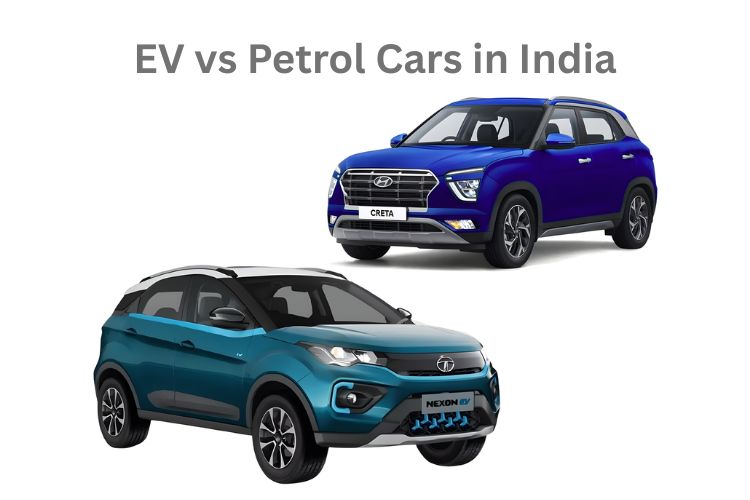
Keynote: EV vs Petrol Cars in India
Electric vehicles in India have crossed the tipping point in 2025, with 18 of 28 new launches being electric and monthly sales exceeding 17,000 units. EVs deliver ₹1-1.5/km running costs versus petrol’s ₹6-7/km, creating annual savings of ₹60,000-75,000 for average drivers. Despite higher upfront costs of ₹6-7 lakh, government subsidies of ₹1.5-4 lakh combined with 100% road tax waivers in progressive states narrow the gap substantially. Total cost of ownership over five years favors EVs by ₹1-1.5 lakh despite steeper depreciation.
However, charging infrastructure remains concentrated in metros with just 29,000 public stations serving rapidly growing demand. Home charging access remains the critical prerequisite for practical EV ownership. The decision hinges on daily mileage, charging availability, and ownership timeline rather than technology superiority alone.
The Sticker Shock Nobody Talks About Honestly
Yes, That Upfront Gap Hurts
Let’s not pretend otherwise. EVs cost ₹6-7 lakh more initially, and glossing over that insults your intelligence.
The Tata Nexon EV starts around ₹12.49 lakh ex-showroom while its petrol sibling begins at ₹8.1 lakh. That’s a 70-80% premium before you even sit in the driver’s seat. The MG ZS EV? Nearly 80-90% pricier than petrol equivalents.
But here’s where it gets interesting. Government subsidies can slash ₹1.5-2.5 lakh immediately in select states. The PM E-Drive scheme throws in ₹1.5 lakh, and if you’re in Delhi or Maharashtra, add another ₹1.5-2.5 lakh from state coffers.
Then there’s the GST advantage nobody mentions enough. EVs attract just 5% GST. Petrol cars? They’re slammed with 28% plus additional cess depending on size and engine. On a ₹10 lakh vehicle, this GST differential alone saves you over ₹2.3 lakh.
| Incentive Type | Central (PM E-Drive) | Delhi | Maharashtra | Karnataka |
|---|---|---|---|---|
| Purchase Subsidy (4W) | ₹1.5 lakh | ₹1.5 lakh | ₹2.5 lakh | Nil |
| Road Tax Waiver | No | 100% | 100% | 100% |
| Registration Fee Waiver | No | 100% | 100% | 100% |
| GST Rate on Vehicle | 5% | 5% | 5% | 5% |
The Five-Year Picture That Changes Everything
Here’s where the calculator stops lying to you.
Running costs flip the entire script. EVs burn ₹1-1.5 per kilometer at home electricity rates. Petrol? You’re paying ₹6-7 per kilometer at today’s ₹94.7/L Delhi prices, and there’s no escape hatch.
Do the quick math. If you drive 1,000 km monthly, that’s ₹60,000-75,000 saved annually on fuel alone. Over five years, you’re looking at savings north of ₹3 lakh just from not visiting petrol pumps.
That single number changes everything. The higher sticker price starts looking like an investment rather than a premium.
The Battery Fear You’re Carrying
Let’s face the nightmare haunting you at 2 AM: that ₹3-7 lakh battery replacement cost.
I get it. The battery is expensive. If it dies, you’re staring at a bill that could fund a decent used car. But here’s the reality check most articles skip: manufacturers now offer 8-10 year warranties or 1.6 lakh km coverage as standard. Tata, MG, Hyundai—they’re all backing their batteries with these guarantees.
Even if you need a replacement at year 10, crunch the numbers. You’ve already saved lakhs on fuel and maintenance. The breakeven math still lands in your favor, especially if you’re a high-mileage driver.
The warranty isn’t marketing fluff. It’s a legally binding commitment that protects you through the most critical ownership years.
Range Anxiety Is Valid, But So Is Your Commute
What 150-400 km Range Actually Means Daily
Most EVs today deliver 150-400 km on a full charge. Sounds limiting until you check your odometer.
You probably drive 30-50 km on average weekdays. Your commute to the office, dropping kids at school, the grocery run, maybe a dinner outing. That’s your actual usage pattern, not the 500 km weekend road trip you take twice a year.
City traffic becomes EV paradise. Where your petrol car burns fuel idling at signals, the EV sips almost nothing. Regenerative braking turns those endless Mumbai jams into juice reclaimed. You’re literally harvesting energy from every slowdown.
Highway reality check: this is where honest conversations start. Long-distance travel on EVs requires planning. You’re not pulling into any random pump for a five-minute fill-up. You’re researching charging stations on your route, hoping they’re functional, and budgeting 30-45 minutes for each stop.
The Charging Infrastructure Truth for 2025
The official numbers look impressive. India counts around 29,000 public charging stations as of August 2025. The government targets 30,000 by 2030, and we’re nearly there.
Here’s the brutal honesty nobody at dealerships will tell you: 88% of current EV owners still cite charging anxiety as a major concern.
Why? Because those 29,000 stations aren’t evenly spread. Karnataka, Maharashtra, Uttar Pradesh, Delhi, and Tamil Nadu hog about 60% of all chargers. The rest of India? You’re mostly on your own. Highway corridors outside major metros remain thin. Tier-2 and Tier-3 cities have minimal infrastructure.
Worse, a significant chunk of installed chargers are non-functional. They show up on apps but deliver error messages when you arrive desperate for juice. In Pune, several charging points face constant delays or sit out of order, forcing owners to depend entirely on home charging.
The ratio tells the real story: India has one public charger for every 235 EVs on the road. Global benchmarks suggest 6-20 EVs per charger. We’re nowhere close.
Home charging setup becomes your sanity insurance. Installing a dedicated home charger costs ₹30,000-50,000 upfront, but it transforms your experience overnight. You leave home every morning with a full “tank” without ever visiting a public station.
When Petrol Still Makes Total Sense
Let’s be honest about when EVs don’t work.
Highway warriors: If you regularly cover 200+ km stretches on unpredictable routes, your moment isn’t today. The infrastructure gaps are real, not your imagination.
Apartment dwellers without dedicated parking: No parking spot means no home charger. Depending on Kerala’s mix of CHAdeMO and CCS2 public chargers—where 70% use outdated Bharat DC-001 connectors incompatible with newer EVs—becomes a daily gamble you’ll lose.
Tier-2/3 city residents: If your nearest working DC fast charger is 40 km away, the math doesn’t work. You’re solving a problem that doesn’t exist in your geography yet.
| City Type | EV Suitability | Key Factor |
|---|---|---|
| Metro (Delhi, Mumbai, Bangalore) | High | Dense charger network + state subsidies |
| Tier-1 (Pune, Ahmedabad, Hyderabad) | Medium | Growing network, home charging critical |
| Tier-2/3 (Jaipur, Indore, Nagpur) | Low | Sparse infrastructure, petrol more practical |
The Money Math Nobody Shows You Complete
Total Cost of Ownership Over Five Years
Here’s where spreadsheets stop lying and start revealing truth.
A typical petrol sedan costs you the upfront price plus roughly ₹1.2 lakh annually in fuel if you drive 12,000 km per year at 15 km/L efficiency and ₹95/L rates. Add ₹10,000-15,000 per year for maintenance—oil changes, filters, spark plugs, the works.
An EV equivalent has a higher initial bite but runs on ₹1-1.5 per kilometer for home charging. Maintenance? Around ₹5,000-7,000 annually because there’s no engine oil, no fuel filters, no spark plugs to replace. Regenerative braking means your brake pads last forever.
Let’s distill this with real numbers using the Tata Nexon platform:
| Cost Component | Nexon Petrol | Nexon EV |
|---|---|---|
| On-Road Price (Delhi, with subsidies) | ₹13.5 lakh | ₹15 lakh |
| Resale Value (after 5 years) | ₹8.1 lakh (60%) | ₹7.5 lakh (50%) |
| Net Depreciation | ₹5.4 lakh | ₹7.5 lakh |
| Total Fuel/Charging (60,000 km) | ₹3.84 lakh | ₹0.72 lakh |
| Total Maintenance (5 years) | ₹60,000 | ₹30,000 |
| Total Cost of Ownership | ₹9.84 lakh | ₹8.52 lakh |
The EV saves you ₹1.32 lakh over five years despite higher depreciation. That’s your weekend getaways funded, your insurance paid, or your next phone upgrade sorted.
The Policy Perks That Actually Apply
The PM E-Drive scheme directly cuts ₹1.5 lakh from your purchase price. Delhi stacks another ₹1.5 lakh on top. Maharashtra goes aggressive with ₹2.5 lakh for select models.
Road tax waivers save you another ₹50,000 to ₹2 lakh depending on vehicle price and state. Karnataka charges 18% road tax on premium petrol cars. That’s completely waived for EVs.
Registration fees? Exempted in most states with active EV policies.
Single-part EV charging tariffs remain capped near average utility costs through March 2026 under Ministry of Power guidelines. This keeps home charging affordable and predictable.
But here’s the catch: subsidy eligibility windows close unexpectedly. FAME-II ended, EMPS 2024 filled the gap temporarily. PM E-Drive is current, but its continuation beyond 2025 depends on budget allocations and political will. If you’re on the fence, verify current schemes before you sign paperwork.
Where Hidden Costs Hide
DC fast charging at public stations hits ₹18-22 per kWh, compared to ₹6-8/kWh at home. Holiday weekend queues spike, turning your 30-minute charge into a 90-minute wait.
Resident Welfare Associations and apartment building meters decide if home charging happens or never does. Some RWAs block installations citing load concerns. Others demand hefty common area fees.
Battery degradation is real but overhyped. Modern EV batteries retain about 80-90% capacity after 8 years under normal use. That’s still more than enough for daily commuting. Petrol cars face rising insurance premiums as they age and increasingly expensive parts replacements that EVs skip entirely.
Resale Value: The Uncomfortable Conversation
The Depreciation Gap That Stings
This is the part that hurts. EVs drop 40-45% in value within the first three years versus petrol’s 35-40%. Over five years, a Nexon EV might retain just 50% of its original value while a Hyundai Creta petrol holds 60-65%.
Dealers fly blind because there’s no standardized battery health test yet. Buyers see “2-year-old EV” and immediately worry about battery degradation, even if the pack is perfectly healthy.
A shocking reality: 3-year-old Nexon EVs get rejected even at 60% of original price by wary used car dealers. This uncertainty affects 33% of potential buyers, and it’s a valid concern, not weakness.
The Market Shift You Should Watch
Here’s what’s changing. Used EV market share jumped from 0.08% to 0.43% in just two years. That’s small but growing fast.
Certified pre-owned programs are emerging. MG Reassure offers 50-60% buyback guarantees on select models. These transferable warranties and documented battery health reports build confidence in the secondary market.
Union Minister Nitin Gadkari projects price parity between EVs and petrol cars within 4-6 months. If that happens, the resale equation transforms overnight.
Document everything smart. Keep all service records, battery health reports, and charging history. Extended warranties that transfer to the next owner dramatically boost resale value.
Petrol’s Sunset Timeline
Future BS-7 emission norms could restrict older petrol cars in metro pollution zones. This is speculation now but plausible within a decade.
As EV adoption rises, petrol resale clarity may blur. Will buyers want 10-year-old petrol cars in 2035 when EVs dominate new sales and charging infrastructure is ubiquitous? Nobody knows, but the risk cuts both ways.
Choose popular models if resale matters. The Tata Nexon EV leads among electrics today, with an established service network and strong brand trust supporting its used value better than obscure brands.
The Climate Math You’re Wondering About
Does Switching Actually Help on Coal Grid
You’re wondering if your EV is really “green” when 70-75% of India’s electricity comes from coal plants.
Valid question. The answer is nuanced but ultimately yes.
Battery electric vehicles cut lifecycle greenhouse gas emissions by 38% in India despite our coal reliance. That’s the well-to-wheel analysis accounting for electricity generation, transmission losses, and vehicle operation.
The grid emission factor runs 0.7-0.75 kg CO₂ per kWh depending on your state. An EV’s well-to-wheel emissions clock in at 158 grams per kilometer. A petrol car? 176 g/km. Diesel is worse at 201 g/km.
Here’s the twist: strong hybrids measure just 133 g/km—better than both petrol and current EVs on India’s coal-heavy grid. Hybrids optimize a highly efficient petrol engine with regenerative braking, cutting fuel consumption without depending on the external grid.
The grid is improving steadily. Renewable energy share climbs each year. As solar and wind capacity grows, every EV on the road automatically becomes greener without you doing anything. That 38% emissions cut today could be 60% by 2030 as the grid decarbonizes.
The Air You Breathe Tomorrow Morning
Lifecycle carbon is one thing. Local air quality is another, more immediate win.
Zero tailpipe emissions mean cleaner street corners, less smog at school gates, and fewer particulates in your family’s lungs every single day. City air quality improves immediately with every EV on the road, even if upstream grid emissions remain high.
That morning cough your kid has? Particulate matter from traffic contributes to it. EVs eliminate that specific source of pollution in your neighborhood.
Battery Lifecycle Reality
What happens when batteries retire? Recycling programs and second-life storage solutions are maturing rapidly. Old EV batteries retain 70-80% capacity, making them perfect for stationary energy storage in homes and grid applications.
Concerns about battery disposal are valid. Solutions are improving. Transparency across manufacturers is increasing annually. This isn’t solved perfectly, but it’s not ignored either.
India’s 2025 EV Momentum You’re Riding
The Market Tipping Point Is Here
Something changed this year. 18 out of 28 new car launches in 2025 are electric. That’s the first time EVs surpass petrol and diesel model introductions.
EV market share hit 4% in May 2025. Sales jumped 155% recently, crossing 17,000 units monthly. This isn’t hype anymore. This is a market reaching critical mass.
Projected 43% compound annual growth rate through 2030. Every major manufacturer from Maruti to Hyundai to Tata has committed billions to EV platforms.
Infrastructure Scaling in Real Time
Thousands of chargers added on highways. Urban hubs see accelerating densification. Tata Power, BPCL, IOCL, and private players are racing to build networks.
The charger count quintupled since FY2022. Government targets align with industry push. This coordination matters because it creates momentum, not scattered efforts.
Tamil Nadu achieves 90% highway coverage with functional fast chargers. That’s a model other states are studying and replicating.
Where Rural and Tier-2 Stand Today
The gap remains real outside metros. If you’re in Tier-2 or rural India, infrastructure hasn’t caught up yet.
Solar home charging can bridge this partially if you own a house with roof space. Install rooftop solar, charge your car essentially free during daytime.
Revisit EVs when your local network densifies visibly. Hybrid vehicles work beautifully meanwhile, giving you efficiency gains without range anxiety.
Your Decision Framework: No Pressure, Just Clarity
The Four Questions That Cut Through Noise
Daily commute under 50 km? EV math becomes superior immediately. Savings compound beautifully over time.
Home charging access confirmed? This changes everything. EV ownership becomes 10x easier overnight when you control your charging.
Ownership timeline 5+ years? EVs reward patience. Resale uncertainty becomes your enemy if you plan to sell within 2-3 years.
Highway warrior with unpredictable routes? Petrol remains simpler today. Plan EVs only around verified fast charging corridors if long-distance travel is frequent.
The Hybrid Middle Ground Worth Considering
Strong hybrids are emerging without plug-in complexity. Maruti Grand Vitara and Toyota Hyryder deliver excellent efficiency through intelligent petrol-electric systems.
Best for mixed highway and city use with zero range planning. Prices sit comfortably between pure petrol and full EV territories.
On India’s coal-heavy grid, hybrids currently offer better lifecycle emissions than EVs at 133 g/km versus 158 g/km. That advantage disappears as our grid greens, but today it’s real.
Your Action Plan Starting Monday
Day 1: Confirm your apartment or home allows charging point installation. Get it in writing from your RWA or landlord.
Day 2: Track actual driving for one full week honestly. Note patterns, distances, and times.
Day 3: Visit real charging stations in your area. Download apps. Test functionality yourself. Don’t trust marketing.
Day 4: Calculate your commute cost. Daily kilometers multiplied by local electricity rate per kWh or petrol per liter.
Day 5: Test drive both EV and petrol on your actual daily route. Not showroom circles. Your real commute.
Model-Agnostic Numbers for Your Spreadsheet
The Cost-Per-Kilometer Reality Check
Petrol at 15 km/L efficiency and Delhi rates of ₹94.7/L equals ₹6-7 per kilometer in fuel costs.
EV on home off-peak charging at ₹6-7/kWh equals ₹1-1.2 per kilometer cleanly.
EV on public AC charging at ₹10-14/kWh equals ₹1.5-2.3 per kilometer realistically.
| Charging Type | Rate per kWh | Cost per km (assuming 140 Wh/km) |
|---|---|---|
| Home (off-peak) | ₹6-7 | ₹0.84-0.98 |
| Public AC | ₹10-14 | ₹1.40-1.96 |
| Public DC Fast | ₹18-22 | ₹2.52-3.08 |
| Petrol (15 km/L at ₹95/L) | – | ₹6.33 |
Don’t Forget the Rest
Add insurance differences. EVs sometimes cost slightly more to insure due to higher declared value, though some insurers offer green vehicle discounts.
Tyre costs are similar across both. Servicing deltas favor EVs heavily at ₹5,000-7,000 annually versus ₹10,000-15,000 for petrol.
Registration costs vary wildly by state. Check yours before finalizing calculations.
Subsidy eligibility windows close unexpectedly. Verify state-specific schemes and their validity periods before making purchase decisions. What’s available today may not exist three months from now.
Conclusion: Your Choice, Your Timeline, Your Terms
The journey from that 2 AM panic to here: we’ve faced the upfront sting, mapped the charging reality, crunched the five-year savings, and acknowledged both the climate win and the resale uncertainty. With petrol near ₹95/L and EV tariffs staying reasonable, energy costs tilt electric. Infrastructure is rising but patchy beyond metros. Battery electric vehicles cut emissions 38% even on today’s coal-heavy grid. The market hit a tipping point with 18 of 28 launches being electric, and momentum feels different this time.
Your first tiny step for today: don’t decide anything. Just track your actual driving for one week. Write down real kilometers, note where you go, when you’d have time to charge. That data tells you more than any article ever could.
Final thought connecting back: remember that calculator anxiety at midnight? It exists because you care about choosing smart. That care is your superpower. Trust your research, trust these numbers, trust that either choice made consciously beats staying frozen by “what ifs.” The future of Indian mobility is electric. The question isn’t if, but when it’s your time. And that timeline? You own it completely.
Petrol vs EV Cars in India (FAQs)
Is buying an electric car worth it in India right now?
Yes, if you drive over 1,000 km monthly and have home charging access. You’ll save ₹60,000-75,000 annually on fuel alone. The upfront premium gets offset within 3-5 years through dramatically lower running and maintenance costs. However, if you lack dedicated parking or frequently travel long distances on highways with sparse charging infrastructure, waiting makes more sense.
How much does it actually cost to charge an EV at home in India?
Home charging costs ₹1-1.5 per kilometer based on residential electricity tariffs of ₹6-8 per kWh. For an average EV consuming 140 Wh/km, a full charge from 0-100% on a 40 kWh battery costs approximately ₹240-320 and delivers 300-350 km range. That’s roughly one-fifth the cost of petrol for the same distance.
What happens to EV battery after 8 years warranty in India?
Most manufacturers guarantee 70% State of Health after 8 years or 1.6 lakh km. Post-warranty, batteries typically retain 70-80% capacity, still sufficient for daily commuting. If replacement is needed, costs range from ₹3-7 lakh depending on capacity. However, even with this expense at year 10, total cost of ownership remains lower than petrol due to accumulated fuel and maintenance savings.
Can I travel long distance in EV in India with current charging infrastructure?
Selectively yes, but with significant planning required. Tamil Nadu boasts 90% highway coverage with working fast chargers. Major metro corridors like Delhi-Jaipur or Mumbai-Pune are reasonably covered. However, outside these routes, infrastructure remains sparse and unreliable. The 14,008 working CCS2 chargers are heavily concentrated in just 5 states, making inter-state highway travel challenging in most regions.
Do electric cars have good resale value in India?
Currently no, EVs depreciate 40-45% in three years versus petrol’s 35-40%. Battery health uncertainty and rapid technological advancement hurt resale values. However, the used EV market is maturing with certified pre-owned programs emerging. Manufacturers like MG offer 50-60% buyback guarantees. As the market grows and standardized battery health testing becomes common, this depreciation gap is expected to narrow significantly by 2027-2028.