You’ve done the math a hundred times. Scrolled through forums at midnight. Asked your brother-in-law who “knows cars.” But you’re still stuck.
Everyone’s throwing numbers at you. Battery capacity this, WLTP range that. But nobody’s talking about the knot in your stomach. The one that whispers: what if I pick the wrong car and hate myself every morning for the next five years?
Here’s what we’re doing. No marketing fluff. No fake enthusiasm. We’re going to name the fears, lay out the real specs from actual documentation, and find your answer together. Because you deserve better than another sanitized comparison that leaves you more confused than when you started.
Keynote: BYD Dolphin vs Tata Nexon EV
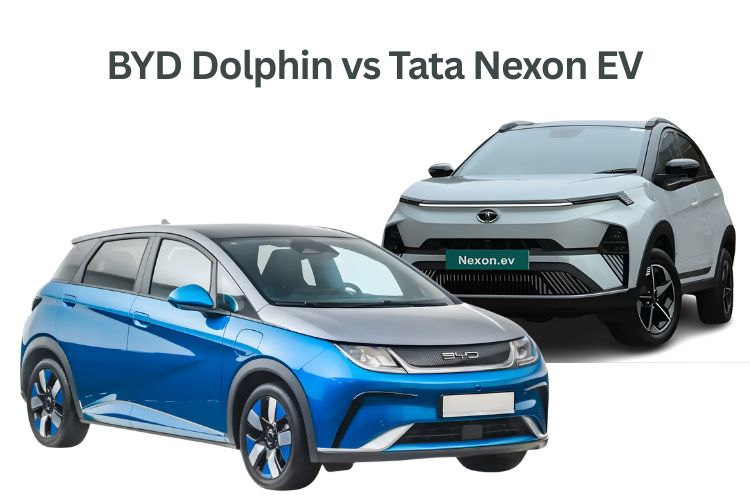
The BYD Dolphin vs Tata Nexon EV comparison represents India’s electric crossroads: global technology versus local expertise. The Dolphin brings superior battery chemistry, faster performance, and premium design. The Nexon counters with proven reliability, Indian-tuned dynamics, lifetime warranty, and 500+ service centers. Both are 5-star safety rated. Your choice depends on whether you value cutting-edge hardware or established trust.
The Trust Battle: New Kid With a Resume vs. The Neighbor You Know
That moment when the salesperson casually mentions “limited service centers” and your stomach drops.
You know that feeling, right?
Tata’s got over 500 service points across India. That’s not just a number. That’s the difference between a confident road trip to your hometown and anxiety every time you cross state lines. The Nexon EV feels like a safety net you can see and touch.
BYD? They’re the world’s largest EV battery maker. Sold millions of electric vehicles globally. Their credentials are legit. But in India right now, they’re building from scratch. Around 12 cities have authorized service centers as of early reports.
Here’s the thing. Your real question isn’t “which has better specs on paper?” It’s simpler and scarier: Which one will actually pick up the phone when I’m stranded at 9 PM on a highway with a flashing warning light?
The Nexon has earned trust the hard way. Through years of real Indian customers, real problems, and real fixes. BYD has to build that trust from zero, even with their impressive global track record backing them.
Money Reality: What Your Hard-Earned Cash Actually Buys
The Sticker Shock Moment
Let’s talk numbers without the dance.
The Tata Nexon EV ranges from ₹12.49 lakh to ₹17.49 lakh across its variants. That’s confirmed. On-road in major cities, you’re looking at ₹14.48 lakh to ₹20.22 lakh depending on your city and chosen trim.
The BYD Dolphin’s India pricing remains speculative. Industry estimates hover around ₹10 to ₹12 lakh based on global positioning and competitive pressure, though some analysts suggest it could stretch to ₹20-25 lakh for premium variants. Until BYD makes an official announcement, treat these as educated guesses.
That initial price gap matters. But it’s just chapter one of your financial story.
The Lifetime Battery Warranty Game Changer
This is where Tata pulled off something brilliant.
Buyers of the Nexon EV 45 kWh variants get a lifetime battery warranty. Not eight years. Not ten. Lifetime, defined as 15 years with unlimited kilometers for the first private owner.
That’s not a warranty. That’s a promise that erases the single biggest fear of EV ownership.
BYD typically offers 8 years or 160,000 km for their high-voltage battery globally. That’s strong by industry standards. But when you put it next to “lifetime,” it loses its shine. The catch? Tata’s lifetime warranty excludes commercial use and applies only to the first owner. Still, experts estimate this could save you ₹8-9 lakh over a decade in potential battery replacement anxiety.
Service Reality Check
Here’s what nobody tells you about ownership costs.
| Cost Factor | BYD Dolphin | Tata Nexon EV |
|---|---|---|
| Service Network | ~12 cities, building out | 500+ EV-certified workshops |
| Parts Availability (Tier-2 Cities) | Limited, improving | Widely available |
| Typical Service Wait | TBD, early reports vary | 3-7 days (battery issues longer) |
| 5-Year Ownership Peace of Mind | Premium quality, network anxiety | Established support, occasional inconsistency |
In a tier-two town, when your charging port actuator fails (a known Nexon issue), you’ll get it fixed. Maybe not instantly, maybe with some frustration, but you’ll get it done. With the Dolphin, you might be looking at parts shipped from regional hubs and longer downtimes during this initial rollout phase.
BYD’s premium positioning promises build quality. But patience gets tested when your local mechanic has never seen your car before.
Range Anxiety: The Gap Between Brochure Dreams and Highway Panic
What Those Big Numbers Actually Mean for You
Let’s cut through the certification nonsense.
The Nexon EV Long Range claims 489 km under MIDC/ARAI testing. Real-world? Owners consistently report 310 to 350 km depending on driving style and conditions.
The Dolphin claims 427 km with its 60.48 kWh Extended Range pack under WLTP certification. Realistically, expect around 340 to 370 km in actual Indian driving.
Here’s why these numbers diverge. ARAI and MIDC tests are conducted in near-perfect lab conditions. Constant speeds, no AC, smooth roads. WLTP is closer to reality but still optimistic. Your mileage literally varies based on how heavy your right foot is and whether you’re stuck in Bangalore traffic with the AC blasting.
The Dolphin’s bigger battery (60.48 kWh vs 45 kWh gross in the Nexon) should theoretically give it the edge. But battery size isn’t everything. Efficiency, aerodynamics, and weight all play their part.
The AC-On, Traffic-Jam, Monsoon Reality
Summer in Delhi. AC at full blast. You’re crawling at 15 km/h in traffic.
Both cars will see their range drop by 15-20% in winter and even more in extreme summer heat. That 489 km Nexon range? Now it’s 390 km on paper, probably 280 km in the real world. The Dolphin’s 427 km becomes 340 km certified, maybe 300 km actual.
This isn’t a footnote. This is your weekend getaway to Lonavala turning into range anxiety theater.
And nobody talks about year five. Batteries degrade. Even with Tata’s warranty covering capacity loss, your 350 km range becomes 300 km. With the Dolphin’s superior LFP Blade Battery chemistry, degradation should be slower. BYD claims their Blade Battery maintains 90% capacity after 3,000 cycles. That’s genuinely impressive. But it’s still just a claim until real-world Indian data proves it.
The “Will I Make It?” Calculator
Your daily commute is 40 km round-trip. Both cars handle that with their eyes closed. You could go four days without charging.
But that Pune to Mumbai highway run? That’s 150 km one way. In an AC-blasting summer with mixed traffic, you’re looking at 180-200 km of range used. Both cars will need a top-up somewhere for the return journey. That changes your travel plans from “leave whenever” to “leave after checking charging station availability.”
The honest truth? For daily city use, both cars are more than adequate. For frequent long-distance highway travel without home charging, both will test your patience until India’s public charging infrastructure matures beyond the current “hit or miss” reality.
“After six months with my Nexon EV, I stopped worrying about range. My brain just adjusted. I charge twice a week at home, and it’s become muscle memory.” That’s from an actual owner, and it’s probably the most useful insight you’ll get.
Charging Time: Coffee Break or Lunch Wait?
Fast Charging Speed Showdown
| Charging Metric | BYD Dolphin Extended Range | Tata Nexon EV Long Range |
|---|---|---|
| DC Fast Charging Peak | 88 kW | 60 kW |
| 20-80% Charging Time (DC) | ~29 minutes | ~40 minutes (10-80%) |
| Home AC Charging (Full) | ~6-7 hours (11 kW expected) | ~6.5 hours (7.2 kW) |
| Charging Standard | CCS2 compatible | CCS2 compatible |
The Dolphin’s 88 kW peak versus the Nexon’s 60 kW sounds impressive. In practice, that’s the difference between grabbing a quick coffee (Dolphin) and having a leisurely snack (Nexon) during your charging stop.
Both support CCS2 charging, which is becoming the de facto standard in India. That means compatibility with most new public fast chargers from Tata Power, Jio-bp, and others.
But here’s the catch. Those peak charging rates? You hit them only in the sweet spot, usually between 20-60% battery level. Below 20% or above 80%, both cars deliberately slow down charging to protect battery health. Your “30-minute charge” often becomes 45 minutes in real-world stop-to-ready time when you factor in parking, plugging in, payment hassles, and that last 10% crawling to 90%.
Home Charging Overnight Changes Everything
Six to eight hours while you sleep.
That’s it. That’s the magic that eliminates 90% of charging anxiety forever.
If you can install a home charger, both vehicles become as convenient as your smartphone. You wake up to 100% every morning. Public charging becomes “occasionally useful” instead of “daily stress.”
The reality check? Apartment complexes with insufficient electrical infrastructure are a nightmare. Getting RWA approval, upgrading the transformer, running dedicated lines? That can add ₹30,000 to ₹80,000 to your setup cost and months of bureaucratic warfare.
Living without home charging means dependence on public infrastructure. And that means planning every long drive around charging stops, dealing with broken chargers, payment app failures, and spots occupied by ICE vehicles. It fundamentally changes the EV ownership experience from “convenient” to “requires patience.”
The V2L Party Trick Both Cars Share
Vehicle-to-Load sounds like marketing speak until you need it.
The Dolphin’s V2L outputs 3.3 kW, enough to run your refrigerator, fan, and TV during a power cut. Or power your campsite. Or run power tools at a remote work site.
The Nexon EV not only does V2L but adds Vehicle-to-Vehicle (V2V) charging. That means your Nexon can charge another EV in an emergency. It’s segment-unique and genuinely useful if you’re part of an EV community or have multiple EVs in the family.
Think of it as turning your car into a mobile power bank. For weekend warriors, small business owners, or anyone tired of power cuts, this feature alone justifies the EV premium.
Space and Daily Life: What Actually Fits Your Chaos
SUV Height vs. Hatchback Efficiency Philosophy
The Nexon EV stands at 1,616 mm tall with a commanding 190 mm ground clearance. That’s SUV territory. You sit higher, see farther, and tackle speed bumps without that sinking feeling in your stomach.
The Dolphin measures 1,570 mm in height, sitting lower and sleeker. Ground clearance is unspecified for India but expect around 150 mm based on its hatchback DNA.
Here’s what this means for your Tuesday morning. That massive speed breaker near your society entrance? The Nexon clears it confidently. The Dolphin makes you slow down, approach at an angle, and pray you don’t scrape the underbody.
Monsoon flooding? Potholes deep enough to swallow a small child? Unpaved roads to your weekend farmhouse? The Nexon’s SUV stance isn’t just about looks. It’s armor for Indian road reality.
The Dolphin counters with efficiency. Lower, sleeker profile means better aerodynamics and potentially better range. But only if the roads cooperate.
Boot Space and Life’s Messy Reality
Nexon EV: 350 liters, fixed
Dolphin: 345 liters, expandable to 1,310 liters with seats folded
On paper, they’re nearly identical for daily grocery runs and laptop bags. But the Dolphin’s 60:40 split-folding rear seats unlock real versatility. Ikea furniture? Check. Airport run with four large suitcases? Barely, but possible. Transporting your mountain bike? Fold the seats, and you’re sorted.
The Nexon’s boot is practical and consistent. But it doesn’t transform. Your stroller fits, your weekend bags fit, and that’s where the story ends.
Which matters more? Ask yourself: how often do I need to haul weirdly-shaped large items versus how often do I need that rear seat for actual humans?
Cabin Comfort Where You’ll Spend Hours
The Nexon EV’s updated interior feels like Tata finally decided to compete with cars costing ₹5 lakh more. Mix of textures, patterns, and colors that look premium without trying too hard. But there are quirks. Some switches are oddly placed. Front cupholders? Missing in action.
The Dolphin’s cabin is a design statement. Flipper-shaped door handles. Seashell air vents. A rotating 12.8-inch touchscreen that wows everyone who sees it for the first time. It feels futuristic and premium.
But here’s the kicker. The Dolphin’s dedicated EV platform means a completely flat rear floor. No middle-seat hump stealing foot space. For your rear passengers, especially that middle-seat victim, this is a massive comfort upgrade.
The Nexon’s adapted ICE platform creates a higher floor pan to fit the battery. Result? Rear passengers sit with their knees slightly higher, especially noticeable on longer drives.
Rear legroom? The Dolphin’s 2,700 mm wheelbase versus the Nexon’s 2,498 mm should translate to noticeably more space for your tall friend or in-laws. That extra 200 mm isn’t marketing fluff. It’s real comfort that matters on four-hour road trips.
Power and Performance: What Happens When You Floor It
The Acceleration Thrill Factor
BYD Dolphin Extended Range:
- 150 kW (201 hp), 310 Nm torque
- 0-100 km/h: 7.0 seconds
Tata Nexon EV Long Range:
- 106.4 kW (145 hp), 215 Nm torque
- 0-100 km/h: 8.9 seconds
The Dolphin isn’t just quicker. It’s nearly two full seconds quicker, which in acceleration terms is the difference between “energetic” and “genuinely thrilling.”
Floor the Dolphin at a traffic light, and you feel that hot-hatch surge. The traction control works overtime trying to keep the front wheels from spinning. It’s brisk, eager, and occasionally overwhelming for the chassis.
The Nexon? Tata deliberately tuned it for progressive, linear power delivery. It’s quick enough to excite, controlled enough to not scare your parents. The older Nexon had aggressive wheelspin issues. The facelift tamed that beast into something more civilized.
Both deliver instant EV torque that makes overtaking a breeze and turns every green light into a mini drag race if you’re into that.
Real-World Handling and Road Manners
This is where theory meets potholed reality.
The Nexon EV’s chassis is legendary in Indian automotive circles for one simple reason: it’s tuned for roads that want to kill you. Broken tarmac? Absorbed. Speed breakers at 40 km/h? Comfortable. Highway stability at 120 km/h? Planted and confident.
The Dolphin’s global suspension tuning is its Achilles heel. International reviews are brutal. It’s comfortable at city speeds but “heaves and floats” on highway undulations. Poor damper control creates a “nauseous motion” at speed. One reviewer literally used the phrase “makes you seasick.”
BYD engineered the Dolphin for smooth European and Chinese roads. Tata engineered the Nexon for Indian chaos. That difference isn’t just noticeable. It’s potentially deal-breaking if you live outside metro areas with decent roads.
The Dolphin’s steering feels artificial, gains no weight in corners, and suffers from torque steer under hard acceleration. The Nexon’s steering is light and responsive, perfect for city parking, adequate for highways.
Regen Braking Learning Curve
Both offer multi-level regenerative braking. You lift off the accelerator, and the motor becomes a generator, slowing the car while feeding energy back to the battery.
The Nexon’s system uses paddle shifters behind the steering wheel for adjustment. Intuitive. Natural. Feels like downshifting a manual transmission.
The Dolphin buries its regen controls in touchscreen menus, turning a simple adjustment into a multi-tap ordeal you can’t safely do while driving.
In real city traffic, you can recover 10-15% range with smart regen use. That’s the difference between 350 km actual range and 385 km. Not revolutionary, but genuinely useful.
One-pedal driving becomes muscle memory after a week. You stop using the brake pedal for 80% of your stops. It feels weird at first, then indispensable.
Tech and Safety: Features That Actually Protect vs. Impress
Driver Assistance That Earns Its Keep
The Nexon EV’s top trims finally added Level 2 ADAS. Adaptive cruise control, lane-keep assist, blind-spot monitoring. The basics, done reasonably well.
The Dolphin carries global 5-star Euro NCAP credentials and comes equipped with ADAS features. But here’s the problem: international reviews savage the system as “incredibly intrusive” and “maddeningly hard to switch off.” Constant beeps. Unnecessary warnings. Phantom braking.
| Safety Feature | BYD Dolphin | Tata Nexon EV (Top Trim) |
|---|---|---|
| NCAP Rating | 5-star (Euro NCAP 2023) | 5-star (Bharat NCAP 2024) |
| Adult Occupant Protection | 89% (35.8/40 points) | 93.3% (29.86/32 points) |
| Child Occupant Protection | 87% (43/49 points) | 91.7% (44.95/49 points) |
| Airbags | 6 (standard globally) | 6 (top variants) |
| ADAS Availability | Yes, but overly sensitive | Yes, new addition |
Bharat NCAP and Euro NCAP aren’t directly comparable, but look at those percentages. The Nexon actually scores higher in core occupant protection. That “made in India” car just outperformed the global premium product in crash safety metrics.
Infotainment Reality Check
The Nexon’s 12.3-inch touchscreen in top trims is a massive upgrade from the old model. Includes Arcade.ev (streaming and games while charging), wireless CarPlay/Android Auto, and a 9-speaker JBL sound system. Pre-production testers noted some software glitches, but that’s hopefully ironed out in production units.
The Dolphin’s rotating 12.8-inch screen is its party trick. Impress your friends on day one. But then you actually use it.
Reviews call the interface a “hostile mess.” Confusing menus. Simple tasks require multiple taps. Want to adjust climate or regen settings? Good luck finding it quickly while driving.
BYD is a battery and hardware company learning software. Tata has years of connected car platform iterations with actual Indian user feedback. Neither is perfect, but Tata’s imperfection feels more forgivable because at least the basics work most of the time.
The Safety Net You Hope to Never Test
Both cars scored 5-star ratings, but context matters.
The Nexon’s bodyshell was rated stable. It provided good to adequate protection across all crash scenarios, including that brutal side pole impact test. The Dolphin’s passenger compartment remained stable, scoring maximum points in side barrier tests, though driver chest protection in frontal offset was rated marginal.
What really matters? Both cars will protect you and your family in a crash. The Nexon’s advantage is that Tata’s local crash-testing data is specifically for Indian-spec vehicles. The Dolphin’s Euro NCAP rating is for global-spec, and we won’t know if India-spec matches until Bharat NCAP tests it.
For most buyers, “both are very safe” is the only answer that matters.
Market Momentum: Who’s Betting on Your Future?
Tata’s doubling down on EVs with massive investments. New models, battery tech partnerships, and manufacturing expansion. They’ve sold over 50,000 Nexon EVs, learned from real-world failures, and iterated.
BYD is the world’s largest EV battery maker. They sold millions globally. Warren Buffett invested in them. Their tech credentials are unquestionable.
But here’s what keeps owners awake: Over-The-Air updates. Parts availability in year three. Service speed when something weird breaks.
Tata’s momentum is proven through survival. They weathered the storm, fixed problems, and kept going. BYD’s momentum is theoretical until it’s tested by Indian roads, Indian users, and Indian monsoons.
The Simple Comparison You Actually Came For
| Feature | BYD Dolphin (Extended Range) | Tata Nexon EV (Long Range 45kWh) | Notes |
|---|---|---|---|
| Battery Capacity | 60.48 kWh (usable) | 45 kWh (gross) | India-confirmed |
| Claimed Range | 427 km (WLTP) | 489 km (ARAI) | Global vs India test cycles |
| Real-World Range | ~340-370 km | ~310-350 km | Estimate based on reviews |
| DC Fast Charging | 88 kW peak | 60 kW peak | India-confirmed Nexon |
| 20-80% Charge Time | ~29 minutes | ~40 minutes (10-80%) | It depends on charger |
| AC Home Charging | ~6-7 hours (11kW expected) | ~6.5 hours (7.2kW) | India-confirmed Nexon |
| Motor Power | 150 kW (201 hp) | 106.4 kW (145 hp) | India-confirmed |
| 0-100 km/h | 7.0 seconds | 8.9 seconds | India-confirmed Nexon |
| Boot Space | 345L / 1,310L (seats down) | 350L fixed | Dolphin more versatile |
| Ground Clearance | ~150 mm (est) | 190 mm | India-confirmed Nexon |
| ADAS | Yes (but intrusive per reviews) | Yes (Level 2, new) | Global-spec Dolphin |
| Expected Price | ₹10-12 lakh (estimated) | ₹12.49-17.49 lakh | Nexon India-confirmed |
| Battery Warranty | 8yr/160,000km (expected) | 15yr/Unlimited km (lifetime) | First owner only, Nexon |
| Service Network | ~12 cities (building) | 500+ workshops | India-confirmed |
Conclusion: Your Calmer EV Decision Starts Right Now
We’ve walked through every fear. The service network anxiety. The range panic. The “what if I choose wrong” paralysis that’s been keeping you up at night. We’ve mapped the hard facts, cut through the marketing noise, and laid it all bare.
The Nexon EV delivers SUV practicality, proven Indian road capability, nationwide service confidence, and that lifetime battery warranty that erases your biggest financial fear. The Dolphin promises global EV expertise, superior performance, cutting-edge Blade Battery tech, and a cabin that feels genuinely premium. Neither choice is wrong. One just fits your specific life, your roads, your priorities better. And now you know exactly which questions to ask yourself to find that answer.
Your first step today: Book back-to-back test drives on YOUR actual daily route. Not the dealer’s perfectly smooth demo road. Your pothole-riddled society entrance with the speed breaker from hell. Your office parking nightmare where ground clearance matters. Your usual highway stretch where you’ve seen exactly zero public chargers. The right choice will reveal itself within twenty minutes of real driving. Your gut knows. You just need to give it permission to decide.
Final thought: You’re not buying a car. You’re buying five years of morning commutes that either energize or drain you. Weekend adventures that create memories or range anxiety. Service center interactions that solve problems or create new frustrations. That moment during the test drive when the steering feels right, the seat height matches your comfort, and you think “yeah, I can see myself here every day”? Trust that moment more than any spec sheet comparison. Because the best EV is the one you’ll feel confident driving tomorrow morning, not the one with marginally better numbers that keeps you frozen in analysis paralysis for another month.
Tata Nexon EV vs BYD Dolphin (FAQs)
Is BYD Dolphin available in India and when will it launch?
No, not yet officially. BYD has trademarked the Dolphin name for India, and industry estimates suggest a potential launch in mid-to-late 2025. Exact timing remains unconfirmed. The wait continues while BYD builds out infrastructure and finalizes pricing strategy.
Which has better range: BYD Dolphin or Tata Nexon EV?
Yes, the Dolphin edges ahead slightly. Its 60.48 kWh battery delivers around 340-370 km real-world range versus the Nexon’s 310-350 km. But certification methods differ (WLTP vs ARAI), making direct comparison imperfect.
What is the price difference between Dolphin and Nexon EV?
Estimates suggest ₹10-12 lakh for the Dolphin against ₹12.49-17.49 lakh for Nexon EV variants. However, Dolphin’s India pricing remains unconfirmed. The Nexon offers known, proven value while Dolphin’s positioning is still speculative.
Are BYD and Tata EVs compatible with the same charging stations?
Yes, both support CCS2 DC fast charging standard. They’ll work with most modern public chargers from Tata Power, Jio-bp, Fortum, and others. Compatibility isn’t the issue; availability of working chargers is.
Which electric car has better resale value in India?
The Nexon EV currently wins by default. With 50,000+ units sold and established presence, it has proven resale market. The Dolphin’s resale value is unknown until it actually launches and creates secondary market data. Established wins over theoretical.