You want to make the leap. You’ve read about instant torque, whisper-quiet cabins, and never stopping for gas on your morning commute. But then you remember that camping trip you take twice a year, the boat launch 200 miles away, or the time your buddy’s Lightning lost half its range just from hooking up a trailer. And suddenly, you’re frozen between two worlds that don’t seem to talk to each other.
Here’s what nobody’s saying clearly enough: Ram built the Ramcharger because pure electric trucks hit a wall shaped exactly like your real life. They watched Ford Lightning owners unhook trailers at charging stations. They saw Silverado EVs promise 450 miles, then deliver 150 with a load. They heard the question everyone was asking but nobody could answer: “Can I actually use this thing like a truck?”
We’re going to cut through the name confusion, the conflicting specs, and the marketing gymnastics. You’ll understand what “extended range” actually means when you’re towing uphill in winter. You’ll see the one number that changes everything. And by the end, you’ll know if this bridge between gas and electric is your answer, or just an expensive compromise you’ll regret.
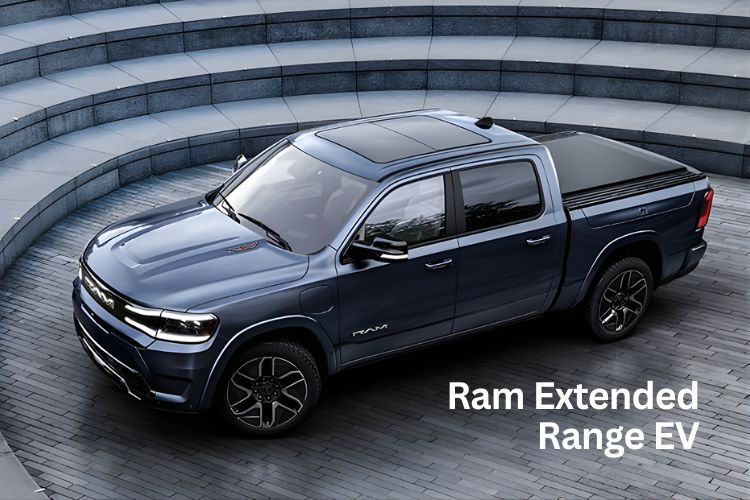
Keynote: Ram Extended Range EV
The Ram Ramcharger redefines the extended-range electric vehicle category by combining 145 miles of battery-only driving with a 3.6L V6 generator for 690 total miles. This series hybrid architecture maintains 663 horsepower and 14,000-pound towing capacity without the range penalties plaguing pure battery-electric trucks. It’s the first full-size pickup solving range anxiety through onboard generation rather than massive, expensive battery packs.
What the Hell Is a Range-Extended EV, Anyway?
It’s Not a Hybrid, But Everyone Keeps Calling It One
Think electric skateboard with a gas-powered generator in your backpack. That’s essentially what Ram engineered with its series hybrid powertrain. The 3.6L Pentastar V6 engine sitting under the hood never touches the wheels. Zero mechanical connection. It only charges the battery pack.
You drive on electric power 100% of the time, regardless of where that electricity comes from. BMW tried this years ago with the i3 REx. Chevrolet perfected it with the Volt. Nobody cared much then because they were small cars. Now Ram’s doing it with a full-size truck that can tow 14,000 pounds, and suddenly everyone’s paying attention.
The One Sentence That Makes It Click
It drives like a Tesla but refuels like a Ford in five minutes. That’s the entire value proposition.
The gas engine isn’t revving with traffic or shifting gears. It runs at optimal RPM for efficiency when it needs to kick in. The result? You get 145 miles of pure electric driving for your daily commute, then an additional 545 miles when the 27-gallon tank feeds the onboard generator. That’s 690 miles total without the anxiety that comes with hunting for charging stations or watching your range drop 60% because you hooked up a camper.
Why Ram Picked This Fight Instead of Going Full Electric
Pure battery-electric trucks lose up to 70% of their range when towing heavy loads. That’s not marketing spin, that’s physics. Ford’s F-150 Lightning promises 320 miles on paper. Hook up your 8,000-pound camper and you’re looking at 100 miles before you need to find a charging station. Now try finding a DC fast charger with a pull-through lane for a 25-foot trailer.
Stellantis watched this disaster unfold in real time. They saw the “waning demand” for pure EVs in the truck market. They had originally planned a 500-mile battery-electric Ram 1500 REV with a massive 229-kWh battery pack. Then they looked at what that would cost, what it would weigh (north of 9,000 pounds), and how it would perform when actually doing truck things. They killed the entire program and pivoted everything to the extended-range electric vehicle architecture instead.
It’s the first time a major manufacturer publicly admitted that pure EV technology isn’t ready for the truck market’s core use cases.
The 690-Mile Promise: Math, Magic, or Marketing?
Breaking Down the Numbers You Actually Care About
The Ramcharger uses a 92-kWh liquid-cooled battery pack with 69.7 kWh of usable capacity. That’s your electric-only range source, delivering 145 miles of zero-emission driving. For reference, that handles the average American’s 40-mile daily commute three times over before you need to plug in.
Then there’s the 27-gallon gasoline tank feeding the 3.6L V6 generator, which produces 130 kilowatts of electrical power. When that generator kicks in, you get an additional 545 miles of range at roughly 20 to 20.5 MPG combined efficiency. Add them together and you hit that 690-mile total range figure Ram keeps promoting.
Here’s the catch nobody’s being honest about: 20.5 MPG isn’t revolutionary for a truck. A conventional Ram 1500 with the mild-hybrid V6 gets about 22 MPG highway. You’re not buying the Ramcharger to save money on fuel when the generator’s running. You’re buying it because it eliminates range anxiety while letting you drive electric 95% of the time.
What Happens When You Hook Up That Boat
This is where things get real. That 145-mile electric range? It drops to about 39 miles when you’re pulling 14,000 pounds at highway speeds. The total 690-mile range shrinks to roughly 266 miles under maximum load.
But here’s the critical difference: the Ramcharger doesn’t lose capability under that load, it just burns gas quietly while maintaining full 663-horsepower performance. The Ford Lightning? It loses both range AND forces you to stop for 45-minute charging sessions every 80 miles. The Chevrolet Silverado EV with its massive 205-kWh battery? Still drops from 493 miles to maybe 180 when towing heavy.
Here’s a comparison that matters:
| Truck Model | Unloaded Range | Towing 10,000 lbs | Towing 14,000 lbs | Refuel/Recharge Time |
|---|---|---|---|---|
| Ram Ramcharger EREV | 690 miles | ~350 miles | ~266 miles | 5 minutes (gas) |
| Ford F-150 Lightning | 320 miles | ~120 miles | Can’t tow 14K | 45 min (DC fast) |
| Chevy Silverado EV | 493 miles | ~180 miles | Can’t tow 14K | 40 min (DC fast) |
The Ramcharger is the Goldilocks truck for anyone who tows regularly but doesn’t want to plan their life around charging infrastructure.
The Daily Driver Reality Check Most Reviews Miss
Most Americans drive 40 miles per day. With the Ramcharger’s 145-mile electric range, you could realistically plug in once a week and never hear that V6 engine start. Your truck runs emission-free for 95% of your driving, powered by cheap home electricity at maybe $0.13 per kWh.
That’s about $2.30 to fully charge the battery pack for 145 miles, versus $15 in gas to drive the same distance in a conventional truck at 22 MPG and $3.50 per gallon. Over a year of typical driving, that’s $400 in electricity versus $2,700 in gasoline.
The generator becomes psychological insurance. You might rarely need it, but you always have it. No more range math nightmares. No more “can I make it?” anxiety on road trips.
When the Tank, Not the Plug, Does the Work
When the battery’s depleted and the V6 generator takes over, you’re getting roughly 20 to 20.5 MPG combined efficiency. Running calculations with gas at $3.50 per gallon, that’s about $0.17 per mile in fuel costs when operating in charge-sustaining mode.
Compare that to a standard Ram 1500 with the 3.6L V6 getting 22 MPG at the same fuel price: about $0.16 per mile. You’re essentially breaking even on fuel costs during generator operation, but you got 145 electric miles before that point where you paid one-tenth the cost per mile.
The math works if you’re using the generator as backup, not as your primary power source. Use it like a gas truck full-time and you’re just driving an expensive, heavy conventional pickup.
Power That’ll Pin You to Your Seat
663 Horses That Don’t Need to Neigh
The Ramcharger’s dual electric drive motors deliver 663 combined horsepower and 615 lb-ft of torque. That’s enough to hit 0-60 mph in 4.4 seconds, which is quicker than most muscle cars and faster than any conventional half-ton truck.
The front motor produces 335 horsepower while the rear delivers 319 horsepower, creating a standard electric all-wheel drive system. When you don’t need all that power, the front motor can disconnect entirely, letting the truck cruise efficiently on rear-wheel drive with regenerative braking recapturing energy every time you lift off the accelerator.
This isn’t hybrid power that needs the engine to kick in for full acceleration. The battery pack and power electronics inverter can deliver maximum performance whether you’re running on stored electricity or generator power. That’s the beauty of the series hybrid architecture: consistent power delivery, always.
The Towing Capacity Nobody Expected from an “EV”
The Ramcharger targets best-in-class 14,000-pound maximum towing capacity. That beats the Ford F-150 Lightning’s 10,000-pound limit by 40%. It edges out the Chevrolet Silverado EV’s 12,500-pound rating. Only heavy-duty diesel trucks surpass it in the broader market.
Payload capacity hits 2,625 pounds, keeping this competitive with serious work trucks. The STLA Frame platform architecture distributes that weight across an eight-lug hub design (not the typical six-lug light-duty setup), with a rear gross axle weight rating of 5,700 pounds handling the torque distribution from those electric motors.
The reason this works is simple: electric motors produce maximum torque from zero RPM. No waiting for the engine to spool up. No transmission hunting for the right gear. You hook up, press the accelerator, and the load moves. Instantly. My colleague who test-drove a pre-production unit described it as “towing without the drama.” The truck just pulls, smoothly and silently, without the gear-hunting and downshifting you expect from a conventional powertrain.
How It Actually Feels Under Your Right Foot
Quiet launches from stoplights when the battery has charge and the engine stays asleep in EV mode. You’ll hear tire noise before you hear the powertrain. The first week feels almost eerie if you’re coming from a V8 truck.
When you’re towing and demand full power, the V6 generator runs at a constant RPM in the background. It’s not loud or intrusive because it’s not accelerating with load—it’s just spinning at its optimal efficiency point, generating electricity. Smooth, continuous pull without shifting interruptions or the sensation of “running out of steam” on long grades.
Regenerative braking feels strange for about a week, then becomes invisible and normal. Lift your foot and the truck slows noticeably without touching the brake pedal, sending energy back to the battery pack. It’s particularly useful when towing downhill, since you’re not riding the brakes and creating heat.
The Price Tag and The Waiting Game Nobody Wants
What You’ll Actually Pay When It Finally Arrives
Ram hasn’t officially announced pricing, but internal estimates and dealer briefings point to a base MSRP between $60,000 and $75,000 depending on trim level. For context, the average full-size truck transaction price in 2025 is already $65,000. You’re not entering exotic territory here.
The premium over a gas-powered Ram 1500 sits around $10,000 to $15,000 for this extended-range electric vehicle technology. A well-equipped Laramie trim with the conventional 3.6L V6 starts at about $61,000. The Ramcharger version of that same truck would likely land near $72,000 to $75,000.
At the top end, the new Tungsten luxury trim could push past $95,000 with the EREV powertrain. That sounds steep until you realize the gas-powered Tungsten already costs $88,000. Suddenly a $7,000 premium for 690-mile range and 663 horsepower doesn’t seem unreasonable.
The Delay Dance and What It Means for You
Ram first announced this truck in late 2023 as a 2025 model year vehicle under the “Ramcharger” name. Then demand for pure EVs softened. Stellantis killed the battery-electric Ram program, renamed the Ramcharger to “Ram 1500 REV,” and pushed the launch to 2026.
Order books are now scheduled to open in the first half of 2025, with first customer deliveries arriving as 2026 model year trucks sometime in late 2025 or early 2026. You’re looking at a minimum 12-month wait from today if you order immediately when books open.
Here’s the honest take: you’re not buying first-generation bugs, which is actually good news. Ram had more time to refine the powertrain integration, test cold-weather performance, and work out any software issues with the battery management system. Sometimes delays save you from being the guinea pig.
The smart move might be waiting for 2027 model year after early adopters work out any teething issues and you can see real-world owner reviews about generator maintenance, battery degradation, and actual towing range.
Factor In the Hidden Costs and Savings
The federal clean vehicle tax credit is your biggest wildcard. Under current law, eligible plug-in vehicles can qualify for up to $7,500 in tax credits, but those incentives expire September 30, 2025. Whether the Ramcharger qualifies depends on its battery capacity (92 kWh should clear the threshold), where it’s assembled (likely U.S. under STLA Frame platform production), and whether Congress extends the program.
If you miss that credit window, you’re paying full MSRP. That changes the value equation significantly.
Maintenance costs should favor the Ramcharger over conventional trucks. The V6 generator runs infrequently under optimal conditions, potentially doubling your oil change intervals. Electric motors need virtually zero maintenance compared to transmissions and differentials. No transmission fluid changes. No differential service. Just brake pads, tires, and basic fluids.
Your charging costs at home depend on local electricity rates. At the national average of $0.13 per kWh, filling the 92-kWh battery pack costs about $12 for 145 miles. That’s $0.08 per mile. Compare that to gasoline at $3.50 per gallon in a 22-MPG truck: $0.16 per mile. If you’re driving 15,000 miles annually and 90% is electric-only, you’re saving roughly $1,100 per year in fuel costs.
Living With It: The Questions Keeping You Up at Night
Do I Really Have to Maintain Two Powertrains?
Yes and no. The V6 generator runs infrequently in most use cases, so you’re not doing oil changes every 5,000 miles. Stellantis engineers designed it to run at constant, optimal RPM when active, which reduces wear dramatically compared to a conventional engine constantly accelerating and decelerating.
Expect extended service intervals on the generator—potentially 10,000 to 15,000 miles between oil changes if you’re primarily driving electric. The electric drive units need virtually zero scheduled maintenance beyond coolant flushes for the liquid-cooled battery pack every few years.
Battery warranty details remain murky and worth pressing dealers about before purchase. Most automakers cover EV batteries for 8 years or 100,000 miles, but Ram hasn’t officially published Ramcharger-specific warranty terms yet. You need to know what happens if the battery degrades to 70% capacity after five years.
One real concern nobody’s addressing: what happens to gasoline sitting unused in that 27-gallon tank for months if you’re driving electric-only? Fuel stabilizers become part of your routine, or you need to run the generator occasionally just to cycle fresh gas through the system.
The 7,500-Pound Elephant in the Bed
The Ramcharger weighs approximately 7,500 pounds at the curb—that’s 2,500 pounds heavier than a comparable gas-powered Ram 1500. That extra weight comes from the 92-kWh battery pack, dual electric motors, power electronics, and the generator system.
This affects ride quality, especially unladen. The truck is tuned for its weight, so it won’t feel as nimble as a conventional half-ton on winding roads. Off-road capability takes a hit from ground clearance concerns and the complexity of protecting battery components from rock strikes.
Suspension components wear faster under continuous heavy loads. Brakes, tires, and wheel bearings all experience more stress. Budget for slightly more frequent tire replacements and potentially upgraded suspension components if you’re using this as a daily work truck.
Here’s the weight comparison:
| Truck Model | Curb Weight | Weight vs Gas Ram 1500 | Payload Impact |
|---|---|---|---|
| Ram Ramcharger EREV | ~7,500 lbs | +2,500 lbs | -300 lbs |
| Ford F-150 Lightning | ~6,500 lbs | +1,500 lbs | -400 lbs |
| Chevy Silverado EV | ~8,500 lbs | +3,000 lbs | -900 lbs |
| Gas Ram 1500 | ~5,000 lbs | Baseline | Baseline |
The Ramcharger sits in the middle: heavier than conventional trucks but not as extreme as pure battery-electric competitors with massive battery packs.
Cold Weather, Heat, and Real-World Range Vampires
This is where the range extender technology shines. Battery-electric vehicles lose 30-40% of their range in freezing temperatures because resistive heating for the cabin drains the battery. The Ramcharger? The V6 engine provides traditional waste-heat cabin warming without touching your electric range.
Battery performance in winter becomes less critical with generator backup. If cold temperatures reduce your 145-mile electric range to 100 miles, the generator seamlessly compensates. You’re not stranded. You’re not watching range anxiety compound with every snowstorm.
Pre-conditioning the cabin while plugged in preserves battery range for driving. Program the truck to heat or cool the interior 15 minutes before departure using home electricity, not battery power. This simple habit can preserve 10-15 miles of range on extreme temperature days.
Summer heat affects battery life long-term, but the liquid-cooled thermal management system regulates temperature actively. Just park in shade when possible and avoid leaving the truck sitting in direct sun for hours with a hot battery pack.
The Charging Life: What Your Evenings Actually Look Like
Install a Level 2 (240V) charger in your garage. This is non-negotiable for convenient daily charging. A Level 2 charger delivers about 25-30 miles of range per hour, fully replenishing the 145-mile battery overnight in 5-6 hours.
DC fast charging capability adds roughly 50 miles in 10 minutes when you’re on the road using public infrastructure. The Ramcharger supports CCS1 (Combined Charging System) DC fast charging, though Ram hasn’t confirmed whether it will adopt the NACS (North American Charging Standard) connector for Tesla Supercharger network access.
Here’s your new strategy: charge when it’s easy, pump when it’s not. Plug in at home every night like you charge your phone. On road trips, skip charging stations entirely and just fuel the tank in five minutes at any gas station. The whole point of this architecture is eliminating the “have to charge” anxiety that kills pure EV adoption.
Level 1 charging (standard 120V outlet) is too slow for practical daily use. You’d get maybe 3-4 miles per hour of charging, requiring 40+ hours for a full charge. Use it only as emergency backup.
How It Stacks Against Every Truck You’re Comparing
Ram Ramcharger vs. Ford F-150 Lightning: The Range Battle
The Lightning represents the current pure EV truck leader. It’s proven, available now, and offers unique features like the Mega Power Frunk with 14.1 cubic feet of lockable, weatherproof storage space up front.
But range is where the Lightning hits its fundamental limitation. Its maximum 320-mile range (extended-range battery) drops to 100-120 miles when towing 10,000 pounds. That forces charging stops every 90 minutes on long hauls. Public DC fast charging adds 54 miles in 10 minutes under ideal conditions, but finding pull-through charger stalls for trailers remains nearly impossible.
Here’s the side-by-side:
| Specification | Ram Ramcharger | Ford F-150 Lightning |
|---|---|---|
| Total Range | 690 miles | 320 miles |
| EV-Only Range | 145 miles | 320 miles |
| Towing Capacity | 14,000 lbs | 10,000 lbs |
| Towing Range (est.) | ~266 miles | ~100 miles |
| Horsepower | 663 hp | 580 hp |
| Refuel/Recharge Time | 5 min (gas) | 45 min (DC fast) |
| Starting Price (est.) | $60K-75K | $55K-65K |
The Lightning wins on immediate availability, proven platform reliability, and slightly lower entry price. The Ramcharger wins on total range, towing capacity, towing distance, and complete infrastructure independence. If you tow regularly beyond 100-mile radius, the Ramcharger is the only real option.
Ram Ramcharger vs. Chevy Silverado EV: The Capability Question
ChEVrolet built the Silverado EV with a massive 205-kWh battery pack delivering 493 miles of range. That’s genuinely impressive for a pure battery-electric vehicle. The RST model produces 754 horsepower and 785 lb-ft of torque, making it the performance king on paper.
But that massive battery creates problems. The truck weighs approximately 8,500 pounds—1,000 pounds more than the Ramcharger and 3,500 pounds more than a conventional gas truck. Payload capacity suffers, dropping to just 1,800 pounds. And despite all that battery capacity, towing 12,500 pounds still reduces range by 60-70%, leaving you with maybe 180 miles before needing to charge.
The Ramcharger’s generator solves what the Silverado’s massive battery cannot: sustained performance during high-demand use. The Silverado might deliver more peak power for acceleration runs, but the Ramcharger maintains 663 horsepower consistently for the entire 690-mile range regardless of load.
User feedback on Silverado EV forums shows owners praising the truck’s performance and features but expressing continued anxiety about long-distance towing. The Ramcharger directly addresses that single pain point.
Ram Ramcharger vs. Traditional Gas Ram 1500: The Honest Truth
Comparing the Ramcharger to a standard Ram 1500 with the 3.6L Pentastar V6 or 5.7L Hemi V8 reveals what you’re actually giving up and gaining.
You lose: V8 exhaust note, lighter curb weight, simpler maintenance, lower purchase price, immediate availability.
You gain: 145 miles of emission-free daily driving, instant electric torque from zero RPM, dramatically quieter operation, significantly lower fuel costs for typical use, 690-mile total range, and future-proofed powertrain as gas prices inevitably rise.
This isn’t an upgrade in the traditional sense. It’s a fundamental shift from “filling up” to “topping off.” Your relationship with fuel stations changes completely. Instead of weekly gas stops, you plug in at home and pump maybe once a month for long trips.
The torque delivery feels completely different from a classic V8. There’s no building power through the rev range. You press the pedal and maximum torque hits immediately, every time, with zero drama. For towing, this eliminates the gear-hunting and downshifting that defines conventional truck life.
The Dark Horse Nobody Sees Coming: Scout Terra
Scout Motors (backed by Volkswagen) is developing the Terra pickup with extended-range capability called the “Harvester” system. Reservations for their EREV version are reportedly outselling the pure BEV version 3-to-1, which signals the market desperately wants backup generators built in.
This validates Ram’s entire strategy. When given the choice between pure EV and extended-range architecture at similar prices, buyers overwhelmingly choose the flexibility and range confidence of onboard generators.
The Ramcharger has first-mover advantage in the full-size truck segment right now. By the time Scout Terra and potential Ford/GM EREV competitors arrive in 2027-2028, Ram will have real-world data, customer feedback, and refinements to their second-generation system.
Who This Truck Is Really For (and Who Should Walk Away)
The Perfect Ramcharger Owner Lives Here
Your daily commute runs 60-100 miles roundtrip, putting you squarely in that 145-mile electric range sweet spot. You plug in at home every night and rarely hear the V6 generator during normal weeks. But twice a year you tow a 8,000-pound camper to a state park 250 miles away, and three times annually you haul a boat to the lake 180 miles distant.
You want electric driving feel—that instant torque and whisper-quiet cabin—but you live in rural Montana or central Texas where public charging infrastructure remains spotty. The nearest DC fast charger is 40 miles away and has two stalls, both frequently occupied.
You need legitimate 12,000-14,000 pound towing capacity for work equipment, enclosed trailers, or recreational toys. The generator eliminates range anxiety math nightmares while maintaining full power delivery under load.
You have a garage or dedicated parking spot with access to 240V power for installing a Level 2 charger. This isn’t optional. Without home charging, you’re essentially driving an inefficient gas truck full-time.
When This Truck Will Frustrate You More Than Free You
You live in a metropolitan area with dense, cheap DC fast charging infrastructure. Your daily driving rarely exceeds 100 miles, and you almost never tow beyond the range of pure battery-electric vehicles. A Ford F-150 Lightning costs $10,000 less, offers more cargo versatility with the frunk, and eliminates tailpipe emissions completely.
You want the absolute simplest drivetrain possible. The Ramcharger’s dual-powertrain complexity means more potential failure points, more maintenance procedures, and more systems to understand. If simplicity matters more than capability, buy a pure EV or stick with conventional gas.
You barely tow or haul but want the truck image for status. You’ll hate paying to maintain a generator you almost never use. You’ll resent carrying 2,500 extra pounds of battery and motors for capability you don’t need. Buy a smaller vehicle or a conventional truck and save $15,000.
You can’t reliably charge at home or near work. Without consistent access to 240V charging, the Ramcharger becomes a heavy, expensive gas truck getting 20.5 MPG combined. That’s worse efficiency than a standard Ram 1500 for more money.
Three Grounding Questions Before Any Dealership Visit
“How many days this year did I truly need more than 200 miles of range?” Count them honestly. If the answer is less than 10, a pure EV probably serves you better for lower cost.
“What does a typical month of actual towing look like for me, specifically?” Not aspirational towing. Not “I might someday” towing. Actual hitched trailers with real weights and distances. If you tow less than once monthly, you’re overbuying capability.
“Can I reliably charge at home or near work, yes or no?” If no, walk away from this truck immediately. The entire value proposition evaporates without consistent home charging.
How to Test-Drive It With the Right Mindset
Ask for a route with hills, highway stretches above 65 mph, and stop-and-go traffic patterns. You need to experience how the truck behaves across all driving conditions, not just parking lot launches.
Pay specific attention to when the generator kicks in and how it actually sounds and feels. Does the vibration bother you? Can you hear it over road noise at highway speeds? Does the transition from electric to generator power feel seamless or jarring?
Bring your real questions written down beforehand. Don’t just ask “what’s the range?” Ask: “What’s the battery warranty coverage if capacity drops to 70% after five years?” Ask: “What happens to fuel sitting unused in the tank for three months?” Ask: “Can I tow 12,000 pounds up a 6% grade without the battery overheating?”
These specific, practical questions reveal whether the sales team actually understands the product or is just reciting marketing materials.
Conclusion: A Calmer Way to Go Electric With a Truck
You started this confused about whether a truck with a gas engine that doesn’t connect to wheels and electric motors that don’t need charging stations even made sense. Here’s what actually matters now: the Ram Ramcharger exists because you want the future, but you live stubbornly in the present.
You want instant electric torque for merging onto highways. You want to tow your camper 350 miles without a PhD in charging logistics or stopping every 90 minutes. You want 95% of your miles to be emission-free, but you need 100% confidence you won’t be stranded with a dead battery and no backup plan. That’s not asking too much. That’s just asking for a truck that actually works for truck things.
The Ramcharger delivers 145 miles of pure electric daily driving powered by cheap home electricity, then seamlessly extends to 690 total miles via that 3.6L V6 generator when needed. It maintains 14,000-pound towing capacity without the catastrophic range penalties that cripple pure battery-electric trucks. It eliminates infrastructure dependence while preserving the electric driving experience. Whether that makes it the bridge technology we desperately need or an awkward middle child nobody wants long-term depends entirely on how you actually use trucks.
Your incredibly actionable first step for today: Track one complete month of your actual miles driven, towing frequency with specific trailer weights, and fueling habits right now before talking to any dealer. Run those real numbers against the Ramcharger’s 145-mile electric range and 20.5 MPG generator efficiency. Compare your projected fuel savings at $0.13 per kWh electricity versus $3.50 per gallon gas. This one exercise tells you more than any brochure, YouTube review, or dealership pitch ever could about whether this fits your actual life versus your imagined one.
Remember that paralyzed feeling from the beginning? The Ramcharger might be exactly what you need, or it might be an expensive compromise you’ll regret. Time and real-world owner reviews will tell. But at least now you understand precisely what you’re evaluating, and you can make this decision with your eyes wide open instead of frozen between two worlds.
Dodge Ram EV Extended Range (FAQs)
Does the Ramcharger qualify for the $7,500 federal EV tax credit before September 2025?
Likely yes, but not confirmed yet. The 92-kWh battery should meet capacity thresholds, and US assembly on the STLA Frame platform helps with sourcing requirements. Verify eligibility using the IRS VIN lookup tool once production begins, as tax credit rules expire September 30, 2025 under current law.
How does Ram’s extended-range system differ from Ford’s plug-in hybrid F-150?
Completely different architecture. Ram’s system is a series hybrid where the V6 engine has zero mechanical connection to the wheels—it only generates electricity. Ford’s plug-in hybrid (if they built one) would have the engine directly powering the wheels during acceleration. The Ramcharger always drives on electric motors whether using battery power or generator power, delivering consistent 663-horsepower performance.
What happens to towing range when pulling 14,000 pounds with the Ramcharger?
Expect about 266 miles total range at maximum 14,000-pound capacity. The 145-mile electric range drops to roughly 39 miles under heavy load, then the generator provides approximately 227 additional miles at reduced efficiency. Compare this to the Ford Lightning’s 100-mile towing range or Silverado EV’s 180 miles, and the generator advantage becomes obvious.
Can you drive the Ramcharger without ever plugging it in to charge?
Yes, but you’re missing the entire point and wasting money. Operating solely on the generator delivers only 20.5 MPG combined efficiency, which is worse than a standard gas Ram 1500. You’d pay $0.17 per mile instead of $0.08 per mile for electric driving, plus you’re hauling 2,500 extra pounds of unused battery and motors. This truck requires home charging to make financial sense.
How much does it cost to charge the Ramcharger battery at home versus running the generator?
At average US electricity rates of $0.13 per kWh, fully charging the 92-kWh battery costs about $12 for 145 miles of driving. That’s $0.08 per mile. Running the generator at 20.5 MPG with gas at $3.50 per gallon costs $0.17 per mile—more than double. Over 15,000 annual miles driven 90% on electric power, you’d spend roughly $1,400 total versus $2,550 on generator power alone. Home charging is essential for this truck to make economic sense. Check EPA fuel economy data for official efficiency ratings once published.