You did everything right. Read the reviews, calculated your daily commute, budgeted for the car payment. You knew exactly how far your EV would go on a charge. Then you replaced those worn-out tires and suddenly your 280-mile range barely hits 240. Your first thought: did the battery break? Your second: nobody mentioned this part.
Here’s the truth most dealerships conveniently skip: your tires are the single biggest efficiency variable you actually control, and the wrong choice quietly steals 10 to 20% of every charge. Most EV guides obsess over charging networks and battery tech. This one’s different. We’re tackling the hidden range thief that lives between your car and the pavement, why it matters three times more in your EV than it did in any gas car you’ve owned, and what you can actually do about it without getting ripped off.
No corporate fluff. Just the facts that give you back those stolen miles and the confidence that you’ll make it home.
Keynote: EV Range Tires
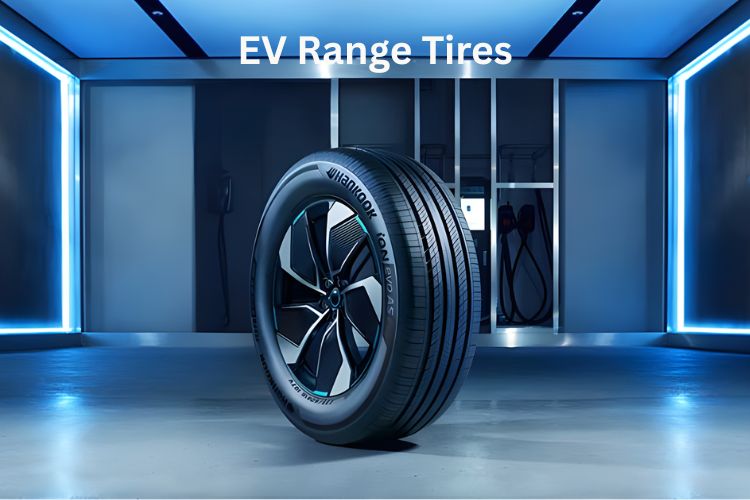
EV range tires are specialized tires engineered with low rolling resistance compounds, reinforced construction for battery weight, and acoustic foam to maximize electric vehicle efficiency. Choosing EV-specific tires over standard replacements can improve range by 5-10% while proper tire pressure maintenance prevents an additional 3-5% energy loss. These tires represent a critical component of total EV ownership costs and real-world driving range.
The Weight, Torque, and Rubber Reality Nobody Warned You About
Why Your EV Murders Tires Faster Than You Ever Imagined
EVs weigh 20 to 30% more than gas equivalents, pulverizing rubber relentlessly. That family sedan you bought? It’s got a 1,200-pound battery pack strapped to the floor, turning it into a heavyweight that crushes tire sidewalls with every mile.
Instant torque delivers maximum power at zero RPM, grinding tread with every launch. Unlike your old gas car that gradually built power, your electric motor slams full force the moment you tap the accelerator. Industry consensus confirms EV tires wear 20% faster, period. Some performance EVs destroy tires in 6,000 miles. Your 50,000-mile tire becomes a 40,000-mile tire the moment it touches an EV.
And here’s what really stings: you’re paying premium prices for tires that won’t last as long. That’s the EV tire reality nobody mentioned at the dealership.
The Physics Problem That Makes Everything Worse
Think of tires as energy sponges that squeeze harder under weight. Battery packs turn family sedans into heavyweight bruisers crushing tire sidewalls constantly. My colleague Jake drives a Tesla Model Y and told me his first set of tires lasted 22,000 miles. His previous Honda Accord? Those tires went 60,000.
That fun acceleration you love creates micro-slippage, leaving invisible rubber strips everywhere. Every time you pin the accelerator at a green light, you’re shearing rubber molecules off the tread. It’s physics, and it’s expensive.
Regenerative braking adds reverse torque, doubling the wear assault from both directions. You’re not doing burnouts, but your tires wear like you are. Standard brakes wear down pads. Electric braking wears down rubber.
The 3X Efficiency Multiplier You Need to Understand
EVs convert 80% of energy to motion versus 25% for gas cars. This efficiency is your superpower and your Achilles heel. When your old gas car wasted three-quarters of every gallon just making heat, inefficient tires barely registered. That engine was already so wasteful, tire drag got lost in the noise.
But your EV’s electric motor is ruthlessly efficient. Wrong tires can cost you 34 to 40 miles per charge. One Michelin study showed a 14% range difference between best and worst tire choices. That’s not a rounding error. On a 300-mile EV, that’s 42 miles, the difference between making it home and calling a tow truck.
The Silent Range Robbery Happening Right Now
Rolling Resistance: The Invisible Energy Vampire
Every tire rotation fights deformation, wasting electrons you paid to store. Here’s the simplest way to understand it: imagine walking in sand versus on pavement. Sand squishes under your feet, stealing your energy with every step. Pavement stays firm, letting you move efficiently.
Your tires are doing the sand walk. Every rotation, the rubber compresses where it touches the road, then slowly springs back. That “slowly” part is the killer. Less squish equals fewer watts burned, more miles in your pocket.
OEM versus replacement tires often differ about 20% in rolling resistance alone. The tires that came on your EV were hyper-optimized in partnership with the manufacturer. They spent 12 months engineering those specific tires for your specific car. When you replace them with whatever’s on sale at the tire shop, that efficiency gap shows up as real, day-to-day range loss.
The Underinflation Crisis Draining Your Battery Daily
Tires lose about 1 PSI per month, increasing rolling resistance silently. You probably don’t think about it. Most people check tire pressure twice a year, maybe when the dashboard light screams at them.
Under-inflation costs roughly 0.2 to 0.3% efficiency per 1 PSI across all tires. Do the math: if all four tires are 4 PSI low, you’re losing about 11 miles on most EVs. That’s 11 miles you paid to charge, just evaporating into the atmosphere because you didn’t spend five minutes with a pressure gauge.
Cold mornings drop PSI further, compounding the invisible theft without warning. When temperatures drop 10 degrees Fahrenheit, you lose another PSI. Winter mornings in Colorado? I’ve seen tires drop 6 PSI overnight. Most drivers check pressure twice yearly, hemorrhaging range every single day.
Wheel Size: The Vanity Tax on Your Range
Bigger wheels look incredible in photos. They murder your range in reality.
| Wheel Setup | Range Impact | Reality Check |
|---|---|---|
| 18-inch standard | Baseline (0 miles lost) | Optimal efficiency, comfortable ride |
| 19-inch upgrade | -10 to 15 miles | Moderate styling boost, minor penalty |
| 20-inch performance | -20 to 40 miles | Looks amazing, hurts wallet and range |
| 21-inch+ aggressive | -40+ miles | For show cars, not road trips |
Bigger wheels increase frontal area and rotational mass simultaneously. You’re spinning more weight and pushing more air. Aero wheels alone added roughly 20 miles in controlled Porsche Taycan testing. That’s free range from wheel design alone.
Wider tires boost grip minimally but barely change range, contrary to myths. The width matters less than the wheel diameter and the tire’s rolling resistance coefficient. A skinny tire with terrible rolling resistance will kill your range faster than a wide tire engineered for efficiency.
The Sticker Shock and Hidden Costs
Welcome to the $1,000+ Tire Reality
EV-specific tires run $150 to $300 each, installation not included. A buddy of mine just paid $1,200 for a set of Michelin e-Primacy tires on his Chevy Bolt. He nearly choked when he saw the invoice.
Performance EV sets hit $1,900 for premium brands like Michelin or Pirelli. If you’re driving a Porsche Taycan or a Tesla Model S Plaid, budget accordingly. You’re replacing them 20% more often than gas car tires, too.
Annual tire costs rival what you’re saving on gas and oil changes. You ditched $200 monthly gas bills and $80 oil changes. Congratulations, you’re now spending $600 annually on tires instead of $400. The math still works out in your favor, but it’s closer than the EV evangelists admit.
Why Cheap Replacements Cost More Long-Term
Non-EV tires lack reinforcement for extra weight, failing prematurely and dangerously. That discount tire special at the budget shop? Those tires were engineered for a 3,200-pound sedan, not your 4,800-pound electric SUV. The sidewalls will flex excessively, heat up, and fail.
Missing load ratings mean safety risks and even faster wear patterns. Check the load index. It’s a number on the tire sidewall. Your EV needs a higher number than a comparable gas car. This isn’t negotiable.
You’ll lose 5 to 20% more range with standard tires. One Tesla Model 3 owner documented this precisely: his OEM tires delivered 241 watt-hours per mile. He switched to high-performance Michelin Pilot Sport AS4 tires (excellent tires, but not EV-specific). Consumption jumped to 281 watt-hours per mile. That’s a 16.6% efficiency hit. The $80 savings per tire became a $400 loss in electricity costs over the tire’s life.
Decoding the Label: What Actually Matters Beyond Marketing
Rolling Resistance: The Only Spec That Pays You Back
Lower rolling resistance means less battery drain and more miles per charge. This is the metric. Everything else is secondary for range optimization.
Look for “low rolling resistance” or RR ratings clearly marked on sidewalls. Some manufacturers print it directly. Others use the EU tire label with letter grades from A to E. An “A” rating means hyper-efficient. An “E” rating means you’re burning electrons like kindling.
This single factor determines if you gain or lose 30+ miles. A tire engineer I spoke with explained it this way: “We’re fighting molecular friction inside the rubber itself. Advanced silica compounds let the rubber flex and return to shape faster, wasting less energy as heat. That’s the difference between a mediocre tire and a great EV tire.”
Efficiency-focused tires recover their cost premium in saved electricity within months. If an EV-specific tire costs $80 more but saves you 5% on charging, you’ll break even in 20,000 miles. After that, it’s pure savings.
Load Index: The Safety Number You Cannot Ignore
Your EV’s weight demands higher load ratings than standard passenger tires. The load index is a number on the tire sidewall, usually right after the size designation. A typical passenger car tire might be rated at 91 (1,356 pounds per tire). Many EVs need 98 or higher (1,653 pounds per tire).
Check your door jamb sticker, then match or exceed that number. It’s printed on a label inside the driver’s door frame. Find it. Memorize it. Never go below it. For more information on tire load capacity requirements and safety standards, the National Highway Traffic Safety Administration provides comprehensive guidance on proper tire specifications for heavier electric vehicles.
Underrated tires risk blowouts under the battery pack’s crushing mass. This isn’t optional negotiation, it’s the difference between safe and dangerous. I’ve seen forum posts from owners who cheaped out and experienced sidewall failures at highway speeds. Don’t be that person.
The Noise Battle: Why EV Tires Have Foam Inside
No engine roar means tire hum becomes your loudest companion. You bought an EV for the serene, silent ride. Then you hear every pebble, every expansion joint, every imperfection in the asphalt. It’s maddening on long drives.
Standard tires will make your serene cabin sound like a cargo truck. The tire acts like a drum. The hollow cavity inside vibrates and amplifies road noise straight into the cabin.
EV-specific tires use internal sound-dampening foam layers for highway sanity. Manufacturers bond a polyurethane foam ring to the inside of the tire. It absorbs vibrations at the source, cutting cabin noise by up to 20%. Michelin calls it Acoustic Technology. Continental calls it ContiSilent. Pirelli uses PNCS (Noise Cancelling System). It’s the same idea: foam kills noise.
Acoustic ratings matter when wind and road noise dominate your commute. If you’re driving 30,000 miles a year on highways, this foam is non-negotiable for your mental health.
The EU Tire Label: Your Efficiency Cheat Sheet
Ratings from A to E show efficiency at a glance. The European Union mandated a standardized tire label showing rolling resistance, wet grip, and noise levels. It’s like a nutrition label for tires.
Temperature and treadwear grades reveal real-world durability and performance trade-offs. Higher treadwear numbers mean the tire lasts longer. But sometimes ultra-long-lasting tires sacrifice grip. It’s always a balance.
The Right Tire for Your Actual Life
If Range Is Your North Star
Prioritize tires labeled for EVs with documented lowest rolling resistance. Don’t trust marketing fluff. Look for independent test data from Consumer Reports or Tire Rack showing actual range improvements.
Brands: Michelin Pilot Sport EV, Bridgestone Turanza EV, Hankook Ion Evo. These are purpose-built from the ground up for electric vehicles. They balance the full package: low rolling resistance, acoustic foam, reinforced construction for weight, and compounds that withstand instant torque. For independent verification of tire performance data, Consumer Reports provides comprehensive testing results showing real-world range impacts across multiple EV tire brands.
Accept they may cost more upfront but recover premium through electricity savings. A Michelin e-Primacy might cost $250 per tire versus $170 for a standard all-season. Over 40,000 miles, the efficiency savings will exceed that $80 difference.
You’ll skip entire charging stops on road trips with the right choice. One owner reported his Hyundai Kona EV gained 70 kilometers of range (about 43 miles) just from switching to optimized tires. That’s an entire charging session he doesn’t need on a long drive.
If Winter Is Real Where You Live
| Tire Type | Range Impact | Traction | Cost Reality |
|---|---|---|---|
| Summer/EV-specific | Best efficiency | Poor in snow | Dangerous in winter |
| Dedicated winter | -10 to 15% range | Excellent grip | Need second set, storage |
| All-weather (snowflake) | -5 to 8% range | Good year-round | One-tire solution |
Sacrifice some range for traction when ice and snow dominate. I live where winter is six months of the year. Trust me: the 10% range hit from winter tires is better than the 100% range hit from sliding into a ditch.
Cold weather already hurts battery capacity, sticky winter tires compound the loss. Your battery might lose 30% capacity at 0°F. Add winter tires, and you’re down another 10%. Budget accordingly and plan your routes with more charging buffer.
Your range will drop but you’ll actually reach your destination alive. Winter tires have deeper, more aggressive tread and softer rubber compounds. They grip ice. They stop on snow. They save lives. Range is meaningless if you’re stuck in a snowbank.
If Every Dollar Counts
Choose mid-tier EV-specific tires over premium non-EV options always. A Continental EcoContact 6 will serve you better than a premium Michelin Pilot Sport (non-EV version). The EV-specific design matters more than the brand prestige.
Brands like Continental EcoContact 6 offer decent performance at lower entry costs. You’re looking at $150-$180 per tire instead of $250+. They won’t win performance awards, but they’ll protect your range and last a reasonable time.
Never go bargain basement, cheap tires cost more in electricity and replacements. That $89 tire at the discount warehouse is a false economy. It’ll wear out in 15,000 miles and drain an extra 50 cents worth of electricity every charge. Over a year, you’ll lose money.
One Kona EV test showed tire choice changed range by 70 km, enough to skip charging stops. That’s the difference between stopping for 30 minutes on a road trip or driving straight through. Time is money. Efficiency is freedom.
Maintenance That Protects Miles and Money
The Five-Minute Monthly Ritual That Saves Range
Check when tires are cold, before driving or three hours after stopping. Hot tires show artificially high pressure. You want the real number.
Find your recommended PSI on the driver’s door jamb sticker, not sidewall. The number molded into the tire sidewall is the maximum safe pressure. Your vehicle’s optimal pressure is lower and specific to your car’s weight and handling characteristics.
EVs typically need 38 to 45 PSI, higher than gas vehicles. My Nissan Leaf specifies 42 PSI. My old Camry was 32 PSI. This isn’t arbitrary. The higher pressure stiffens the sidewall, reducing flex and energy loss.
Add air immediately if you’re even 2 PSI low to reclaim lost efficiency. Don’t wait. Don’t procrastinate. Two PSI costs you about a mile of range per charge. It adds up fast.
Rotation Every 5,000 Miles Doubles Tire Life
Two-wheel-drive EVs destroy driven tires first from power and braking forces. Front-wheel-drive EVs pulverize the front tires. Rear-wheel-drive models shred the rears. It’s not balanced like a gas car with gradual acceleration.
Regular rotation spreads wear evenly, extending life up to 50% longer. My mechanic rotates my tires every oil change out of habit. Except I don’t have oil changes anymore. So I set a calendar reminder every 5,000 miles. It works.
Don’t wait for service reminders, set calendar alerts yourself now. Your EV’s service computer might suggest rotation every 10,000 miles. That’s too long. By then, your driven tires are already significantly more worn. A $50 rotation saves you from $1,000 replacements sooner.
The Tread Depth Reality and Break-In Surprise
Use penny test monthly: Lincoln’s head visible means replace immediately, no exceptions. Insert a penny into the tread groove with Lincoln’s head upside down. If you can see the top of his head, you’re at 2/32 inch or less. Replace the tires.
Legal minimum is 1.6mm but safety evaporates below 4mm with EV weight. The law says you can drive on nearly bald tires. Physics says you can’t stop safely on wet roads with a 5,000-pound EV on nearly bald tires. Replace earlier.
New tires may drop range 2 to 4% initially during break-in period. This freaks people out. They install new tires and immediately see worse efficiency. It’s temporary. The fresh, deep tread creates more rolling resistance until the rubber compound cures and the tread blocks wear in slightly.
Track efficiency for two weeks before judging the swap, worn-in tires regain efficiency. After 500 miles, the tire settles into its normal performance. Then you can accurately assess if you made the right choice.
Cold Weather and Seasonal Pressure Swings
Top up pressure in fall to avoid silent winter losses. When temperatures drop from 70°F to 30°F, your tires lose about 4 PSI. Add air in October, before the cold hits.
Recheck with each 10°F temperature swing for maximum efficiency. Your tire pressure isn’t set-and-forget. It’s a living thing that changes with temperature. Stay vigilant.
Myths That Cost You Range and Cash
“More Pressure Is Always Better for Range”
Myth. Over-inflation hurts grip and causes uneven wear patterns across tread. You’ll wear out the center of the tire fast while the edges look brand new. Then you’ve bought a new set of tires at 25,000 miles instead of 40,000.
Follow the door-jamb spec exactly, not maximum sidewall rating. The engineers calculated the optimal pressure for your vehicle’s weight distribution, suspension geometry, and expected load. Trust them.
Safer handling beats a barely measurable efficiency bump every time. The difference between 42 PSI (recommended) and 50 PSI (over-inflated) might gain you 0.5% efficiency. But you’ll lose 20% wet traction. Bad trade.
“Any Premium Tire Will Keep My EV’s Range”
Myth. Replacement tires often roll 20% worse than OEM factory choices. Oak Ridge National Laboratory tested this. They found that even high-quality aftermarket tires frequently have significantly higher rolling resistance than the hyper-optimized OEM tires.
Verify with independent test charts, not just brand marketing promises. Consumer Reports and Tire Rack publish real-world range testing data. Use it.
The “EV tire” label isn’t just marketing hype, compound design genuinely differs. EV-specific tires use silica-enhanced rubber compounds that minimize hysteresis (internal energy loss). They’re chemically different from standard tires.
“Can’t I Just Use My Efficient Gas Car Tires?”
Absolutely not. They aren’t designed for the weight and instant torque. A tire rated for 1,400 pounds per corner will flex dangerously under a 1,700-pound load. The sidewall construction is inadequate.
This false economy costs more in rapid replacements and lost range. You’ll destroy those tires in 20,000 miles and burn extra electricity the entire time. Spend the money once, do it right.
Load ratings matter exponentially more, underrated tires risk catastrophic blowouts. I’ve read accident reports. Tire failure at 70 mph is terrifying. Don’t cheap out on the four contact patches between you and the pavement.
“Rotating Tires Doesn’t Affect Range”
Myth. Uneven wear creates drag and subtly hurts efficiency over time. When your front tires are worn and your rear tires are fresh, you’re creating an inconsistent rolling resistance across the vehicle. It’s measurable.
Regular rotations are cheap insurance protecting your significant tire investment. You just spent $1,200 on tires. Spend $50 every 5,000 miles to make them last 40,000 miles instead of 30,000. It’s basic math.
Your Decision Framework: Choosing With Confidence
The 60-Second Self-Assessment Before You Shop
What’s your primary driving environment: highway, city, or mixed mountain terrain? Highway drivers need maximum efficiency and low noise. City drivers need durability against potholes. Mountain drivers need all-weather traction.
What’s your tolerance for road noise versus maximum efficiency trade-off? Some ultra-efficient tires sacrifice some acoustic comfort. If you’re noise-sensitive, prioritize tires with internal foam even if they cost more or sacrifice 1% efficiency.
What is your actual, real-world budget including replacement frequency? Don’t just look at the sticker price. Calculate cost per mile over the tire’s expected life. A $250 tire lasting 45,000 miles costs 0.55 cents per mile. A $170 tire lasting 25,000 miles costs 0.68 cents per mile. The expensive tire is cheaper.
The Non-Negotiables for Your Next Set
Must have Low Rolling Resistance designation or high EU efficiency rating. Look for the label. Demand the data. Don’t trust vague marketing claims.
Load index must meet or exceed your EV’s factory specification exactly. This is non-negotiable. Your door jamb sticker lists the required load index. Match it or exceed it. Period.
Prioritize brands with proven EV-specific lines and independent test data. Michelin, Bridgestone, Hankook, Goodyear, Continental, and Pirelli all have legitimate EV tire programs. They’ve invested millions in research. Use it.
OEM vs Aftermarket: When Each Makes Sense
| Choice | Range Impact | Cost | Best For |
|---|---|---|---|
| Stick with OEM | Optimal efficiency | Most expensive | Maximizing range, warranty concerns |
| EV-specific aftermarket | Nearly identical | Moderate premium | Balanced performance, proven efficiency |
| Quality non-EV tire | -5 to 10% range | Budget-friendly | Prioritizing grip, winter traction |
Automakers collaborate with tire companies for 12+ months per model specifically. Your Tesla came with tires that Tesla and Michelin co-developed over a year. They tested dozens of compounds and tread patterns. The result is on your wheels right now.
Your OEM tires balance range, noise, weight, and torque for your exact vehicle. When they wear out, buying the same model again is the safest bet for maintaining your advertised range.
Aftermarket EV tires can match performance if you verify specs carefully. A Hankook Ion Evo wasn’t your OEM tire, but it was engineered with the same goals. Independent testing shows it performs comparably. You’ll be fine.
Conclusion: From Range Anxiety to Road Trip Freedom
You now know what most EV owners still don’t: your tires aren’t passive rubber circles. They’re active participants in every mile of range, every dollar of electricity cost, and every moment of safety. Yes, they wear faster. Yes, they cost more. But armed with this knowledge, you’re no longer at the mercy of vanishing range that nobody warned you about or dealership surprises that drain your wallet.
Your first step today, right now: walk outside and check your tire pressure with your phone or a gauge. It takes five minutes. You’ll probably find you’re 3 to 5 PSI low, which means you’ve been hemorrhaging range for weeks. Fix that and you’ve just bought yourself an extra 10 miles per charge, free.
The tire game changed when you bought an EV. The rules are different, the stakes are higher, and yes, it’s frustrating that nobody spelled this out at signing. But now you’re ahead of the curve. You know what to look for, what to avoid, and how to make choices that serve your needs instead of burning money on rubber that’ll be bald in a year. Your EV deserves the right shoes. Now you know exactly how to buy them.
Sailun EV Range Tires (FAQs)
Do EV-specific tires really increase range?
Yes. Premium EV-specific tires can recover 5-10% of your range compared to standard tires. Independent testing shows tires engineered with low rolling resistance compounds and optimized tread designs reduce energy consumption measurably. One study documented a 16.6% efficiency improvement, translating to roughly 30-40 extra miles on a full charge depending on your vehicle.
How much faster do electric vehicle tires wear out?
About 20% faster than comparable gas car tires. The combination of heavy battery weight and instant torque delivery accelerates tread wear significantly. Where a gas car might get 50,000 miles from tires, expect 40,000 miles on an EV. Performance EVs with aggressive driving can destroy tires in as little as 15,000-20,000 miles.
What happens if I use regular tires on my EV?
You’ll sacrifice range, safety, and tire life. Non-EV tires lack the reinforced construction needed for heavy battery weight, increasing blowout risk. Their higher rolling resistance can reduce your range by 10-20%, costing you more in electricity over the tire’s shortened lifespan than you saved on the initial purchase.
How does tire pressure affect EV battery efficiency?
Massively. Every 1 PSI drop across all four tires costs you roughly 0.2-0.3% efficiency. If your tires are 4 PSI low (extremely common), you’re losing approximately 11 miles per charge. Monthly pressure checks are the single most cost-effective maintenance task you can perform to protect your range.
Are expensive EV tires worth the cost?
Yes, when you calculate total ownership costs. A $250 EV-specific tire that delivers 5% better efficiency and lasts 40,000 miles costs less per mile than a $170 standard tire that kills your range and wears out in 25,000 miles. The electricity savings alone typically recover the premium within 15,000-20,000 miles of driving.