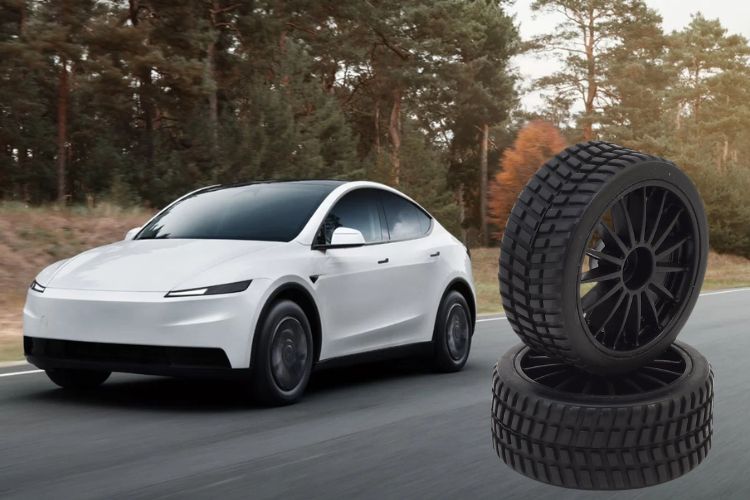
You’re staring at a $1,600 invoice. The technician just told you your Model Y’s rear tires are finished at 18,000 miles. Eight months of ownership. A 50,000-mile warranty stares back at you from the paperwork. That sinking feeling in your gut isn’t just about the money. It’s the betrayal, the confusion, and the terrifying realization that you don’t actually know what went wrong or how to fix it.
Here’s what makes it worse: you’ve already googled “best EV tires for Model Y” three times this week. Every list looks identical. Every forum disagrees. Someone swears by Brand X while another person says it destroyed their range. Your neighbor insists you’re “driving it wrong.” The Tesla service advisor shrugs and says “it’s normal.”
But here’s the truth nobody’s told you yet: your Model Y does eat tires differently than any car you’ve owned. It’s not your fault. It’s physics, weight, and instant torque doing what they do best. And once you understand what’s actually happening under those wheels, this whole confusing mess transforms into a straightforward decision you can make with confidence.
Here’s how we’ll tackle this together: First, we’ll decode exactly why your Model Y shreds rubber faster than your old SUV ever did. Then I’ll walk you through what actually matters when choosing replacement tires, cut through the EV-specific marketing hype with real data, and give you specific recommendations matched to how you actually drive. Finally, you’ll learn the three maintenance habits that could double your tire life and save you thousands over the years you own this car.
Keynote: Best EV Tires for Model Y
The best tires for Tesla Model Y balance efficiency, safety, and longevity based on your driving patterns. Hankook iON evo AS SUV delivers excellent all-around performance for most owners. Bridgestone Turanza EV maximizes range and comfort for commuters. Michelin Pilot Sport All Season 4 suits enthusiasts prioritizing grip. Proper alignment, 6,250-mile rotations, and correct pressure matter more than brand choice for tire longevity.
Why Your Model Y Has a Tire Problem (And It’s Not What You Think)
The Physics Nobody Explained at Delivery
Your Model Y weighs 4,400 pounds. Let that sink in for a second. That’s heavier than a Ford Explorer, and all that extra weight comes from batteries stacked low in the floor. Every ounce of that mass pushes down on four contact patches smaller than your hand.
That instant torque you love? The one that makes merging onto highways feel like a carnival ride? It’s literally grinding rubber into pavement every single time you accelerate. There’s no gradual power build like in a gas engine. It’s zero to full force in milliseconds, and your rear tires bear the brunt of it.
The weight distribution is 46/54, front to rear. That means your rear tires are supporting more weight and delivering all that torque. Performance models burn through rear tires every 10,000 to 20,000 miles while the fronts are barely broken in. I’ve seen owners replace rears three times before the fronts need touching.
The Betrayal Pattern Most Owners Discover Too Late
Over 30% of EV owners replace tires before hitting 30,000 miles. That’s not a Tesla problem. That’s an electric vehicle reality nobody mentions in the sales pitch. The torque, the weight, the instant power delivery, it all adds up to rubber that disappears faster than you’d think possible.
Conservative drivers report approaching 70,000 miles on a single set. Spirited drivers kill tires at 20,000. The difference isn’t the car. It’s how you use that accelerator pedal.
Every stoplight launch leaves rubber on pavement, even without wheel spin. You don’t hear it. You don’t see smoke. But it’s happening. And those cold tire launches in the first few miles after parking? They multiply wear exponentially. The compound hasn’t reached optimal temperature yet, so it scrubs instead of grips.
That Hum You Can’t Unhear Anymore
Without engine noise masking everything, every imperfection in the road screams through the cabin. That low hum at highway speeds isn’t your imagination. It’s tire roar. And stock tires often get louder as they wear, making drives genuinely unbearable.
The difference between quiet tires and loud ones is the difference between a library and a wind tunnel. Once you notice it, you can’t un-notice it. It’s maddening on long trips.
The EV-Specific Tire Myth (When It Matters, When It’s Marketing Garbage)
What “EV-Optimized” Actually Means Beyond the Label
True EV tires use harder compounds to handle the weight. They’ve got acoustic foam inserts to dampen that road roar. Reinforced sidewalls prevent the tire from squirming under all those pounds.
But here’s the thing: most “EV approved” labeling is pure marketing fluff. It’s like putting a “Windows-compatible” sticker on a mouse. Technically true but completely meaningless.
Consumer Reports tested this exact question in 2024, and what they found might surprise you. Non-EV tires often outperformed the fancy EV-specific ones in wet braking and snow traction. The real-world differences in rolling resistance? Smaller than the marketing would have you believe.
The Range Anxiety Factor Everyone Obsesses Over
Real talk: the range impact from choosing quality non-EV tires is typically 5% to 10% maximum. For most Model Y owners with the Long Range, that’s 15 to 30 miles of total range. On a 300-mile battery, you’re trading 285 miles for better grip in the rain.
The 20-inch Induction wheels already cost you about 7% efficiency compared to the 19-inch Gemini wheels. Tire choice matters, but wheel size matters more.
Michelin e.Primacy led efficiency tests at approximately 265 Wh/mi in Consumer Reports testing. That’s genuinely impressive. But the Hankook iON evo came in just 3% behind while costing $90 less per tire and offering noticeably better wet weather performance.
For most drivers, safety in bad weather beats squeezing three extra miles out of a charge. You’ll never notice those miles. You will absolutely notice shorter stopping distances when someone cuts you off in the rain.
When You Should Actually Pay the EV Tire Premium
If maximizing every electron matters because you’re pushing the limits of your 80-mile daily commute, EV-specific tires make sense. When every percentage point of efficiency determines whether you make it home or stop at a charger, pay the premium.
When cabin noise is genuinely ruining your quality of life, those acoustic foam inserts deliver measurable relief. Tesla’s own data shows a 6 dB reduction at 200 Hz. That’s noticeable, though not transformative.
You never drive in challenging weather, so maximum grip matters less than maximum range. Fair enough. Get the efficiency-focused touring tires.
The Real Trade-Offs That Hit Your Wallet and Your Confidence
Range vs. Grip: The One Decision That Changes Everything
Touring EV tires preserve range but offer “good” handling, not “grab you by the throat” handling. You’ll notice it the first time you take a freeway on-ramp a bit hot. The car feels floatier. Less planted. It’s safe, but it’s different.
Ultra-high-performance all-season tires deliver shorter stopping distances and that confidence-inspiring feel when you need to make an emergency lane change. They also cost you energy with every mile. Higher rolling resistance means more battery drain.
The difference feels huge in the first week. Then you adapt. Your brain recalibrates what “normal” feels like, and you stop thinking about it. Until you drive someone else’s Model Y with different tires, and suddenly you remember.
Hankook iON evo AS hits the sweet spot most owners love. It’s efficient enough not to wreck your range. Grippy enough to feel safe in the rain. Quiet enough not to drive you crazy. It’s the Goldilocks tire.
Noise vs. Performance: Pick Your Sanity Level
Foam-lined variants can lower cabin noise by 6 dB at 200 Hz, according to Tesla’s engineering data. In practice, that translates to whisper-soft on smooth highways in independent testing. You’ll hear wind noise before tire noise on most surfaces.
Sport tires grip harder but sing louder, especially on rough pavement. That aggressive tread pattern that bites into corners also catches air and amplifies it. You’re trading decibels for confidence.
Quiet touring tires feel disconnected in spirited driving but deliver blissful silence on your daily commute. Performance tires wake you up every morning but make podcasts harder to hear. Pick the annoyance you can live with.
Cost vs. Lifespan: The Math That Actually Matters
Cheap tires at $199 each that die at 15,000 miles cost you $0.053 per mile. Premium tires at $289 lasting 50,000 miles cost $0.023 per mile. The expensive tire is literally half the cost over time.
Four Hankook iON tires run approximately $1,290 after mail-in rebates from Discount Tire. Four Michelin Pilot Sport All Season 4 tires hit around $1,400 installed. Four budget all-season tires might save you $300 upfront but cost you $600 more over the next two years in replacements.
Budget $2,000 to $3,000 annually for tires if you drive spiritedly with a Performance model. Budget $800 to $1,200 if you drive conservatively with good maintenance habits. This isn’t a one-time expense. It’s recurring, and planning for it removes the shock.
The Lineup: Tires That Actually Solve Your Specific Problem
For the Commuter Who Craves Silence and Efficiency
Bridgestone Turanza EV is engineered specifically for EV weight and traction needs. It’s boring. Delightfully, peacefully boring. The compound prioritizes low rolling resistance over maximum grip, and the result is a tire that delivers excellent highway range while whispering politely in the background.
Michelin e.Primacy All Season is the efficiency champion. It topped Consumer Reports testing for energy consumption while maintaining acceptable wet performance. Not outstanding, but acceptable. If your commute is 95% dry pavement and you charge at home every night, this tire maximizes your investment in that battery pack.
The trade-off: you sacrifice that last 10% of cornering joy for daily peace. Emergency maneuvers feel competent but not razor-sharp. For most suburban commuters, that’s a trade worth making every time.
For the Driver Who Wants It All Without Compromise
Hankook iON evo AS SUV is the community favorite for balanced everything. It’s the Swiss Army knife of Model Y tires. SimpleScore of 8.8 with excellent handling at 9.2 and longevity at 8.6. Those numbers translate to real-world confidence.
Owners consistently report it’s noticeably quieter and smoother than the original Goodyear Eagle F1 tires many Model Ys ship with. The wet braking performance holds up across the life of the tire. Range impact is minimal, usually 2-3% compared to pure touring tires.
Available in 21-inch stagger configuration for Performance models with the front at 255/35R21 and rear at 275/35R21. That matters because finding performance tires in stagger sizes gets expensive fast, and Hankook delivers here without the Michelin premium.
This is the tire I’d put on my own Model Y. Real talk.
For the Enthusiast Who Lives for Backroads
Michelin Pilot Sport All Season 4 is grippy, confidence-inspiring, and slightly louder than touring options. The sidewall stiffness gives you immediate feedback through the steering wheel. You know exactly what the tires are doing at every moment.
Outstanding balance between spirited driving and year-round capability. It’s not a summer tire pretending to handle winter. It’s a legitimate all-season that happens to be shockingly good in the dry.
Expect a modest range hit versus touring tires. You’ll give up maybe 5-7% efficiency. What you gain is a grin every time you hit a curvy road. Consumer Reports measured excellent braking distance of 15m dry and 18m wet from below 55mph. When seconds matter, these tires deliver.
For Summer-Only Performance Junkies
Michelin Pilot Sport 4S is the grin factor incarnate. Higher energy use, no apologies, zero regrets. This tire transforms the Model Y from quick crossover to legitimate sports car feel. The grip limits are absurdly high. You’ll run out of courage before these tires run out of adhesion.
Best when temperatures stay consistently warm. Swap them out before the first frost or you’ll skate across intersections like a hockey puck. The compound goes hard and useless below 40°F.
Accept 15,000 to 25,000 mile lifespan as the cost of fun. Performance Model Y owners with Überturbine wheels and a taste for backroads report replacing rears at 12,000 miles. They do it smiling.
When Winter Actually Happens Where You Live
Nokian Hakkapeliitta R5 EV and Michelin X-Ice Snow excel in brutal cold. These are studless winter tires with surprisingly quiet compounds and EV-specific load ratings. The Extra Load designation supports the Model Y’s 4,400 pounds even when packed with passengers and gear.
True winter rubber makes all-season tires look terrifying on ice. There’s no comparison. All-season is a compromise that handles most conditions adequately. Winter tires handle snow and ice confidently. If you live anywhere that gets real winter, separate winter tires aren’t luxury. They’re necessity.
Swap when spring arrives. Store them properly to avoid flat spots and compound degradation. A good set will last four to five winters if you’re not commuting 100 miles daily on them.
The Tesla-Specific Details That Actually Matter
Know Your Size Before You Click “Buy”
19-inch Gemini wheels: 255/45R19. This is the most common size and delivers the best efficiency. If you’ve got the standard Long Range with silver aero covers, this is your size.
20-inch Induction wheels: 255/40R20. Style upgrade, small range hit, wider tire selection. The black Induction wheels look fantastic but cost you about 7% range versus the 19s.
21-inch Überturbine wheels: 255/35R21 front, 275/35R21 rear stagger on Performance models. These are directional and side-specific. You can’t rotate them in the traditional pattern, only front to back on the same side. That accelerates wear and limits your tire options.
The XL Load Rating You Cannot Skip
Extra Load designation is non-negotiable. The Model Y weighs significantly more than a traditional crossover, and standard load tires will flex and overheat under that weight. This isn’t a suggestion from Tesla. It’s a safety requirement.
Speed rating must match or exceed OEM specifications. Most Model Ys ship with H-rated (130 mph) or V-rated (149 mph) tires. Don’t downgrade to T-rated tires to save $30 per tire. When you need to make an emergency maneuver at highway speeds, that rating matters.
Mixing T-marked and non-marked tires can change the feel and noise slightly. Tesla’s T0, T1, and T2 designations indicate specific tuning for noise and handling characteristics. T2 is the newest spec with improved performance.
When the T-Mark (T0/T1/T2) Becomes Your Best Friend
Continental ProContact RX with T2 designation can add up to 10 miles of range versus the older T0 spec, according to testing data from Tire Rack. The improvements are subtle but measurable. Lower rolling resistance coefficient, slightly revised compound formulation.
Tesla-tuned variants optimize noise, vibration, and harshness characteristics if that factory feel matters to you. Some owners swear they can feel the difference. Others think it’s placebo. Either way, knowing the designation exists helps when you’re comparing options.
21-inch Hankook iON evo AS SUV is the newest-generation all-season set with Tesla approval. It’s available at Discount Tire and Tesla Service Centers with competitive pricing, especially during rebate periods.
The Hidden Killers: Alignment, Rotation, and Pressure Secrets
Why Your Model Y Probably Left the Factory Slightly Off
Toe and camber errors scrub inside edges before the middle tread wears down. You won’t see it during casual inspections because the outer tread looks fine. Then suddenly the wear bars are showing and you’re confused how it happened so fast.
Performance Model Y rear alignment specifications cause premature uneven wear by design. Tesla sets aggressive negative camber for better handling. That’s great for cornering. It’s terrible for tire life. The inside edges scrub constantly during straight-line driving.
First alignment should happen at purchase, not when damage appears. Spend the $150 to verify your car left the factory within spec. Many don’t. Catching it early saves you from replacing tires at 15,000 miles instead of 35,000.
The 6,250-Mile Rotation Rule That Saves Thousands
Rotate every 6,250 miles per Tesla’s recommendation, not “when convenient” or “when I remember.” Missing one rotation cycle can create permanent uneven wear patterns that no amount of future rotations will fix.
Track tread depth with an actual gauge rather than visual guessing. A simple digital depth gauge costs $12 on Amazon and tells you exactly where you stand. Check all four tires, but especially focus on the inside edges of the rears.
Rear tires wear way faster due to torque and weight distribution, but proper rotation keeps all four roughly even. You want to spread that wear across all the rubber you’ve paid for, not kill two tires while the other two coast along untouched.
Tesla Service Centers will rotate for free if you’re already there for other service. Independent shops charge $40 to $80 depending on your market. Schedule it with oil changes if you’ve still got a gas car in the household. Make it automatic.
Pressure, Heat Cycles, and the Nerdy Stuff That Actually Matters
Higher tire pressure at 42 to 45 PSI reduces rolling resistance for EVs. Tesla’s door-jamb sticker recommends 42 PSI cold for most Model Y configurations. That’s higher than traditional crossovers running 35 PSI. The harder tire flexes less, which reduces energy loss to heat.
Check pressure weekly, not monthly. Temperature changes affect pressure significantly. A 10°F temperature drop reduces pressure by 1 PSI. That means your winter morning pressure is 5 PSI lower than your summer afternoon pressure if you’re not monitoring it.
Use the door-jamb pressures, not what’s printed on the tire sidewall. The sidewall shows maximum pressure for maximum load. That’s not the same as optimal pressure for your specific vehicle. Tesla engineers calculated 42 PSI for efficiency and safety together.
Recalibrate TPMS after rotations or seasonal swaps to avoid false warnings. The system learns which sensor is in which position. Rotating without recalibration means the car thinks the right rear is low when it’s actually the left front.
The TPMS Recall You Should Know About
2024 to 2025 Model Y vehicles had a recall addressing TPMS warning-light persistence. The fix came via over-the-air software update. Keep your software current so low-pressure alerts actually work properly.
If your TPMS light comes on and stays on even after adjusting pressure, check for pending software updates before assuming you’ve got a faulty sensor. Nine times out of ten, it’s software.
The Decision Framework: How to Choose Like You Actually Know What You’re Doing
If You Drive Mostly Highway Miles in Decent Weather
Prioritize longevity and whisper-quiet comfort over maximum grip. Target treadwear rating 500 or higher for extended life without sacrificing safety. Bridgestone Turanza EV or Michelin e.Primacy deliver daily peace without drama.
You’re not carving canyon roads. You’re commuting to work and hauling kids to soccer practice. The tire that makes those miles feel effortless is the right tire. The one that saves you 20 miles of range while making you miserable with road noise is the wrong tire, even if it looks good on paper.
If Weather Gets Real Where You Live
Ultra-high-performance all-season tires excel in wet conditions but sacrifice some range. Continental ExtremeContact DWS06 Plus offers genuine snow performance, which is rare for all-season rubber. The three-peak mountain snowflake certification isn’t just marketing. It means real testing in real snow.
Owners report 50,000 miles with at least 20,000 more left on quality all-season sets when properly maintained. That’s two to three years of confident driving in rain, sleet, and occasional snow without swapping to winter tires.
Separate winter tire sets cost less than hospital bills from accidents. If you’re in Minnesota or Colorado, budget for two sets of tires. Mount the winters on cheap steel wheels so the swap costs you nothing but time twice a year.
If You Actually Use That Performance Badge
Accept tire life as the cost of backroad joy and spirited driving. Goodyear Eagle Exhilarate is specifically tuned for performance EVs with solid warranty coverage. It’s not the quietest or most efficient, but it delivers that connected, eager feeling every time you grab the wheel.
Sport tires deliver shorter stopping distances and grin-inducing cornering feel. They communicate what the car is doing through vibrations and feedback. You feel the road, the grip level, the limit approaching. For driving enthusiasts, that’s worth every penny of the premium and every mile of reduced lifespan.
If Budget Is Your Main Concern Right This Second
Prices range from $199 for standard all-season rubber to $289 for EV-tuned performance options. Hankook and General brands offer solid performance at lower initial cost without the brand premium.
Focus on maintenance to maximize life of any tire choice. Perfect alignment, religious rotation, and proper pressure will make budget tires last longer than premium tires neglected.
Four quality Hankook iON tires at approximately $1,290 after rebates beats replacing cheap tires twice in the same timeframe. Do the math for your specific driving patterns. Sometimes the expensive tire is actually the budget option.
Conclusion: Your Tires Don’t Have to Be a Recurring Nightmare Anymore
You’re going to spend more on tires with this car than you expected. That part won’t change. The Model Y’s weight, instant torque, and rear-biased power delivery make it genuinely hard on rubber. But the difference between burning through $1,500 worth of tires every 15,000 miles and making them last 40,000? That’s understanding what’s actually happening and making informed choices about it.
The good news: once you’ve nailed down the right tire for your driving style, got your alignment dialed in, and built the rotation habit into your maintenance routine, this problem shrinks from constant anxiety to known maintenance item. You’ll stop doom-scrolling forums at midnight wondering if everyone else’s tires last longer. You’ll know exactly when to budget for the next set. And you’ll drive with the confidence that comes from understanding your car instead of feeling betrayed by it.
Your first step for today: check your current tread depth with a penny right now, before you close this tab. Insert Lincoln’s head upside down into the tread grooves. If you can see the top of his head, you’re at 2/32 inch and legally worn out. Check all four tires, but especially focus on the inside edges of the rears where wear happens fastest. If you’re down to 3/32 inch and planning a family road trip next month, that decision just got made for you. And remember that sinking feeling in the tire shop that started this whole search? Next time you’re standing there, you’ll actually know which questions to ask, which numbers matter, and whether that technician is being straight with you. That confidence is worth more than any single tire choice you make today.
Model Y Tires (FAQs)
Do I really need EV-specific tires for my Model Y?
No, but they help. Quality all-season tires work fine for most drivers. EV-specific tires optimize for lower rolling resistance and acoustic comfort, but Consumer Reports testing showed many conventional tires outperform them in wet and snow conditions. If you prioritize maximum range and cabin silence, pay the premium. If you value grip and safety in bad weather, skip the marketing hype.
How much range will I lose with non-EV tires?
Typically 5% to 10% maximum with quality conventional tires. That’s 15 to 30 miles on a Long Range Model Y. The difference between top efficiency tires and quality all-season options is often just 2-3%. Your driving style, tire pressure, and wheel size impact range far more than the EV-specific label. Aggressive acceleration kills range faster than any tire choice.
Is acoustic foam worth the extra cost?
Depends on your noise sensitivity. Tesla’s data shows 6 dB reduction at specific frequencies. That’s noticeable on smooth highways but less impactful on rough pavement. Foam tires cost $50 to $100 more per tire and complicate repairs since many shops refuse to patch them. If cabin noise genuinely bothers you, the investment pays off. If you’re fine with normal road noise, save your money.
What tire size does my Model Y need?
Check your wheel size first. 19-inch Gemini wheels need 255/45R19. 20-inch Induction wheels need 255/40R20. 21-inch Überturbine Performance wheels need stagger sizing with 255/35R21 front and 275/35R21 rear. Always verify the size printed on your current tire sidewall before ordering. Wrong size means wrong speedometer reading and potential safety issues.
How long do Model Y tires typically last?
Conservative drivers reach 50,000 to 70,000 miles with proper rotation and alignment. Spirited drivers burn through tires at 15,000 to 25,000 miles, especially rears. Performance models with 21-inch wheels see rear tire replacement every 10,000 to 20,000 miles. Your actual lifespan depends on driving style, tire pressure, alignment accuracy, and rotation discipline more than the tire brand itself.