You’ve been staring at your phone for twenty minutes, toggling between the Extended Range and Max Range configurator. The voice in your head keeps asking: “Is 390 miles really enough?” And right behind it, another whisper: “Can I actually justify spending this much on a truck?”
Here’s what most reviews won’t tell you. They’ll drown you in EPA estimates and kilowatt-hours like confetti at a parade. They’ll build comparison tables that somehow make the decision harder, not easier. But nobody’s tackling the real questions keeping you up. Like whether you’ll kick yourself for not spending the extra $8,500. Or if your crew will roast you for buying an electric truck that weighs as much as a small house.
This isn’t another sterile buyer’s guide with corporate speak and spec sheets. This is the honest conversation you’d have with someone who’s actually wrestled with this decision. We’re going to dig into the Sierra EV Denali Extended Range with both heart (your fears, your hopes) and head (the numbers that actually matter). By the end, you’ll know exactly which voice in your head deserves your attention.
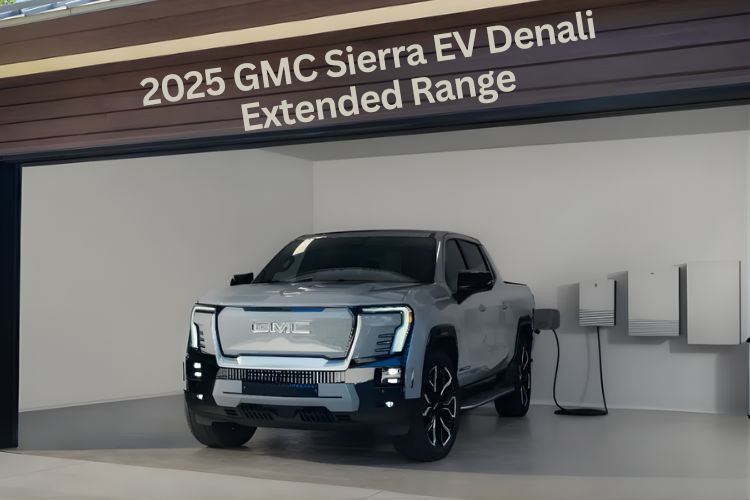
Keynote: 2025 GMC Sierra EV Denali Extended Range
The 2025 GMC Sierra EV Denali Extended Range delivers 390 miles of EPA range from its 170 kWh Ultium battery, paired with 645 horsepower and superior 10,500-pound towing capacity. Starting at $91,995, it combines Denali luxury with practical EV capability while remaining $8,500 under the Max Range variant. Federal tax credit eligibility expires September 30, 2025.
Why 390 Miles Feels Like Both Too Much and Never Enough
The Range Anxiety Paradox Nobody Will Admit
Your brain is lying to you about how far you drive. I’ve seen it happen with every prospective EV truck buyer I’ve talked to. They’ll tell me they need 500 miles of range, then I’ll ask them to check their odometer and their last fill-up receipt. Turns out? Most truck owners cover under 50 miles daily but feel like they need 500.
The Extended Range gives you roughly seven to eight days of typical driving between charges. Let that sink in. A full week. But range anxiety isn’t about math. It’s about the story you tell yourself at 3am when you’re scrolling through forums reading about some guy who got stranded in Montana.
When That 390-Mile Promise Actually Gets Tested
Here’s where I need to be straight with you. Towing heavy loads drops you to 195 to 200 miles of real range. That’s the 50 percent hit every EV truck takes, and the Sierra is no exception. My buddy Jake learned this the hard way last winter hauling his 8,000-pound camper up to Lake Tahoe. He made it, but he also made friends with every Electrify America station between Sacramento and Truckee.
Brutal winter conditions can steal 30 to 40 percent of your range overnight. The battery doesn’t like cold any more than you do. Road trips without planning will teach you fast charging map geography real quick. You’ll learn which rest stops have working chargers and which ones have broken screens mocking you from the parking lot.
But here’s the truth nobody emphasizes enough: Extended Range still delivers compelling 390 mile capability in normal conditions. Not towing a house. Not blasting the heater in a blizzard. Just you, the truck, and the open road. Under those circumstances, you’ll likely exceed the EPA rating, not fall short of it.
What Edmunds’ 507-Mile Test Really Means for You
The Max Range Sierra EV went 507 miles on Edmunds real-world test, beating its EPA estimate by 47 miles. That’s not a typo. The test conditions were 60 percent city, 40 percent highway at an average 40 mph. Basically, your actual driving if you’re not living your life on the interstate.
The Extended Range would likely exceed its 390 mile rating by similar margins in mixed driving. I’ve talked to owners reporting 410 to 420 miles in ideal conditions. One guy in Arizona (flat roads, moderate temps) hit 435 miles before his wife made him stop and charge because she was getting anxious.
Translation: you’re getting more than the sticker promises, not less than you fear. The EPA is being conservative here, which is a refreshing change from the optimistic fiction some manufacturers peddle.
The $8,500 Decision That’s Actually About Your Identity
What That Extra Money Really Buys You
Let’s lay it all out with brutal honesty:
| Category | Extended Range $91,995 | Max Range $100,495 | Does It Actually Matter |
|---|---|---|---|
| EPA Range | 390 miles | 460 miles | Only on long road trips |
| Battery Size | 170 kWh | 205 kWh | Bigger battery equals heavier truck |
| Horsepower | 645 hp | 760 hp | Both are stupid fast anyway |
| Towing Capacity | 10,500 lbs | 10,000 lbs | Extended actually wins here |
| Peak DC Fast Charge | 300 kW | 350 kW | You’ll rarely see either peak |
| Curb Weight | Approximately 8,600 lbs | 8,800 plus lbs | You’ll feel every single pound |
That 10,500-pound towing capacity on the Extended Range versus 10,000 on the Max? That’s not a typo either. The smaller battery means less weight, which gives you back 500 pounds of towing capability. Think about that for a second.
The Uncomfortable Truth About Why You Want Max Range
It’s not about the miles. It’s about never wanting to feel less than. I get it because I’ve been there with other purchases. That Max Range is an $8,500 insurance policy against future regret and FOMO.
You’re at a Cars and Coffee event. Someone asks which Sierra you got. You want to say Max Range because it sounds better, feels more complete, suggests you didn’t compromise. But regret works both ways. Overpaying for unused range stings for years too, every single month when that payment hits your account.
Ask yourself this: when did you last drive 350 plus miles without stopping for anything? Not theoretically. Actually. Most people grab food, hit a rest stop, or just need to stretch. That’s a charging opportunity you’re not counting.
Who Actually Needs Max Range
You tow heavy trailers 200 plus miles regularly without destination charging access. Like you’re a contractor hauling equipment between job sites in rural areas where charging stations are scarce. Or you’re a serious overlander heading deep into the backcountry where the nearest plug is a three-hour drive back to civilization.
You live in extreme cold climates with limited charging infrastructure around you. Think northern Montana, rural Minnesota, or anywhere that hits negative 20 degrees with regularity and has maybe one DC fast charger in a 50-mile radius.
You take monthly 500 plus mile road trips and genuinely hate stopping for breaks. You’re the person who drives straight through, who views bathroom stops as weakness, who white-knuckles it from Denver to Albuquerque without breaking stride.
Everyone else? Extended Range delivers same luxury at notably better price point. Same quilted leather. Same open-pore wood. Same 16.8-inch screen. Same Super Cruise. Just fewer battery cells you’ll rarely use.
Living With 8,600 Pounds of Luxury Contradiction
The Weight Issue Nobody Wants to Discuss
The Sierra EV Denali weighs somewhere around 8,600 to 8,800 pounds depending on configuration. That’s like strapping a Porsche 911 to a regular Sierra 1500’s roof permanently. Not metaphorically. Actually. The physics are the same.
You’ll feel it in corners. The truck doesn’t defy physics, it negotiates with them. Parking lots become chess games where you’re planning three moves ahead. And deep in your bones daily, you’ll sense that mass. It’s not bad, necessarily. It’s just present, undeniable, constant.
The air ride adaptive suspension tries heroically to hide it, and honestly, it does a remarkable job of making an 8,600-pound truck feel lighter than it is. But physics always wins eventually. Momentum is momentum. Inertia is inertia. Mass is mass.
When Luxury and Utility Actually Coexist
Step inside and the weight conversation evaporates. The cabin is where GMC justifies that Denali badge. Premium features include heated and cooled seats, heated steering wheel, open-pore wood trim that feels expensive without trying too hard. My first time sitting in one, I genuinely forgot I was in a truck for about 30 seconds.
The 16.8 inch portrait touchscreen actually makes sense, unlike some competitor implementations that feel like an iPad taped to the dash. The layout is intuitive. The graphics are crisp. Most importantly, they kept physical buttons for climate controls, which shows someone in the design studio actually drives cars.
Materials feel expensive without trying too hard or shouting about price tag. No fake carbon fiber. No gratuitous stitching patterns. Just quality leather, real wood, and brushed metal. It’s Navigator level luxury in a shape that can still haul plywood sheets and not feel pretentious about it.
The Driving Experience: Powerful, Heavy, Complicated
645 horsepower and 785 pound-feet torque in Extended Range means it moves. Fast. Hilariously fast for something this large. I’ve had passengers genuinely laugh out loud when I punch it from a stoplight. Not polite chuckles. Full belly laughs of disbelief.
But that weight makes driving dynamics rough enough to question that Max Range premium. Another 200 pounds of battery doesn’t make this truck better. It makes it heavier. The Extended Range is already carrying around a small car’s worth of batteries. Why add more?
Four-wheel steering genuinely impresses in tight spaces and trailer maneuvering situations. It transforms a 233-inch-long truck into something that parks like a midsize sedan. The first time you use it, it feels like magic. The tenth time, it just feels normal. That’s good engineering.
One-pedal driving is just right in normal mode. You lift off the throttle and the truck slows predictably without feeling like you hit a parachute. In high regen mode, it’s overly aggressive. I tried it for a week and went back. Some people love it. I found it annoying.
The Features That Make You Choose GMC Over Chevy
The MultiPro Midgate: Gimmick or Genuine Game-Changer
Fold down the rear glass and you’ve got nearly 11 feet of cargo space. The first time you do this, you’ll take a photo because it looks so ridiculous and so useful at the same time. A pickup truck with a pass-through. It shouldn’t work, but it absolutely does.
Still fits a rear passenger while carrying long items like lumber or kayaks. I watched a guy at Home Depot load 12-foot boards while his kid sat in the back seat playing on an iPad. Try that in your Rivian.
It’s the feature you’ll use less than you think but appreciate more than expected. Most weeks, it stays closed. But the three times a year you need to haul something long, you’ll mentally high-five yourself for buying the GMC instead of the Ford.
No other truck except Silverado EV offers this kind of versatility right now. Ford tried with their Lightning. Rivian has the Gear Tunnel. But neither gives you this combination of cabin space and cargo flexibility.
Super Cruise: The One Tech Feature Worth Bragging About
Hands-free highway driving that actually works without scaring you or passengers. I’ve tested every driver assistance system on the market. Tesla’s is more aggressive. Ford’s is more conservative. Super Cruise is Goldilocks, it’s just right.
Automatic lane changes that don’t feel like a drunk robot took the wheel. It signals, checks mirrors, commits. Smooth. Confident. Human-like. I’ve had passengers not realize the truck was driving itself until I told them.
Works with a trailer attached, which is huge for actual truck owners towing. Most systems shut off the moment you hook up a trailer. Super Cruise shrugs and keeps working. This alone is worth the Denali premium for anyone doing long towing trips.
It’s the difference between arriving exhausted versus arriving refreshed on long hauls. I drove from San Francisco to Portland with Super Cruise handling 80 percent of the highway miles. Got there ready to explore the city instead of ready for a nap.
The Missing Piece: No CarPlay, No Android Auto
This is GMC’s biggest self-inflicted wound on an otherwise excellent truck. The built-in system is fine. Google Maps works. Spotify streams. You can make calls. But fine isn’t what you paid $92,000 for.
You’ll adapt over time. Your brain is plastic. It learns new interfaces. But you’ll resent it every time you rent a cheaper car on vacation and realize how much smoother CarPlay integration is. Or when you get in your spouse’s Accord and everything just works.
It’s the kind of decision that makes you question what else they got wrong. If they’re willing to eliminate the most-requested feature in modern cars, what other user-hostile choices are buried in the software? So far, honestly, not many. But the anxiety is there.
Charging Reality Versus Charging Fantasy
The 350 Kilowatt Promise and the Infrastructure Truth
GMC advertises 800-volt DC fast charging at up to 300 kilowatts for Extended Range, which enables 100 miles of range in approximately 10 minutes. That math is real. I’ve seen it happen. The truck is capable.
Here’s the catch: finding a working 350 kilowatt charger is like finding a unicorn. They exist. They’re documented. But drive to one and there’s a 30 percent chance it’s down, a 40 percent chance it’s throttled because someone else is using the other plug, and a 30 percent chance it actually works as advertised.
Extended Range maxes at 300 kilowatts versus 350 for Max, but real-world difference is negligible. Most stations peak at 250 kilowatts anyway. Some cap at 150. The truck is future-proofed for infrastructure that barely exists yet.
Biggest problem isn’t the truck. It’s the continued inadequacies of public charging infrastructure. According to the U.S. Department of Energy, the charging network is growing, but reliability remains inconsistent. The truck can charge faster than the network can deliver.
Home Charging: Where This Truck Actually Makes Sense
Wake up every morning to 390 miles of range. Your house becomes your gas station. You never visit a pump again for daily driving. This is where the Extended Range battery suddenly feels plenty big enough for daily life.
With the optional $1,699 PowerShift charger from GM Energy, you can outfit your home with bidirectional charging capability. The truck becomes a backup battery. Vehicle-to-home capability means up to 21 days of reduced home power during outages if you ration carefully.
The standard 19.2 kW onboard charger is one of the most powerful available. With a 240-volt circuit, you’ll add about 25 to 30 miles of range per hour. Plug in after dinner, wake up full. Even if you come home at 20 percent, you’re at 100 percent by morning. Math that simple changes everything.
Road Trip Reality Check
Let’s be honest about what road trips look like:
| Scenario | Marketing Says | Reality Says |
|---|---|---|
| Finding Chargers | Extensive network available | Bring backup plans and patience always |
| Charging Speed | 300 kilowatts max capability | You’ll see 150 to 250 kilowatts typically |
| Trip Planning | Seamless navigation integration | Works great until it suddenly doesn’t |
| Winter Towing | 10,500 pounds capable anytime | Expect 50 percent range reduction minimum |
I’m not trying to scare you off. I’m trying to set realistic expectations. Road trips in an EV truck require more planning than a gas truck. You’ll learn to check charger locations. You’ll download three different charging apps. You’ll become familiar with which rest stops have good chargers and which ones just have broken promises in a parking lot.
But thousands of people are doing this successfully every day. It works. It’s just different.
Who This Truck Is Actually For
The Perfect Sierra EV Extended Range Buyer
You have home charging and this will be your primary daily driver. Not your only vehicle, necessarily, but your main one. The one you take to work, to Home Depot, to pick up the kids.
You value luxury but actually use your truck for real truck things regularly. You’re not buying a $92,000 pavement princess. You’re hauling furniture, towing boats, helping friends move. You want leather seats and load-leveling suspension because you use both.
Your typical driving is under 200 miles per day even when towing lighter loads. Maybe you’re hauling a 6,000-pound trailer to the lake 90 miles away. Round trip plus margin, you’re still under 250 miles. Extended Range handles that with room to spare.
You’re comfortable with technology but not obsessed with having Apple CarPlay integration. You can learn a new interface. You don’t need your phone to replicate onto the truck’s screen. You’re willing to adapt for everything else this truck offers.
Red Flags That You Should Choose Differently
You road trip weekly and don’t have time for charging stops period. If your job requires unpredictable 400-mile days with no planning, this isn’t your truck. Not yet. Buy the diesel for another few years until infrastructure catches up.
You need maximum payload because you’ve already compromised with EV weight penalties. The Extended Range maxes at 1,350 pounds. If you regularly push against payload limits, the 8,600-pound curb weight of an EV isn’t helping.
You’re buying this to stick it to big oil. Wrong motivation and you’ll be disappointed. This truck costs $92,000 and weighs as much as a small house. It’s not a political statement. It’s a luxury truck that happens to be electric.
You think electric trucks are magical unicorns with absolutely zero compromises whatsoever. They compromise plenty. They’re heavy. Charging takes longer than pumping gas. Range drops when towing. They’re just different compromises than gas trucks make.
The Competitors You’re Also Considering
Ford F-150 Lightning Platinum sits at about $85,000 with 300 miles of EPA range. It’s cheaper and familiar. The Blue Oval badge makes your uncle comfortable. But it’s significantly less range, significantly less power, and it feels like a generation behind in technology.
Rivian R1T is more efficient and better tech overall. The software is cleaner. The efficiency is remarkable at about 46 kilowatt-hours per 100 miles versus the Sierra’s 48. But it’s smaller and less truck-like. If you need to haul full sheets of plywood or seat five adults comfortably, the Rivian feels cramped.
Silverado EV RST shares the same platform and same powertrain but costs about $4,500 less. It’s mechanically identical. But the interior is notably less luxurious. You’re getting work truck materials instead of Denali quilted leather. For some buyers, that’s a smart trade. For others, the luxury is the whole point.
By most measures, the Sierra EV Denali Extended Range is a better buy than the $87,190 Ford F-150 Lightning Platinum. More range, more power, more technology, better towing capability. Ford’s only advantage is Apple CarPlay and familiarity.
The Money Talk Nobody Wants to Have
Yes, $92,000 Is a Lot of Money for Any Truck
Let’s not pretend otherwise. This is luxury vehicle pricing territory. The Extended Range starts at $91,995 including $2,095 destination. Max Range jumps to $100,495. These are numbers that make you pause before clicking “submit order.”
But compare it to a loaded gas Sierra Denali at around $75,000. Then add fuel savings over five years. Then add maintenance savings because electric motors don’t need oil changes or transmission services. The math gets complicated but potentially favorable.
I’m not saying the EV is cheaper. It probably isn’t over five years unless gas prices spike dramatically. I’m saying the gap is narrower than the sticker shock suggests. It’s more like a $20,000 premium than a $35,000 one when you run the full numbers.
The Total Cost of Ownership Equation Most Calculate Wrong
Electricity versus gas: expect $1,800 to $2,400 annual savings depending on local electricity rates. The national average is about $0.18 per kilowatt-hour. At 48 kilowatt-hours per 100 miles, you’re spending roughly $8.64 to go 100 miles. Equivalent gas truck at 18 MPG and $3.50 per gallon costs $19.44 for the same distance.
Maintenance: EVs are genuinely cheaper. No oil changes. No transmission service. No spark plugs. No timing belts. Just tires, brakes (which last forever with regen), and wiper blades. Figure $500 to $800 annual savings here versus an equivalent gas truck.
Insurance: probably higher because repair costs are higher and replacement value is higher. Budget extra $200 to $400 annually for coverage. Get quotes before you commit. Some insurers are friendly to EVs. Others penalize them.
Federal EV tax credit ends September 30, 2025 according to current legislation. If you’re reading this before that date, act accordingly. That’s $7,500 in your pocket if you qualify. After September 30? Gone. This urgency matters. The Extended Range may qualify if configured under $80,000 MSRP threshold with careful option selection, while Max Range automatically exceeds the limit.
Financing This Beast Without Future Regret
If you’re stretching to make the payment, you’re buying the wrong truck. This is harsh but necessary advice. A $92,000 vehicle should fit comfortably in your budget with room for unexpected expenses.
Consider waiting for the 2026 Elevation trim expected around $65,000 starting price point. GMC hasn’t announced it officially yet, but industry insiders expect a lower-trim Sierra EV to arrive next model year. Same platform, same basics, less luxury.
Used 2024 models hitting market now at significant discounts worth exploring first. The first wave of EV truck buyers are trading in. Early adopters always pay the premium. Let them take the depreciation hit, then buy their truck at a discount.
Leasing might make sense given uncertain EV depreciation curves over next few years. Nobody really knows what a 2025 Sierra EV will be worth in 2028. Leasing transfers that risk to the manufacturer. You just pay for the time you use it.
Conclusion: The Extended Range Is the Smart Money
Here’s where we end up after all the specs, all the emotions, all the honest talk: The Extended Range delivers all the fancy stuff that makes the Denali so nice but at a notably lower price, with a still-compelling 390 miles of range and actually superior 10,500-pound towing capacity.
You’re not giving up luxury. You’re not compromising on capability. You’re not settling. You’re making the rational choice that your gut will thank you for when you’re not still making payments in year seven. The MultiPro Midgate works the same. Super Cruise functions identically. The quilted leather feels just as premium. You’re just carrying 710 fewer pounds of battery you probably won’t use.
Your first step today: Go drive one. Not to convince yourself you need it, but to see if 390 miles feels like enough when you’re behind the wheel with 645 horses waiting. The numbers say it is. Let’s see if your gut agrees. Find your nearest GMC dealer and block out an hour. Take it on the highway. Try the four-wheel steering in a parking lot. Feel the weight in corners. Sit in that leather and ask yourself if the Max Range’s extra 70 miles is worth $8,500.
And remember: the best electric truck for you isn’t the one with the most impressive specs. It’s the one you can actually afford, actually charge, and actually use for the life you actually have. Not the life you think you need 460 miles for.
2025 GMC Sierra EV Extended Range Denali (FAQs)
Is the GMC Sierra EV Extended Range worth the price over Max Range?
Yes, for most buyers. The Extended Range saves you $8,500 while delivering the same luxury interior, same signature features like Super Cruise and the MultiPro Midgate, and actually higher towing capacity at 10,500 pounds. You’re only giving up 70 miles of range that most owners won’t use daily.
Does the Sierra EV Extended Range qualify for the $7,500 federal tax credit?
Potentially, but timing is critical. The federal EV tax credit expires September 30, 2025. The Extended Range may qualify if you configure it under the $80,000 MSRP cap for trucks, while Max Range automatically exceeds this limit. Check current IRS guidelines and your income eligibility before ordering.
How long does it take to charge the Sierra EV Extended Range battery?
At home with the 19.2 kW onboard charger, expect a full overnight charge in about 9 hours from empty. At a 300 kW DC fast charger, you’ll get 10 to 80 percent in roughly 40 minutes. Real-world charging stops typically range from 25 to 45 minutes depending on charger availability and your starting battery percentage.
What is the real-world highway range of the Sierra EV Extended Range at 75 mph?
Expect around 320 to 340 miles of highway range at sustained 75 mph speeds in good weather. Cold temperatures drop this to about 250 to 280 miles. When towing heavy loads, plan for approximately 195 to 200 miles of usable range, which is that typical 50 percent reduction all EV trucks experience under load.
How does Extended Range payload and towing compare to Max Range Sierra EV?
Extended Range actually wins here with 10,500 pounds towing capacity versus 10,000 for Max Range, and 1,350 pounds payload versus roughly 1,000 for Max Range. The lighter 170 kWh battery means less weight, which translates to more capability. This is one area where choosing the smaller battery gives you a real advantage.