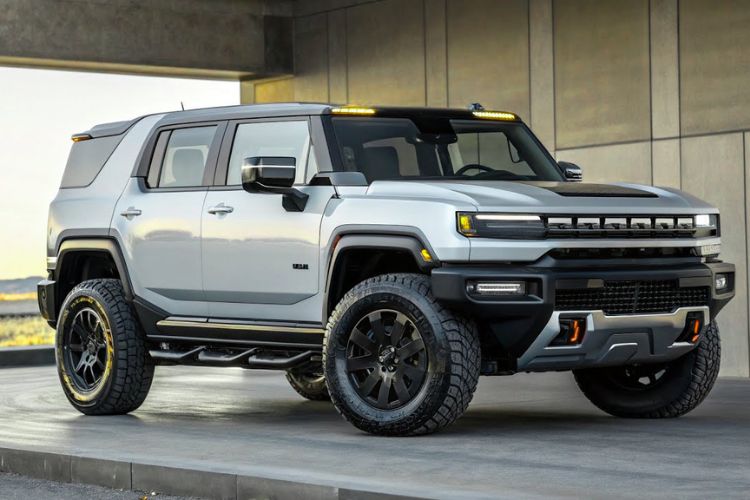
You’re scrolling through specs on the 2025 GMC Hummer EV SUV, grinning at 830 horsepower and that wild CrabWalk mode, when you hit the curb weight. Nine thousand sixty-three pounds. You blink. Refresh the page. Still there. Suddenly that excitement twists into something closer to dread.
Is this thing going to crack my driveway? Destroy my electric bill? Make me the villain in every parking lot?
Here’s what most reviews won’t tell you: that weight isn’t a side note. It’s the whole story. It explains the shocking range drops, the tire bills, the safety debates, and why this “green” vehicle generates more controversy than almost any EV on the road. We’re not here to sell you on it or scare you away. We’re here to decode what 9,000 pounds actually means for your wallet, your conscience, and your daily reality.
Keynote: 2025 GMC Hummer EV SUV weight
The 2025 GMC Hummer EV SUV weighs 9,063 pounds in 3X trim configuration, making it one of America’s heaviest consumer vehicles. The 2,923-pound Ultium battery pack accounts for one-third of total mass. With a 10,400-pound GVWR, it’s classified as a Class 3 medium-duty truck, creating infrastructure compatibility concerns and significant efficiency trade-offs despite 830-horsepower capability.
The Raw Numbers: Staring Down the Scale
Curb Weight Reality Check
My neighbor pulled up in his new Hummer EV 3X last month. I asked him about the weight, and he laughed nervously. “Yeah, it’s heavy,” he said. Heavy doesn’t quite cover it. MotorTrend confirmed what the spec sheets show: 9,063 pounds for the fully loaded 3X trim.
That’s roughly twice what a Honda CR-V weighs sitting in your driveway. The battery pack alone tips the scales at 2,923 pounds. Think about that. The battery weighs more than an entire Honda Civic. And that battery is just one piece of this 4.5-ton machine that GMC’s managed to classify as a Class 3 medium-duty truck with its 10,400-pound GVWR.
Most dealer listings you’ll find show configurations approaching or exceeding 9,000 pounds. The base numbers are real, and they’re massive.
Why the Numbers Vary Across Sources
You’ve probably noticed different weight figures floating around online. That’s not confusion, it’s configuration. The base 2X trim with its dual-motor setup and smaller battery starts around 8,500 pounds. Still absurdly heavy, but noticeably lighter than the tri-motor beast.
Add the Extreme Off-Road Package with those 35-inch tires and underbody armor? You’re climbing back up. GMC’s official site stays deliberately vague on exact curb weight figures, probably because no number makes this sound reasonable. Real-world testing and owner door stickers provide the most reliable confirmation: this vehicle is legitimately, unapologetically massive.
SUV vs Pickup: The Weight Showdown
Here’s something that surprised me when I dug into the specs. You’d think the pickup with its longer bed would be heavier, right? Wrong.
| Model | Approximate Weight | Key Difference |
|---|---|---|
| Hummer EV Pickup Edition 1 | 9,640 lbs | Longer bed, extended wheelbase |
| Hummer EV Pickup 3X | 9,000+ lbs | Full capability, truck format |
| Hummer EV SUV 3X | 9,063 lbs | Shorter wheelbase, slightly lighter |
| Hummer EV SUV 2X | 8,500 lbs (est.) | Lower output motors, fewer features |
The SUV actually weighs more than the pickup in comparable trims. That’s because the enclosed rear section, the power swing gate, that massive rear window, and the full-size spare tire mounted on the back all add weight that the open bed doesn’t carry. The shorter wheelbase saves some frame weight, but the SUV’s rear structure more than makes up for it.
Why This Thing Weighs What It Weighs
The Ultium Battery: Your Rolling Power Plant
Imagine strapping a Honda Civic underneath your SUV. That’s essentially what GMC did with the Ultium battery pack. This 170 kWh monster accounts for roughly one-third of the entire vehicle’s mass.
It’s not just big, it’s built like a bunker. The pack uses 139 stamped steel components requiring 3,500 welds to hold together. GMC designed this double-stacked 400-volt architecture not just for power delivery but for punishment. They wanted a battery that could survive the Rubicon Trail without exploding into flames.
The engineering choice was clear: maximize range and capability at any cost. And the cost? 2,923 pounds of lithium, steel, and copper riding under the floor.
The Fortress Underneath: Armor That Adds Up Fast
Every pound of capability adds literal pounds. That high-strength steel frame built to survive rock crawling? Heavy. The full underbody skid plates protecting that expensive battery from trail obstacles most owners will never encounter? Also heavy.
Those 35-inch all-terrain tires look incredible but they’re not light. Add reinforced suspension components, heavy-duty axles for off-road punishment, the four-wheel steering system that enables CrabWalk mode, and adaptive air suspension for adjustable ride height. It all stacks up fast.
GMC built this thing to be unstoppable. Unstoppable has mass.
Luxury, Tech, and Ego: The Premium Weight Tax
But it’s not all about capability. Those panoramic removable roof panels? They require structural reinforcement and complex sealing mechanisms. The massive 13.4-inch infotainment screen, the 12.3-inch driver display, and the 17-camera system monitoring everything around the vehicle all add weight in wiring, processors, and mounting hardware.
Premium audio systems, dual-zone climate control, power-adjustable everything. GMC chose spectacle over minimalism at every decision point. And spectacle, it turns out, has considerable mass. This isn’t a stripped-down work truck. It’s an event on wheels, and events require infrastructure.
What 9,000 Pounds Means for Your Real Life
Range Reality: Hauling a House on Electrons
The EPA estimates 314 miles of range for the 3X SUV. In perfect conditions, on flat ground, at moderate speeds, you might get close. But real-world highway testing tells a different story. At 75 mph, testers achieved only 250 miles before running dry.
Here’s why: heavy mass plus brick-like aerodynamics creates brutal energy consumption. You’re looking at 1.8 to 2.2 miles per kilowatt-hour on the highway. The efficiency rating of 52 MPGe combined sounds decent until you realize a Prius hybrid gets 56 MPGe. An actual gasoline hybrid beats this electric behemoth on efficiency.
Cold weather drops real-world range to around 200 miles. Tow 6,000 pounds and you’ll see the same. This isn’t a “charge once a week” commuter. It’s a “plan every long trip carefully and know where the fast chargers are” vehicle.
Charging Behavior: Patience as a Lifestyle
DC fast charging from 30% to 90% will cost you over $40 at most public stations. That massive battery needs massive amounts of electrons. A standard 110V home outlet would require approximately 72 hours for a full charge. Let that sink in. Three full days plugged into a regular outlet.
You need a Level 2 home charger. There’s no getting around it. Even then, you’re adding roughly 30 miles of range per hour of charging. The good news? With access to 350 kW fast charging infrastructure, you can add 100 miles in about 14 minutes under ideal conditions. But “ideal conditions” are rarer than you’d hope.
Braking, Handling, and “Will This Fit?”
At 93.7 inches wide with mirrors folded, the Hummer EV barely squeezes through standard 96-inch garage doors. You’ll have maybe an inch of clearance on each side. The overall length of 196.8 inches makes tight parking garages an adventure in geometry, not convenience.
And here’s the physics that can’t be argued with: heavier vehicles carry more kinetic energy. More energy means longer stopping distances, even with capable brakes and all that regenerative braking helping out. MotorTrend’s testing called the braking performance “adequate, not magic.” That’s a polite way of saying this thing takes longer to stop than you’d expect.
My colleague Tom who owns a Model Y told me he can whip into any parking spot without thinking. The Hummer EV? Every parking decision becomes a calculation. Will it fit? Can I get out? Are there clearance restrictions I need to worry about?
The Hidden Ownership Costs Nobody Warns You About
All that weight combined with instant EV torque wears those 35-inch tires 20 to 30 percent faster than lighter vehicles. And these aren’t cheap tires. Specialized off-road rubber costs $400 to $500 per tire. Times four. Plus the full-size spare you’ll want to carry. That’s a $2,000+ tire replacement bill that comes up faster than you’d expect.
Insurance premiums reflect both the high vehicle value and the potential damage this thing could cause to other vehicles in a collision. Some older parking structures and residential streets have 4-ton weight limits posted. You’ll need to start noticing those signs and avoiding those roads.
The costs add up in ways the window sticker never mentions.
The Safety Conversation We’re Not Having
The Physics That Can’t Be Argued With
In January 2023, NTSB Chair Jennifer Homendy gave a speech that made headlines. She specifically called out heavy EVs like the Hummer as a pedestrian safety concern. Not because they’re poorly designed, but because physics is brutal and unforgiving.
You inside the Hummer are incredibly protected by mass and structure. But when 9,000 pounds hits a 4,000-pound sedan, the energy transfer is catastrophic for the lighter vehicle. The Insurance Institute for Highway Safety had to reinforce their crash test equipment just to handle the Hummer’s mass. They’d never tested anything approaching 9,500 pounds before. The previous heaviest vehicle was around 6,000 pounds.
An Oxford study found that each additional 1,000 pounds of vehicle weight increases pedestrian fatality risk by 47 percent in crashes. Think about that math applied to the Hummer versus an average sedan. It’s sobering.
What GMC Built In to Address This
To GMC’s credit, they didn’t ignore these concerns. The Hummer EV comes standard with 18 cameras providing 360-degree awareness, including an underbody view that shows obstacles you might not see otherwise.
Front and Rear Pedestrian Braking with cyclist detection comes standard. Enhanced Automatic Emergency Braking, Lane Keep Assist, Blind Spot Monitoring. It’s all there. The technology assists your decision-making and can intervene when sensors detect danger.
But technology assists, it doesn’t cancel physics. Sensors don’t change the fact that 9,000 pounds carries exponentially more destructive energy than 4,000 pounds.
The Social Responsibility Question
I’m not here to moralize. But I am here to be honest. Picture tight urban streets during school drop-off. Blind intersections near playgrounds. Crowded downtown areas with pedestrians stepping between parked cars.
This vehicle demands different driving behavior than a sedan or even a normal pickup. Sensors and cameras help you see, but the weight means you need more distance to stop and more caution when maneuvering in tight spaces with vulnerable road users nearby.
Choosing this vehicle means accepting responsibility for how its mass affects others sharing the road. That’s not judgment. It’s physics married to ethics. And it’s something every prospective owner should think about seriously.
Performance Paradox: When Weight Feels Like Cheating
The Mind-Bending Acceleration
Zero to 60 mph in 3.5 seconds. That’s Porsche 911 Carrera territory. Except the Porsche weighs 3,300 pounds and the Hummer weighs nearly three times that. The sensation is completely unlike anything else on the road.
That 830 horsepower in the 3X trim delivers instant electric torque that makes the mass disappear under throttle. The specification sheet lists 11,550 pound-feet of wheel torque. That number sounds impossible until you experience it launching from a stoplight. It’s not nimble. It’s not graceful. It’s more like an unstoppable freight train that just happens to accelerate like a sports car.
The sensation of a 9,000-pound object hitting 60 mph faster than most sports cars feels fundamentally wrong. Your brain knows this shouldn’t be possible. But your body gets pressed into the seat anyway.
Off-Road Capability That Justifies Some of the Build
Here’s where some of that weight earns its keep. The Hummer EV offers 16 inches of ground clearance with adaptive air suspension. Switch to Extract Mode and you get 16.9 inches. That’s legitimate rock-crawling height.
Four-wheel steering enables a 35.4-foot turning radius. That’s tighter than a Chevy Bolt despite the Hummer being twice as large. The CrabWalk mode allows diagonal movement, making tight trail obstacles that would trap other vehicles suddenly manageable.
And that sheer mass? On loose surfaces and steep climbs, it provides a traction advantage. The low center of gravity from the floor-mounted battery prevents body roll despite the height. The reinforced frame withstands punishments that would destroy efficiency-focused EVs designed for pavement.
Where Weight Actually Helps
If you’re actually using this vehicle off-road or for towing, the weight becomes an asset instead of a liability. The 7,500-pound towing capacity benefits from substantial curb weight for trailer stability. Physics works both ways. That same mass that hurts efficiency helps maintain control when hauling boats or trailers on the highway.
The unibody construction combined with heavy battery placement creates a remarkably stable platform despite the high roofline. GMC built this thing to be a capability monster, and in those specific scenarios, the weight supports the mission instead of fighting it.
The Environmental Weight: More Complex Than “Zero Emissions”
The Manufacturing Footprint Nobody Discusses
That massive 170 kWh battery pack requires enough lithium and minerals to power 400 e-bikes. Let that sink in. The raw material extraction alone for this single vehicle’s battery could electrify an entire neighborhood of smaller, more efficient vehicles.
One study found that in regions with coal-heavy electrical grids, the Hummer EV generates more greenhouse gases over its lifecycle than a gasoline Chevy Malibu. The upstream emissions from producing that enormous battery partially offset the “zero tailpipe emissions” benefit you’re paying for.
It’s still cleaner than the original gas-guzzling Hummers over its lifetime. But it’s not the environmental champion it appears to be at first glance.
The Tire Particulate Problem
Heavy EVs accelerate tire wear, releasing microplastic particles into the environment with every mile. This is becoming the new “tailpipe emissions” conversation among environmental researchers. Your “green” choice creates different pollution, not zero pollution.
The Hummer’s 9,000 pounds combined with that instant torque creates more tire particulate matter than lighter vehicles. It’s a hidden environmental cost that doesn’t show up on any EPA rating or emissions disclosure.
When the Weight Makes Environmental Sense
But here’s the nuance. If you genuinely need towing capability, off-road durability, and harsh terrain performance, replacing a diesel F-350 or Ram 3500 with an electric Hummer is still a net environmental win.
The question isn’t “Is it perfect?” because it’s not. The question is “Is it better than what it replaces?” In regions with clean electrical grids, the lifetime emissions favor the heavy EV over diesel alternatives. Honest assessment beats both greenwashing and knee-jerk criticism.
How the Hummer Stacks Up Against the World
The Electric Heavyweight Championship
Let’s settle this with actual numbers. How does the Hummer EV SUV compare to other electric trucks and SUVs people cross-shop?
| Vehicle | Curb Weight | Battery Size | EPA Range | 0-60 Time | Starting Price |
|---|---|---|---|---|---|
| Hummer EV SUV 3X | 9,063 lbs | 170 kWh | 314 miles | 3.5 sec | $104,650 |
| Rivian R1S | ~7,000 lbs | 135 kWh | 321 miles | 3.0 sec | $75,900 |
| Ford F-150 Lightning | ~6,500 lbs | 131 kWh | 320 miles | 4.5 sec | $62,995 |
| Tesla Model X Plaid | ~5,400 lbs | 100 kWh | 333 miles | 2.5 sec | $109,990 |
| Cadillac Escalade IQ | ~8,800 lbs | 200 kWh | 450 miles | 5.0 sec | $129,990 |
The Hummer is literally in a weight class of its own. It’s 2,000 pounds heavier than the Rivian, 2,500 pounds heavier than the F-150 Lightning, and nearly 3,700 pounds heavier than the Model X.
What You Sacrifice and What You Gain
You give up efficiency. You give up easy parking. You give up affordable insurance and tire bills. You give up range confidence and environmental simplicity. Those are real sacrifices that affect daily life.
You gain jaw-dropping capability. Intimidating presence. Off-road dominance that’s genuinely class-leading. Towing stability that makes hauling heavy loads feel effortless. And occupant protection that’s about as good as physics allows.
The Rivian R1S offers 90 percent of the Hummer’s capability at 2,000 fewer pounds. It’s more practical for daily life. The Tesla Model X delivers similar straight-line performance at nearly half the weight, with vastly better efficiency. These alternatives exist and they’re worth considering seriously.
The Value Proposition at $100,000+
The base 2X trim starts at $89,995 with 570 horsepower. That’s still extremely capable with the dual-motor setup and smaller battery. The 3X trim at $104,650 adds the full 830-horsepower experience and enhanced features that justify the price increase.
Standard equipment includes Super Cruise hands-free driving on compatible highways, that 17-camera system, and those removable roof panels. But the vehicle no longer qualifies for the federal EV tax credit due to its price and classification, making the effective cost higher than competitors that do qualify.
Who This 9,000-Pound Beast Actually Makes Sense For
The Profile of the Ideal Owner
You regularly encounter harsh off-road terrain. Not gravel driveways. Not occasionally muddy roads. Actual technical off-road situations where ground clearance, approach angles, and underbody protection matter.
Towing boats, trailers, or recreational toys is a frequent reality for you, not an occasional maybe. You have the parking infrastructure to support it. Your garage door is wide enough, your driveway is reinforced concrete, and you’ve verified local bridge and parking structure weight limits.
And honestly? You embrace spectacle and presence as legitimate vehicle priorities. You want people to notice. You want the attention. And you’re comfortable with the responsibility that comes with piloting 9,000 pounds through a world built for half that mass.
The Buyer Who Should Walk Away
Your daily reality is city commutes, tight parking, school runs, and crowded streets. You thought this would be fun but you’re starting to have second thoughts while reading this article. Good. Listen to those doubts.
You want “green” credentials but you’re uncomfortable with the mega-size consequences for other road users. You thought electric automatically meant environmentally friendly, but you’re realizing this particular electric vehicle’s footprint is more complex than you assumed.
Efficiency and range confidence matter more to you than Instagram-worthy capability. A lighter EV would deliver better daily manners without the constant mental calculations about where this thing will fit.
The Three-Question Gut Check
Question 1: Will you use the off-road capability more than twice a year? Be honest. Weekend trail rides count. Driving through your yard to park a boat doesn’t.
Question 2: Does your garage, driveway, and daily route accommodate 9,000 pounds comfortably? Have you actually measured? Do you know the weight limits on structures you’ll use regularly?
Question 3: Can you accept higher running costs, accelerated tire wear, and significant efficiency penalties compared to lighter EVs?
If two or more answers are “no,” explore the Rivian R1S or Ford F-150 Lightning instead. They’ll serve you better without the daily compromises.
Conclusion: Living With the Weight of Your Choice
The 2025 GMC Hummer EV SUV’s weight isn’t a bug. It’s the defining feature. Those 9,063 pounds deliver unmatched off-road capability, occupant protection that approaches tank-like, and road presence that makes every parking lot a photo opportunity. But that same mass creates real consequences. Faster tire wear. Higher electricity costs per mile. Longer stopping distances. And legitimate safety concerns for everyone else sharing the road.
You now understand the trade. You’re not buying an efficient EV that happens to be large. You’re buying automotive excess as engineering art, a vehicle that chose spectacle over sensibility at every single decision point. For the right person with the right use case and the right infrastructure, this is defensible. Even brilliant. For everyone else, it’s an expensive lesson in physics delivered monthly through tire bills and charging costs.
Your first step today: Don’t just test drive it. Try parking it in your actual garage, your grocery store parking lot, and your neighborhood streets. Drive it through your regular routes during school drop-off hours. See if the reality matches the fantasy before the purchase becomes regret.
Final thought: The weight you’re carrying isn’t just in the vehicle. It’s in the responsibility of piloting 9,000 pounds through a world built for half that mass. Choose accordingly.
2025 GMC Hummer EV SUV Curb Weight (FAQs)
Why is the GMC Hummer EV SUV so heavy?
Yes, it’s primarily the battery. The 2,923-pound Ultium battery pack alone accounts for one-third of the total weight. Add a reinforced steel frame designed for off-road punishment, three electric motors in the 3X trim, full underbody armor, 35-inch tires, and luxury features throughout. GMC prioritized maximum capability and range over minimizing weight. Every component choice added mass.
How does the Hummer EV SUV weight compare to the pickup version?
Surprisingly, the SUV is actually heavier. The 3X SUV weighs 9,063 pounds while the 3X Pickup comes in at 9,043 pounds. The SUV’s enclosed rear section, power swing gate, massive rear window, and full-size spare tire mounted on that gate add more weight than the pickup’s longer frame and open bed. The shorter wheelbase saves some mass, but the rear enclosure more than makes up for it.
Does the Hummer EV weight affect its safety rating?
Yes, but it’s complicated. You inside the Hummer are extremely well-protected by sheer mass and structure. But for other vehicles and pedestrians, the physics are concerning. The IIHS had to modify crash test equipment to handle vehicles this heavy. Research shows each additional 1,000 pounds increases pedestrian fatality risk by 47 percent in collisions. GMC includes comprehensive safety tech, but momentum and mass can’t be eliminated by sensors.
What is the battery weight in the Hummer EV SUV?
The large 24-module Ultium battery pack in the 3X trim weighs 2,923 pounds. That’s heavier than an entire Honda Civic sedan. This single component accounts for roughly 32 percent of the vehicle’s total curb weight. The smaller battery in the 2X trim is lighter, contributing to that model’s reduced overall weight of approximately 8,500 to 8,900 pounds.
Is the Hummer EV SUV too heavy for bridge weight limits?
It depends on the specific bridge. The Hummer’s 9,063-pound curb weight exceeds some older bridge and parkway weight restrictions designed for passenger cars. For example, the Brooklyn Bridge has a 3-ton (6,000-pound) limit that the Hummer exceeds by 50 percent. Most modern highways and bridges handle it fine, but you’ll need to pay attention to posted weight restrictions on older infrastructure and residential streets with limited load capacity.