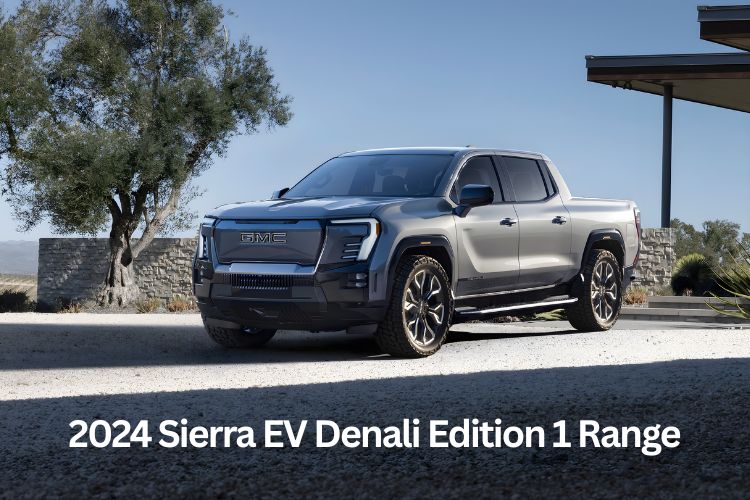
You’re staring at the spec sheet. 440 miles. Your heart does a little jump, but then your brain kicks in with all those “what ifs.” What about when you’re towing that boat? What about winter? What about that highway stretch where there’s nothing but wind and worry?
Here’s the thing: you’ve probably read a dozen reviews, and they all say something different. Some swear it’s a game-changer. Others whisper about compromises nobody talks about. The brochures show you perfection, but you’ve been burned by promises before.
Let’s cut through all of it together. We’re going to look at what GMC actually promises, what independent testers discovered when they pushed this truck hard, and most importantly, what this range really means for your life. No jargon. No corporate spin. Just the honest truth about whether this electric Denali finally kills range anxiety for good.
Keynote: 2024 Sierra EV Denali Edition 1 Range
The 2024 GMC Sierra EV Denali Edition 1 delivers a GM-estimated 440-mile range, confirmed by EPA testing and supported by real-world results showing 380-507 miles depending on driving conditions. Its massive 205-kWh Ultium battery pack prioritizes range over efficiency, achieving market-leading unloaded range but experiencing typical 50-60% reduction when towing near its 10,000-pound capacity. The truck represents brute-force engineering that effectively eliminates daily range anxiety for most buyers.
What GMC Promises and How They Got There
The Number That Stopped Conversations
The 2024 Sierra EV Denali Edition 1 delivers 440 miles of GM-estimated range on a full charge. That’s not just good for an electric truck; it’s territory most EVs period can’t touch. To put that in perspective, the original estimate was 400 miles, but GMC squeezed out an extra 40 through platform optimization. More range, and the price actually dropped from $108,695 to $99,495.
This isn’t just marketing fluff. The EPA confirmed it. The 440-mile EPA range rating comes from standardized testing using the SAE J1634 methodology, which means every manufacturer gets tested the same way. When you compare the Sierra EV Denali Edition 1 against competitors, you’re comparing apples to apples.
The Battery Beast Behind It All
This isn’t efficiency magic. It’s brute force in the best way possible. The Sierra EV packs a massive 205-kWh battery pack, one of the largest in any consumer vehicle on the road today. Think of it as strapping an enormous power bank to a chassis designed to handle it. That 800-volt charging architecture means serious capability: 350-kW DC fast charging that can add 100 miles in about 10 minutes.
The Ultium platform underpinning this truck represents GM’s full commitment to electric vehicles. Those permanent-magnet synchronous AC motors deliver power smoothly and efficiently, while the liquid-cooled lithium-ion battery stays at optimal temperature whether you’re in Arizona summer or Minnesota winter.
But here’s what nobody tells you upfront: this truck weighs 8,800 pounds empty. That’s nearly four and a half tons. The battery alone accounts for over 2,000 pounds of that weight. GMC made a conscious trade-off. Instead of chasing the most efficient miles per kWh, they decided to simply carry enough battery capacity to make efficiency almost irrelevant.
The 2025 Surprise That Changed Everything
Here’s where it gets interesting. The 2025 Sierra EV Denali Max Range model bumped the EPA rating to 460 miles. But the real story? Edmunds tested it and achieved 507 miles on a single charge. That’s 10.1% better than the EPA estimate and it beat the previous range king, the Lucid Air, by 2 miles. A 9,000-pound truck just became the longest-range EV in real-world testing.
How did GMC find those extra 20 miles between 2024 and 2025? Not by adding more battery. They optimized the motors, tweaked the inverters, and refined the aerodynamics. It’s software and hardware working smarter, extracting every possible electron from the same fundamental 205-kWh battery pack.
The Real-World Tests That Tell the Truth
When Theory Meets Your Driveway
EPA numbers are helpful for comparison shopping, but you don’t live in an EPA test lab. You live in the real world with hills, headwinds, and heated seats cranked to max. So what happens when independent journalists take the Sierra EV and drive it until it stops?
| Test Source | Miles Achieved | Test Conditions | vs. EPA Rating |
|---|---|---|---|
| Edmunds Max Range | 507 miles | Mixed 60/40 city/highway, mild weather | +10.1% |
| MotorTrend Edition 1 | 422 miles | 70 mph steady-state highway | Exceeded competitors |
| Car & Driver | ~400 miles | 75 mph highway speed | -8.7% |
| Road & Track | ~380 miles | 2/3 highway, real-world speeds | -13.7% |
These aren’t minor variations. They’re dramatically different outcomes that tell you exactly how driving style affects your real-world range. And they’re all honest results from the same truck.
What These Numbers Actually Mean
The MotorTrend test is especially revealing. They ran the Sierra EV at a steady 70 mph until it hit 5% battery, the point where most drivers would be frantically searching for a charger. Result? 422 miles. That beat every other EV truck they’d ever tested, including the Rivian R1T by 82 miles.
But let’s dig into the Edmunds test, because it tells the more complete story. Their 507-mile achievement wasn’t highway cruising. It was 60% city driving and 40% highway, mimicking how most people actually use a truck day to day. Around town for errands, then occasional highway trips. In that mixed environment, the Sierra EV’s regenerative braking becomes your secret weapon. Every time you slow down, the motors turn into generators and stuff energy back into that massive 205-kWh battery pack.
One tester started a run with 431 predicted miles at 92% charge. After covering 317 miles, the battery dropped to 6%, suggesting a real-world range just under 380 miles at higher highway speeds. The pattern is clear: drive it like a normal person in mixed conditions, and you’ll likely exceed expectations. Push it hard on the highway at 75+ mph, and you’ll still get 380-400 miles. That’s honest, usable range.
The Highway Speed Reality
Here’s the uncomfortable truth: air resistance is physics, and physics doesn’t care about your battery size. At 65 mph, you’re golden. The truck sips electrons at a reasonable rate, and you’ll get close to that EPA estimate. At 75 mph, you’re looking at roughly 80% of your potential range. Every 5 mph over 65 costs you miles you won’t get back.
Why? Aerodynamic drag doesn’t increase linearly. It increases exponentially. Push from 65 to 75 mph, and you’re not asking 15% more from the battery. You’re asking something closer to 40% more. The Sierra EV is, fundamentally, a massive metal block pushing through air. There’s only so much GMC’s engineers could do to smooth the airflow.
But here’s the thing: even with that penalty, the Sierra still outlasts its competitors. The Ford F-150 Lightning Extended Range manages about 270 miles at 70 mph. The Rivian R1T hits around 340 miles. The Sierra EV’s 400-mile highway performance isn’t just good. It’s dominant.
The Towing Truth Nobody Wants to Admit
When You Hook Up the Trailer
Maximum towing capacity: 10,000 pounds. That’s serious truck capability, the kind of number that makes diesel owners take notice. But let’s be brutally honest about what happens to your range. This is where the Sierra EV transforms from a range champion into a truck that needs a charging strategy.
Independent testing with a 5,500-pound trailer showed efficiency dropping to just 1.0 mile per kWh. Let that sink in. Without a trailer, you might see 2.0 miles per kWh on the highway. Hook up that boat, and your efficiency gets cut in half.
Here’s what that means in practical terms. An owner towed a 9,000-pound boat and trailer for 50 miles at highway speeds. They started at 100% battery and ended at 75%. That’s 25% of the battery consumed for 50 miles. Do the math, and you’re looking at a total range of about 200 miles from 100% to empty. But you’d never actually drain it to zero, so your usable range is more like 160-180 miles between charging stops.
Max out that 10,000-pound towing capacity, and you might see your range drop to roughly 150-170 miles. That’s a 60% reduction from the unloaded highway range. It’s dramatic. It’s real. And you need to plan for it.
The Comparison to Gas Trucks
Before you panic, remember this: gas trucks also drink hard under load. A diesel truck with a 600-mile unloaded range might only achieve 300 miles when towing that same heavy trailer. The Sierra EV’s 50-60% range reduction is identical to what you’d see in a traditional truck. The physics of moving 18,000 pounds down the highway at 65 mph doesn’t care if your power comes from batteries or diesel.
The difference? No shifting drama, no turbo lag, just smooth, relentless torque from zero RPM. One owner reported the Sierra EV “hands-down outperforms any gas or diesel” on hills with a trailer. The power delivery is instant and predictable. You’re not waiting for a transmission to downshift or a turbo to spool up.
And here’s the practical reality: you’d plan gas stops every 150-200 miles with a diesel towing anyway. The EV just shows it more clearly on the display. The benefit is you can often charge at your destination, at the campground or marina, and wake up with a full battery. Try that with diesel.
The Seven Silent Range Killers and How to Beat Them
Temperature: Your Battery’s Biggest Enemy
Cold weather is the silent assassin of EV range, and the Sierra EV is no exception. Testing at 16°F showed range reduced by approximately 25% when cruising at 70 mph. At 20°F, you lose 12% from temperature alone, before you even turn on the heater. Crank that HVAC system to keep the cabin toasty, and you’re looking at up to 41% total reduction.
The chemistry inside a lithium-ion battery simply slows down when it’s cold. The ions don’t flow as freely between the anode and cathode. There’s more internal resistance, more energy lost as heat, and less energy available for the motors. Hot weather at 80°F actually gave the longest range in testing, because the battery operates most efficiently at moderate temperatures.
Here’s how you fight back: precondition your cabin while plugged in and charging. Let the house electricity warm the interior, not your precious battery electrons. Use heated seats and the heated steering wheel first before cranking the main HVAC system. Those targeted heaters use far less energy than heating the entire cabin. The navigation system will even precondition the battery pack before you reach a charging stop, warming it up so it can accept maximum charging power.
Weight and What You’re Carrying
The Sierra EV weighs 8,802 pounds empty. That’s the official curb weight with no passengers, no cargo, nothing in the bed. Add yourself, your family, camping gear, and that cooler full of drinks, and you’re easily pushing 9,300-9,500 pounds. Every additional pound means more energy required to accelerate and maintain speed.
This mass contributes to the truck’s consumption rate of 48.1 kWh per 100 miles in mixed driving. For context, a Rivian R1T achieves around 42.3 kWh per 100 miles, despite also being a large truck. The Sierra carries more weight, so it uses more energy. Simple physics.
But the flip side? That weight becomes an advantage in stop-and-go traffic. The heavier the vehicle, the more kinetic energy is available to recapture through regenerative braking. It’s like a flywheel effect. Getting the truck moving takes substantial energy, but slowing it down gives much of that energy back.
Driving Speed: The Exponential Thief
Cruising at 65 mph barely touches your EPA estimates. You’re operating in the sweet spot where aerodynamic drag is manageable and the powertrain is efficient. Push to 75 mph and watch your range drop to less than 80% of potential. Hit 80 mph, and you might only see 70-75% of your rated range.
It’s exponential, not linear. Double your speed, and you don’t double your energy consumption. You quadruple it, at least for the aerodynamic component. Your right foot is the most powerful range management tool you have. More effective than any software update GMC could push.
Think of it like running versus jogging. Jog a mile, and you burn maybe 100 calories. Sprint that same mile, and you might burn 150-200 calories. The faster pace doesn’t just add up. It multiplies. The Sierra EV at 80 mph is sprinting. At 65 mph, it’s jogging. Choose your pace based on whether you need maximum range or minimum travel time.
The Little Things That Add Up
Roof rails create drag. Those beautiful 24-inch wheels increase rolling resistance. AC blasting on full pulls continuous power. Max Power mode with all 754 horsepower ready keeps the motors energized. Each of these steals 5-15 miles from your total range.
Switch from Max Power to Tour mode for daily driving. You don’t need three-quarter-ton launch control to merge onto the freeway. One user reported gaining 30-40 miles just by being smarter about drive mode selection and accessory use. That’s a meaningful difference when you’re planning a road trip.
Here’s the reality: GM built the MultiPro MidGate and offered CrabWalk four-wheel steering and Super Cruise hands-free driving. These features are amazing when you need them. But every system consumes power, even in standby. Be intentional about what you activate. One-pedal driving with regenerative braking maxed out recovers energy on every deceleration. It’s free miles, just from lifting your foot earlier.
How the Sierra Stacks Up Against Every Rival
The Competitive Range Landscape
The electric truck market in 2024-2025 is brutally competitive. Every manufacturer is chasing range as the ultimate selling point, because range eliminates the biggest objection to EV ownership. Here’s how the Sierra EV Denali Edition 1 compares against the heavyweights.
| Model | EPA Range | Real-World Test | Battery Size | Efficiency | Max Towing |
|---|---|---|---|---|---|
| 2025 Sierra EV Max Range | 460 miles | 507 miles | 205 kWh | 48.1 kWh/100mi | 10,000 lbs |
| 2024 Silverado EV RST | 440 miles | 484 miles | 205 kWh | 49.2 kWh/100mi | 10,000 lbs |
| 2023 Rivian R1T Dual Motor | 410 miles | 386 miles | 135 kWh | 42.3 kWh/100mi | 11,000 lbs |
| 2023 Ford F-150 Lightning | 320 miles | 345 miles | 131 kWh | 43.7 kWh/100mi | 10,000 lbs |
Look at that table carefully. The Sierra isn’t winning on efficiency. It’s not even close. The Rivian R1T achieves 42.3 kWh per 100 miles. The F-150 Lightning manages 43.7 kWh per 100 miles. The Sierra? 48.1 kWh per 100 miles. It’s using roughly 15% more energy to cover the same distance.
What This Table Really Shows
The Sierra isn’t the most efficient EV. Not even among trucks. The Lucid Air sedan gets an astonishing 28.3 kWh per 100 miles, nearly half what the Sierra requires. But the Sierra carries that massive 205-kWh battery pack to places the Lucid could never go. It hauls 10,000-pound trailers. It fits full sheets of plywood. It powers your job site for days.
It’s huge, expensive, and not particularly efficient. But that extra capacity enables real truck work without constant charging anxiety. Ford and Rivian chose smaller batteries to save weight and cost. GMC chose maximum capacity to deliver psychological peace of mind. Neither approach is wrong. They’re just targeting different buyers.
The 2025 Sierra EV Max Range achieving 507 miles in Edmunds testing isn’t just a win over the EPA estimate. It’s a statement. It beat the Lucid Air’s 505-mile real-world result by 2 miles. A truck designed to tow trailers just outranged the world’s most efficient luxury sedan. That’s the power of brute-force engineering executed well.
The Denali Difference
GMC is the only brand with three EV trucks in its lineup: the Hummer EV for pure capability, the Sierra EV for premium luxury, and the Silverado EV for value-focused buyers. The Sierra EV leans into luxury with the nicest, quietest cabin of the bunch. Unlike the Silverado, it doesn’t broadcast its EV status to the world with aggressive styling. You get capability without the “look at me” factor.
The interior materials, the sound insulation, the ride quality when not towing. These matter if you’re spending $100,000. Is it worth the roughly $3,000 premium over the mechanically identical Silverado EV RST? If you value a tangibly higher-grade interior and the Denali badge’s prestige, yes. If you’re focused purely on function over form, the Silverado delivers the same powertrain for less money.
The Features That Make Range Anxiety Disappear
Tech That Actually Helps You Go Further
Available Super Cruise hands-free driving works on over 750,000 miles of compatible roads across North America. It’s not just adaptive cruise control. It’s true hands-free driving where the truck monitors the road, maintains lane position, and even changes lanes when you signal. On a long highway trip, this reduces driver fatigue dramatically and helps you maintain consistent, efficient speeds.
The Intelligent Range feature is constantly collecting vehicle data and route topography to show energy use in real-time. It learns your driving style and adjusts predictions accordingly. After a few days of ownership, the range estimates become eerily accurate because the system knows how you drive.
Battery preconditioning happens automatically when you enter a fast-charging destination in the navigation system. The truck warms the battery pack to optimal temperature before arrival, ensuring you achieve maximum charging speeds. This can cut 10-15 minutes off a charging stop, and over a long road trip, that adds up.
Think of these features as your range safety net, always working in the background. They don’t add range, but they optimize how efficiently you use the range you have. That’s almost as valuable.
The MultiPro MidGate Game-Changer
GMC’s first MultiPro MidGate provides nearly 11 feet of load floor length with the tailgate down and the MidGate lowered. You can haul 4×8 sheets of drywall, lumber, kayaks, or paddleboards without sacrificing rear seat functionality. When you need passenger space, raise the MidGate and you have a full five-passenger truck. When you need cargo space, lower it and you have nearly the length of a long-bed truck.
This isn’t just a neat trick. It’s what makes the Sierra EV a truck first, EV second. The functionality matters more than the badge. It solves real problems that truck owners face every week. And it does it without requiring a crew cab long-bed configuration that wouldn’t fit in most garages.
Power That Goes Both Ways
The Onboard Power Station Pro provides up to 10.2 kW of off-board power through outlets in the bed and under the hood. That’s enough to run power tools, charge e-bikes, power a tailgate party, or keep essential home circuits running during a multi-day power outage. GMC claims the truck can power a typical home for up to 21 days, though that assumes conservative use and a full battery.
Your truck becomes a mobile power plant with 205 kWh of stored energy. That’s not a gimmick for brochure photos. It’s genuine utility that adds value beyond transportation. During hurricane season or winter storms, having 200+ kWh of backup power could literally be life-saving. That capability is standard on the Denali Edition 1, not an expensive add-on.
What the Math Really Means For Your Daily Life
Breaking Down Your Reality
The average American drives just 42 miles daily according to Federal Highway Administration data. Let’s put that in perspective. Even with 50% range loss from extreme towing or brutal winter conditions, the Sierra EV Denali Edition 1 still has 220+ miles of usable range. That’s over five days of average commuting on a single charge.
Most people’s range anxiety is psychological, not practical. You’re worried about a scenario that might happen twice a year, if that. The other 363 days, you have massive range overkill. And that’s not a criticism. That buffer is exactly what eliminates the anxiety. You’re never thinking about range because you always have plenty.
Calculate your longest regular drive. For most people, it’s the occasional visit to family 150 miles away, or that weekend getaway 200 miles from home. The Sierra EV handles those trips with range to spare. You’ll stop for food and bathroom breaks long before the battery forces you to charge.
Planning Road Trips Without Panic
With 440 miles of range, you’re looking at 6-7 hours of comfortable highway driving before you need a charging stop. The truck doesn’t care if you’re doing 65 or 70 mph. You’ll still get 380-420 miles depending on conditions. A 15-minute DC fast charging session at 350 kW adds roughly 129 miles, enough for 2+ more hours on the road.
Here’s the thing most people miss: you were already going to stop. You need bathroom breaks. You want coffee. Your kids need to burn off energy. The truck’s charging needs align perfectly with your human needs. Pull into an EA or EVgo station with 350-kW capability, plug in while you grab lunch, and you’re back on the road with 80% charge in about 40 minutes.
Yes, it’s slower than a five-minute gas station stop. But it’s not the multi-hour ordeal some people imagine. And with 440 miles of starting range, you’re making fewer stops than you would in most gas trucks, which typically get 450-500 miles per tank when highway cruising.
Your Weekly Charging Rhythm
Install a Level 2 home charger with that 19.2-kW onboard AC charger capability. The truck can accept serious power overnight. Plug in Sunday night. Wake up Monday with 100% charge and 440 miles of range. For most people, that’s the entire week covered, plus errands and carpooling and unexpected trips.
You’ll never use a public charger for daily driving. Range stops being an obsession and becomes a quiet background detail you rarely think about, like knowing your gas tank is full. The mental shift is profound. Instead of planning your life around gas stations, you just plug in at home and forget about it.
Calculate your longest regular drive, add 25% for safety margin, and compare it to the Sierra’s range in your typical conditions. For 90% of truck buyers, the math works out overwhelmingly in favor of never worrying about range again.
The Uncomfortable Trade-Off They Don’t Advertise
The Weight Penalty Is Real
At 9,000 pounds fully loaded, this truck doesn’t just carry a massive battery. It feels like it. The air suspension works hard to manage the weight, but it can’t defy physics. Reviewers describe the ride as “floaty” over big bumps and “crashy” over small ones. Those gorgeous 24-inch wheels with relatively thin sidewalls don’t help ride comfort either.
There’s a harshness at low speeds over broken pavement that you don’t expect in a $100,000 Denali. The suspension is constantly fighting between controlling nearly five tons of mass and delivering a luxury ride. It doesn’t always succeed. On smooth highways, it’s serene. On rough city streets, you feel the weight in every pothole.
The acceleration is brutal when you want it. 0-60 mph in 4.5 seconds is supercar territory. But daily driving reveals the compromises. The truck doesn’t feel nimble or playful. It feels substantial, even ponderous in tight parking lots. The four-wheel steering CrabWalk mode helps, but you’re always aware you’re piloting something massive.
Inside vs. The Road
Inside? The cabin is absolutely stunning. Real wood trim, premium leather, excellent sound insulation from wind and road noise. The tech is top-tier with a 16.8-inch infotainment screen and a massive head-up display. The materials absolutely justify the Denali badge. It feels like a luxury SUV from the driver’s seat.
But the experience of luxury includes how the truck rides, and that’s where the compromise lives. The weight required to carry a 205-kWh battery pack creates suspension tuning challenges no amount of money can fully solve. You have to ask yourself: is 440-500 miles of range worth a ride that isn’t as buttery smooth as a gas-powered Denali?
For some buyers, yes. The range peace of mind matters more than ultimate ride refinement. For others, the compromise is a deal-breaker. Drive it before you buy it. Spend time on rough roads, not just smooth dealer test routes.
Cold Weather Strategies That Work
Warm or cool the cabin while plugged in and charging to conserve battery power for driving. The truck will use shore power instead of battery power for HVAC. This is free conditioning that costs you nothing in range.
Use heated seats and the heated steering wheel rather than running the main HVAC system at full blast. Seat heaters use roughly 100 watts. A heated steering wheel uses maybe 50 watts. The cabin heater can draw 5,000-7,000 watts to maintain temperature in freezing conditions. Target the heat where you need it, not the entire cabin.
Plan for 60-70% of rated range in severe cold with temperatures below 10°F. That means 265-310 miles instead of 440 miles. It sounds dramatic, but it’s predictable. Factor it into your planning and you’ll never be caught short. And remember: every gas truck also loses efficiency in extreme cold. The EV just shows it more clearly on the range display.
Who This Truck Is Really Built For
This Is Your Truck If
You refuse to compromise on range and want the biggest number available. You’ve read about 300-mile EVs running out of charge with just 10% showing, and that terrifies you. The Sierra EV’s 440-mile cushion gives you psychological peace.
You have a long commute, 80-100 miles each way, and the ability to charge at home overnight. You need genuine, usable range that accounts for winter, highway speeds, and occasional poor charging infrastructure in rural areas.
You tow occasionally but not constantly. Weekend boat trips, monthly hauling a trailer to job sites, moving furniture for family members. You need 10,000-pound capability and 200 miles of towing range, not 150 miles like the F-150 Lightning provides.
You value the “wow” factor and tech bragging rights. Super Cruise hands-free driving, 754 horsepower in Max Power mode, 4.5-second 0-60 times. You want your truck to be a conversation starter and a technology showcase.
This Isn’t Your Truck If
You believe a Denali must have the absolute smoothest ride on the market. If you’re cross-shopping against a gas-powered Sierra Denali and ride quality is your top priority, the battery weight will disappoint you.
You’re looking for peak efficiency and a light, nimble driving feel. The Sierra EV is neither efficient nor nimble. It achieves range through massive battery capacity, not frugal energy consumption.
You’re a cost-conscious buyer focused on the lowest total cost of ownership. At $100,000 MSRP, this truck takes years of fuel savings to break even versus a diesel Sierra. If budget is paramount, consider the Silverado EV RST or even a well-equipped gas truck.
You need a dedicated heavy-hauling workhorse for constant towing. If you’re a contractor towing 8,000-10,000 pounds daily, that 160-200 mile towing range means you’ll spend significant time at charging stations. A diesel might still be more practical for that specific use case.
The Cost Reality Check
What You’re Actually Paying For
MSRP of $99,495 for the 2024 Denali Edition 1 including destination. The 2025 Max Range model with 460 miles costs $102,085. For that price, you get 754 horsepower and 785 pound-feet of torque in Max Power Mode. You get 0-60 mph in 4.5 seconds in an 8,800-pound truck. That’s objectively ridiculous performance.
You’re getting luxury features like Super Cruise, a premium 14-speaker sound system, massaging front seats, and power-everything. The MultiPro MidGate, CrabWalk four-wheel steering, and 10.2-kW power export capability. These aren’t base truck features dressed up with a Denali badge. This is a genuinely premium vehicle.
But let’s talk about the elephant in the room: $100,000 is a lot of money. A base Sierra 1500 with a gas V8 starts under $40,000. A well-equipped Sierra Denali with the 6.2L V8 costs around $70,000. You’re paying a $30,000-$60,000 premium for electric propulsion and that massive battery pack.
The Value Question
Is it expensive? Absolutely. No rational person argues otherwise. Is it worth it? That depends on what eliminates anxiety for you. If the thought of running out of charge 50 miles from home keeps you from considering any EV, this truck addresses that fear directly.
You’re paying for the largest battery pack available in a pickup truck. You’re paying for the peace of mind that comes with 440-460 miles of range. That means absorbing towing penalties, weather penalties, and speed penalties without constant mental math about whether you’ll make it home.
Tests like Edmunds’ 507-mile real-world result help quell range anxiety, which has been a genuine roadblock for broader EV adoption. GMC is betting there’s a segment of buyers for whom no amount of money is too much to eliminate that specific fear. If you’re in that segment, the Sierra EV is precisely what you need.
Conclusion: Your New Reality With 440 Miles of Confidence
We’ve walked from that glossy 440-mile claim through brutal real-world testing and found something remarkable: the number mostly holds up. Sometimes it exceeds expectations by hitting 507 miles. Sometimes it drops to 380 miles on challenging highway runs. But here’s what matters: for 95% of your driving life, this truck eliminates the range conversation entirely.
The Sierra EV Denali Edition 1 isn’t perfect. It’s heavy, it’s not the most efficient, and yes, towing cuts your range dramatically to around 160-200 miles. But it’s honest about what it is: a real truck that happens to be electric, not an electric vehicle pretending to be a truck. That 205-kWh battery pack delivers genuine capability when you need it and massive range cushion when you don’t.
Your first step today: open the myGMC app or visit GMC’s website and use their range calculator with your actual daily routes. Factor in your climate, your typical driving style, and your occasional towing needs. Input whether you’re mostly city, mostly highway, or a realistic mix. You’ll probably discover that range anxiety was the only thing holding you back from making the switch.
You’re not guessing anymore. You’re choosing this truck knowing exactly how far it goes for you.
2024 GMC Sierra EV Denali Edition 1 Range (FAQs)
How accurate is the Sierra EV Denali’s 440-mile range claim?
Yes, it’s largely accurate. Independent testing by MotorTrend achieved 422 miles at steady 70 mph highway driving. Edmunds achieved 507 miles in mixed 60/40 city/highway driving with the 2025 Max Range model. Real-world range varies from 380 miles at aggressive highway speeds to over 500 miles in gentle mixed driving. The EPA estimate is conservative for most daily driving scenarios.
Does the Sierra EV range decrease when towing?
Yes, dramatically. Towing a 5,500-pound trailer drops efficiency to about 1.0 mile per kWh, suggesting roughly 200-210 miles of total range. Towing a 9,000-pound load at highway speeds reduces range to approximately 160-180 miles between charges. This is a 50-60% reduction, similar to what gas trucks experience, but more visible on the digital range display.
What is the Sierra EV’s real range at highway speeds?
At 70 mph, expect 400-420 miles. At 75 mph, expect 380-400 miles. The Car and Driver test of the platform-equivalent Silverado EV achieved 400 miles at 75 mph. Highway driving eliminates regenerative braking benefits and maximizes aerodynamic drag, reducing range compared to the EPA mixed-cycle estimate.
How does cold weather affect Sierra EV Denali range?
Cold weather causes significant range loss. Testing at 16°F showed approximately 25% reduction at highway speeds. Severe cold at -4°F to -22°F can cause 30-35% reduction, dropping usable range to 240-280 miles. Preconditioning the cabin while plugged in and using heated seats instead of cabin heat helps minimize the impact.
How long does it take to charge the Sierra EV Denali from 10% to 80%?
With a 350-kW DC fast charger, expect 40-45 minutes for a 10-80% charge, adding approximately 148 kWh and 280-300 miles of range. GMC claims 100 miles can be added in about 10 minutes under ideal conditions. Home charging with the 19.2-kW onboard charger takes approximately 12.7 hours for a complete charge on a Level 2 240V outlet.