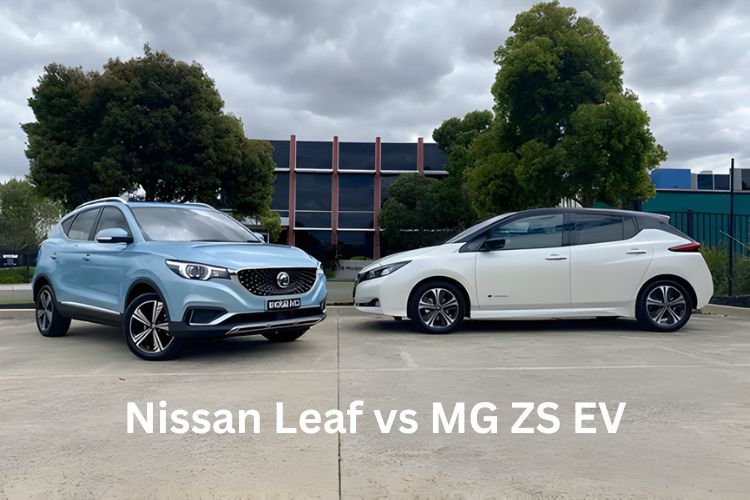
That flutter in your stomach when you’re finally ready to ditch the petrol pump, but two very different EVs are pulling you in opposite directions. You’ve got the Nissan Leaf in one tab (the proven pioneer, the OG electric everyone trusts) and the MG ZS EV in the other (the scrappy newcomer with an SUV body and a price that makes you wonder what’s the catch).
Here’s the real fear that’s keeping you awake: what if I choose wrong and regret it for seven years? Every review champions a different car. Every forum argues specs you barely understand. CHAdeMO this, liquid cooling that, thermal throttling something else. And most guides? They compare spreadsheets, not the daily realities that’ll make or break your EV life.
We’ll tackle feelings first, back them with 2025 data, then find which car hugs your actual life. Because the right choice isn’t about which car wins on paper. It’s about which one won’t make you curse yourself three years from now when you’re stuck at a charging station or scraping over a speed bump for the hundredth time.
Keynote: Nissan Leaf vs MG ZS EV
The Nissan Leaf versus MG ZS EV comparison reveals two valid paths to affordable electric motoring. The Leaf delivers superior efficiency, faster charging, and advanced technology at a premium price. The MG counters with genuine SUV practicality, comprehensive equipment, and a 7-year warranty for thousands less. Both use CCS charging in their current forms, eliminating infrastructure anxiety. The Leaf suits efficiency-focused drivers who value refined technology. The MG serves value-conscious families who prioritize space and warranty coverage over cutting-edge features.
What You’re Really Choosing: Legacy Hatch vs Value SUV
Let’s cut through the marketing speak and talk about what these cars actually are.
The Leaf’s Identity
The Nissan Leaf is a compact hatchback that started the EV revolution back in 2010. Built from scratch as an electric vehicle, not a converted petrol platform. That trusted old friend vibe radiates from every angle. Proven, familiar, but starting to show its age. Think of it like the reliable bike that’s served you well but now tires on hills.
The new third-generation Leaf transforms into a sleek crossover with that impossible-to-achieve 0.25 drag coefficient. It’s aerodynamic obsession made metal. Nissan built this car around one mission: squeeze every last mile from every electron.
The ZS EV’s Pitch
The MG ZS EV is a small SUV body with higher ride height and family-friendly ergonomics. Newer player with modern tech and an almost-too-good-to-be-true warranty. It’s the budget disruptor that doesn’t feel budget.
Fresh-faced challenger that feels “normal” in the best way possible. You sit higher. You load groceries without ducking. You navigate British roads without holding your breath over speed bumps. The ZS EV doesn’t try to reinvent driving. It just makes going electric feel completely unremarkable.
The Core Question Nobody Asks
Not which is “better,” but which fits how you actually drive. City commutes and school runs? Weekend highway trips? Mix of both?
Your answer here determines everything that follows. Because one of these cars will make your life easier. The other will make certain journeys a planning nightmare.
The Charging Reality That Changes Everything
Forget range for a second. The real story is what happens when you need to charge away from home, and it’s not pretty for one of these cars.
The CHAdeMO Problem: The Leaf’s Achilles Heel
Here’s the uncomfortable truth: older Nissan Leafs use CHAdeMO for DC fast charging. This charging standard is quietly disappearing, like buying a new VCR in 2025. Europe and UK are adding far more CCS chargers than CHAdeMO lately.
Finding CHAdeMO chargers is already difficult outside major routes. Electrify America’s new stations? CCS dominates 8 to 1. ChargePoint’s rollout? Same story. Even Nissan admitted defeat and switched to CCS for the new Leaf and their Ariya SUV.
This is the dealbreaker for many. You can own the most reliable car on earth, but if you can’t charge it on road trips without detours and crossed fingers, what’s the point?
The MG’s Modern Standard: CCS Everywhere
MG ZS EV uses CCS Combo 2 port with peak DC charging around 76-94 kW in real-world conditions. CCS is the global standard, like USB-C for laptops. Every new charging station has CCS. You can even access Tesla Superchargers with an adapter.
Infrastructure momentum beats spec sheets. OEMs, networks, and policy all favor CCS. When you pull into a service station, you’re not hunting for that one CHAdeMO plug tucked in the corner. You’ve got options. Choices. Backup plans.
That peace of mind? You can’t put a price on it.
What This Means on a Real 300-Mile Family Trip
Imagine driving from London to Edinburgh with the kids in the back. One car makes you pre-plan every charging stop with military precision. The other lets you adapt on the fly.
| Journey Reality | Nissan Leaf (Old CHAdeMO) | MG ZS EV |
|---|---|---|
| Finding a charger | Genuine anxiety, pre-planning essential | Flexible, options everywhere |
| Peak charging speed | 50 kW (often throttles lower) | 76-94 kW consistently |
| Charging stop time | 40-50 minutes to 80% | 30-40 minutes to 80% |
| Total trip anxiety | High (what if charger’s broken?) | Low (always a backup option) |
The good news? The brand-new third-generation Leaf finally adopts CCS2 charging. It’s fixed. The 75 kWh model can handle up to 150 kW DC charging, absolutely crushing the MG’s speeds. But if you’re looking at used Leafs to save money, that CHAdeMO albatross is waiting for you.
The Range Question: Numbers vs Your Actual Daily Calm
On paper they look close. In your driveway on a cold Tuesday morning? Different story.
The Official Numbers
The new Leaf with its 75 kWh battery targets up to 386 miles WLTP. The 52 kWh version aims for 271 miles WLTP. The MG ZS EV Standard Range promises 198 miles WLTP. Long Range stretches to 273 miles WLTP.
But WLTP is the fantasy. It’s the range you get in perfect conditions with a gentle driver and mild weather. Real-world is what actually matters when you’re late for work and the heater’s blasting.
The Real-World Reality Check
Picture watching the range drop as you sit in winter traffic, heater on full, wipers working overtime. That WLTP number feels like a cruel joke.
Leaf 40 kWh delivers 140-160 miles mixed driving, less in heat or cold. Leaf e+ gets 180-220 miles in realistic conditions. The new 75 kWh model should achieve around 250-280 miles in daily use.
ZS EV Standard Range achieves 200-240 miles daily despite its smaller official number. ZS EV Long Range hits 250-280 miles consistently. The MG’s real-world performance punches above its WLTP rating.
Translation: the ZS EV stretches trips and eases “will I make it?” anxiety better than you’d expect from the specs alone.
The Battery Secret That Matters More Than Range
Here’s what most reviews bury: many ZS EVs use LFP battery chemistry. These lithium iron phosphate cells are robust workhorses. You can charge to 100% daily without worry. No battery anxiety. No degradation paranoia.
Older Leafs use NMC packs without liquid cooling. They need mindful charging. Avoid constant 100%. Avoid back-to-back rapid charges on hot days. The passive air cooling system lets battery temperatures climb, accelerating capacity loss over time.
Studies from hot climates paint a stark picture. Arizona and Texas data shows older Leafs at 78% State of Health after 50,000 miles with frequent DC charging. The liquid-cooled MG? 88% SOH under identical conditions.
Your road trip freedom five years from now lives in this difference. The new Leaf’s water-cooled battery fixes this problem entirely, but used Leafs carry this thermal management burden like original sin.
Living With Each Car: The Details That Matter at 7am
Spec sheets don’t capture the stuff that’ll actually delight or annoy you daily.
The One-Pedal Magic Trick
Nissan’s e-Pedal mode brings the car to a complete stop. Game-changing in city traffic. You lift off the accelerator and the regenerative braking handles everything. No brake pedal dancing in stop-and-go traffic. No creeping forward at lights.
People who love e-Pedal genuinely love it. It makes driving feel effortless, like the car reads your mind. After a month, going back to a regular car feels primitive.
MG ZS EV has regenerative braking with three levels of adjustment, but you still need the brake pedal for full stops. It’s good, it works, but it’s not that transformative one-pedal experience. Small difference on paper, profound difference after a month of commuting.
Space, Comfort, and Visibility
The numbers tell one story. The lived experience tells another.
| Real-Life Factor | Nissan Leaf | MG ZS EV |
|---|---|---|
| Boot space | 435L (surprisingly big) | 359L (smaller than expected) |
| Ride height | Low hatchback (1530mm) | Higher SUV perch (1635mm) |
| Loading groceries/kids | Duck slightly, compact footprint | Easy height, SUV convenience |
| City parking | Calms nerves, nimble | Good but slightly bulkier |
| Blind spot visibility | Terrible A-pillars create danger | Notably better, clearer sightlines |
That blind spot issue on the Leaf isn’t minor. Those thick A-pillars genuinely hide pedestrians and cyclists at junctions. You learn to bob your head around like a pigeon to check properly. The MG’s visibility is notably superior, especially important for newer drivers or busy school runs.
The Interior Vibe You’ll Feel Every Day
Step into the new Leaf and you’re greeted by those massive 14.3-inch dual screens. Google Built-in means Google Maps, Google Assistant, the entire ecosystem lives natively in the car. Navigation knows where chargers are. Voice control actually works. The interface is immediately familiar.
The MG’s interior is spacious and highly functional. The 10.1 or 12.3-inch touchscreen runs MG’s iSmart system. It works. You get CarPlay and Android Auto. But reviews consistently mention hard plastics and occasional software lag. The native system can feel glitchy, throwing up warning chimes for minor issues.
Both have remote climate control. Nissan’s app is notoriously unreliable. MG’s works better. Heated seats come standard on upper trims for both. The Leaf offers driver massage seats on top models. The MG counters with a panoramic Sky Roof on the Trophy trim.
The Reliability Question: One Was Born Electric, the Other Wasn’t
Here’s the uncomfortable truth dealers gloss over.
Nissan’s Decade of Real-World Proof
“79,000 miles, nothing but tyres and wipers.” That’s a real quote from a Leaf owner forum. The Nissan Leaf was engineered from scratch as an EV, not a conversion. A recent UK study named it the country’s most reliable EV with just 3.06% warranty claim rate.
Ten years of taxi drivers and fleet managers choosing it repeatedly. Known issues are rare and mostly limited to battery degradation in early air-cooled models. This is proven, battle-tested technology with a track record.
When something does go wrong, Nissan’s dealer network is established and familiar with EV repairs. Parts availability is strong. You’re not a pioneer. You’re benefiting from a decade of learning.
The MG’s Growing Pains
The ZS EV is built on a petrol platform, converted to electric architecture. It works, but some owners report BMS issues and software glitches in forums. Not dramatic failures that leave you stranded. More like annoying warning lights and infotainment freezes.
The same UK reliability study placed the ZS EV second with 4.76% warranty claim rate and the lowest average repair cost at just £225.90. That’s genuinely impressive for a newer player. But you’re accepting some uncertainty. Dealer experience with EVs varies wildly. Some owners report extended waits for parts shipped from China.
You become a beta tester of sorts. Excitement mixed with the unknown.
The Warranty Safety Net That Tips the Scale
Nissan offers 3 years or 60,000 miles standard coverage. The battery gets 8 years or 100,000 miles against defects. It’s industry-standard but nothing special.
MG counters with 7 years or 80,000 miles comprehensive warranty. That’s MG putting money where their mouth is. Seven years of peace. Seven years where any mechanical or electrical failure is someone else’s problem.
Question: would you rather rarely need a warranty or frequently use a good one? The MG’s extended coverage doesn’t make it more reliable. But it does make ownership less financially risky.
The Money Math: Price, Value, and Five-Year Reality
Let’s do the uncomfortable arithmetic most people avoid.
Purchase Price Reality
The MG ZS EV Standard Range starts around £26,000. Long Range tops out near £40,000 fully loaded with the Trophy trim. You get panoramic roof, heated leather seats, wireless charging, and that 7-year warranty.
The new Nissan Leaf pricing isn’t finalized yet, but expect £35,000-£51,000 based on Nissan’s positioning. The old Leaf e+ with 62 kWh sat around £36,000-£40,000. The new 75 kWh model with superior tech will command a premium.
| Cost Factor | Nissan Leaf | MG ZS EV |
|---|---|---|
| Starting price (2025) | ~£35,000-£51,000 | £26,000-£40,000 |
| Best range option | 386 miles WLTP (75 kWh) | 273 miles WLTP (Long Range) |
| Real-world range | 250-280 miles | 250-280 miles |
| Price per mile of range | Higher | Lower |
| Value proposition | Premium for proven tech | More features for less money |
The MG wins the spreadsheet battle decisively. More metal for your money. More standard equipment. Lower entry price.
The Five-Year Total Cost Nobody Calculates
Service costs are minimal for both because EVs are mechanically simple. No oil changes. No timing belts. No clutches.
The Leaf’s superior efficiency matters more over time. At 4.5 miles per kWh versus the MG’s 3.5 miles per kWh, the Leaf uses roughly 25% less energy per mile. Over 50,000 miles, that’s thousands of pounds in charging costs.
Insurance quotes vary wildly by driver, but get real quotes for both. The MG is surprisingly affordable despite the SUV body. Resale value is uncertain. Nissan EVs historically hold value better due to proven track record. The MG is unknown territory with that CHAdeMO-free CCS advantage working in its favor.
The CHAdeMO Tax You’ll Pay Later
If you’re considering a used older Leaf to save money, factor in the CHAdeMO obsolescence tax. Finding compatible chargers costs time hunting alternatives. You might need a CHAdeMO adapter adding £500+ frustration.
Factor in a potential £2,000+ resale hit because the next buyer faces the same infrastructure headache. This “tax” compounds every year as CHAdeMO becomes rarer. The network is actively shrinking.
The new CCS-equipped Leaf eliminates this entirely. But used Leafs? That charging port is a depreciating asset.
Power and Performance: Which Feels Fun Behind the Wheel
Imagine merging onto the motorway without that petrol growl, just smooth, instant torque pushing you back in your seat.
The Numbers That Matter
New Leaf 75 kWh: 160 kW (215 hp), 355 Nm torque, 0-62mph in 7.6 seconds. New Leaf 52 kWh: 130 kW (174 hp), 345 Nm torque, 0-62mph around 8.5 seconds.
MG ZS EV Standard Range: 130 kW (176 hp), 280 Nm torque, 0-60mph in 8.0 seconds. Long Range paradoxically gets less power: 115 kW (156 hp), same 280 Nm torque, 0-60mph in 8.2 seconds.
The Leaf edges ahead with quicker responses and more torque. That extra 75 Nm of twist makes overtaking more confident. But neither car is a sports car. Both deliver that addictive EV instant acceleration that makes petrol cars feel laggy.
The Cooling Factor Nobody Explains
The new Leaf uses liquid cooling for its battery pack. Water jackets circulate coolant to maintain optimal temperature. The battery stays happy under pressure. Performance remains consistent. Charging speeds don’t throttle even on hot days or after spirited driving.
Older Leafs with air-cooled batteries? That’s where the infamous “Rapidgate” throttling happens. The battery heats up during rapid charging or aggressive driving. The BMS panics and restricts power to protect the cells. Your charging speed drops from 45 kW to 20 kW. Performance feels hesitant.
The MG ZS EV uses liquid cooling from the start. The CATL-supplied NMC battery maintains consistent performance. No thermal anxiety. No degradation paranoia from heat stress.
Translation: both current models manage temperature properly. But if you’re buying a used Leaf without liquid cooling, you’re inheriting a laptop that constantly overheats.
The Truth About “Fun”
For effortless city sprints and highway confidence, the new Leaf wins with more power and better tech. For relaxed, comfortable vibes, the MG satisfies with its higher driving position and SUV feel.
Neither will thrill enthusiasts. Both deliver what matters: that electric torque surge that makes every green light a tiny joy. Silent acceleration that feels futuristic. Smooth power delivery that spoils you for combustion engines forever.
The Future-Proofing Factor: Which Won’t Feel Ancient in 2028
You’re not buying for today. You’re buying for five winters from now when the car’s paid off and your kids are three years older.
The Infrastructure Trajectory
CHAdeMO is actively being phased out across Europe and UK. New charging stations are CCS-only. Some networks are removing CHAdeMO plugs entirely to make room for more CCS units. Even Nissan admitted defeat. The new Leaf and the Ariya both use CCS in Europe.
By 2028, finding CHAdeMO could be genuinely difficult outside major routes. The network is shrinking in real-time. That infrastructure tilt makes any CCS-equipped car simpler for long-term public charging.
The new Leaf dodges this bullet entirely. But older Leafs? They’re tied to a dying standard.
The “Should I Just Wait?” Question
There will always be something better coming. Better range. Faster charging. Lower prices. The perfect affordable EV is perpetually 18 months away.
Real question: will either of these embarrass you or fail you in three years? The new CCS-equipped Leaf feels future-proof with modern tech and Google integration. The MG feels safer bet for value buyers who need practical transport now.
Waiting makes sense if your current car is perfectly fine. Waiting is procrastination if your petrol car is costing you £200 monthly in fuel and you’re ready for the switch.
The Decision Framework: Stop Agonizing, Choose Your Car
Here’s how to actually decide.
Choose the Nissan Leaf If
Your driving is 95% local with reliable home charging. You rarely take long trips requiring public fast charging. You found a stellar deal on the new CCS-equipped model. You genuinely love one-pedal driving after testing it properly.
You prioritize proven reliability above cutting-edge features. You value efficiency and lower running costs over initial price. You want the most advanced tech with Google Built-in and superior charging speeds. You plan to keep the car until it dies so resale doesn’t matter.
Choose the MG ZS EV If
You do regular longer trips and need charging flexibility. You want stress-free access to modern charging infrastructure without worrying about obsolete standards. You value more standard features for less money.
You need genuine SUV practicality with higher seating and better ground clearance. You’re comfortable with a newer brand for that 7-year warranty peace. You want the car that fits the next five years of EV evolution without overspending.
The Third Option Nobody Mentions
If you need consistent 300+ mile range, neither car is ideal. Consider the MG4 EV instead. Better range, similar price, sleeker hatchback design. Or the new Renault Scenic E-Tech for more space.
If you’re looking at used older Leafs purely to save money, be honest about that CHAdeMO limitation. Can you live with shrinking infrastructure for the next 5 years? If yes, the Leaf’s reliability might be worth the charging compromise. If no, pay more for CCS compatibility.
Don’t force a purchase if neither feels right. The wrong EV is worse than keeping your current car another year.
Final Comparison at a Glance
| Factor | Nissan Leaf (New Gen 3) | MG ZS EV |
|---|---|---|
| Real-world range | 250-280 mi (75 kWh) | 250-280 mi (Long Range) |
| WLTP range | 386 miles (75 kWh) | 273 miles (Long Range) |
| DC fast charging | CCS2, up to 150 kW | CCS2, 76-94 kW |
| Battery cooling | Liquid-cooled (modern) | Liquid-cooled (stable) |
| Battery chemistry | NMC with thermal management | NMC/LFP (charge to 100% freely) |
| Power/torque | 160 kW / 355 Nm (75 kWh) | 115-130 kW / 280 Nm |
| 0-62mph | 7.6 seconds (75 kWh) | 8.0-8.2 seconds |
| Boot space | 437L (surprisingly spacious) | 443L (flexible loading) |
| Ground clearance | ~135mm (low for crossover) | 161-177mm (genuine SUV) |
| One-pedal driving | True e-Pedal (full stop) | Regen only (need brake) |
| Visibility | Poor (thick A-pillars) | Good (clear sightlines) |
| Warranty | 3 years / 60,000 miles | 7 years / 80,000 miles |
| Starting price | ~£35,000-£51,000 | £26,000-£40,000 |
| Reliability track record | Excellent (proven platform) | Good (newer, less data) |
| Future charging access | Excellent (CCS standard) | Excellent (CCS standard) |
| Best for | Efficiency, tech, long-distance | Value, practicality, family use |
Conclusion: The Choice That Fits Your Real Life, Not the Reviews
We’ve traveled from late-night spec-sheet paralysis to crystal clarity. Here’s what it comes down to: The new Nissan Leaf is the technologically superior choice that rewards you with efficiency, faster charging, and Google-powered intelligence. It’s refined, proven, and genuinely impressive. But it costs more and sits lower than you’d expect from a crossover.
The MG ZS EV is the practical, value-driven choice that delivers genuine SUV utility, comprehensive equipment, and that 7-year warranty safety net for thousands less. Yes, it’s less efficient and charges slower, but for most daily driving, that won’t matter. You’re getting more physical car for less money.
In five years, nobody will remember what you paid. But you’ll remember every charging stop, every moment of range anxiety, every scrape over a speed bump. Choose the car that eliminates your biggest daily friction point.
Your first step today: Book test drives of both. Drive your actual daily route. Try your real parking spot. Feel that e-Pedal magic in the Leaf. Experience the MG’s higher perch and better visibility. Then check CCS charging availability on routes you actually drive using Zapmap. That reality check will tell you everything.
The final truth: Choose the car that fits how you’ll actually use it, not the one that looks best on paper. The right EV is the one that makes every drive feel lighter, not heavier. You’ve got this.
MG ZS EV vs Nissan Leaf (FAQs)
Why does the Nissan Leaf charge slowly on road trips?
Older Leafs with CHAdeMO can only access limited charging networks that max out around 50 kW. The passive air cooling also causes “Rapidgate” throttling where charging speeds drop dramatically when the battery heats up. The new CCS-equipped Leaf with liquid cooling fixes both issues completely.
Is the MG ZS EV battery liquid cooled?
Yes. The MG ZS EV uses liquid-cooled NMC battery cells from CATL. This active thermal management system maintains consistent performance and prevents the degradation issues that plagued older air-cooled Leafs. The battery stays happy under pressure.
Which has better resale value, Leaf or MG ZS?
Historically, Nissan Leafs hold value better due to proven reliability and brand trust. However, older CHAdeMO-equipped Leafs are seeing accelerated depreciation as the charging standard dies. The new CCS Leaf should retain value well. MG’s long warranty helps resale, but the brand is too new to predict confidently.
Can I use Tesla Superchargers with a Nissan Leaf?
The new CCS-equipped Leaf can access some Tesla Superchargers that have been opened to other EVs using a CCS adapter. Older CHAdeMO Leafs cannot use Tesla Superchargers at all. This is another reason the charging standard matters enormously.
Does the MG ZS EV qualify for federal tax credit?
In the UK, neither vehicle qualifies for the old plug-in car grant as it ended in 2022. In the US, the MG ZS EV does not qualify for the federal EV tax credit because it’s not assembled in North America and doesn’t meet battery sourcing requirements. The new Nissan Leaf’s US availability and credit eligibility are still being confirmed.