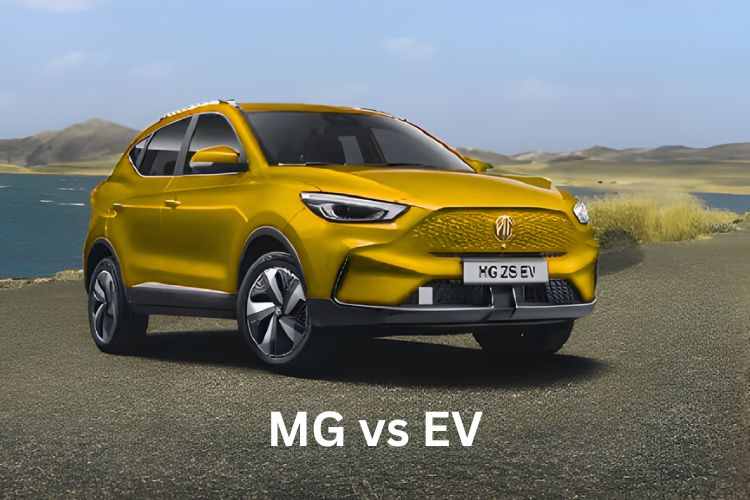
You’re three tabs deep into your EV research. There’s a Kia EV3 in one browser window at £38,000. A Hyundai Kona Electric in another at £36,500. Then you click on the MG4, and it’s sitting there at £26,995. Your mouse hovers. You refresh the page, thinking it’s a mistake.
It’s not.
That £10,000 gap isn’t a sale. It’s the regular price. And now you’re stuck with a question that’s keeping you up at night: is this smart money, or am I setting myself up for years of regret?
Here’s the thing. Every review you’ve read tells you about kilowatt hours and charging curves. They throw around terms like “LFP battery” and “regenerative braking” like you’re supposed to nod along. But none of them address the actual knot in your stomach. The real question isn’t technical. It’s personal. Am I being cheap, or am I being clever?
Let’s talk about the elephant in the showroom. MG used to be British sports cars, right? Little roadsters with character. Now it’s Chinese-owned, aggressively priced, and suddenly everywhere. That shift feels uncertain. Maybe even a bit suspicious.
So here’s what we’re going to do together. We’ll face the fears first. Then we’ll stack the facts. No corporate jargon. No tech-speak without translation. Just the honest truth about whether an MG electric vehicle makes sense for your life and your wallet. By the end, you’ll choose with confidence instead of doubt.
Keynote: MG vs EV
MG Motor has transformed from a defunct British sports car brand into a volume EV disruptor under Chinese ownership. The MG4 EV delivers rear-wheel-drive dynamics and competitive range starting at £26,995, undercutting rivals by £7,000 to £10,000. Reliability ranks second-to-last among brands, but hardware quality receives consistent praise. Software and infotainment systems lag behind premium competitors. Total cost of ownership favors MG due to lower purchase prices and identical EV fuel savings. The value proposition attracts budget-conscious buyers willing to trade polish for accessibility. MG’s success proves price disruption works in democratizing electric mobility.
The Real Question You’re Actually Asking
Let’s clear something up right away. When you search “MG vs EV,” you’re not comparing a brand against a technology. You already know MG makes EVs. What you’re really asking is: how do MG’s electric vehicles stack up against everyone else’s electric vehicles?
You’re not choosing between a brand and a technology. You’re choosing between your savings account and your sleep at night.
The three fears keeping you up are simple. First: will it strand me mid-route with a dead battery and no charger in sight? Second: will it fall apart in year two, leaving me with repair bills that eat up all my savings? Third: am I throwing away money I can’t get back when I try to sell it?
And here’s what most guides skip entirely. The raw, uncomfortable feeling of watching your neighbors drive “proper” brands while you explain your MG choice at dinner parties. The subtle raised eyebrow when you say you bought Chinese. The internal voice wondering if you should have just stretched the budget.
We’re going to anchor every single one of those fears to a number, a table, and a truth you can actually use. No hand-waving. No marketing speak. Just the data that matters and what it means for your daily life.
Who MG Really Is Right Now
From British Heritage to Global Giant
MG Motor today is owned by SAIC, one of the world’s largest automakers. This isn’t some garage startup cobbling together cars in a shed. SAIC is a Chinese state-owned manufacturing giant with the resources and scale to compete globally.
In 2024, MG outsold Vauxhall and Skoda in the UK. Read that again. A Chinese-owned brand with a British badge beat established European names. MG became the number one privately-purchased EV brand after Tesla. That’s not luck. That’s a calculated strategy working exactly as planned.
The play is brutally simple: use massive manufacturing scale to undercut European prices by £5,000 to £15,000 for similar specs. Wrap it in a familiar British badge that carries a century of heritage and goodwill. Watch the sales roll in.
The Models Actually in Showrooms
Walk into an MG showroom today, and you’ll see three main electric options. Each one targets a different buyer with surgical precision.
The MG4 hatchback is the star of the show. It’s available with battery options from 51 to 77 kWh, delivering up to 520 km of WLTP range. DC fast charging peaks at 117 to 135 kW, meaning you can grab 80% charge in about 30 minutes. Starting price? £26,995. This is the driver’s choice, the one that actually feels fun to pilot, not just practical to own.
The MG S5 EV is the newest family SUV contender, starting at £28,495 with up to 298 miles of range. It’s positioned as the sensible family hauler with modern styling and a decent feature set for the money.
The MG ZS EV is the older SUV model. It offers 320 to 440 km of WLTP range, but here’s the compromise: slower DC charging at around 50 kW. It’s being phased out but still available, often at attractive discounts.
Rule of thumb: if you see “MG4,” think fun and value. If you see “ZS EV,” think basic family transport with compromises. The S5 sits somewhere in between, offering more space than the MG4 with better tech than the aging ZS.
The Brutal Reliability Truth You Need to Hear
The Numbers That Made You Nervous
Let’s rip the band-aid off. MG ranked 31st out of 32 manufacturers in the 2024 What Car Reliability Survey. That’s second to last. Not second. Second to last.
The MG4 scored 63.8% reliability, finishing dead last among 18 EVs tested. A full 25% of MG ZS EVs surveyed had problems versus the industry average. These aren’t minor stats you can ignore. They’re real data from real owners.
If you were hoping I’d sugarcoat this, I won’t. This is the trade-off for that £10,000 saving. You need to know it going in.
What Actually Breaks
So what’s going wrong? The good news is it’s rarely catastrophic. Software glitches and infotainment freezes top the complaint lists. The touchscreen lags. The system crashes. You reboot it and move on with your day.
Inconsistent DC fast charging speeds frustrate long-distance drivers. Sometimes you get the advertised 135 kW. Sometimes you get 80 kW for no clear reason. It’s annoying, not dangerous.
Interior trim rattles appear after a few thousand miles. The lane-keeping system feels aggressive, yanking the wheel when you don’t want it to. Parts availability can be an issue because the dealer network is smaller than Ford or VW. When things do go wrong, you might wait longer for repairs.
The Other Side That Reviews Bury
But here’s what the reliability rankings don’t tell you. Forums are full of owners saying things like this: “I’ve driven my MG4 for 18 months and 25,000 miles without a single issue. Meanwhile my colleague’s new VW ID.3 has been at the dealer twice.”
The truth is that most owners report 90% of early bugs get fixed via over-the-air software updates. It’s the 10% edge cases, the truly unlucky owners, who dominate forums and surveys because happy owners rarely post. One verified report tracked an MG ZS EV over four years and 150,000 km. The battery retained approximately 90% of its original capacity. The car kept running.
Is MG as reliable as Hyundai or Kia? No. But is it the disaster the rankings suggest? Also no. It’s a value brand with value-brand quality control. Some cars are perfect. Some need a few dealer visits. You’re gambling on which one you get.
The Money Talk: Where Your Savings Actually Go
The Sticker Shock Breakdown
Here’s where the rubber meets the spreadsheet. Let’s look at three comparable electric SUVs side by side.
| Model | Starting Price | Real-World Range (WLTP) | DC Fast Charging Peak | Warranty Length |
|---|---|---|---|---|
| MG S5 EV | £28,495 | 298 miles | 92 kW | 7 years / 80,000 miles |
| Kia EV3 | £38,000 | 267 miles | 102 kW | 7 years / 100,000 miles |
| Hyundai Kona Electric | £36,500 | 319 miles | 105 kW | 5 years / unlimited miles |
That’s a £7,500 to £10,000 gap for vehicles that, on paper, deliver similar real-world capability. The MG undercuts rivals dramatically. But see what you trade for that gap? Slightly slower charging. A bit less range in the Kia’s case. The intangible “premium feel” that the Korean brands have spent years cultivating.
The Hidden Costs Nobody Shouts About
Before you celebrate that £10,000 saving, let’s talk about what happens after you drive off the lot.
Insurance premiums run higher on the MG4 due to that last-place reliability ranking. Insurers aren’t stupid. They’ve seen the data. Expect to pay £100 to £200 more annually compared to a Kia Niro EV for similar coverage.
Resale reality is harsh. The MG ZS EV retains only 37% of its value after three years versus the Kia Niro’s 47% to 51%. On a £28,000 car, that’s roughly £3,000 less in your pocket when you sell. The MG4 is too new for solid long-term data, but early signs suggest similar depreciation patterns.
But here’s the counter-argument. Daily running costs favor EVs dramatically, and MG EVs are no exception. Home charging averages £5 per full charge versus £15 weekly for petrol. Over five years, an MG EV saves roughly £4,000 in fuel alone. Add almost zero maintenance compared to petrol engines, and you’re looking at total savings that dwarf the insurance premium difference.
What You Get for Paying Less
So what do you actually get for choosing MG? A seven-year warranty versus five years on most rivals. That’s a meaningful safety net. It signals that MG knows it needs to back up its products with confidence.
Decent standard equipment comes on even base trims. Heat pumps on select models improve winter efficiency. The S5 includes 360-degree cameras and vehicle-to-load capability, meaning you can power camping gear or tools directly from the car’s battery. The ZS EV saves roughly 2 tons of CO2 annually compared to an equivalent petrol SUV. That’s not marketing fluff. That’s real environmental impact.
You’re not buying junk. You’re buying a competent EV with some rough edges at a price that makes electric mobility accessible.
The Head-to-Head That Settles Your Dinner Table Debate
MG4 vs The Budget Rivals
Let’s put the MG4 next to its closest competitors and see where the value actually lives.
| Model | Price | WLTP Range | DC Peak Speed | Charging (10-80%) | One-Line Vibe |
|---|---|---|---|---|---|
| MG4 64 kWh | £29,245 | 281 miles | 135 kW | ~32 minutes | Fun driver’s hatch at a steal |
| BYD Dolphin | £29,000 | 265 miles | 88 kW | ~40 minutes | Cheaper but front-wheel drive, slower |
| Hyundai Kona Electric 64.8 kWh | £36,500 | 319 miles | 105 kW | ~35 minutes | Polished, efficient, costs £7,000 more |
Color-code this by use case. For city commuters who rarely road-trip, the MG4 and BYD Dolphin both work beautifully. For families who need one car to do everything reliably, the Hyundai’s extra £7,000 buys peace of mind and better efficiency. For tech-lovers who want cutting-edge software, none of these are the answer. You need to stretch to a Tesla or Polestar.
When MG Actually Wins
The MG4 genuinely shines in two scenarios. First, city commutes and weekend errands. The zippy rear-wheel-drive handling and instant 130 kW of torque make daily driving feel like an upgrade, not a compromise. You’ll pass petrol cars from stoplights and smile every time.
Second, budget ceiling buyers. If £10,000 genuinely strains your finances, if stretching to £38,000 means cutting into emergency savings or taking on debt you’re uncomfortable with, the MG is how you go electric at all. It’s the difference between driving electric today versus waiting three more years while you save.
When You Should Pay More
Two situations demand you stretch the budget. First, long highway road trips. If you’re regularly driving 300+ miles in a day, the Hyundai Kona Electric’s superior efficiency and more consistent charging performance justifies the premium. The MG4 can do it, but you’ll plan routes more carefully and spend a bit more time at chargers.
Second, absolute reliability needs. If you can’t afford downtime, if your car is your lifeline to work and you have no backup transport, a Kia or Hyundai’s track record justifies every extra pound. The seven-year warranty is great, but preventing problems beats fixing them.
Living With It: The Daily Joys and Honest Quirks
What You’ll Love
Owners consistently report three things that surprise them in positive ways.
Silent mornings change your relationship with driving. A study found EV owners report 25% less driving stress from smooth, quiet commutes. No engine roar. No vibration. Just gliding. It’s meditation on wheels.
Instant torque never gets old. The feeling of pressing the accelerator and having the car surge forward with zero delay, gliding past petrol cars like they’re standing still, remains thrilling months into ownership.
Home charging freedom eliminates 80% of the hassle of owning a car. You plug in overnight. You wake up to a full battery. No more detours to petrol stations. No more standing in the cold pumping fuel. It just works.
What You’ll Tolerate (Or Won’t)
But let’s be honest about the frustrations. The software lags. The infotainment system isn’t Tesla. Think of it like a high-end smartphone from three years ago. Still great at the basics, but not cutting-edge. The touchscreen response can be slow. Menus are buried deeper than they should be. You’ll adapt, but it’s a daily reminder you didn’t buy premium.
Cabin materials are decent but not premium. Expect some hard plastics on the lower dashboard. Occasional rattles appear after 10,000 miles. The steering wheel feels nice, but the door cards are thin. It’s fine. It’s just not luxurious.
Charging network anxiety is real. Unlike Tesla’s Supercharger reliability, third-party networks like Ionity or Gridserve require more patience. Not every charger works. Some are slower than advertised. You’ll download three different apps. It’s part of non-Tesla EV ownership, not unique to MG, but it’s worth knowing.
The Question That Decides Everything
Here’s the fear underneath all your research: “I’ll pick wrong and regret it forever.” That fear is paralyzing you. So let me offer a counter.
Test both your top choices on your actual route, same day. Book an MG4 test drive and a Hyundai Kona test drive this week. Drive them back-to-back on your real commute. Feel the torque. Test the software while sitting in traffic. Sit in the silence. Let the car make its own argument to your gut, not just your spreadsheet.
The right car will feel right. Your body will know. Trust it.
Your Decision Framework: Pragmatist or Pioneer?
You’re Likely an MG Buyer If
Your budget is genuinely tight and the EV premium is breaking you. You do mostly short commutes under 200 km daily and rarely road-trip beyond regional destinations. You see cars as appliances, not status symbols, and you can handle occasional dealer visits without losing your mind.
This is a second car or dedicated commuter, not your only vehicle. You have a backup plan if it needs service. You’re comfortable with good-enough rather than perfect. You’d rather save £10,000 and fix a few software bugs than pay for polish you won’t fully appreciate.
You’re Likely a “Big Brand” Buyer If
You need absolute reliability for work or long commutes with no backup transport. One breakdown costs you a day’s wages or misses a critical meeting. You keep cars for 8+ years and resale value genuinely matters because you plan to sell privately, not trade in.
A slick software interface and ecosystem like Tesla Superchargers or Kia’s Connect services is non-negotiable to your daily happiness. The stress of potential problems would eat at you daily, costing more in mental energy than the money you saved.
The Compromise Nobody Mentions
Here’s an option that might be smarter than either new car. A used Kia or Hyundai EV with remaining warranty versus a new MG. A two-year-old Kia Niro EV with five years of warranty left, priced around £24,000, gives you Kia reliability at MG money.
Sometimes the smartest answer isn’t either/or. It’s finding the third path nobody’s talking about.
Conclusion: Your New Reality With This Choice
We’ve named the fear behind that £10,000 gap and mapped the facts behind the price. The truth is simple, even if it’s uncomfortable.
Choosing MG isn’t about being cheap. It’s about being practical. You’re prioritizing function over flash, access over prestige. You’re saying that getting into an EV today, with all its fuel savings and environmental benefits, matters more than having the most polished product on the market. That’s a legitimate, defensible choice made by tens of thousands of smart buyers.
Paying more for Kia or Volkswagen isn’t wasteful. It’s paying for polish and peace of mind. It’s buying the reassurance that when something goes wrong, the fix will be fast and the product was less likely to break in the first place. That’s also a legitimate choice.
Only you know which trade-off lets you sleep better. The person who bought the MG and saved £10,000 sleeps well. So does the person who paid £38,000 for the Kia and hasn’t had a single problem. The person who can’t sleep is the one who bought the wrong car for their personality.
Your first step today: Book test drives for an MG4 and one rival this week. Not next month. This week. Drive them back-to-back on your actual commute route. Feel the torque. Test the software at a stoplight. Sit in the silence at a traffic jam. Let the car make its own argument to your gut, not just your spreadsheet.
Final thought: Five years ago, people mocked Kia’s long warranty as a sign they needed it. Now Kia sets the benchmark. Maybe MG gets there. Maybe they don’t. But right now, they’re how some families afford to go electric at all. And that choice, made with open eyes and honest numbers, is never the wrong one.
EV vs MG (FAQs)
Is MG a reliable EV brand?
No, not compared to Hyundai or Kia. MG ranked 31st out of 32 brands in reliability. But most problems are software bugs, not mechanical failures. Many owners drive 25,000+ miles without issues. It’s a gamble, not a guarantee.
How does MG4 compare to Tesla Model 3?
The MG4 costs £15,000 less but offers a fraction of the tech. Tesla’s software, Supercharger network, and performance are superior. But the MG4’s handling surprises reviewers, and it’s rear-wheel drive like the Tesla. For pure driving fun per pound, MG4 wins. For the complete package, Tesla wins.
What’s the real-world range of MG ZS EV?
Official WLTP is 273 miles for the Long Range. Real-world testing shows 198 miles in ideal conditions, dropping to around 175 miles at 20°F in winter. Plan for 160-180 miles realistically in cold weather with heating on. That’s honest but usable for most commutes.
Do MG electric vehicles qualify for federal tax credit?
In the US, no. MG vehicles are not currently sold in the United States, so federal EV tax credits don’t apply. In the UK, MG EVs were eligible for the Plug-in Car Grant when it existed, but that scheme ended in 2022. Check your local incentives separately.
Are Chinese-made EVs safe and durable?
MG EVs pass the same European New Car Assessment Programme crash tests as European brands, often scoring four or five stars. Battery longevity data shows 90% capacity retention after 150,000 km in real-world use. They’re safe. Durability is acceptable but not class-leading. You’re not buying a death trap, but you’re not buying a Lexus either.