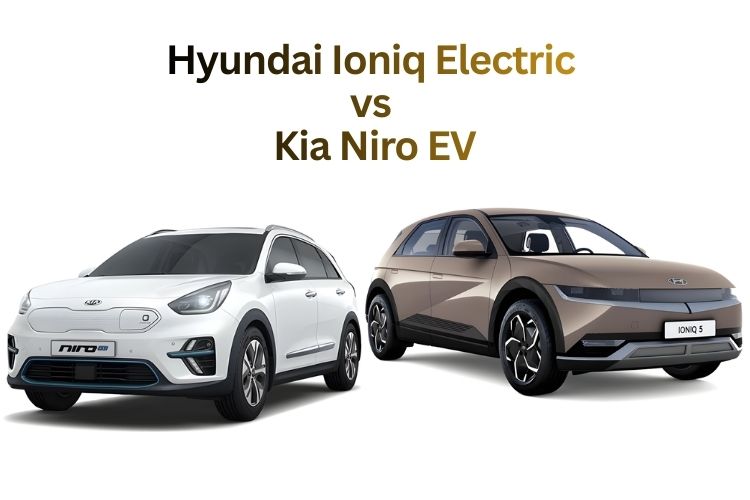
You’re lying there, phone glowing in the dark, toggling between used car listings and new EV configurators. Two Korean siblings keep popping up: something called an “Ioniq Electric” and the Kia Niro EV. Your gut says they’re similar, your wallet hopes one’s a steal, but the web just throws conflicting specs at you.
Here’s the plot twist nobody mentions upfront: “Ioniq Electric” means two completely different cars. One’s a discontinued efficiency champion you’ll find used. The other is Hyundai’s current electric flagship wearing a completely different name.
This confusion has paralyzed smarter people than you. But we’re going to sort it out right now, then find your perfect electric match based on what you actually need, not what some spec sheet screams loudest.
Keynote: Hyundai Ioniq Electric vs Kia Niro EV
The Hyundai Ioniq Electric versus Kia Niro EV comparison addresses two distinct shopping scenarios. The discontinued Ioniq Electric (2017-2021) offers budget-conscious buyers a used EV entry point under $15,000 with stellar efficiency. The current Kia Niro EV delivers balanced new-car value with 253-mile range and family-friendly cargo space. Meanwhile, Hyundai’s Ioniq 5 now challenges the Niro EV directly at similar pricing but with superior 800-volt charging technology and RWD dynamics.
Wait, Which Ioniq Are We Even Talking About?
Most comparisons skip this completely, leaving you more confused than confident. Let’s fix that immediately.
The discontinued Ioniq Electric (2017-2021)
This was Hyundai’s first mass-market EV, a compact hatchback that set efficiency records before quietly disappearing in 2021. You’ll only find it used now, typically priced between $12,000 and $18,000. That budget-friendly entry point still attracts commuters hunting for maximum value per dollar.
The numbers tell a simple story: 38.3 kWh battery, 170 miles of EPA range, and a stellar 145 MPGe efficiency rating that sips electricity like a miser. Home charging tops out at 7.2 kW, enough for a complete overnight refill. DC fast charging maxes around 50 kW, filling to 80% in about 54 minutes.
Cargo space sits at 23 cubic feet behind the rear seats. It’s a city car built for solo drivers or couples who value thrift over tech, perfect for predictable 40-mile daily loops.
And here’s the kicker: if you buy one under $25,000, you can claim up to $4,000 in federal used EV tax credits. That sweetens an already compelling budget play.
The current contender: Ioniq 5 (2022-present)
This is Hyundai’s real answer to the Niro EV for new-car shoppers. Forget everything about the old hatchback, because the Ioniq 5 is a futuristic midsize SUV built on cutting-edge 800-volt architecture.
Range stretches up to 318 miles on the long-range rear-wheel-drive model. Performance options climb to 320 horsepower with all-wheel drive. And that 800-volt system? It adds 180+ miles in under 20 minutes at fast chargers, redefining what “road trip ready” actually means.
Starting price for 2026: $36,600 after Hyundai slashed nearly $8,000 off MSRP to compensate for expired federal credits. That’s just $3,000 more than the Niro EV’s estimated base price, which fundamentally changes the value equation.
| Vehicle | Starting MSRP | Range | Charging Architecture |
|---|---|---|---|
| Ioniq 5 SE | $36,600 | 245 miles | 800-volt |
| Niro EV Wind | ~$41,000 (est.) | 253 miles | 400-volt |
Your first fork in the road
Shopping used and budget-tight? The old Ioniq Electric still delivers maximum thrift for minimum fuss.
Want current technology with dealer support? It’s Ioniq 5 versus Niro EV, not some discontinued hatchback.
We’ll cover both paths completely, so you leave here with zero doubt about which vehicle actually fits your Tuesday morning reality.
The Range Reality That Actually Matches Your Tuesday Morning
EPA numbers lie to you every single day in real traffic. Let’s talk about what actually happens when you’re running late, the heater’s cranking, and you forgot to charge last night.
What the stickers promise vs what winter delivers
The discontinued Ioniq Electric claims 170 miles EPA, but winter cold steals 20% of that capacity. You’re looking at 135-140 miles in freezing temps, maybe less if you’re highway-heavy.
The Niro EV advertises 253 miles EPA and holds up better in cold weather, losing just 15% to winter’s bite. Real-world testing by Edmunds actually saw it exceed EPA ratings, touching 280 miles in mixed driving. That buffer matters when you misjudge your morning math.
The Ioniq 5 long-range promises 318 miles EPA on the rear-wheel-drive model, though real-world conditions drop that to 210-280 miles depending on speed, weather, and how heavy your right foot feels. The AWD models trade 30-60 miles of range for superior winter traction.
Winter doesn’t care about your optimism. It just steals electrons.
The charging speed that changes road trips forever
Here’s where siblings stop being siblings.
The old Ioniq Electric maxes out around 50-70 kW on DC fast chargers. That 10-80% charge takes 54 minutes, enough time to eat a full meal and regret your beverage choices.
The Niro EV peaks at 85 kW on its 400-volt system, dropping that charge time to a consistent 43-45 minutes. Better, but still long enough to turn a quick stop into a mini event.
The Ioniq 5’s secret weapon is its 800-volt architecture, accepting up to 250-350 kW at compatible stations. That same 10-80% charge? 18-20 minutes. Hyundai claims you can add 68 miles in just five minutes. That’s bathroom-break speed, not lunch-break speed.
| Vehicle | DC Fast Charging | 10-80% Charge Time |
|---|---|---|
| Ioniq Electric | 50-70 kW max | ~54 minutes |
| Niro EV | 85 kW max | 43-45 minutes |
| Ioniq 5 | 250-350 kW max | 18-20 minutes |
This difference redefines “usable range.” A 500-mile road trip in an Ioniq 5 might need one 20-minute coffee stop. The same trip in a Niro EV requires at least one 45-minute lunch break, maybe two. Choose based on how you actually drive, not what sounds good on paper.
Home charging: the overnight reset nobody talks about
But here’s what changes everything for commuters: you probably won’t use public fast chargers much at all.
The discontinued Ioniq Electric’s 7.2 kW onboard charger refills its modest battery completely overnight. Plug in at 9 PM, wake up at 6 AM, full battery. Repeat forever.
The Niro EV’s 11 kW onboard charger fills its larger 64.8 kWh pack in under 7 hours on a Level 2 home wallbox. Same deal: bedtime plug, morning full charge, zero gas station visits.
Both let you wake up to a full battery every single day. That rhythm erases range anxiety faster than any EPA number.
“Range anxiety disappeared once I embraced home charging rhythm. I stopped obsessing over percentages and started treating my car like my phone.”
The Money Talk (Because $3,000 or $20,000 Is Still Real Money)
That stomach-drop moment when you see the total price never gets easier. Let’s be brutally honest about what these vehicles actually cost.
Sticker shock or budget relief?
Used Ioniq Electric listings hover between $12,000 and $18,000 depending on mileage and condition. Add that $4,000 used EV federal credit (if under $25,000), and you’re looking at a net cost around $10,000-$14,000 after incentives. That’s Toyota Corolla money for an electric car with legendary efficiency.
The Niro EV starts around $39,600 for the base Wind trim, climbing to $46,000 for the loaded Wave. It screams maximum new-car value per dollar in the compact crossover segment.
The Ioniq 5 now starts at $36,600 for the 2026 SE Standard Range after Hyundai’s massive price cuts. The long-range SE RWD sits at $39,100. Suddenly, you’re getting a larger vehicle with RWD dynamics and 800-volt charging for potentially less than the smaller Niro EV. That’s a market-shaking inversion.
Both new models can access $3,750 in federal tax credits through leasing (manufacturer lease incentives may apply). State and utility rebates stack on top, sometimes adding another $2,000-$4,000 depending on where you live.
The 5-year reality check most guides skip
Purchase price is just the opening act. Let’s run the real numbers over five years of ownership.
The old Ioniq Electric sips electrons at 145 MPGe, translating to rock-bottom charging costs. Figure roughly $500-$600 annually if you’re paying average electricity rates and driving 12,000 miles. Over five years, that’s $2,500-$3,000 total in “fuel.”
The Niro EV’s 253-mile range reduces public charging stop frequency, saving you an estimated $400-$500 yearly compared to shorter-range competitors. Its 113 MPGe efficiency keeps charging bills reasonable, running about $650-$750 annually.
The Ioniq 5 retains resale value slightly better than the Niro EV due to its tech advantages and current market demand. That 15-18% better depreciation curve over five years softens the initial price premium, especially on upper trims.
| 5-Year Cost Factor | Used Ioniq Electric | New Niro EV | New Ioniq 5 SE |
|---|---|---|---|
| Purchase Price (after credits) | ~$13,000 | ~$36,000 | ~$33,000 |
| Charging Costs (60k miles) | ~$2,500 | ~$3,500 | ~$4,000 |
| Maintenance | ~$800 | ~$600 | ~$300 (free 3yr) |
| Est. Depreciation | ~$3,000 | ~$12,000 | ~$10,000 |
| 5-Year Total | ~$19,300 | ~$52,100 | ~$47,300 |
The peace of mind factor
All three share Hyundai Motor Group’s legendary 10-year/100,000-mile battery warranty protecting against capacity loss below 70%. That’s a safety net you hope never to use but can’t put a price on.
The Niro EV and Ioniq 5, still in production, mean easier parts availability and established service networks. No hunting for discontinued components.
The Ioniq 5 adds complimentary scheduled maintenance for 3 years/36,000 miles, covering tire rotations and inspections. That’s a tangible $300-$500 value that Kia doesn’t match.
Warranty is like insurance. Boring, essential, and worth understanding before you need it.
Space, Stuff, and the Saturday IKEA Run
Imagine loading that bulky stroller, the camping gear, your partner’s inexplicable antique lamp purchase. Which vehicle swallows it all without complaint?
The cargo volume numbers that matter
The old Ioniq Electric hatchback offers 23 cubic feet behind the rear seats. Groceries? Fine. Weekly Costco haul? You’ll play Tetris. Fold the seats, and cargo expands, but it’s still a compact footprint built for urban efficiency, not moving day.
The Niro EV’s crossover body delivers 22.8 cubic feet with seats up, nearly identical to the Ioniq Electric. But fold those rear seats flat, and you unlock 63.7 cubic feet of maximum cargo space. That’s legitimately useful for furniture runs and airport luggage chaos.
The Ioniq 5 flips the script with 26 cubic feet seats-up and 59 cubic feet seats-down. Its flat floor and clever packaging create an airy, versatile space that feels bigger than the numbers suggest.
| Vehicle | Cargo (Seats Up) | Cargo (Seats Down) |
|---|---|---|
| Ioniq Electric | 23 cu ft | ~limited expansion |
| Niro EV | 22.8 cu ft | 63.7 cu ft |
| Ioniq 5 | 26 cu ft | 59 cu ft |
The backseat passenger comfort test
The old Ioniq Electric’s compact 96 cubic feet of passenger volume feels tight for families. Fine for two adults, cramped with kids in car seats, genuinely uncomfortable for four full-size humans on long trips.
The Niro EV provides 99.7 cubic feet of passenger space plus 36.9 inches of rear legroom. That extra breathing room ends backseat territorial disputes and makes suburban carpool duty tolerable.
The Ioniq 5’s packaging magic delivers 36.9 inches of rear legroom despite being externally similar in size to the Niro. Its completely flat floor and long wheelbase create a lounge-like environment that rivals three-row SUVs. Passengers actually stretch out back there.
“Niro’s back seat saved our sanity. No more ‘move over’ battles, no more complaints about knees hitting seatbacks. Just peace.”
The little surprises that delight or disappoint
The Niro EV’s 110-volt outlet in the cargo area charges laptops on road trips and powers tailgate setups. It’s the kind of feature you don’t appreciate until you desperately need it.
The Ioniq 5’s sliding center console creates lounge-like flexibility you’ll actually use, pushing forward for easier rear access or sliding back for extra front storage. Sounds gimmicky, feels genius.
Both whisper-quiet at highway speeds, but the Ioniq 5’s dual 12.3-inch screens feel properly futuristic. Meanwhile, the Niro’s physical buttons for climate and volume earn praise from anyone who’s cursed at a touchscreen while driving. Sometimes old-school wins.
How It Feels Behind the Wheel Every Single Day
Beyond specs and cargo cubes, which one makes you smile on Tuesday morning when you’re just driving to work?
Power that thrills or soothes your commute
The old Ioniq Electric delivers 118 horsepower in a lightweight package. It’s nimble, quick enough for confident city merges, but never thrilling. Think efficient zip, not adrenaline rush.
The Niro EV’s 201 horsepower and 188 lb-ft of torque hug highways confidently without drama. Acceleration is adequate at 6.7 seconds to 60 mph. It gets you there without making a scene.
The Ioniq 5 offers a power spectrum from 168 hp in the base model to a potent 320 hp with AWD. That top configuration hits 60 mph in 4.4 seconds, legitimately quick by any standard. Even the base RWD model feels punchier and more balanced than the FWD Niro.
| Vehicle | Horsepower | 0-60 MPH | Drivetrain |
|---|---|---|---|
| Ioniq Electric | 118 hp | ~9.9 sec | FWD |
| Niro EV | 201 hp | 6.7 sec | FWD |
| Ioniq 5 | 168-320 hp | 4.4-7.4 sec | RWD/AWD |
The ride quality nobody warns you about
The old Ioniq Electric rides low and planted, hugging corners like well-worn sneakers. It slices through traffic with precision but can feel busy over rough pavement. You’re connected to the road, whether you want to be or not.
The Niro EV prioritizes cloud-like comfort tuned purely for smooth daily ease. Its suspension absorbs bumps gracefully, though it can feel firm on truly terrible surfaces. It’s the hiking boot approach: comfortable for long hauls, not built for spirited canyon carving.
The Ioniq 5 strikes an athletic balance, delivering a smooth, quiet ride that stays composed in corners. Reviewers describe it as “engaging and cheery,” a “comfier cruiser” that remains “plenty agile.” The steering lacks ultimate feedback but never feels vague. It’s the all-day running shoe that somehow handles the occasional sprint.
Tech that helps or tech that frustrates
The old Ioniq Electric’s simple interface feels dated but dead-reliable. Basic 10.25-inch screen, straightforward menus, zero learning curve. It won’t impress tech enthusiasts but never confuses grandparents.
The Niro EV offers wireless Apple CarPlay and Android Auto plus physical buttons for critical functions. You can adjust climate and volume by muscle memory while keeping eyes on the road. That matters more than any fancy feature list.
The Ioniq 5’s seamless dual 12.3-inch screens look spectacular and remain genuinely intuitive. Hyundai kept physical controls for essential functions, letting you “just jump in and drive” without reading a manual. Some dual-purpose controls can confuse initially, but the overall experience feels modern without being needlessly complex.
Test the infotainment during your test drive, not after purchase. Your daily frustration tolerance matters more than any reviewer’s opinion.
Your Decision Framework (So You Stop Overthinking This)
There’s no wrong choice here, only the right one for your specific life. Let’s get brutally practical.
Choose used Ioniq Electric if…
Your daily commute is 40-60 miles round trip with reliable home charging every night. That 170-mile range becomes irrelevant when you never actually drain it.
Your budget under $20,000 is absolutely non-negotiable. The $10,000-$14,000 net price after the used EV credit makes this the cheapest way into electric driving.
You’re a solo driver or couple prioritizing maximum efficiency and thrift over passenger space or tech features. The 145 MPGe rating means electricity costs barely register on your budget.
Checklist:
- Short, predictable commutes
- Brutal budget constraints
- Hate car payments desperately
- City-focused driving
- Don’t need frequent road trips
Choose Niro EV if…
You want maximum new-car value with 253 miles of range that genuinely eases range anxiety for weekend getaways.
Family cargo needs and urban maneuverability matter equally. That 63.7 cubic feet of maximum cargo space plus compact footprint handle Costco runs and tight parking lots.
Your budget sits around $40,000, and you value physical buttons, reliable dealer support, and proven mainstream tech over bleeding-edge features.
Checklist:
- Balanced family needs
- Groceries and strollers weekly
- Practical over flashy
- Smooth comfort priority
- Predictable ownership experience
Choose Ioniq 5 if…
You regularly drive 150-250 miles in a day, and ultra-fast 800-volt charging access exists near your routes. Those 20-minute charge stops versus 45-minute stops fundamentally change trip planning.
Premium interior quality, future-forward design, and superior passenger space feed your enthusiasm for the EV transition.
You can afford the potential $3,000+ premium (though 2026 pricing narrows this gap dramatically) and want AWD options for genuine winter capability.
Checklist:
- Enthusiast mindset
- Frequent longer trips
- Charging infrastructure solid
- Passenger comfort priority
- Want RWD driving dynamics
Your New Electric Calm Starts Here
We tackled the naming confusion that trips up every single buyer researching “Ioniq Electric.” That discontinued hatchback delivers unbeatable thrift for simple city routines under $15,000 net. The Niro EV balances range, cargo space, and mainstream value for families refusing to compromise. The Ioniq 5 thrills tech enthusiasts with 800-volt charging speed and premium refinement at a newly aggressive price.
The answer isn’t which vehicle is “better.” It’s which one actually fits your Tuesday morning, your Saturday IKEA run, your annual road trip to visit family.
Your one action for today: Grab paper and map your longest routine trip alongside your nearest DC fast chargers. Circle which anxiety keeps you up at night: range or recharge speed. Then schedule test drives for your top choice tomorrow, because specs on a screen never tell you how the steering wheel actually feels in your hands.
The paralysis ends today. The electric driving starts tomorrow.
Kia Niro EV vs Hyundai Ioniq Electric (FAQs)
Why did Hyundai discontinue the Ioniq Electric?
Yes, Hyundai ended Ioniq Electric production in 2021. The company shifted resources toward the advanced E-GMP platform powering the Ioniq 5 and Ioniq 6. That dedicated EV architecture offers superior range, charging speed, and interior space. The old Ioniq Electric couldn’t compete with newer competitors without expensive platform updates.
How much slower is Ioniq Electric DC charging compared to Niro EV?
Yes, noticeably slower. The Ioniq Electric maxes around 50-70 kW versus the Niro EV’s 85 kW peak. That’s roughly 54 minutes to 80% versus 43-45 minutes respectively. The old Ioniq Electric also tapers power more aggressively after 80% state of charge, making full charges painfully slow.
Does the used Ioniq Electric qualify for any tax credits or rebates?
Yes, absolutely. If you purchase a used Ioniq Electric under $25,000, you qualify for up to $4,000 in federal used clean vehicle credits. Your income must fall under $150,000 (married filing jointly) or $75,000 (single). State and utility programs may add additional rebates depending on your location.
Which has better real-world winter range?
The Niro EV wins winter performance. Its larger battery and superior thermal management system loses only 15% capacity in freezing temps versus the Ioniq Electric’s 20% loss. That translates to roughly 215 miles versus 135-140 miles in harsh winter conditions. The Ioniq 5 falls between them at 180-240 miles depending on trim.
Should I buy a used Ioniq Electric or wait for newer EVs?
It depends entirely on your budget and timeline. If you need transportation now and have under $15,000 to spend, the used Ioniq Electric offers unbeatable value for basic commuting. But if you can wait 6-12 months and stretch your budget, the used EV market will see more recent models with better range and tech hitting affordable price points.