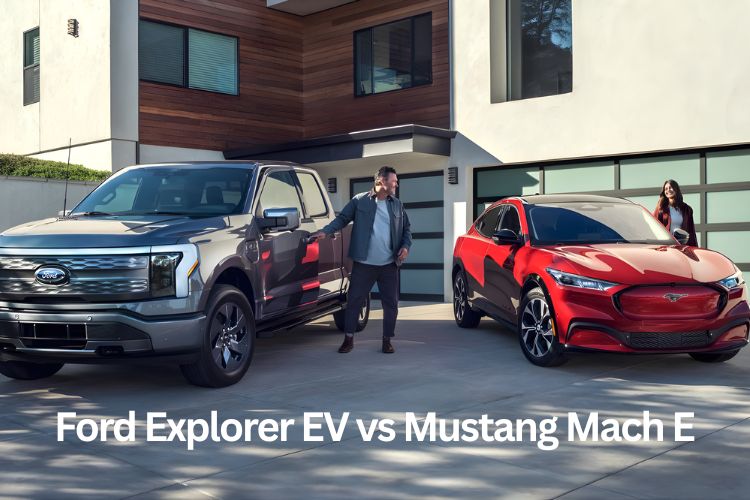
You’re scrolling through Ford’s website at 11 PM, toggling between two electric SUVs, and that familiar knot forms in your stomach. The same feeling you got trying to pick a college major or deciding which apartment to rent.
You want space, range, and stress-free charging, not a degree in automotive engineering.
Friends swear by the Mach-E’s thrill. The new Explorer EV promises adventure. Confusing, right?
Here’s the truth most people miss: They’re built for two completely different people and sold in different markets. The Explorer EV lives in Europe, rolling off assembly lines in Germany on Volkswagen’s borrowed bones. The Mach-E? That’s Ford’s global icon, engineered in-house and sold everywhere from Detroit to Dublin.
Everywhere you look, there’s conflicting advice. Spec-sheet dumps that miss the feeling. Reviews that ignore your real daily needs, like whether three car seats will actually fit or if you can make it to Grandma’s house without range anxiety eating you alive.
We’re going to cut through the noise together, using cold, hard data to find warm, real solutions. By the end, you’ll know which one fits your daily miles, budget, and the person you see yourself being behind the wheel.
Keynote: Ford Explorer EV vs Mustang Mach E
The ford explorer ev vs mustang mach e comparison reveals Ford’s dual-path electrification strategy. The Explorer EV leverages Volkswagen’s MEB platform for rapid European market entry without massive capital investment. The Mustang Mach-E represents Ford’s proprietary engineering showcase, built on the company’s GE1 platform to compete globally against Tesla and establish electric performance credentials.
For US buyers, only the Mach-E is available, offering 240-320 miles of range, 264-480 horsepower depending on trim, and Tesla Supercharger access. It remains one of 2025’s most compelling electric crossovers, blending Mustang DNA with SUV practicality.
The Foundation: Where Each One Lives (And Why That Changes Everything)
The Geography of Your Options
Here’s where things get interesting, and slightly frustrating if you’re in the US.
The Explorer EV is Europe-focused, built in Cologne, Germany on Volkswagen’s MEB platform. Yes, you read that right. This isn’t Ford’s “own recipe.” It’s a strategic partnership that let Ford skip years of development and billions in costs by borrowing VW’s proven electric architecture, the same bones underneath the VW ID.4 and Skoda Enyaq.
The Mach-E sells in North America and Europe on Ford’s in-house platform and tuning. Translation: You might not even have a choice depending on your zip code. If you’re shopping in the States, the Explorer EV simply doesn’t exist for you yet. It’s a European exclusive, designed for narrow city streets and strict emissions zones.
This isn’t just trivia about factories.
It changes everything about the drive, the tech, the feel, and who these vehicles are competing against.
| Feature | Ford Explorer EV | Mustang Mach-E |
|---|---|---|
| Primary Market | Europe Only | Global (US, Europe, etc.) |
| Platform | Volkswagen MEB (shared) | Ford GE1 (proprietary) |
| Assembly Location | Cologne, Germany | Cuautitlán, Mexico |
| Length | 4,468 mm (175.9 in) | 4,739 mm (186.6 in) |
What This Really Means for You
The Explorer EV competes with VW ID.4 and Skoda Enyaq in the calm, efficient family-mover arena. It’s a compact crossover built for European tastes: practical, space-conscious, and efficient above all else.
The Mach-E plays in the sporty family crossover game, positioned as a statement vehicle. It’s Ford’s answer to Tesla, wrapped in Mustang DNA and designed to make your heart beat faster when you walk toward it in a parking lot.
As one Ford executive explained when announcing the VW partnership, “This wasn’t about lacking capability. It was about smart capital allocation.” Ford needed a European volume player fast. Borrowing proven tech let them save their engineering firepower for the vehicles that truly matter to their brand identity, like the Mach-E and the F-150 Lightning.
Range Reality: The Number That Actually Matters on Tuesday Morning
The Advertised Numbers
Let’s talk about the numbers on the sticker, then we’ll talk about what actually happens when you’re late for work on a cold January morning.
The Explorer EV Extended-Range RWD delivers over 600 km WLTP, which sounds like 374 miles until you understand European testing. The AWD configurations run a bit less, naturally trading some efficiency for grip.
The Mach-E Premium Extended Range RWD hits up to 320 miles EPA, about 515 km for those keeping score in metric.
Here’s the critical explainer nobody wants to admit upfront: WLTP runs higher than EPA. Always. The European test cycle is more optimistic, more generous with its assumptions about temperature, speed, and how you’ll actually drive. When you normalize the math, that Explorer EV’s 374-mile WLTP figure probably translates to an EPA rating somewhere in the 300 to 320 mile vicinity, placing these two vehicles on remarkably similar footing for maximum potential range.
| Model | Official Range | Real-World Highway (70 mph) | Cold Weather Impact |
|---|---|---|---|
| Explorer EV RWD ER | 374 mi (WLTP) / ~310 mi (EPA est.) | ~280-290 mi (est.) | ~250-260 mi (est.) |
| Mach-E Premium RWD ER | 320 mi (EPA) | ~270-280 mi | ~240-250 mi |
| Mach-E Select RWD SR | 260 mi (EPA) | ~220-230 mi | ~190-200 mi |
What Your Commute Will Actually Feel Like
Both have city bias in testing. Stop-and-go traffic is where EVs shine, regenerating energy every time you brake, clawing back electrons that would be wasted heat in a gas car.
Cold weather trims range on both vehicles. Hard truth time: when it’s 20 degrees outside and you crank the heat, you’re burning battery just to stay warm. Real-world tests show the Mach-E Standard Range RWD achieving 198 miles at a constant 75 mph in ideal conditions, dropping to 184 miles when you’re running 2 kW of heating. That’s a 7% hit just for comfort.
The one number that changes everything: calculate your daily round-trip miles. Seriously, do it right now. Work to home and back. Add the grocery store. The gym. Your kid’s school.
If it’s under 200 miles, either works and you’ll charge at home overnight without thinking twice. Over that? You’re planning around charging stops, and suddenly that 25-minute vs. 38-minute charging difference between these two becomes your new obsession.
Under the Hood: Battery, Motors, and What It Feels Like Behind the Wheel
The Technical Foundation
The Explorer EV uses VW-sourced components, the same electric guts powering half of Europe’s EV revolution. You get choices: a 55 kWh standard battery or an 82 kWh extended pack, both with usable capacities slightly lower (52 kWh and 79 kWh respectively). Rear-wheel or all-wheel drive options span from a modest 168 hp single motor up to a dual-motor 335 hp setup.
The Mach-E packs Ford’s own batteries: approximately 73 kWh usable in Standard Range or 88 kWh usable in Extended Range configurations. The power spread is wild, starting at 264 hp for the base Select RWD and climbing all the way to 480 hp in the GT.
| Model | Battery (Usable) | Configuration | Power | Torque |
|---|---|---|---|---|
| Explorer EV RWD SR | 52 kWh | Single Motor RWD | 168 hp | N/A |
| Explorer EV RWD ER | 79 kWh | Single Motor RWD | 282 hp | 402 lb-ft |
| Explorer EV AWD ER | 79 kWh | Dual Motor AWD | 335 hp | 501 lb-ft |
| Mach-E Select RWD | 73 kWh | Single Motor RWD | 264 hp | 317 lb-ft |
| Mach-E Premium eAWD ER | 88 kWh | Dual Motor AWD | 346 hp | 428 lb-ft |
| Mach-E GT | 88 kWh | Dual Motor AWD | 480 hp | 600 lb-ft |
The “Feel” Translation
Let’s stop talking specs and start talking feelings.
The Explorer EV equals calm, efficient family mover designed for comfortable, stable cruising rather than neck-snapping speed. Ford tuned it for European buyers who want a serene, predictable drive that won’t terrify your in-laws or spill coffee during the morning commute. The quickest version, the AWD Extended Range, hits 62 mph in 5.3 seconds. That’s quick enough to merge confidently. It’s not quick enough to scare yourself.
The Mach-E equals sportier edge, especially GT models. The 0-60 time for the GT model proves it’s a rocket: 3.8 seconds flat, with the GT Performance and Rally trims dropping that to 3.5 and 3.4 seconds respectively. That’s supercar territory. That’s your stomach in your throat territory.
The Mustang DNA isn’t marketing fluff.
This vehicle is built to be fun to drive. Reviewers consistently praise its sharp steering response, tight body control, and genuine entertainment factor even in the base trims. You feel connected to the road in a way the Explorer EV never attempts. The trade-off? A firmer ride quality that some drivers find overly stiff on rough pavement.
The Explorer is built for peace of mind. The Mach-E is built for that grin you can’t wipe off your face.
As one automotive journalist put it: “The Mach-E drives like a Mustang that went to SUV school and aced the class while still sneaking out to street race on weekends.
Charging Wars: Where Your Patience Meets Reality
The Hard Numbers
Charging speed determines whether your road trip includes a relaxing lunch or anxious pacing by the charger.
The Explorer EV handles 11 kW AC charging at home overnight and DC fast charging up to approximately 170 kW on higher trims. More importantly, Ford claims a 10-80% charge in just 25 minutes at a fast charger.
The Mach-E maxes out at 150 kW DC fast charging, with the Extended Range battery taking around 36 to 38 minutes for that same 10-80% session.
| Model | AC Charging (Home) | DC Peak Power | 10-80% Charge Time | Miles Added (10 min) |
|---|---|---|---|---|
| Explorer EV ER | 11 kW | 135-170 kW | 25 min | ~70-80 mi |
| Mach-E Extended Range | 10.5 kW (48A) | 150 kW | 36-38 min | ~50-60 mi |
That 11-minute difference? On paper it’s nothing. In reality, it’s the difference between grabbing coffee and using the restroom versus finishing your coffee, checking email, and watching other people leave before you.
The North American Game-Changer
Here’s where the Mach-E pulls ahead in a massive way for US buyers.
The Mach-E uses a CCS port plus Ford’s NACS adapter for Tesla Superchargers. Yes, you read that right. Ford partnered with Tesla, and Mach-E owners can now access the most reliable, most widespread fast-charging network in North America. That’s game-changing. Tesla’s Superchargers work. They’re everywhere. They’re rarely broken.
Highlight the massive BlueOval Charge Network access as a major peace-of-mind advantage. Ford gives you access to over 174,000 charging points across North America through various partnerships, but adding Tesla’s network on top? That’s checkmate for range anxiety.
Europe readers: The Explorer EV taps mature CCS networks across the continent. There’s less anxiety than five years ago, but you still plan your route using apps like A Better Route Planner. It’s part of the EV life.
Think of it this way. Charging strategy is like planning a cross-country drive in 1950 versus today. You wouldn’t leave without knowing where the gas stations are. Same deal here, except the “gas stations” charge your car in 30 minutes instead of 3 minutes. Plan accordingly, pack patience, and remember that most days you’re charging at home overnight anyway.
The Long-Term Budget Win
Over five years and 75,000 miles, you’ll spend an estimated $2,265 charging a Mach-E at average residential rates versus over $8,000 fueling a comparable gas SUV. That’s real money back in your pocket. Money for vacations, college funds, or just not stressing about every trip to the “pump” because you’re filling up while you sleep.
Design Philosophy and Space: The Head vs. The Heart
First Impressions from 20 Feet Away
The Mach-E announces itself. Sleek, sloped roofline, that running pony badge proudly up front. It’s a “coupe-SUV” designed to make a statement about style, to turn heads in parking lots and earn knowing nods from strangers at red lights.
The Explorer EV takes the opposite approach. Upright, rugged, traditional two-box SUV silhouette designed for capability and visible space. It looks like what Americans think an SUV should look like, which is ironic considering we can’t buy it.
From 20 feet away, one says “look at me.” The other says “I’ve got this.”
Inside: The Battle of Screens and Real-Life Space
Step inside the Mach-E and your eyes immediately find that massive 15.5-inch portrait touchscreen. It dominates the dashboard. Available Bang & Olufsen sound turns the cabin into a concert hall. There’s karaoke functionality if you’re brave. It’s an event, an experience, designed to feel like you’re sitting in something special.
The Explorer EV features the new 14.6-inch moving screen with SYNC Move. Yes, moving. It slides up and down through 30 degrees so you can find the perfect angle and reduce glare. When you slide it down, it reveals a hidden “My Private Locker” storage compartment. It’s clever European engineering answering practical questions.
But here’s what really matters when the honeymoon phase ends and you’re living with this vehicle daily.
Imagine the relief of actually fitting three car seats, the dog crate, and your weekend gear without Tetris-level planning. Imagine not having to choose between passengers and luggage.
| Measurement | Explorer EV | Mustang Mach-E |
|---|---|---|
| Cargo Volume (Rear Seats Up) | 19.0 cu ft (536 L) | 29.7 cu ft (840 L) |
| Cargo Volume (Rear Seats Folded) | 50.2 cu ft (1,422 L) | 64.4 cu ft (1,822 L) |
| Frunk Space | None | 4.8 cu ft (136 L) |
| Rear Legroom | 37.6 in | 38.4 in |
The “Can I Actually Fit My Life in This?” Test
The Explorer EV is the clear winner for pure family-hauling volume in its physical footprint, but the Mach-E’s larger overall size gives it more total cargo space behind the second row. The numbers don’t lie: 64.4 cubic feet with seats folded in the Mach-E versus 50.2 cubic feet in the Explorer.
But the Mach-E’s frunk is a legitimate game-changer for charging cables, takeout, and wet gym bags. That 4.8 cubic foot waterproof, drainable compartment up front keeps the stinky soccer cleats away from the groceries. The Explorer EV has no frunk at all, a consequence of its MEB platform design where the motor and power electronics occupy that space.
The Explorer counters with clever interior storage: a 17-liter “MegaConsole” between the front seats that swallows a 15-inch laptop, plus that hidden compartment behind the screen for your wallet or sunglasses.
Here’s the honest assessment. The Mach-E claims a “spacious interior,” and it delivers on that promise with clever bonuses in a cabin designed for driver connection and engagement. The Explorer EV delivers practical European family-hauler volume in a tighter package that fits the cities it serves.
The True Cost: Sticker Price, Ownership Reality, and Your Wallet in Five Years
The Upfront Investment
Let’s talk money. Real money. The kind that makes you refresh your bank account twice before signing papers.
The Mustang Mach-E Select starts at approximately $37,995. That’s your entry ticket to the electric Mustang club with 260 miles of range and all the core tech, including that massive touchscreen and standard BlueCruise capability.
Want more luxury? The Mach-E Premium kicks off around $41,995 with standard range, climbing to $42,995 with all-wheel drive and the extended battery for 300 miles of range.
The performance trims escalate quickly. The Mach-E GT commands approximately $54,495, while the off-road-inspired Rally trim tops the lineup at around $58,490.
| Mach-E Trim | Starting MSRP | Drivetrain | Range | Key Features |
|---|---|---|---|---|
| Select RWD | $37,995 | RWD | 260 mi | Base tech, BlueCruise |
| Premium RWD | $41,995 | RWD | 260 mi | Heated seats, premium audio |
| Premium eAWD ER | $42,995+ | AWD | 300 mi | B&O sound, heated everything |
| GT | $54,495 | AWD | 280 mi | 480 hp, performance tuning |
| Rally | $58,490 | AWD | 265 mi | Rally suspension, 700 lb-ft |
For the Explorer EV, European pricing starts around €42,500 in Germany, roughly $45,800 at current exchange rates. That positions it against the VW ID.4 and a flood of increasingly affordable Chinese EVs in a brutally competitive market.
The Long-Term Relationship
Hit them with this fact: The Mach-E has an estimated five-year maintenance cost of just $1,785, far below the industry average for SUVs. No oil changes. No transmission services. No exhaust systems to rust out. Just tires, brakes (which last forever thanks to regenerative braking), and the occasional cabin air filter.
Be honest about depreciation, though. The Mach-E is projected to hold about 43% of its value after five years, shedding roughly $28,000 if you paid $49,000. That’s mid-pack for EVs, neither exceptional nor terrible. The Explorer EV’s resale story is still being written, but the Explorer nameplate historically holds value reasonably well.
Here’s your actionable takeaway: Calculate total cost of ownership including electricity rates in your region, not just sticker shock. If you’re paying $0.14 per kWh at home (the US national average), you’ll spend around $453 annually to drive 15,000 miles. Compare that to $2,500+ in gas for an equivalent SUV.
The Mach-E qualifies for up to $7,500 in federal tax credits under current rules, assuming you meet the income requirements and the MSRP caps ($55,000 for SUVs). That brings an effective price of a Mach-E Select down to around $30,500. That’s Civic money for a performance electric SUV with 260 miles of range.
Do the math. Run the numbers. Factor in your state’s incentives. The upfront price looks scary until you realize you’re saving $2,000+ annually in fuel and another $500+ in maintenance.
Over five years, that’s $12,500 back in your pocket.
Conclusion: The Final Verdict – Which Electric SUV Is Your Next?
We’ve moved from the anxiety of choice to clear understanding.
Ford built two answers to two different questions: “Can my EV be thrilling?” (Mach-E) and “Can my EV be my family’s everything?” (Explorer). One is a tool for life’s adventures. The other is an adventure you live with daily. The Explorer EV is Europe’s practical answer to emissions mandates and narrow streets, built on borrowed brilliance from VW’s platform. The Mach-E is Ford’s global performance statement, designed to make you smile and prove EVs aren’t compromises.
Forget the spec sheets for a second. This isn’t about which is objectively better. It’s about who you are.
Your decision is simple, actually. Go to your driveway or imagine it. Picture your next 100 journeys. Do you see yourself looking back at your parked car with a smile because it turns heads and accelerates like a rocket? Or do you see a packed, peaceful cabin at the end of a long trip, everyone comfortable, nothing left behind, zero drama at charging stops?
If you’re in the US, the choice is made for you anyway. The Explorer EV doesn’t exist in your market yet. The Mach-E is your only Ford EV SUV option, and honestly? It’s an excellent one. The Premium eAWD Extended Range is the sweet spot: 300 miles of range, all-weather confidence, and every feature you’ll actually use for around $43,000.
Your homework is to sit in both if you can, even if you have to sit in a gas Explorer to feel the size difference. Feel which one wraps around you like a promise. Test that Mach-E acceleration and see if it makes you giggle. Imagine your life inside that cabin for the next five years.
Whatever you choose, you’re choosing a future that’s electric. The only question left is: what kind of journey do you want to have in it?
Mustang Mach E vs Ford Explorer EV (FAQs)
Is the Ford Explorer EV available in the United States?
No. The Ford Explorer EV is exclusively sold in Europe, built in Germany on Volkswagen’s MEB platform. Ford has no announced plans to bring it to the US market. American buyers looking for a Ford electric SUV should consider the Mustang Mach-E instead.
How does Mustang Mach-E range compare to Explorer EV?
The Mach-E Premium Extended Range RWD offers 320 miles EPA, while the Explorer EV RWD Extended Range claims 374 miles WLTP. When normalized for different testing standards, they’re roughly equivalent: both deliver around 300-320 miles real-world range. Cold weather and highway speeds reduce both by 15-20%.
Can the Mustang Mach-E tow as much as the gas Explorer?
No. The Mustang Mach-E is not officially rated for towing in the US market, while the gas-powered Explorer can tow up to 5,600 pounds when properly equipped. The European-spec Explorer EV is rated for 2,646 pounds braked towing capacity in its market.
Which Ford EV has better cargo space for families?
The Mustang Mach-E offers more total cargo volume: 64.4 cubic feet with rear seats folded versus 50.2 cubic feet in the Explorer EV. The Mach-E also includes a 4.8 cubic foot waterproof frunk for additional storage. However, the Explorer EV maximizes space within a more compact European-sized footprint.
What’s the price difference between Explorer EV and Mach-E?
In their respective markets, they’re priced similarly. The Mach-E starts at $37,995 in the US, while the Explorer EV starts around €42,500 (roughly $45,800) in Germany. Direct comparison is difficult due to different markets, tax structures, and included equipment levels.