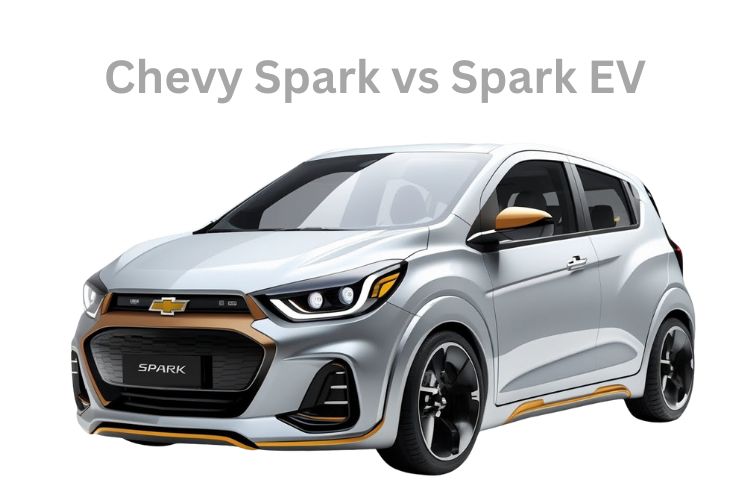
You’re scrolling through listings at 11 PM, and there they are: a $10,000 gas Spark and a $12,000 Spark EV, both clean, both tempting. One feels safe, familiar. The other whispers promises of $2 fill-ups and rocket-ship torque. Your finger hovers over the “contact seller” button, but you freeze.
Because here’s what’s really happening in your gut: you’re not just picking a car. You’re choosing between the anxiety of gas pumps versus the anxiety of that 82-mile leash. You’ve read the spec sheets. You’ve watched the YouTube reviews. Some guy said the EV is a “hidden hot hatch.” Another forum post called it a “parts scarcity nightmare.” You’re more confused now than when you started.
Here’s the truth nobody’s saying clearly enough: this decision isn’t about which car is better. It’s about which car fits the actual shape of your life. Your parking spot. Your daily loop. Your backup plan when things go wrong.
We’re cutting through the noise together. You’ll feel the torque difference, see the real money numbers over three years, and walk away knowing exactly which Spark is yours. No regrets. No second-guessing at 2 AM.
Keynote: Chevy Spark vs Spark EV
The Chevrolet Spark and Spark EV represent fundamentally different approaches to affordable urban mobility. The gas Spark offers universal flexibility and low-risk ownership. The Spark EV delivers exhilarating performance and minimal operating costs within strict range limitations. Your choice hinges on infrastructure and driving patterns. Home charging access and predictable sub-60-mile commutes favor the EV. Variable mileage and single-car households demand the gas model’s versatility. Neither car is objectively superior. Each serves distinct needs with precision.
What You’re Really Choosing: Freedom vs. Fortune
Let’s start with what most comparisons get wrong. This isn’t a horsepower debate or a battery capacity lecture. It’s simpler and more personal than that. You’re choosing between two completely different relationships with your car.
The Gas Spark’s Promise
The gasoline Spark offers something you can’t see on a spec sheet: psychological freedom. You can wake up tomorrow, decide to drive three states over to see a friend, and just go. No apps. No charging maps. No mental math about whether you’ll make it home.
Any mechanic on any corner can fix it. Parts are sitting on shelves in every auto parts store in America. When something breaks, you’re dealing with $200 repairs, not $8,000 unknowns. That’s not just practical security. It’s sleep-at-night peace.
Yes, gas hurts at the pump. Every fill-up is a little gut punch. But you’re never calculating range while merging onto the highway or hunting for a working charger in an unfamiliar town.
The Spark EV’s Brilliant Limitation
If your week looks like this: 30 miles Monday, 45 miles Tuesday, 20 miles Wednesday, all starting and ending at the same driveway with a plug, the Spark EV becomes something closer to a money-printing machine. Your “gas station” is your garage. Your fuel cost is whatever you pay to run your fridge.
But here’s the filter: it’s not for everyone. It’s ruthlessly specific. It’s for the urban driver with a plug, a predictable routine, and honestly, a second car for when life throws a curveball.
The first drive will shock you. That 327 lb-ft of torque feels like you accidentally test-drove a car two classes above what you paid for. It’s not Spark-fast. It’s genuinely fast, full stop.
The Numbers That Actually Matter (Not the Ones They Market)
Forget EPA ratings for a second. Let’s talk about what 82 miles means on your actual Tuesday morning when it’s 38 degrees outside and you forgot to pre-condition the battery.
Range Reality Check
The Spark EV’s EPA range is 82 miles with an efficiency rating of 119 MPGe combined. In perfect conditions, on flat roads, at 55 mph, some hypermilers have coaxed over 100 miles out of it. In the real world, at 70 mph on the highway, expect closer to 60-65 miles before you’re sweating. In winter with the heat blasting, owners report ranges dropping to 40-50 miles.
The gas Spark gives you 340-plus miles per tank. Real-world fuel economy sits around 33-35 mpg combined. Predictable. Anxiety-free. Boring in the best possible way.
Here’s the reframe nobody talks about: the EV’s range isn’t a flaw. It’s a filter. Does your daily life fit inside that 60-mile real-world bubble? If yes, you just found a brilliantly cheap way to commute. If no, stop reading about the Spark EV.
The Acceleration You’ll Actually Feel
The spec sheet says 0-60 mph in 7.5 seconds for the Spark EV versus 10.7 seconds for the gas model. But forget 0-60 for a second.
The real story is torque: 327 lb-ft in the EV versus 94 lb-ft in the gas version. That’s not a difference. That’s a different universe. The EV’s single-gear electric motor delivers every bit of that torque instantly, from zero rpm. The gas Spark has to rev to 4,400 rpm just to find its peak, and even then, it’s working three times harder to deliver a third of the punch.
Merging onto highways becomes effortless in the EV. You tap the accelerator and you’re just there, silent and smooth. The gas Spark makes you plan your merge, listen to the engine strain, and hope nobody’s coming fast in the right lane.
Let’s Talk Real Money (The Part Everyone Gets Wrong)
The sticker price is a lie. The real cost of a car is what leaves your bank account over three years. This is where the Spark EV either becomes a stroke of genius or a financial trap, depending entirely on one thing: whether it dies on you.
Fuel Costs (The Monthly Gut Punch vs. The $2 Fill-Up)
Let’s run the simple math that changes everything. Assume you drive 15,000 miles per year.
Gas Spark: At 33 mpg combined and $3.30 per gallon (2024 national average), you’ll burn about 455 gallons annually. That’s roughly $1,500 per year, or $125 per month just to move the car.
Spark EV: At 28 kWh per 100 miles and $0.16 per kWh (national average residential rate), you’ll use about 4,200 kWh annually. That’s approximately $690 per year, or $58 per month.
Over three years, the Spark EV saves you $2,430 in energy costs alone. That $2,000 price gap you saw in the parking lot just evaporated. You’re now comparing two cars at the same effective price, and one of them is way more fun to drive.
| Annual Mileage | Gas Spark (Fuel) | Spark EV (Electric) | Annual Savings |
|---|---|---|---|
| 10,000 miles | $1,000 | $460 | $540 |
| 15,000 miles | $1,500 | $690 | $810 |
| 20,000 miles | $2,000 | $920 | $1,080 |
The Secret Weapon (Maintenance)
Here’s where the EV quietly saves you thousands while you’re not paying attention.
Gas Spark needs to oil changes every 7,500 miles ($40-60 each). CVT transmission fluid at 45,000 miles ($150-200). Spark plugs at 97,500 miles ($100-150). Air filters. Belts. Exhaust system repairs. Budget $500-800 per year if you want to sleep soundly.
Spark EV Tire rotations every 7,500 miles ($20-30 each). Cabin air filter every 22,500 miles ($25). Brake fluid occasionally. That’s basically it. The electric motor has one moving part. No oil. No transmission fluid. No exhaust system to rust out. Budget $200-300 per year, and that’s being generous.
Over three years, that’s another $1,200-1,500 in the EV’s favor. Now you’re $3,600 ahead, and we haven’t even talked about how regenerative braking means your brake pads last 100,000 miles instead of 40,000.
Depreciation and Resale
Here’s where it gets weird. Used Spark EVs hold value strangely well among people who understand the math we just did. Savvy buyers know the maintenance savings. They know about the instant torque. They’re not scared; they’re hunting for deals.
But here’s the shadow in that equation: one catastrophic battery failure turns a $10,000 car into a $2,000 parts car overnight. The gasoline Spark depreciates predictably, like a normal economy car. When it dies, it dies slowly, with warning signs and fixable problems.
The Honest Gotchas (What the Brochures Won’t Tell You)
Every car has a dark side. Most reviews hide it behind corporate-speak and “on the other hand” hedging. We’re not doing that. Here’s what breaks, what costs money, and what keeps owners up at night.
The Gas Spark’s Achilles Heel
That CVT transmission has a reputation, and it’s not a good one. Browse any Spark forum and you’ll find stories of CVT failures before 100,000 miles. Shuddering. Slipping. Sometimes total failure. When it goes, you’re looking at $3,000-4,000 for a replacement or rebuild.
It’s not guaranteed to happen. Plenty of Sparks sail past 150,000 miles without drama. But if you’re buying a higher-mileage gas Spark, budget mentally for potential transmission work. Consider it the price of admission for that 340-mile range.
The EV’s Big Fear (The Battery Question)
Let’s address the elephant crushing the room: the battery. The Spark EV uses an A123 Systems lithium-ion pack rated at 18.4 kWh usable capacity. When it works, it’s reliable. When it doesn’t, replacement costs can hit $5,000-8,000, assuming you can even find a replacement pack.
Here’s your safety net: the original battery warranty was 8 years or 100,000 miles. Check the in-service date on any used Spark EV you’re considering. A 2016 model purchased in early 2016 could still have coverage through early 2024. Many warranties have already expired, but some haven’t. This single piece of information changes the entire risk calculation.
The Spark EV is a discontinued compliance car built for three model years. Parts availability is better than it should be, but worse than you want. Dealerships can still service them, but finding someone who actually wants to work on a seven-year-old compliance EV is its own adventure.
After that warranty expires, you’re driving a ticking time bomb. It might tick for another 50,000 miles. It might stop tomorrow. Nobody knows. That uncertainty is the real cost of that $10,000 price tag.
The Charging Infrastructure Reality
Do you have a garage, carport, or dedicated parking spot with access to 240V power? If the answer is yes, keep reading. If the answer is no, stop. The Spark EV doesn’t work for you. Full stop.
Home charging on a Level 2 charger (240V, like your dryer outlet) takes about 7 hours to go from empty to full with the Spark EV’s 3.3 kW onboard charger. That’s slow compared to modern EVs, but it’s fine if you’re plugging in overnight and waking up to a full battery.
The Spark EV does support DC fast charging via the SAE Combo connector, and it can theoretically add 80-90 miles in 30 minutes. But here’s the reality: fast chargers for a car this old are less common, and relying on public charging for a vehicle with this range is a recipe for constant stress.
If you’re considering this car without home charging, you’re signing up for a part-time job managing your vehicle’s energy. Don’t do it.
How Each Car Feels in Real Life (The Stuff You Can’t Google)
Specs don’t tell you what it’s like to live with a car. They don’t capture the daily texture, the small annoyances, or the unexpected joys. Here’s what nobody mentions in reviews.
The Gas Spark (Your Dependable Flip Phone)
It’s loud. Not muscle-car loud, but buzzy, droning, small-engine loud. At highway speeds, the engine is working hard, and you hear every bit of that effort. Passing requires planning, downshifting (mentally, since it’s a CVT), and patience.
The ride is firm, sometimes harsh over broken pavement. You feel the road. At city speeds, it’s nimble and easy to park. On the highway, it’s a bit nervous and bouncy.
But here’s what makes it work: it’s uncomplicated. You never think about it. You get in, you drive, you park. No apps. No charging schedules. No battery conditioning. It’s a flip phone in a smartphone world, and sometimes that’s exactly what you need.
Perfect for the college student driving 200 miles home for holidays. Perfect for the apartment dweller with street parking. Perfect for someone who needs one car to do everything without drama.
The Spark EV (The Espresso Shot Rocket)
The first time you floor it from a stoplight, you’ll laugh out loud. It’s genuinely hilarious how fast this tiny egg-shaped car moves. That instant torque launch feels like something escaped from a much more expensive vehicle.
The cabin is silent at idle because there is no idle. Just silence. Then you tap the accelerator and it surges forward with a faint electric whine, smooth and relentless through its single gear. No shifting. No lag. Just continuous, building acceleration until you lift off.
One-pedal driving takes about an hour to learn and then becomes second nature. Lift off the accelerator and the aggressive regenerative braking slows you down so effectively that you barely touch the brake pedal in city traffic. It’s less fatiguing, more engaging, and oddly satisfying.
The interior feels more premium than the gas version. Heated seats. Push-button start. That futuristic digital display. It’s clearly the fancier Spark.
But then you hit the highway at 75 mph and watch the range estimate drop like a stone. Suddenly you’re doing math. Calculating. That psychological weight of limited range never fully disappears, even on familiar routes.
The Decision Framework: Which Spark Is Actually Yours?
Stop overthinking. I’m going to give you three questions. Answer them honestly, and the correct choice becomes obvious.
The Three Questions That Decide Everything
Question 1: What’s your daily round-trip commute?
Under 50 miles with home charging available? The Spark EV makes financial sense. Your fuel savings over three years will be massive, and you’ll rarely think about range.
Over 60 miles or highly variable? The gas Spark is your answer. You need the flexibility and the peace of mind.
Question 2: Where do you park at night?
Garage or driveway with 240V access or the ability to install it? The EV is viable. You’ll plug in when you get home and start every day at 100%.
Street parking or an apartment without charging infrastructure? Gas Spark only. Don’t try to make the EV work. You’ll hate it within a month.
Question 3: Is this your only car?
If this is your sole vehicle and it has to handle everything from daily commutes to spontaneous weekend trips to emergency drives across three states, you need the gas Spark. The EV’s limitations become crippling when it’s your only option.
If this is a second car, a dedicated commuter, or you have reliable access to another vehicle for longer trips, the Spark EV becomes incredibly compelling.
Your Perfect Match (In Plain English)
You are the Spark EV if: You have a predictable commute under 60 miles round-trip, a garage or carport with charging access, and either a second vehicle or no need for road trips. You love the idea of $60 monthly fuel costs and instant torque. You understand and accept the battery risk. You’re the genius commuter who did the math and smiled.
You are the gas Spark if: Your driving is unpredictable. You take frequent trips over 100 miles. You don’t have reliable home charging. You need one car to do absolutely everything without requiring a backup plan. You value flexibility and the security of universal serviceability above all else. You’re the pragmatist, and there’s absolutely nothing wrong with that.
Conclusion: Your Next, Perfectly Clear Step
We started in a parking lot, staring at two small cars with wildly different promises. You’ve walked through the financial math. You’ve felt the torque difference in your mind. You’ve faced the range limits honestly and discovered the maintenance secret that makes spreadsheet people smile.
The truth is elegantly simple: the Spark EV isn’t better. It’s brilliantly specific. It’s a scalpel designed for one job, and it does that job better and cheaper than almost any car on the market. The gas Spark isn’t worse. It’s reliably universal, the Swiss Army knife that handles everything adequately without drama or risk.
Go to a used car website right now. Search for both models in your area. For any Spark EV listing that catches your eye, write down this question: “Can you confirm the in-service date and remaining battery warranty coverage?” Call tomorrow. That one question moves you from speculation to decision.
The parking lot doesn’t feel so overwhelming anymore, does it? You’re not just buying a car. You’re choosing a system that fits your actual life, backed by real numbers and honest trade-offs. And that clarity? That’s a feeling that never gets old.
Spark EV vs Chevy Spark (FAQs)
Is the Spark EV faster than the gas Spark?
Yes, significantly. The Spark EV hits 60 mph in 7.5 seconds versus the gas model’s 10.7 seconds. More importantly, its 327 lb-ft of instant torque makes city driving and highway merging feel effortless, while the gas Spark’s 94 lb-ft requires patience and planning for passing maneuvers.
How much does it cost to charge a Spark EV at home?
At the national average rate of $0.16 per kWh, a complete charge costs about $2.95 to refill the 18.4 kWh battery. If you drive 15,000 miles annually, your yearly electricity cost is roughly $690, compared to $1,500 in gasoline for the gas Spark—a savings of over $800 per year.
What happens when the Spark EV battery degrades?
Battery degradation is real but gradual. Most Spark EVs lose about 25% of capacity after three years, reducing real-world range from 82 miles to 60-70 miles. If the battery fails catastrophically after the 8-year/100,000-mile warranty expires, replacement costs range from $5,000-8,000, and finding a replacement pack can be difficult since the car is discontinued.
Can I install a DC fast charger at home for the Spark EV?
No, residential DC fast charging isn’t practical or legal for most homeowners. DC fast chargers require commercial-grade electrical infrastructure (400+ volts, 50+ kW) and cost $15,000-40,000 to install.
The Spark EV’s 3.3 kW onboard charger works with standard Level 2 (240V) home charging, which fully charges the car in about 7 hours—perfectly adequate for overnight charging.
Why was the Spark EV only sold in California, Oregon, and Maryland?
The Spark EV was a “compliance car” built primarily to meet California Air Resources Board (CARB) Zero Emission Vehicle mandates. GM produced limited quantities exclusively for states that had adopted California’s stricter emissions standards.
This limited distribution explains the car’s parts scarcity and discontinued status—it was never intended as a volume vehicle.