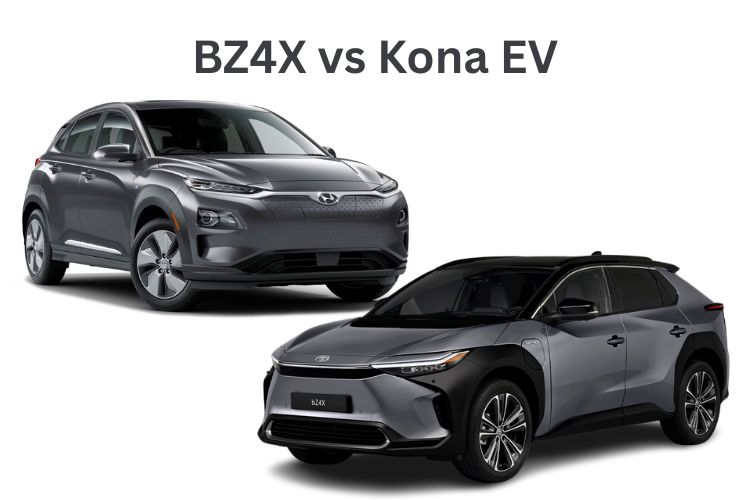
You’re standing in a dealership, keys to a test drive dangling in front of you, and suddenly everything inside you freezes. Which one do you pick?
It’s not just about comparing specs on a screen anymore. This is Toyota. The brand your parents swore by, the name that built its empire on cars that refuse to die. But then there’s Hyundai, the scrappy underdog that somehow figured out how to build EVs that actually work while everyone else was still sketching concepts on napkins.
Every review you’ve read contradicts the last one. Range numbers don’t match. Charging speeds feel like they’re written in a different language. One friend swears Toyota’s bulletproof reliability will save you thousands. Another insists Hyundai’s warranty is the only smart bet in a world where EVs are still finding their footing.
Here’s what we’re going to do. We’ll start with the feelings, the gut-level stuff that actually matters when you’re driving this thing every single day. Then we’ll dig into the cold, hard facts. And by the end, you’ll know exactly which car is whispering your name.
Keynote: bZ4X vs Kona EV
The bZ4X versus Kona Electric comparison reveals fundamentally different EV philosophies. Toyota’s bZ4X targets mainstream buyers with AWD capability, 314-mile maximum range, and faster DC charging. Hyundai’s Kona Electric prioritizes affordability, consistent real-world performance, and industry-leading warranty coverage. The bZ4X suits families needing versatile capability. The Kona Electric excels for urban commuters. Neither is universally better. Choose based on your specific driving patterns, climate, and budget priorities.
The Real Question No One’s Asking: Brand Legend vs. EV Experience
Here’s the truth most comparison guides tiptoe around: You’re not just comparing two electric SUVs. You’re weighing a brand philosophy against product mastery.
Everyone knows someone with a 20-year-old Camry that won’t quit. That peace of mind is baked into every Toyota badge, earned through decades of Corollas that laughed at odometers hitting 200,000 miles. But the bZ4X? This is Toyota’s first real swing at a mass-market EV, and it stumbled hard out of the gate. Wheel bolt recalls. Charging quirks that left owners scratching their heads. The initial version felt like Toyota was learning in public, and nobody wants to be the beta tester for a $45,000 experiment.
Hyundai didn’t just wake up one day and decide to build EVs. The Kona Electric has been quietly proving itself since 2018, refining its formula with each model year. This isn’t Hyundai’s first rodeo. It’s their masterclass. They’ve worked out the kinks, listened to real owners, and built something that just works.
The gut-level question you need to answer: Do you bet on the world’s most trusted car brand learning how to build EVs, or do you go with a brand that’s already figured it out?
Range Reality Check: What Happens on a Cold Tuesday Morning?
The Numbers Everyone Quotes (But Don’t Tell the Whole Story)
The Kona Electric delivers an EPA-estimated 261 miles with its 64.8-kWh battery. The bZ4X peaks at 252 miles in XLE FWD trim, though AWD versions dip lower even with the bigger 71.4-kWh battery pack.
That 9-mile difference sounds like nothing, right? But it’s the difference between pulling into your driveway with range to spare and hunting for a charger on your evening commute, wondering if you’ll make it.
The Cold Weather Truth No One Wants to Talk About
Both EVs lose range when temperatures drop. That’s physics, not a flaw. But here’s where it gets interesting: real-world owner reports show the Kona’s smaller, more efficient battery often performs more predictably when the thermometer dips below freezing. The bZ4X, despite its larger battery, can lose 35 to 40 percent of its range in sub-freezing conditions. The Kona? Closer to 25 to 30 percent, thanks to its standard heat pump and battery preconditioning.
If you live where winter means something, that consistency matters more than raw battery size ever will.
For pure range anxiety relief, the Kona edges ahead by being the more consistent performer, day after day, season after season.
The Coffee Stop Test: Charging Speed vs. Charging Sanity
The Speed Numbers (What They Promise)
The Kona hits 10 to 80 percent in approximately 43 minutes on DC fast charging, maxing out around 77 to 100 kW. The bZ4X promises to reach 80 percent in about 30 minutes under ideal conditions with a 150-kW charger on FWD models.
On paper, Toyota wins. But here’s where it gets interesting.
The Real-World Charging Personality
| Aspect | Kona Electric | bZ4X |
|---|---|---|
| Charging Speed | Slower but steady | Faster peak, quirky curve |
| Consistency | Predictable trickle | Can slow unexpectedly |
| Real-World Feel | “I know what I’m getting” | “Sometimes fast, sometimes not” |
Think of it like this: The Kona is that friend who’s always 10 minutes late but you can set your watch by it. The bZ4X is the friend who might show up early or get completely lost. Which one gives you less anxiety when you’re planning a road trip?
For daily charging peace of mind, many owners prefer the Kona’s boring reliability over the bZ4X’s occasional brilliance. The bZ4X’s charging curve can taper dramatically after 80 percent state of charge, dropping to 40 to 50 kW, while the Kona settles into a predictable 35 to 45 kW. That unpredictability matters when you’re trying to plan your charging stops.
The Supercharger Game-Changer
Both brands now offer complimentary NACS adapters for Tesla Supercharger access, but Hyundai’s 2025 adapter availability timeline beats Toyota’s delayed rollout. This is huge. The biggest, most reliable charging network in America just opened its 17,000 plus Supercharger locations to both vehicles.
Check your eligibility window and request your adapter the day you buy. This fundamentally changes the charging infrastructure equation.
The Daily Vibe Check: Which One Feels Like Home?
When You Slide Behind the Wheel
Kona’s “Future is Now” Tech: Dual 12.3-inch screens dominate the dash, wrapped in a panoramic curved display. It feels open, digital, unmistakably modern. This is the car that says “I live in 2025.” The Seamless Horizon Lamp, that pixelated LED light bar stretching across the front, makes it look like it rolled off a concept car stage.
bZ4X’s “Different for Different’s Sake” Layout: That high-mounted instrument cluster where you look over the steering wheel, not through it? It’s polarizing. Some drivers love the clear sightlines. Others hate adjusting their eye position. There’s no middle ground. The 2026 model fixed the worst offender, raising the digital gauge cluster so it’s not blocked by the wheel anymore, but that yoke-inspired steering wheel design still divides opinions.
Do you want proven tech brilliance that feels intuitive from day one, or Toyota’s bold experiment that might take weeks to feel natural?
The Space You Actually Use Every Day
The Kona’s tighter turning circle makes parallel parking feel like a video game you’re actually good at. Its compact 171.5-inch length slides into spaces the bZ4X can’t touch. This is your urban warrior, built for congested streets and tight parking garages.
The bZ4X offers noticeably more rear legroom at… wait. Actually, it doesn’t. The Kona delivers 36.4 inches of rear legroom versus the bZ4X’s 35.3 inches. That’s the efficiency of EV packaging at work. Despite being a sub-compact SUV, the Kona’s 104.7-inch wheelbase and upright design create more space where it counts.
But here’s where the bZ4X fights back: cargo capacity behind the rear seats is 27.7 cubic feet versus the Kona’s 25.5. That extra space matters when you’re loading groceries or weekend gear.
Only the bZ4X offers all-wheel drive. If you face snow, mud, or mountain roads regularly, this isn’t optional. The Kona’s front-wheel drive is fine for most conditions, but it can’t match the bZ4X’s X-MODE system with settings for snow, dirt, and mud. That 8.2 inches of ground clearance on the bZ4X versus the Kona’s 5.9 inches? That’s the difference between confidently tackling a rutted forest road and white-knuckling it.
The Wallet War: Where Your Money Actually Goes
The Sticker Shock
| Model | Starting MSRP | What You Get |
|---|---|---|
| Kona Electric SE | ~$34,500 | Entry point, loaded tech, V2L standard |
| bZ4X XLE FWD | $34,900 | Base battery, smaller range |
| bZ4X XLE Plus FWD | $37,900 | Larger battery, 314-mile range |
| bZ4X Limited AWD | $45,300 | Full power, all features |
The Kona starts at essentially the same price as the base bZ4X, but you’re getting the only trim Hyundai offers. It’s simpler. No agonizing over option packages or trying to decode trim levels. Meanwhile, Toyota gives you five configurations to choose from, letting you walk up the ladder from affordable entry to loaded AWD performance.
That $10,000 gap between the Kona and a loaded bZ4X Limited AWD? That’s not rounding error. That’s a year of car payments or a serious vacation fund.
Note: Check local incentives and lease deals. The math can flip dramatically depending on your state rebates and manufacturer cash.
The Warranty That Changes Everything
Hyundai’s Nuclear Option: 5-year, 60,000-mile comprehensive coverage and 10-year, 100,000-mile powertrain warranty. This is the best warranty in the business, period. No asterisks, no fine print surprises.
Toyota’s Traditional Stance: 3-year, 36,000-mile basic warranty. 5-year, 60,000-mile powertrain. It feels dated, especially for an EV that’s supposed to represent the future.
Both offer 10-year, 100,000-mile battery warranties (the bZ4X technically covers EV components for 8 years, 100,000 miles), so your most expensive component is equally protected. But that extra 2 years and 24,000 miles of comprehensive Hyundai coverage is worth thousands in peace of mind. Every rattle, every electronic glitch, every wear item for five full years? Covered.
The Resale Reality Check
Toyota has legendary resale value. A used Toyota holds its price like few other brands. But Hyundai’s EV resale has surged as the Ioniq 5 and Kona Electric proved themselves reliable. The gap is closing faster than anyone predicted.
Don’t buy solely for resale. Buy the car that serves your life today, not your imaginary buyer in 2029. Predicting EV resale values five years out is like predicting the weather next month. Too many variables, not enough certainty.
The Reliability Riddle: What the Data Actually Says (And Doesn’t)
Here’s where it gets messy, and we need to be completely honest.
Everyone “knows” Toyotas run forever. That’s not marketing. That’s decades of Camrys and Corollas earning trust one oil change at a time. Consumer Reports and J.D. Power studies consistently rank Toyota among the top brands for vehicle reliability and long-term durability.
Recent reliability data shows Hyundai’s initial quality and long-term dependability scores rivaling or beating Toyota in many categories. They’ve come a long way from the budget brand jokes of the 1990s.
Both brands are still learning EVs. The bZ4X had early stumbles that made headlines. Wheel bolt issues forced a recall. Owners complained about charging quirks and range discrepancies that made EPA estimates feel optimistic. The Kona has been steadier, building on years of real-world EV experience, but it’s not immune to problems.
Don’t rely on brand mythology from the gasoline era. Check model-year-specific reliability data for 2024 and 2025 EVs before you sign. The past doesn’t always predict the future, especially when the technology is fundamentally different.
The Final Verdict: Which Car is Calling Your Name?
Choose the 2025 Hyundai Kona Electric if…
You want the best value per dollar. That lower entry price, industry-crushing 10-year powertrain warranty, and standard Vehicle-to-Load capability matter when you’re calculating total cost of ownership over five years.
You’re a daily city commuter who prioritizes efficiency, tech, and predictability. The 200-mile real-world range is more than enough for your routine, and the compact footprint makes urban parking painless.
You don’t need AWD, and you value a car that’s mastered the EV formula through iteration. Hyundai’s been refining this platform since 2018. It shows.
You want the proven product that works brilliantly right now, not the promise of what might be great tomorrow.
Choose the 2025 Toyota bZ4X if…
You need genuine AWD capability for weather, terrain, or peace of mind. That dual-motor system with X-MODE isn’t just marketing. It’s confidence on snow-covered roads and muddy trails.
Rear-seat passengers and cargo space behind the seats are non-negotiable. The bZ4X’s larger dimensions deliver more room for gear, even if the Kona surprises with better rear legroom.
You believe in Toyota’s long-term engineering philosophy over short-term quirks, and that badge means something to you. You’re willing to bet that Toyota’s legendary durability will eventually translate to EVs, even if the first chapter was rocky.
You’re placing a bet on Toyota’s ability to learn, adapt, and ultimately deliver the reliability they’re famous for, now applied to electric powertrains.
Conclusion: The One Thing to Do Right Now
Let’s recap the journey: This was never about crowning a universal “best” EV. It was about finding the one that fits your daily reality, your budget, and that gut feeling you can’t quite explain.
The Kona gives you more consistent range, better long-term warranty coverage, proven EV experience, and a remarkably low entry price. The bZ4X gives you AWD capability, a larger footprint, faster peak charging speeds, and the Toyota name that three generations of your family have trusted.
Stop reading reviews. Go to both manufacturer websites right now and use their payment calculators. Enter your actual trade-in value, your real down payment, and look at that monthly number staring back at you. Then close your eyes and picture that car sitting in your driveway tomorrow morning. Which one makes you feel excited to grab the keys?
The best EV isn’t the one with the most impressive number on a spec sheet. It’s the one that makes you smile when you press the start button and breathe easy when you pull into your garage. You’ve done the research. You know the facts. Now trust your gut. Go find your car.
Kona EV vs bZ4X (FAQs)
Which is more reliable Toyota bZ4X or Hyundai Kona Electric?
No, there isn’t enough long-term data yet to declare a winner. Toyota has a stronger historical reliability reputation across its gasoline lineup, but the bZ4X experienced early recalls for wheel bolt issues.
The Kona Electric has been on the market since 2018 with fewer reported problems. Hyundai’s 10-year, 100,000-mile powertrain warranty versus Toyota’s 5-year, 60,000-mile coverage suggests Hyundai has more confidence in their EV longevity.
Does the bZ4X or Kona Electric qualify for federal tax credit?
No, neither vehicle qualifies for the full $7,500 federal tax credit on purchase because both are manufactured outside North America. The bZ4X is built in Japan, and the Kona Electric is built in South Korea.
However, both may qualify for the credit when leased, as manufacturers can claim it and pass savings to customers as lease cash. Check with dealers about current lease incentives and verify eligibility for state-level rebates in your area.
What is the real-world highway range of bZ4X vs Kona Electric?
The bZ4X achieved 160 miles in Car and Driver’s real-world highway test, a 36 percent shortfall from its 252-mile EPA estimate. The Kona Electric’s 261-mile EPA rating translates to approximately 180 to 200 miles in real-world highway driving, depending on conditions.
Both vehicles lose 25 to 40 percent of rated range in cold weather below 32°F, with the Kona showing more consistent performance due to standard battery preconditioning and heat pump technology.
How long does it take to charge bZ4X vs Kona Electric at home?
Both take approximately 6 to 7 hours for a complete charge on Level 2, 240-volt home charging. The bZ4X has an 11 kW onboard charger that can replenish its larger 71.4 kWh battery in about 7 hours. The Kona Electric’s 10.8 kW onboard charger refills its smaller 48.6 kWh battery in roughly 6 hours. Actual times vary based on your home charging equipment’s power output and your local time-of-use electricity rates.
Which has better cargo space bZ4X or Kona Electric?
The bZ4X offers more cargo space behind rear seats at 27.7 cubic feet versus the Kona’s 25.5 cubic feet. However, the Kona Electric surprisingly delivers more maximum cargo capacity with seats folded: 63.7 cubic feet compared to the bZ4X’s 56.9 cubic feet.
The Kona also includes a 27-liter front trunk for additional storage. For daily hauling behind seated passengers, choose the bZ4X. For maximum cargo flexibility, the Kona’s efficient packaging wins.